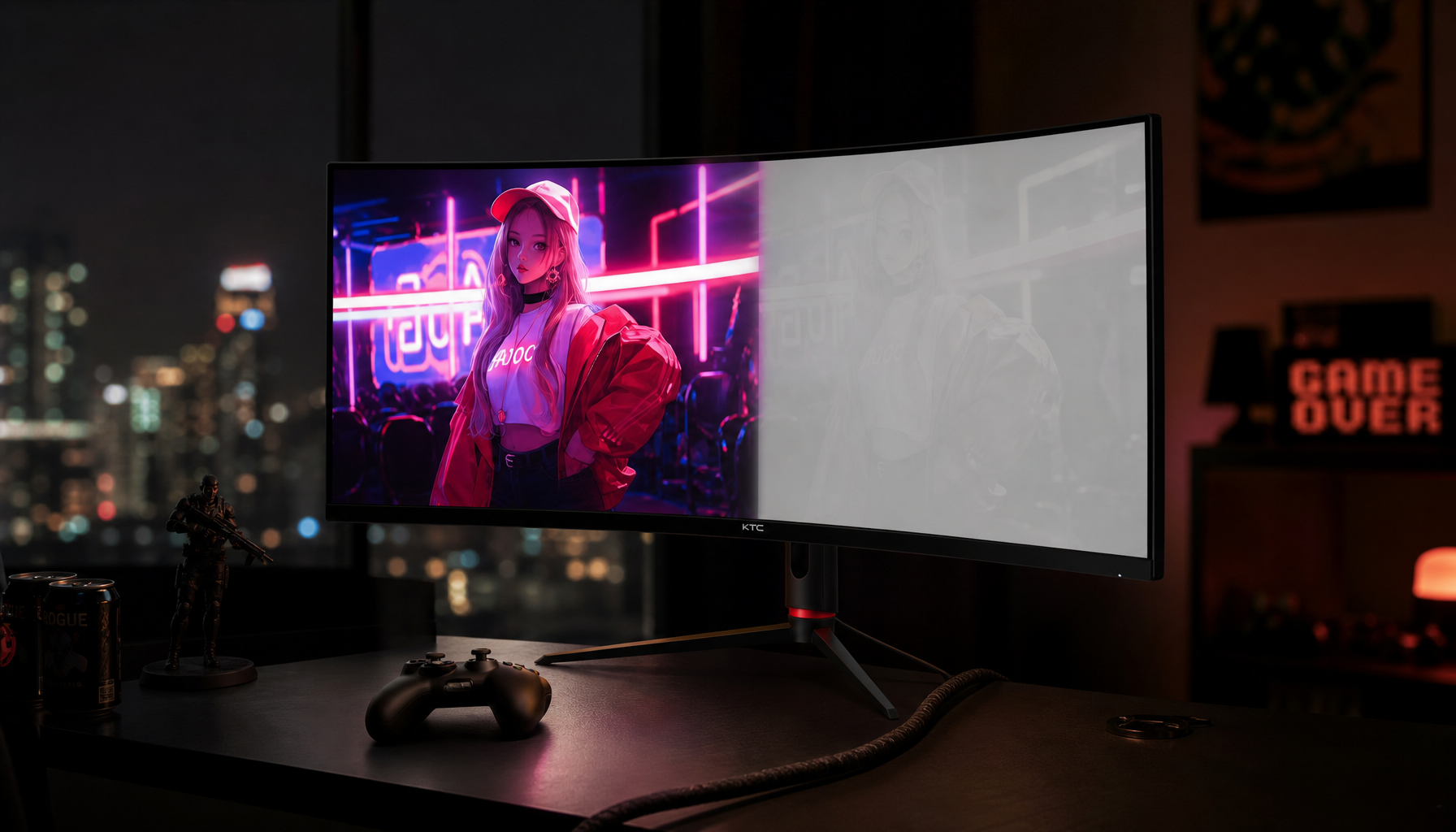
PQ is an absolute HDR transfer function built for precise mastering and playback, while HLG is a relative HDR transfer function built for broadcast flexibility and SDR compatibility. For monitors, PQ usually matters most for movies, games, and creator review; HLG matters most for live video, TV delivery, and fast HDR workflows.
Does HDR look too dim in one app, blown out in another, or strangely flat when you switch picture modes? A practical setup choice can prevent double tone mapping, crushed shadows, and clipped highlights before you start blaming the panel. Here is how PQ and HLG work, where each one works best, and how to choose the right HDR mode on a gaming monitor, office display, or portable screen.
Why Transfer Functions Matter on Real Displays
A transfer function tells the video system how digital signal values become visible brightness on screen. That sounds technical, but the result is obvious: the same explosion, white document window, neon game sign, or sunlit cloud can look controlled on one display and harsh or dull on another.
Modern HDR standards center on two curves. BT.2100 defines two HDR gamma curves, PQ and HLG, for HDR production and transmission. Both can carry more highlight and color information than traditional SDR, but they make different assumptions about the display, the room, and the delivery path.
For a simple monitor example, imagine a 600-nit gaming display playing a movie mastered for 1,000 nits. With PQ, the monitor receives absolute brightness instructions and must decide how to tone map the highlights it cannot fully reproduce. With HLG, the display interprets the signal more relatively, scaling output around its own peak brightness behavior.
PQ HDR: Precision for Mastered Content
PQ stands for Perceptual Quantizer. It is standardized as SMPTE ST 2084 and is widely used in HDR10, dynamic HDR workflows, UHD discs, streaming HDR, and many HDR games.

The key idea is that PQ uses absolute brightness values, with a theoretical range up to 10,000 nits. If a pixel is encoded to represent a certain luminance level, the signal is not merely saying “make this relatively bright.” It is describing a target brightness.
That makes PQ powerful for controlled mastering. A colorist can place diffuse white, skin highlights, lamp reflections, fire, and specular glints with high repeatability. In practical display terms, PQ gives the strongest path toward the director’s or game artist’s intended contrast, provided the monitor tracks the EOTF accurately and tone maps responsibly.
PQ’s tradeoff is display dependence. Most consumer monitors cannot hit every brightness level encoded in high-end HDR content. Tone mapping reshapes HDR content to fit the panel’s real peak brightness, black level, contrast, and color volume. A 400-nit portable smart screen and a 1,400-nit mini-LED gaming monitor may both accept HDR10, but they will not show the same highlight detail unless their tone mapping and calibration are excellent.
Pros and Cons of PQ
PQ’s biggest advantage is creative precision. It is the better choice when you are watching premium streaming HDR, reviewing HDR video, playing HDR games, or evaluating content where highlight placement matters. It also works with metadata systems such as MaxCLL, MaxFALL, and mastering display metadata, which can help displays make smarter tone-mapping decisions.
Its weakness is that poor implementation is easy to see. On an underpowered monitor, PQ can look too dark, clipped, washed out, or inconsistent between titles. HDR content may target 1,000 nits or 4,000 nits, while many desktop displays cannot reproduce those levels directly. That is why one HDR movie may look balanced and another may need in-app or system calibration even on the same screen.
HLG HDR: Flexibility for Broadcast and Live Workflows
HLG stands for Hybrid Log-Gamma. It was developed for HDR television and broadcast workflows. Its name describes the curve: the lower part behaves more like traditional gamma, while the upper part uses a logarithmic curve for highlights.
The practical difference is that HLG does not require HDR metadata. That makes it highly useful for live broadcast, sports, news, streaming events, and fast camera-to-screen workflows where metadata can be lost, delayed, or hard to manage.
HLG is relative rather than absolute. Instead of assigning every signal value to a fixed target brightness, it lets the display adapt the curve to its own peak luminance. That makes it more forgiving across a wide range of TVs and monitors, especially when the same feed needs to reach both HDR and SDR environments.
A real-world example is live sports. A broadcaster cannot grade every camera cut like a feature film, and the same feed may go to living room TVs, production monitors, and web platforms. HLG’s no-metadata design keeps the pipeline simpler and reduces the need for separate SDR and HDR versions.
Pros and Cons of HLG
HLG’s strength is operational reliability. It is efficient for broadcast, easier to transmit, and more tolerant when the playback environment is mixed. For creators, it can also be useful for quick HDR capture and delivery when the goal is speed rather than frame-by-frame mastering.
Its weakness is that compatibility is not magic. HLG commonly combines BT.2020 color primaries, and older SDR Rec.709-only displays may still show color shifts or desaturation. HLG can also look less exact than PQ when you need a tightly mastered cinematic image, because the display has more influence over final brightness.
PQ vs HLG: The Monitor Buyer’s Comparison
Question |
PQ |
HLG |
Brightness model |
Absolute, display-referred |
Relative, display-adaptive |
Best fit |
Movies, streaming HDR, discs, games, color review |
Broadcast, live video, fast HDR delivery, SDR-compatible workflows |
Metadata |
Often uses static or dynamic metadata |
Does not require HDR metadata |
Display behavior |
Needs accurate EOTF tracking and tone mapping |
Scales more naturally across displays |
Main risk |
Clipping, dim output, or odd tone mapping on limited panels |
Less precise creative reproduction and imperfect SDR color compatibility |
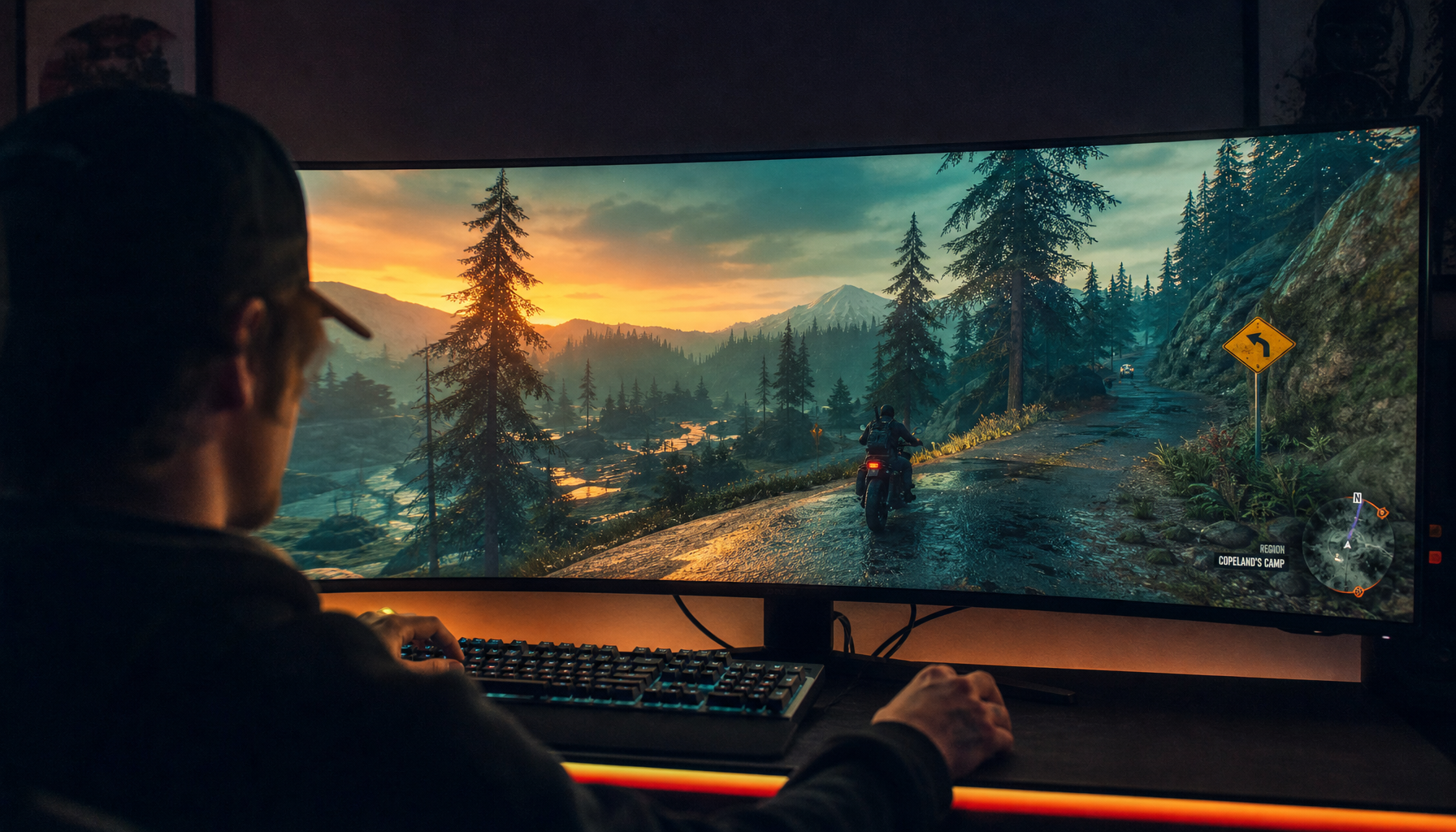
For a gaming monitor, PQ is usually the more important format because HDR games and HDR10 video rely on it heavily. The useful specs are not just “HDR supported.” You want real peak brightness, sustained brightness, contrast, local dimming quality, black level, color volume, EOTF tracking, and calibration controls.
For an office productivity display, HDR should be treated more cautiously. Desktop work often depends on stable SDR whites, readable text, and predictable color. If enabling HDR makes spreadsheets, browser pages, or design documents look inconsistent, keep a calibrated SDR mode for daily work and switch to HDR only for HDR video, game testing, or content review.
For portable smart screens, the question is power and brightness. A portable display may accept HDR metadata but lack the sustained luminance or black-level control to make PQ convincing. HLG playback may feel more forgiving, but neither format can overcome a panel with weak contrast or limited brightness.
Practical Setup Advice
Start by matching the format to the content. Use PQ or HDR10 mode for HDR movies, streaming apps, UHD sources, and most HDR games. Use HLG mode when the source is a broadcast-style HDR feed, camera output, or creator export tagged as HLG.

Then calibrate the display after choosing the HDR mode. System HDR calibration tools can help the computer understand darkest visible detail, brightest visible detail, and maximum display brightness, but calibration should be run after the monitor is already in the HDR mode you plan to use. Changing the monitor’s HDR preset afterward can invalidate the result.
For games, avoid double tone mapping. Set the monitor to its HDR game mode first, run the console or PC HDR calibration, then adjust the game’s own HDR sliders. If the game asks for peak brightness and your monitor is a 600-nit class display, do not blindly set 1,000 or 4,000 just because the menu allows it.
For creator work, do not judge PQ and HLG by eye in a random vivid mode. Use the most reference-oriented HDR preset available, disable unnecessary contrast enhancement, and verify scopes or measurements when accuracy matters. Workflow notes from editing software users show that PQ-to-HLG conversion can change shadow and highlight behavior, so grading specifically for the intended output format is safer than assuming conversion will preserve the same look.
Which One Should You Choose?
Choose PQ when the content is mastered, cinematic, game-oriented, or accuracy-driven. It gives the clearest path to controlled HDR reproduction, especially on a capable monitor with strong peak brightness, good blacks, and reliable tone mapping.
Choose HLG when the workflow is live, broadcast-oriented, or needs broad playback compatibility without metadata. It is a practical HDR format for getting a robust image across many screens, not necessarily the format for the most exact premium HDR grade.
The performance-first answer is simple: buy and configure the display around the content you actually use. PQ rewards better hardware and calibration; HLG rewards workflow flexibility. A strong HDR monitor should handle both, but the best viewing experience comes from choosing the right curve before you judge the screen.