Display gamma shapes how SDR screens translate signal values into visible midtones and shadows, while HDR largely replaces traditional gamma with transfer functions such as PQ or HLG to control luminance more precisely.
Does your HDR monitor look stunning in a game, then strangely flat or washed out on the desktop? In real setup work, the fastest fix is often not a new cable or a deeper color menu, but using SDR gamma for SDR content and HDR mode only for true HDR playback. Here is what gamma does, why HDR behaves differently, and how to set up a gaming, office, or portable display without fighting the image.
Gamma Is the Midtone Engine of SDR
Gamma is the display’s tone-response curve between black and white. It does not simply make the screen brighter. It decides how dark grays, mid-grays, and near-white tones are spaced between the black floor and peak white. That is why changing gamma can make a game’s cave scene reveal more texture, make a spreadsheet’s gray gridlines easier to read, or make a photo’s shadows look crushed.
In SDR, gamma is central because SDR brightness is relative. A 50% gray signal is not meant to be half of the monitor’s physical brightness, and the same SDR image can look brighter or darker depending on display brightness, room light, and the monitor’s selected gamma curve. Standard SDR monitor use typically lands around gamma 2.2, which is why desktop apps, web content, office software, and most SDR games are built around that expectation.
The practical result is simple: SDR gamma is about consistency. If your monitor is set near 2.2, a web image, a game HUD, a presentation slide, and a product photo are more likely to appear close to the creator’s intent. If gamma is too high, shadows deepen and hidden detail disappears. If gamma is too low, midtones lift and the image can look foggy, even when the panel is technically bright.
HDR Uses a Different Brightness Logic
HDR is not just SDR with the brightness slider pushed higher. HDR content expands the range between dark and bright parts of an image, preserving highlight and shadow detail instead of lifting the entire picture. HDR content commonly uses higher brightness, deeper blacks, wider color ranges, and at least 10-bit color depth, giving it more room for subtle gradients than 8-bit SDR.
The key difference is that HDR usually moves away from traditional SDR gamma and uses an electro-optical transfer function, or EOTF. In HDR10, that is typically PQ, standardized as SMPTE ST 2084. PQ maps code values to intended real-world luminance levels, with a theoretical range up to 10,000 nits. That makes HDR more absolute: if a highlight is mastered to be very bright, the display is expected to reproduce or tone-map that highlight according to its own limits.
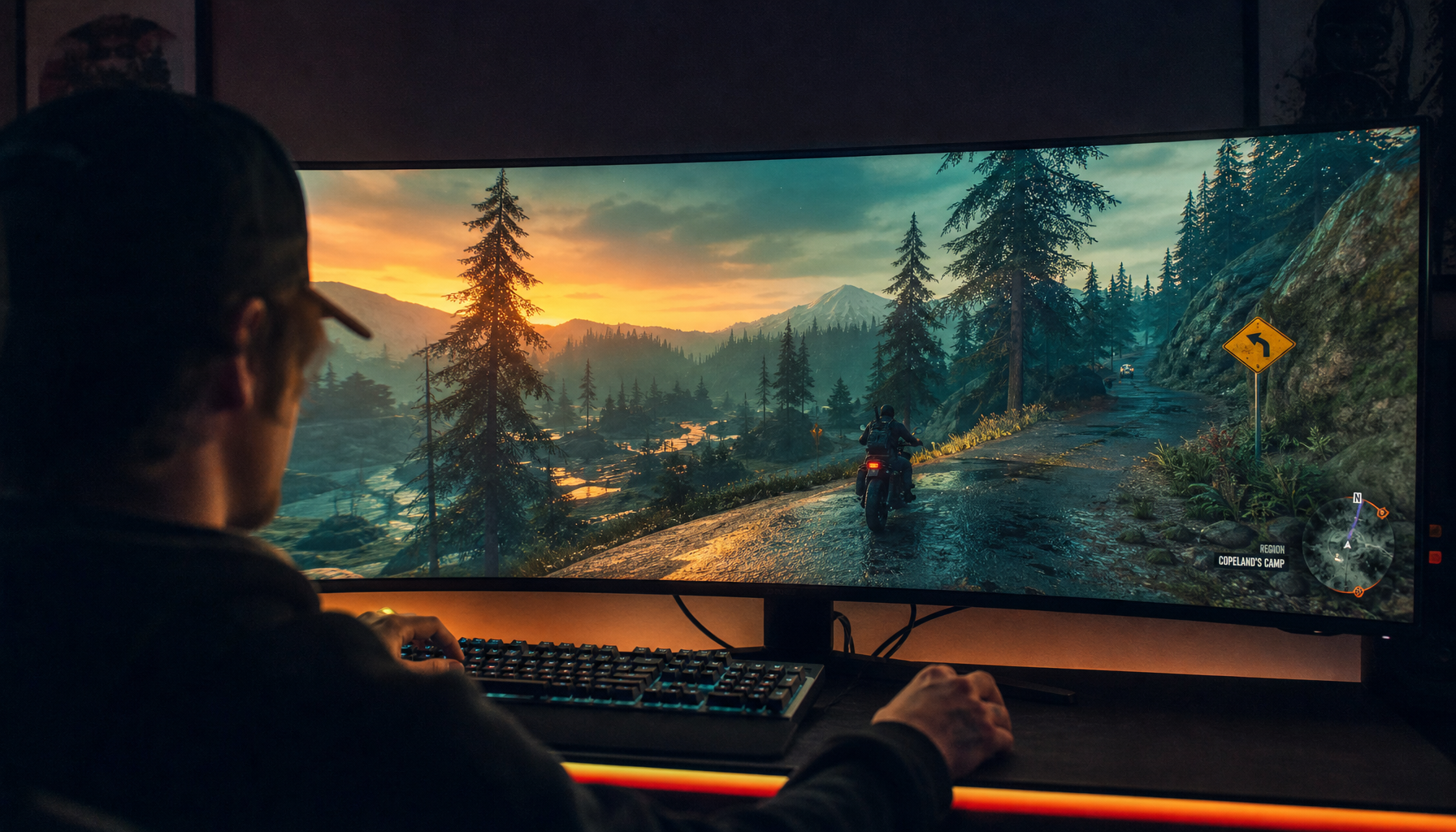
This is why HDR can feel more immersive in a racing game or cinematic RPG. Headlights, sunlight off metal, fire, muzzle flashes, and neon signs can sit above the normal scene brightness instead of being compressed into the same narrow SDR range. The monitor is not merely changing gamma; it is interpreting a wider luminance signal.

Gamma Versus EOTF: The Core Difference
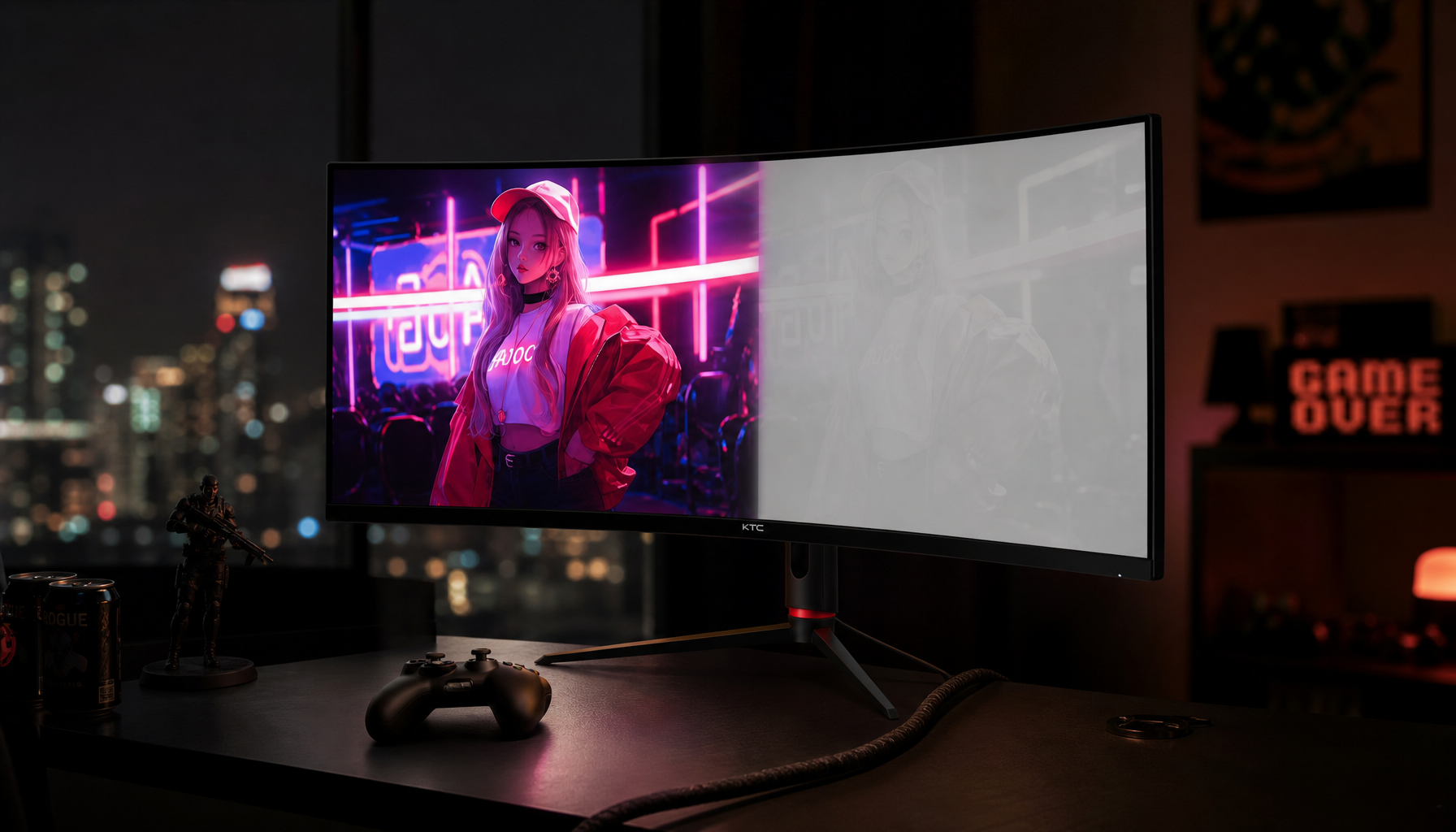
SDR gamma and HDR EOTF both describe tone mapping from signal to light, but they solve different problems. SDR gamma organizes a limited brightness range so images look natural on conventional displays. HDR EOTF manages a much wider brightness range so highlights, shadows, and midtones can be placed with greater intent.
Rendering mode |
Tone system |
Brightness behavior |
Best use |
SDR |
Gamma, commonly near 2.2 |
Relative to display settings |
Office work, web, SDR games, general desktop use |
HDR10 |
PQ EOTF |
More absolute luminance targets with tone mapping |
HDR games, HDR movies, console HDR, creator review |
HLG |
Hybrid Log-Gamma |
Broadcast-friendly HDR with SDR compatibility goals |
Live video, broadcast workflows, some streaming use |
A practical example is a 1,000-nit HDR movie on a 600-nit monitor. The monitor cannot display every highlight exactly as mastered, so it tone-maps the signal to fit its hardware. Tone mapping scales brightness and color to the display’s limits, ideally keeping highlight detail visible rather than clipping it into a blank white patch.
Why SDR Looks Wrong in HDR Mode
A common PC mistake is leaving HDR enabled all day. Desktop apps, browsers, spreadsheets, email clients, and most productivity tools are still fundamentally SDR experiences. Desktop and office apps are generally designed for SDR, so forcing them through HDR mode can skew gamma, color, and contrast.
This is the source of the familiar complaint that HDR looks washed out. Often, HDR is not the problem; the mismatch is. SDR content expects a gamma-based SDR pipeline, but the display is running in an HDR pipeline with different tone-mapping behavior. Some monitors also lock brightness, contrast, gamma, RGB balance, and color temperature controls in HDR mode, removing the normal tuning tools used for daily work.

For an office productivity display, that matters more than peak brightness. A monitor that makes spreadsheet gridlines pale, dark-mode panels uneven, or browser text less comfortable is hurting the job it is supposed to improve. For general desktop use, SDR with a calibrated 2.2 gamma target usually looks cleaner, more predictable, and easier on the eyes.
What Gamma Means for Gaming
For SDR gaming, gamma is both a competitive and visual-clarity setting. If gamma is too dark, enemy silhouettes and map detail can vanish in shadows. If gamma is too bright, contrast collapses and the world looks gray. Start with monitor gamma at 2.2, keep graphics-driver color controls at default, and adjust the game’s own brightness screen only after that.
For HDR gaming, the priority changes. The game, operating system, and monitor need to agree on HDR output, black level, and peak brightness. PC gaming HDR often needs to be enabled in the operating system, inside the game, and in the monitor’s on-screen display, especially when metadata exchange matters. Once HDR is working, the game’s HDR calibration screen is usually more important than the monitor’s old SDR gamma preset.
This is especially noticeable on OLED and Mini LED displays. OLED gives near-black precision and strong scene contrast, while Mini LED can drive higher full-screen brightness. Good HDR depends on contrast, black levels, brightness, color performance, and local dimming quality, not simply on an HDR badge in the spec sheet.
What Gamma Means for Office and Creative Work
For office work, gamma should be boring in the best way. A neutral SDR gamma near 2.2 supports readable text antialiasing, consistent gray UI panels, predictable charts, and comfortable dark mode. A portable smart screen used beside a laptop should also stay close to the laptop’s SDR behavior, or dragging a window between screens becomes visually distracting.

For creators, gamma errors become production errors. If your display’s SDR gamma is too dark, you may brighten photos or product images too much. If your gamma is too light, you may over-darken files that later look heavy on other screens. SDR remains valuable because its color and tone expectations are broadly standardized, which makes it practical for web images, thumbnails, ecommerce assets, and client review.
HDR creation is more demanding. HDR production can require specialized monitors, software, and post-production expertise, and creators often still need SDR versions for compatibility. A serious editing setup should treat SDR and HDR as separate deliverables, not one universal export setting.
Choosing a Monitor: Gamma Control Still Matters
A display can accept HDR input and still produce poor HDR. The panel must have the brightness, contrast, color depth, and dimming control to render the signal convincingly. A TV or monitor labeled HDR may only mean it can process the signal, not that it can truly display HDR contrast or color.
For gaming monitors, look for real HDR hardware: meaningful peak brightness, strong black levels, wide color coverage, and local dimming or OLED pixel-level control. HDR certification is more useful than vague marketing language because it sets tested expectations for brightness, gamut, and dimming behavior. For productivity displays, also make sure SDR mode offers usable brightness control, an sRGB or standard mode, and stable gamma options.
The right choice depends on use. A high-refresh SDR monitor can still be excellent for esports and office work. A strong HDR monitor earns its cost when you play HDR games, watch HDR movies, or review HDR creative work. A portable smart screen should prioritize predictable SDR first unless it has enough brightness and contrast to make HDR credible.
Practical Setup Advice
Use SDR mode for desktop work, web browsing, documents, dashboards, and non-HDR games. Set the monitor to standard, sRGB, creator, or custom mode, adjust brightness for the room, keep contrast near default unless whites clip, and choose gamma 2.2. A simple grayscale ramp should show smooth steps from near-black to near-white without sudden crushing or milky haze.
Use HDR mode only when the content is actually HDR. The HDR toggle can be switched when launching an HDR game or movie, then turned off afterward. Calibrate HDR with the operating system or console tool, then use the game’s HDR settings to match the display’s peak brightness and black floor.
For a dark-room movie setup, gamma 2.4 can make SDR films look deeper and more cinematic, but it is usually too heavy for a bright office. For a sunlit room or a portable monitor used near a window, gamma 2.2 with higher SDR brightness is often more practical than HDR that looks dim or inconsistent.
FAQ
Does HDR still use gamma?
HDR does not usually rely on traditional SDR gamma in the same way. HDR10 commonly uses the PQ EOTF, while HLG uses a different approach designed partly for broadcast compatibility. Your monitor may still expose gamma controls in menus, but true HDR rendering is driven more by EOTF tracking, metadata, tone mapping, and panel capability.
Should I change gamma for every game?
For SDR games, start at 2.2 and adjust only if the game’s own calibration screen suggests it. For HDR games, use HDR calibration instead of forcing SDR gamma changes. The goal is to preserve intended shadow detail without flattening the whole image.
Why does HDR look dimmer than SDR sometimes?
HDR can look dimmer because it reserves brightness headroom for highlights instead of making the entire image bright. If you normally run SDR at maximum brightness, a correctly mastered HDR scene may have darker average brightness but more realistic bright peaks.
Is 4K SDR better than 1080p HDR?
Resolution and dynamic range solve different problems. 4K SDR gives sharper pixel detail, while 1080p HDR can deliver stronger contrast and more realistic highlights if the display has real HDR capability. For competitive work, choose clarity and refresh rate first; for cinematic immersion, strong HDR can matter more than pixel count.
Gamma is the control language of SDR tone, while HDR uses a wider luminance system built around EOTF, metadata, and tone mapping. Treat them as separate modes, match the mode to the content, and your display will stop fighting you: SDR will look clean and reliable, while HDR will deliver the impact it was built for.