Chroma subsampling can preserve HDR brightness while reducing color detail, so highlights may still look intense even as saturated edges, text, UI elements, and gradients lose precision. For HDR gaming, creative work, and PC monitor use, 4:4:4 or RGB output is the cleanest choice when your display chain can support it.
Do bright HUD icons look slightly smeared, or does red text on a dark HDR scene feel less crisp than the monitor’s specs promised? In practical display testing, switching from 4:2:0 to 4:4:4 often makes the biggest visible difference in small text, color edges, and desktop UI clarity, even when the overall picture still looks vivid. Here is how chroma subsampling changes HDR color fidelity, when it matters, and how to choose the right setting for gaming, productivity, and portable display setups.
Chroma Subsampling, Explained Without the Fog
Chroma subsampling is a compression method that reduces color-detail data while preserving more brightness-detail data. It works because human vision is usually more sensitive to brightness and contrast than to color resolution, so video systems can remove some color information without making every image look obviously degraded. The common formats are 4:4:4, 4:2:2, and 4:2:0, and chroma subsampling is widely used across images, streaming video, disc media, cameras, and display interfaces.
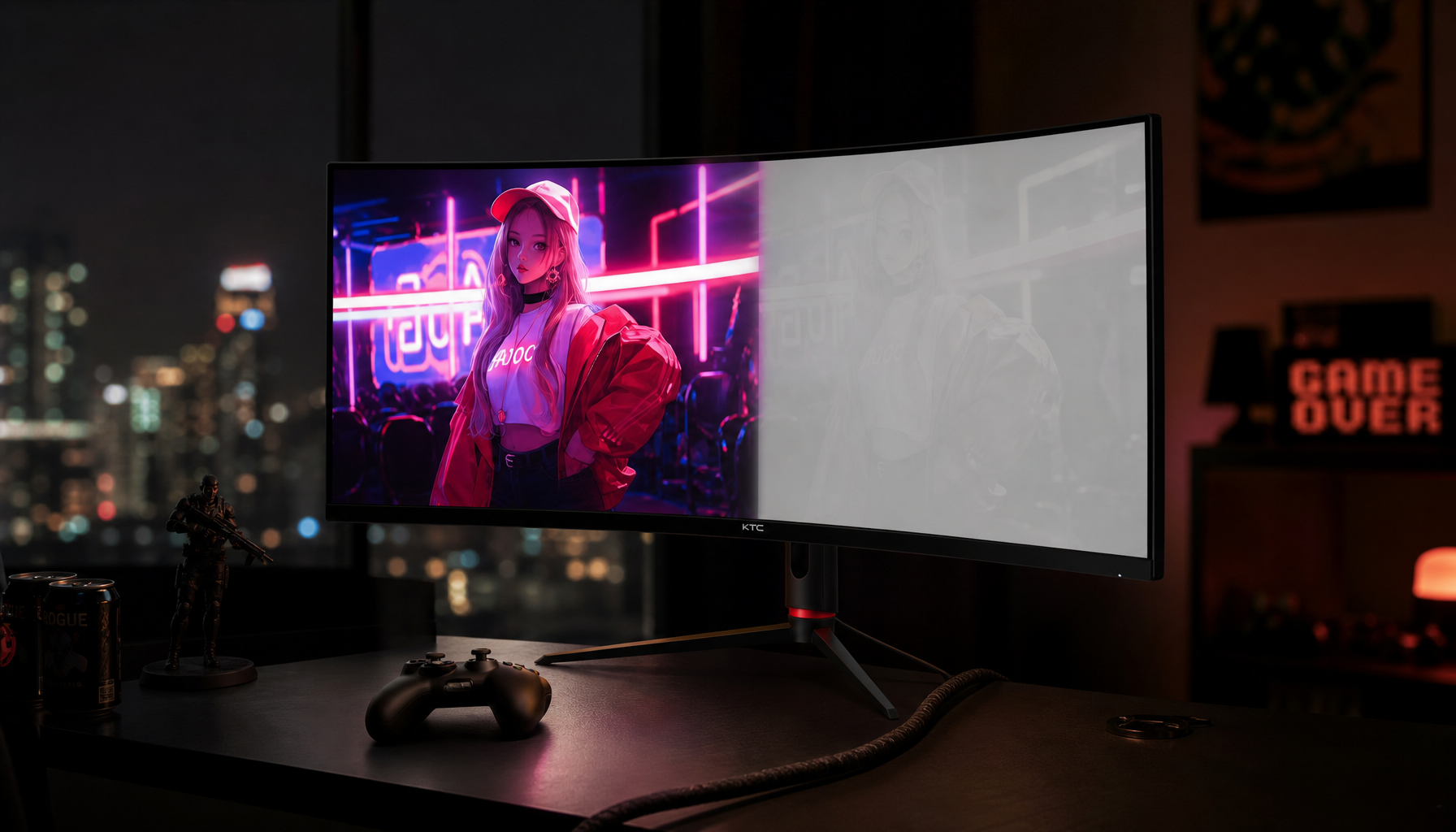
In 4:4:4, every pixel keeps full brightness and color information. In 4:2:2, horizontal color detail is reduced, so color transitions can soften from left to right. In 4:2:0, color detail is reduced both horizontally and vertically, which saves more bandwidth but can make fine colored details look blurry. For movies, that loss is often hard to spot. For a desktop, game launcher, spreadsheet, coding editor, or esports HUD, it can be obvious.

Format |
Color Detail |
Practical Effect |
Best Fit |
4:4:4 / RGB |
Full |
Sharpest color edges and text |
PC monitors, HDR gaming, design, productivity |
4:2:2 |
Medium-high |
Mild color softening |
Video capture, bandwidth-limited HDR, some consoles |
4:2:0 |
Reduced |
Most likely to blur text and fine saturated edges |
Streaming, movies, disc media, bandwidth-constrained playback |
Why HDR Makes the Trade-Off More Visible
HDR is not just brighter SDR. It depends on a wider brightness range, deeper contrast, and broader color reproduction. When chroma data is reduced, HDR can still deliver punchy highlights because luma detail is preserved, but color fidelity can suffer where the image depends on precise chroma transitions.
That distinction matters. A sunset in an HDR movie may still look rich at 4:2:0 because the scene has broad gradients and natural textures. A neon-red enemy outline, a cyan crosshair, or magenta text on a dark interface is less forgiving because the color edge itself carries the information. Artifacts are most noticeable around text, thin lines, alternating colors, and high-contrast color edges, which are exactly the elements modern gaming monitors and productivity displays show all day.

HDR also raises expectations. If you bought a 4K 120Hz monitor with 10-bit HDR support, you expect precision, not just brightness. A 4:2:0 signal may let the connection hit the resolution and refresh-rate target, but it can compromise the color structure that makes high-end displays feel clean and immersive.
Bandwidth Is the Real Reason This Happens
Chroma subsampling exists because video data is heavy. Higher resolution, higher refresh rate, wider color depth, and HDR all increase bandwidth demand. A 4K signal at 120Hz with 10-bit color can exceed what older display links can carry without trade-offs, so the system may reduce chroma detail to keep the image moving.
This is why users sometimes see a monitor advertise 4K 120Hz HDR but only get that mode with 4:2:0 over a limited video path. The available bandwidth on some older display links is lower than the requirement for uncompressed 4K 120Hz 10-bit 4:4:4, while 4:2:0 can reduce the load enough to fit. That does not mean 4:2:0 is bad. It means the display chain is making a performance trade: more motion or resolution, less color detail.
For a simple example, think of a 4K 120Hz HDR gaming setup. If the graphics card, cable, port, and monitor cannot carry full 10-bit RGB or 4:4:4 at that mode, you may be offered 4:2:2 or 4:2:0 instead. The game may still feel smooth, but small colored UI elements may lose crispness. If the monitor and graphics card support visually lossless display compression, that is often the better route because it is designed to preserve visual quality more effectively than dropping chroma resolution.
How It Affects Gaming Monitors
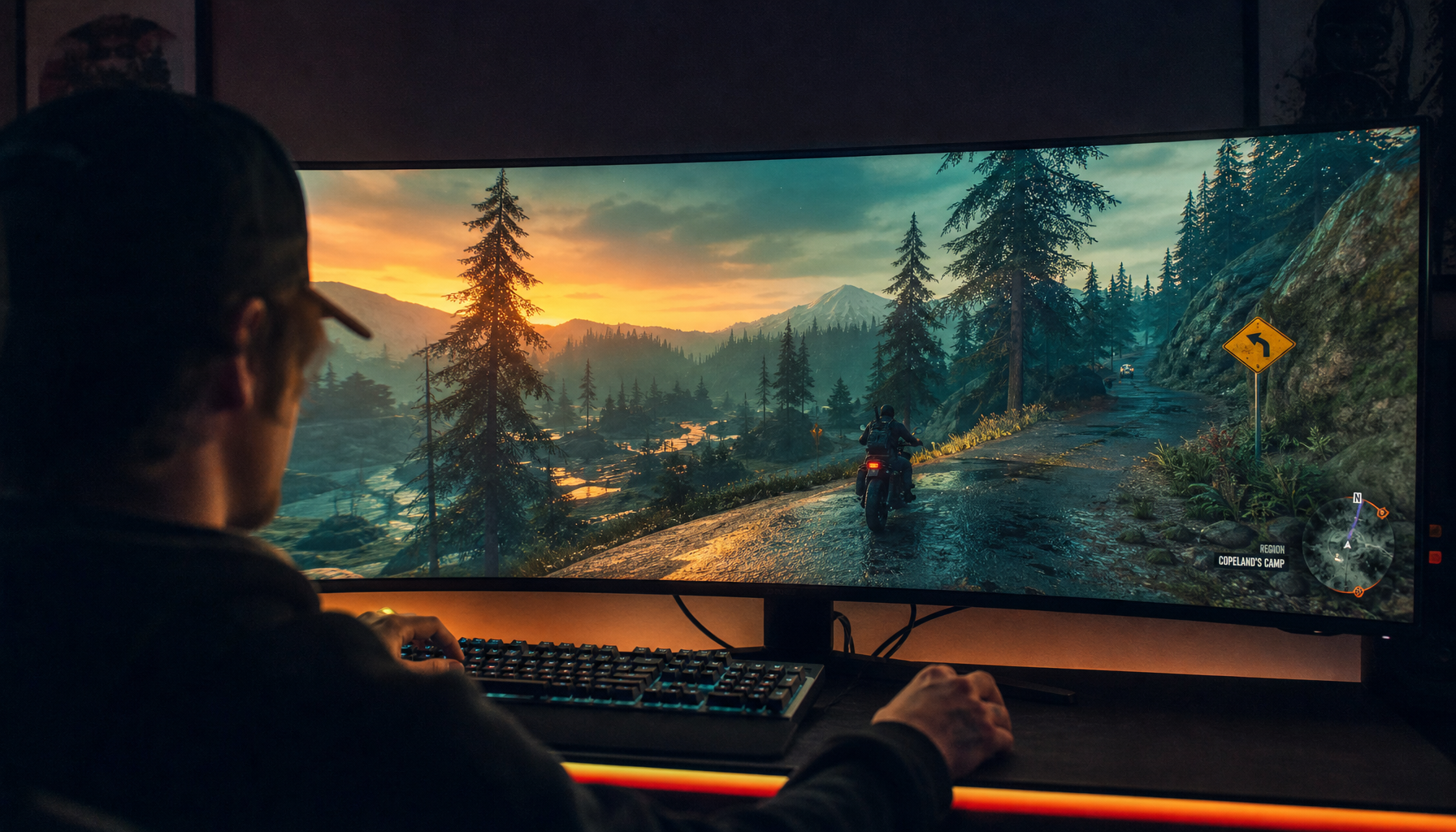
For competitive gaming, chroma subsampling matters most when UI precision matters. Player names, minimap icons, inventory text, reticles, damage indicators, and colored outlines can all become less clean under 4:2:0. The difference is easiest to see from normal desk distance on a 27-inch or 32-inch 4K monitor, where pixel density is high enough to make text sharp but close enough for chroma blur to reveal itself.
For cinematic console gaming from several feet away, the penalty may be smaller. Many games and video pipelines are designed around subsampled content, and motion can hide mild chroma loss. But for PC gaming, especially when you use the same screen for chat apps, browsing, launchers, streaming tools, and work, 4:4:4 or RGB should be the target. Full 4:4:4 data preserves chroma and luma at full resolution, which is the cleanest foundation before the panel, HDR tone mapping, and game engine do their own work.
The practical rule is direct: if you must choose between 4K 120Hz HDR at 4:2:0 and 4K 60Hz HDR at 4:4:4, choose based on the task. For esports motion, refresh may win. For desktop use, strategy games, UI-heavy titles, streaming overlays, and creator work, full chroma is usually worth more.
How It Affects Office and Productivity Displays
Productivity is where chroma subsampling gets exposed fast. Spreadsheets, browser tabs, presentations, charts, and dashboards contain sharp edges and colored text on flat backgrounds. Lower chroma resolution can make red, blue, or purple text look fuzzy even when black text still appears reasonably sharp.

This is why a large TV can look excellent with movies but disappointing as a monitor. On a 60-inch 4K display viewed from about 5 to 8 ft, full 4:4:4 support becomes important if you are reading dashboards, comparing documents, or running multiple application windows. Professional large-format displays also differ from TVs because they are often chosen for continuous operation, uniformity, control inputs, and PC-friendly signal handling rather than only living-room video performance.
For office users, the check is simple. Set the source device to RGB or YCbCr 4:4:4, enable the display’s enhanced video or PC mode if needed, and view a chroma test pattern at 100% scaling. If colored text blurs into the background, your chain is not delivering full chroma cleanly.
Portable Smart Screens and Single-Cable Workflows
Portable monitors add another variable: connection simplicity. A single cable that carries video and power is convenient, but not every path has the same bandwidth. A portable 4K HDR screen may behave differently depending on the laptop port, cable, hub, refresh rate, and power mode.
For travel productivity, 4:4:4 matters more than peak brightness if you spend the day reading text. For portable gaming, refresh rate and latency enter the decision. A 1080p or 1440p portable screen at high refresh with full chroma can feel cleaner than a 4K portable mode forced into reduced chroma by a weak cable or adapter. Portable monitor technology is built around flexibility, but HDR fidelity still depends on the whole signal path, not the panel spec alone.
A reliable buying move is to check whether the monitor supports the resolution, refresh rate, HDR mode, and chroma format you actually plan to use. Marketing pages may highlight 4K, HDR, and single-cable input separately, but the valuable question is whether those features work together.
Pros and Cons of Chroma Subsampling in HDR
The advantage is efficiency. 4:2:2 can reduce bandwidth by about one third compared with 4:4:4, and 4:2:0 can save even more. That can prevent dropped frames, reduce file size, enable higher refresh rates, or make demanding video modes possible on limited connections. 4:2:2 sampling often remains close to visually transparent for natural video because brightness detail stays intact.
The downside is that chroma subsampling is visually lossy. Once color detail is removed, the display must reconstruct missing chroma information. That reconstruction can soften colored edges, reduce saturation in fine details, and make HDR interfaces look less precise. The loss is not evenly visible across all content, which is why one person may say 4:2:0 looks fine in movies while another immediately notices blurry desktop text.
Practical Settings for Better HDR Color Fidelity
For a PC monitor, start with RGB full range or YCbCr 4:4:4 at the monitor’s native resolution. Use a verified high-bandwidth path when you need 4K, high refresh, 10-bit color, and HDR together. Use certified cables, avoid low-quality adapters, and check the graphics control panel after changing refresh rate because some systems silently switch chroma format when bandwidth gets tight.
For a TV used as a monitor, enable the enhanced video format or PC input label, then test text clarity. For console movie playback, 4:2:0 is usually acceptable because most movies, TV, streaming, and disc sources are already mastered that way. For creator workflows, record or export higher-quality intermediates when possible, then compress only at final delivery.
Also remember that chroma format is not the only HDR quality factor. Bit depth, tone mapping, color gamut, calibration, peak brightness, black level, and panel technology all matter. A poorly tuned 4:4:4 HDR mode can still look inaccurate, while a well-mastered 4:2:0 movie can look excellent. The goal is to avoid unnecessary chroma loss when your content depends on fine color detail.
FAQ
Does 4:4:4 make every HDR movie look better?
Not usually. If the movie source is already 4:2:0, forcing 4:4:4 output will not recreate missing original color detail. It may help the display chain avoid extra degradation, but it will not turn a subsampled master into a true 4:4:4 master.
Is 4:2:2 acceptable for HDR gaming?
It can be acceptable when bandwidth is limited and you want high-refresh HDR, especially from normal couch distance or in motion-heavy games. For PC gaming with small text, overlays, and sharp HUD elements, 4:4:4 or RGB is the better target.
Should I choose 10-bit 4:2:2 or 8-bit 4:4:4?
It depends on content. For HDR video and gradients, 10-bit can reduce banding. For desktop text and UI clarity, 4:4:4 is usually more important. On a gaming or productivity monitor, the ideal answer is 10-bit with 4:4:4 or RGB through a high-bandwidth connection.
Final Word
Chroma subsampling does not destroy HDR, but it can quietly reduce the color precision that makes a premium display feel premium. For video-first viewing, 4:2:0 is often efficient and acceptable; for HDR gaming, desktop work, creative review, and portable productivity, aim for 4:4:4 or RGB and make sure the cable, port, graphics card, and monitor can actually deliver it.