Motion Blur Reduction changes with refresh rate because the monitor has more or less time to finish pixel transitions, time its backlight strobe, and match each flash to delivered frames. The cleanest result usually comes from a stable FPS-to-Hz match, not simply the highest refresh number in the menu.
Does your aim feel crisp at 120Hz but oddly doubled or dim at 144Hz or 240Hz? A practical setup check can reveal whether the issue is frame pacing, strobe timing, brightness loss, or panel response. The payoff is simple: sharper motion when tracking enemies, scrolling timelines, or using a portable screen for fast visual work.
Motion Blur Reduction Is Not Just More Hz
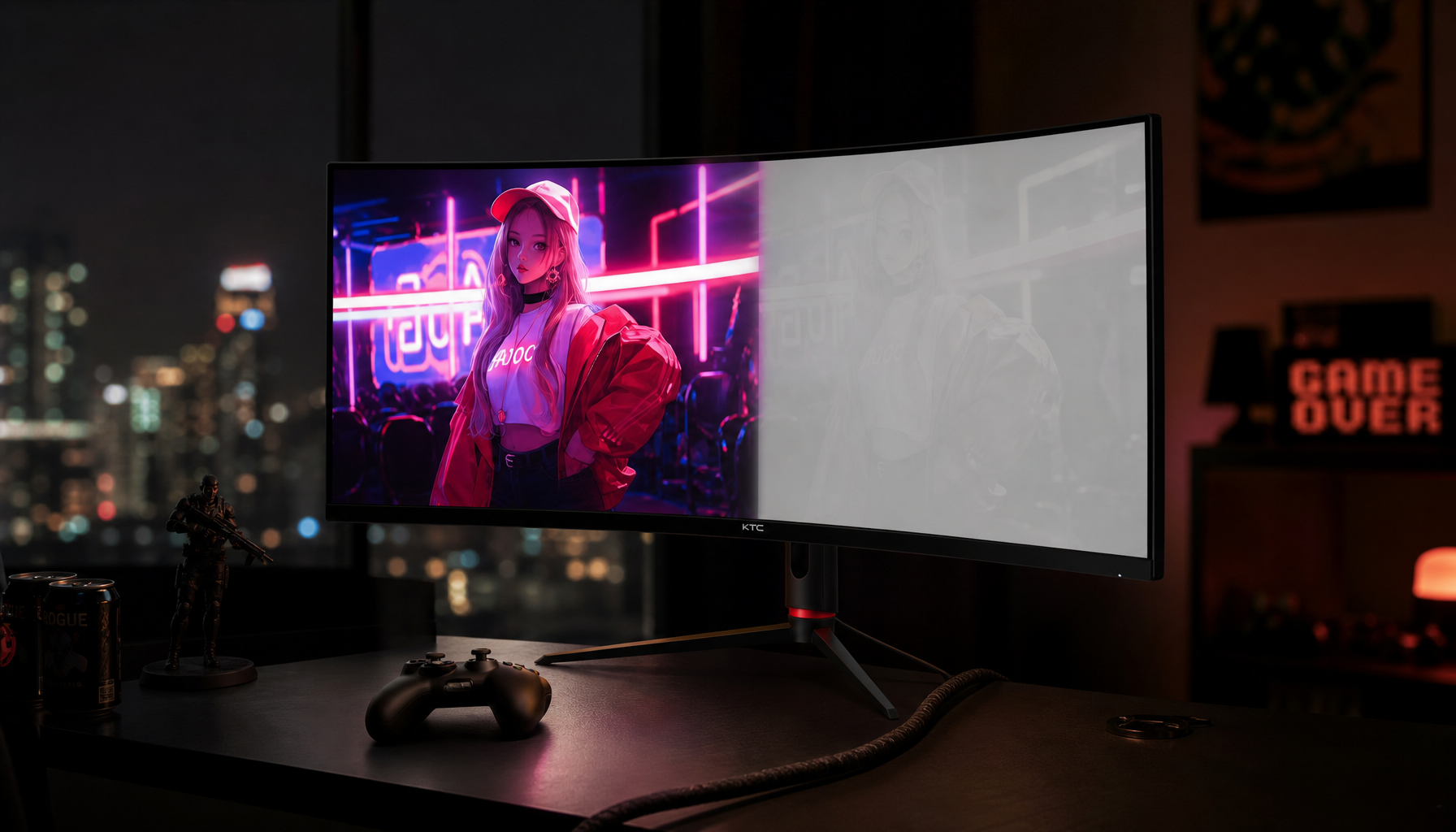
Motion Blur Reduction, often labeled MPRT, backlight strobing, or a motion clarity mode, works by reducing how long each frame stays visibly lit. Instead of leaving the backlight on continuously, the display briefly hides pixel transitions and flashes the image when the frame is closer to ready. That is why motion blur reduction can make movement look closer to old CRT-style clarity in fast games.
Refresh rate is the number of times the display updates each second, while frame rate is the number of frames your PC or console actually produces. A monitor set to 144Hz refreshes every 6.9 ms, while 120Hz refreshes every 8.3 ms and 240Hz refreshes every 4.2 ms. That timing window matters because the panel has to change pixels, settle the image, and fire the strobe at the right moment. System display settings guidance also notes that higher refresh rates can improve gaming smoothness, tearing, blur, and responsiveness, but the available settings depend on the display’s supported capabilities and current resolution.

The key point for buyers and tuners is that Motion Blur Reduction is a timing system, not a magic sharpness switch. A well-tuned 120Hz strobe can look cleaner than a poorly tuned 240Hz strobe if the panel response, brightness, and frame pacing line up better at 120Hz.
Why 120Hz Can Look Cleaner Than 144Hz or 240Hz
Many monitors have a sweet spot below their maximum refresh rate. At a lower setting, the display has more time between refreshes, so LCD pixels are more likely to finish their gray-to-gray transitions before the strobe flash. That reduces strobe crosstalk, the double-image artifact where moving objects appear duplicated, often worse near the top or bottom of the screen.
For example, if a 144Hz monitor shows smeared player outlines with MBR enabled, dropping to 120Hz may give the panel roughly 1.4 ms more per refresh cycle to settle. That sounds tiny, but in display timing it can be enough to turn a messy flash into a cleaner one. MBR quality depends on the monitor, system performance, game, drivers, picture settings, and implementation, so strobing often works better below the monitor’s maximum refresh rate when FPS stays stable and close to the selected Hz.
Higher refresh can still win when the panel and strobe tuning are excellent. A premium 240Hz monitor with strong pixel response and good strobe calibration may deliver outstanding clarity. But if its pixels are still transitioning when the backlight fires, the result can be brighter-looking motion trails, inverse ghosting, or double images. In practice, refresh rate is only one part of the chain.
The FPS Match Is the Real Performance Gate
Motion Blur Reduction performs best when FPS, refresh rate, and strobe rate are locked together. If the monitor strobes at 120Hz but the game fluctuates between 92 and 118 FPS, the display may repeat frames or flash uneven frame intervals. That makes motion look jittery, even if raw pixel blur is reduced.

This is why competitive players often prefer a stable 120 FPS at 120Hz over a shaky 144 FPS target at 144Hz. PC gaming refresh-rate guidance makes the same core distinction: the monitor’s Hz and the game’s FPS are related but separate, and the best high-refresh experience comes when the system can deliver enough frames to match the display.
Here is the practical calculation. At 120Hz, every refresh arrives every 8.3 ms. If your frame time jumps from 8.3 ms to 13 ms during a firefight, that frame misses the clean strobe rhythm. At 240Hz, the target is even stricter at 4.2 ms per frame, so a system that feels fast enough without strobing can suddenly look inconsistent with MBR enabled.
Refresh setting |
Frame time target |
What MBR needs |
Common result if FPS misses |
100Hz |
10.0 ms |
Stable 100 FPS |
Easier lock, more visible flicker for some users |
120Hz |
8.3 ms |
Stable 120 FPS |
Often a strong clarity-and-stability balance |
144Hz |
6.9 ms |
Stable 144 FPS |
Sharper if locked, messier if frame pacing varies |
240Hz |
4.2 ms |
Stable 240 FPS |
Excellent when hardware and panel tuning are strong |
Brightness, Flicker, and Comfort Change With the Setting
Backlight strobing improves perceived motion clarity by shortening visible frame time, but shorter flashes reduce brightness. KTC’s comparison of Motion Blur Reduction and Adaptive Sync notes that strobing commonly reduces brightness by about 30% to 50%, which can make the image feel dim or washed out in a bright room.
This is one reason the same monitor may feel great at 144Hz in a dim office but uncomfortable at 100Hz during a long evening session. Lower strobe frequencies can make flicker easier to notice. Higher strobe frequencies can feel smoother to sensitive users, but they leave less time for the panel to finish transitions. The tradeoff is personal and technical at the same time.

For office productivity and portable smart screens, MBR is usually less important than pixel density, brightness comfort, and stable scrolling. A 100Hz or 120Hz productivity display can feel smoother for spreadsheets, web pages, and design tools without needing strobing at all. For portable monitors, battery draw and brightness headroom matter, so lowering refresh rate may be the more reliable value choice when unplugged.
Motion Blur Reduction vs Adaptive Sync
Adaptive Sync and Motion Blur Reduction solve different problems. Adaptive Sync matches the monitor’s refresh behavior to fluctuating GPU output, which reduces tearing and stutter. Motion Blur Reduction uses strobing to reduce persistence blur, but usually wants a fixed refresh rate and locked FPS. That is why many monitors make you choose between variable refresh rate and MBR.

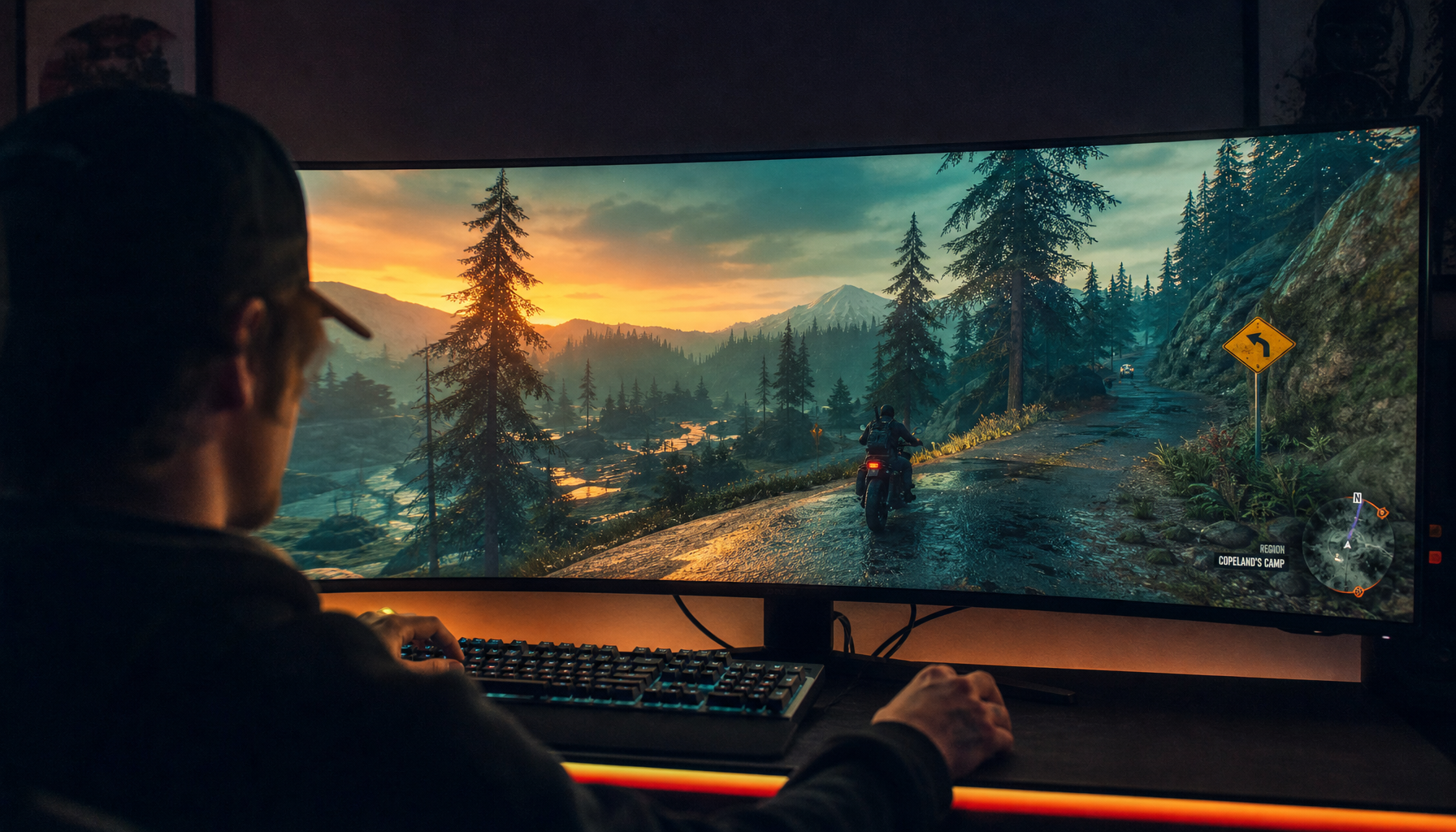
For a cinematic RPG, open-world game, or demanding AAA title where FPS rises and falls, Adaptive Sync usually feels better. The motion may be less razor-sharp, but camera movement is smoother and less interrupted. A refresh-rate explainer makes the same broader point that Adaptive Sync dynamically matches display refresh to GPU output to reduce tearing, stuttering, and uneven motion.
For a competitive shooter where your system can hold 120, 144, or 240 FPS with tight frame pacing, Motion Blur Reduction can be the sharper tool. It helps with tracking strafing opponents, reading recoil movement, and keeping map detail clearer while turning. The reliable setup is not enabling every performance feature. It is choosing the one that matches the workload.
How to Tune MBR by Refresh Rate
Start by turning off in-game motion blur, because software blur can hide what the monitor is actually doing. Then set the operating system to the refresh rate you want to test, since new displays can default to 60Hz even when the panel supports more. Use advanced display settings, select the target display, and choose its refresh rate.
Next, test MBR at 120Hz before assuming the maximum refresh setting is best. If your monitor supports 100Hz, 120Hz, 144Hz, and 240Hz strobing, compare them in the same game scene and in a motion test. An overview of Motion Blur Reduction emphasizes its value for fast games but also points out that implementation quality varies, which is exactly why visual testing matters.
If 144Hz strobing looks doubled, cap the game at 120 FPS and run 120Hz MBR. If 240Hz strobing looks clean but too dim, raise brightness if the monitor allows it or use the mode only for competitive sessions. If flicker causes fatigue, turn MBR off and use Adaptive Sync. If you see inverse ghosting, reduce overdrive from Extreme to a more balanced setting, because aggressive overdrive can create bright halos that strobing makes easier to notice.
Pros and Cons at a Glance
Benefit or drawback |
What it means in real use |
Sharper motion |
Easier target tracking, clearer scrolling, better fast-camera readability |
Lower perceived blur |
MPRT improves because each frame is visible for less time |
Reduced brightness |
The image can look dimmer, especially in bright rooms |
Flicker sensitivity |
Some users may feel eye strain or headaches during long sessions |
Crosstalk and double images |
Poor timing or slow pixel response can create duplicated moving objects |
VRR conflict |
Many monitors make you choose between Adaptive Sync and MBR |
Best Refresh-Rate Choices by Use Case
For esports, choose the highest refresh rate where your system can hold FPS steadily and the strobe image stays clean. That may be 120Hz on a 144Hz monitor, 144Hz on a 240Hz monitor, or the full 240Hz on a display with excellent response tuning. For productivity, keep the refresh rate high enough for smooth scrolling, but skip MBR unless you are doing motion-sensitive testing or animation review. For portable screens, prioritize native resolution, readable brightness, and battery life before chasing strobing modes.

Low-frame-rate virtual environment research reinforces a useful principle: persistence affects how continuous or jumpy motion feels, and low-persistence techniques can reduce visual artifacts when frame timing is constrained. That does not mean every low-refresh MBR mode is automatically better. It means the visible time of each frame is a real performance variable, and the best setting is the one where frame delivery, panel response, and comfort align.
Bottom Line
Motion Blur Reduction performs differently across refresh rates because every Hz setting changes the timing budget. For the cleanest, most reliable result, test 120Hz or 144Hz before max refresh, lock FPS to match, avoid aggressive overdrive, and switch back to Adaptive Sync when frame rates fluctuate. The best display setup is the one that makes motion easier to read without sacrificing comfort, brightness, or control.