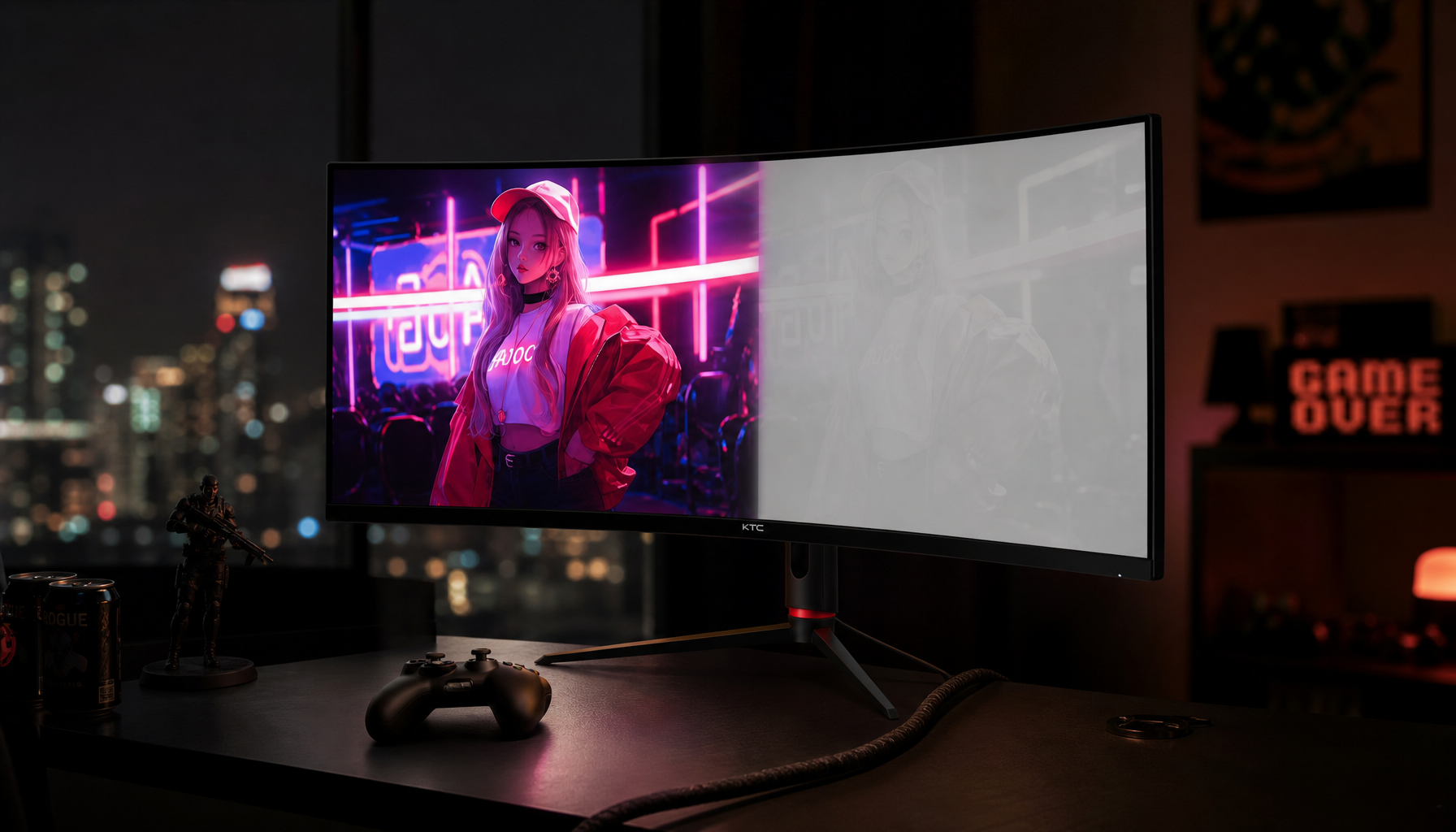
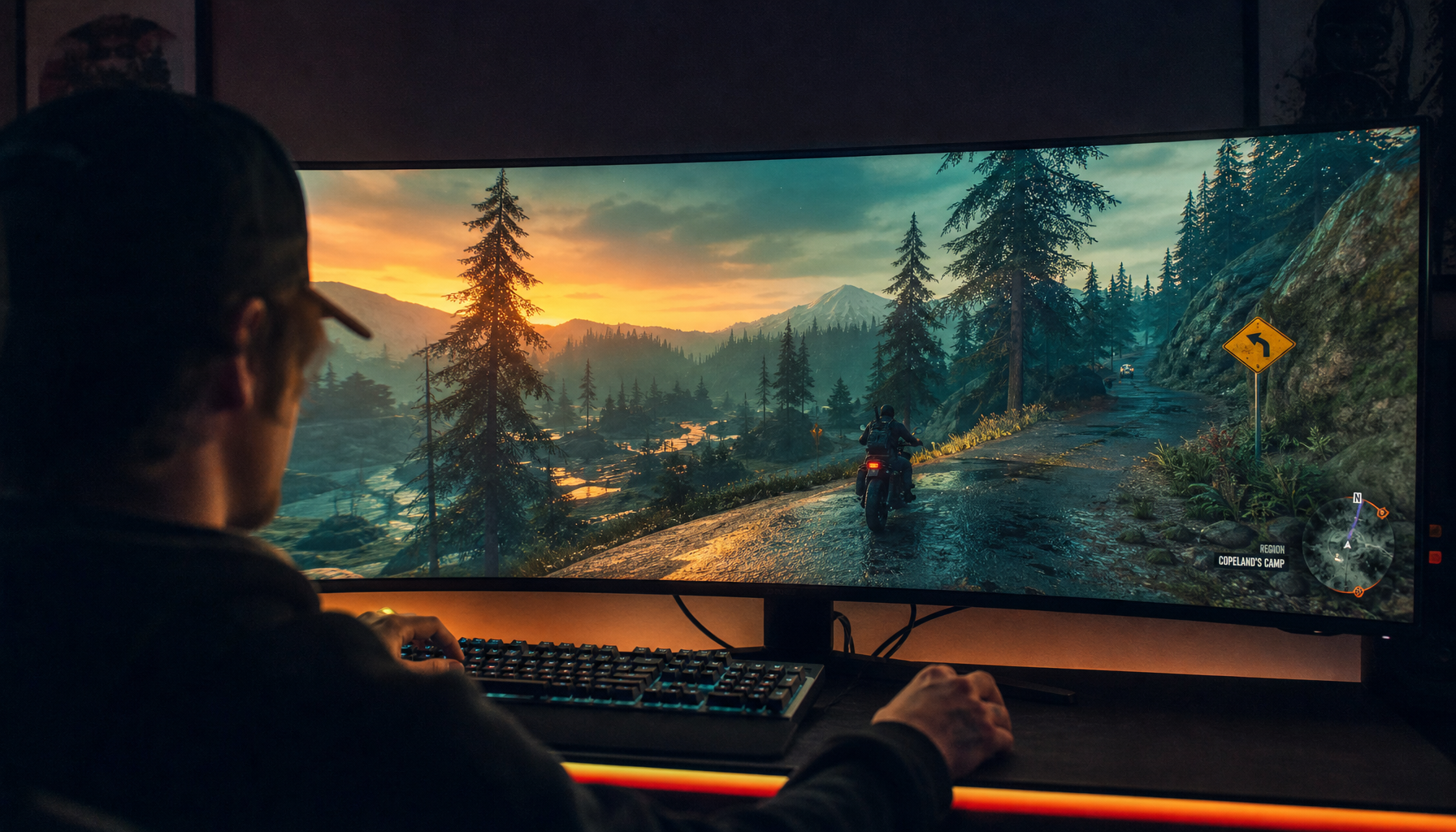
Motion blur reduction can deliberately introduce pulsing or dark intervals, which may cause visible flicker, eye strain, headaches, or discomfort in susceptible users. Anyone with known photosensitivity should treat strobing modes as optional and disable them immediately if symptoms appear.
Does a sharper competitive-gaming image leave you with tired eyes, a headache, or an uneasy feeling after a short session? A practical A/B test at your normal desk brightness can help identify whether the monitor’s motion mode is the trigger.
Why Motion Blur Reduction Can Flicker
Modern displays commonly use a sample-and-hold approach: each frame remains visible until the next refresh. When your eyes track a moving target, that persistent image can look blurred even if pixel transitions are fast. LCD motion blur is therefore not only a response-time problem.
Motion blur reduction, sometimes called MBR or backlight strobing, reduces perceived blur by briefly turning the backlight off between visible frames. OLED displays can use black-frame insertion because they do not have a conventional backlight. The technique can make fast camera pans and scrolling targets look much sharper, but the darker intervals are a form of intentional flicker.

This matters because “flicker-free” marketing usually describes ordinary brightness control, not every optional performance mode. Enabling strobing can change an otherwise comfortable monitor into a pulsed display.
Can It Affect Photosensitive Users?
Yes, potentially. The level of risk depends on the person, strobe frequency, pulse timing, brightness, room lighting, peripheral vision, session length, and displayed content. Susceptibility varies significantly, so another user’s comfort is not a reliable benchmark for your own.

The same display can also produce different-looking artifacts for different reasons. A display-enthusiast forum discussion distinguishes visible edge vibration at lower frame rates from motion blur at higher frame rates and notes that sensitivity thresholds vary widely. Strobe backlights are another flicker source entirely.
A monitor setting cannot diagnose photosensitivity. If flickering light has previously caused a seizure, aura, migraine, nausea, dizziness, or other concerning symptoms, do not experiment with strobing modes without guidance from a qualified medical professional. Stop using the mode immediately if symptoms begin.
The Performance Tradeoff
Strobing can deliver a substantial clarity improvement when the conditions are right. Published testing has reported 85% to 92% less motion blur at 120 frames per second and Hz with strobing than at 60 Hz operation. The cost is reduced illumination time, which can lower brightness and make flicker more noticeable.
Display mode |
Best use |
Main benefit |
Main drawback |
Standard high refresh |
Office work and mixed use |
Stable, predictable image |
More persistence blur during tracking |
Adaptive Sync |
Games with variable frame rates |
Less tearing and stutter |
Some displays may show sync-related flicker |
Motion blur reduction |
Competitive games with stable frame rates |
Sharper moving targets |
Reduced brightness and intentional flicker |
Aggressive overdrive |
Limited use when carefully tuned |
Faster pixel transitions |
Inverse ghosting and bright or dark trails |
At 60 Hz, each frame remains visible for about 16.7 milliseconds. At 120 Hz, that interval drops to about 8.3 milliseconds. Higher refresh rates can improve motion clarity even before strobing is enabled, making standard high-refresh operation the better starting point for sensitive users.
The motion blur reduction comparison estimates that strobing commonly reduces brightness by 30% to 50%. It also recommends Adaptive Sync as the default for most gamers, while reserving blur reduction for competitive players who can maintain a locked frame rate.
How to Test Your Monitor Safely
Start with motion blur reduction disabled. Set the display to its native resolution and a supported high refresh rate, then use the monitor for your normal workload or game session. If the image is comfortable, you have established a baseline.
If you do not have a known photosensitivity condition and choose to test MBR, begin with a short session in a normally lit room. Avoid testing in darkness, because a pulsing screen can become the dominant light source. Try a fixed 120 Hz or 144 Hz mode first if your monitor supports it, and keep the frame rate stable rather than chasing a higher but inconsistent average.
For example, a competitive game fluctuating between 85 and 144 frames per second may look worse with strobing than with Adaptive Sync. A stable 120 frames per second at 120 Hz is a more appropriate test case. If moving objects appear doubled, brightness becomes uncomfortable, or symptoms emerge, disable MBR.
A cell phone camera can provide a quick supporting check for rolling bands or pulsing, but it is not a medical safety test. Camera shutter behavior can exaggerate or miss flicker. Your comfort during real use is the decisive factor.
Separate Strobe Flicker From Other Problems
Not every unstable image comes from motion blur reduction. Flickering may also come from refresh-rate conflicts, GPU drivers, damaged cables, unstable power, automatic brightness controls, adapters, or failing hardware. A useful first step is to disable the monitor’s MBR setting and check whether the issue disappears immediately.
The monitor flickering troubleshooting advice recommends checking the native refresh rate, GPU drivers, ports, cables, and power delivery. If flicker continues with MBR disabled across multiple devices, test a different cable, outlet, port, and room location before blaming the panel.
Ghosting is also different from flicker. Monitor ghosting appears as faint trails behind moving objects and is often linked to pixel response time or overdrive tuning. Increasing overdrive may reduce ghosting, but an extreme setting can produce inverse ghosting. That adjustment will not remove intentional strobe flicker.
Choosing the Right Mode for Your Use Case
For office productivity, coding, document scrolling, and portable-screen use, keep blur reduction off. A stable, high-refresh display with comfortable brightness is usually more valuable than maximum motion sharpness during prolonged sessions.
For cinematic games with variable frame rates, use Adaptive Sync when available. It is designed to reduce tearing and stutter as GPU output changes.
For competitive gaming, MBR can be worthwhile when the game holds a consistent frame rate and you tolerate the pulsing comfortably. Test the exact monitor implementation because strobe quality varies. Some modes introduce image duplication, crosstalk, restricted brightness controls, or limited refresh-rate support.

A CRT-like level of motion clarity remains a meaningful benchmark for enthusiasts. A real-world display comparison describes how fine textures and scrolling backgrounds can lose detail on sample-and-hold displays without blur reduction. The improvement is real, but it is not universally comfortable.
Final Verdict
Motion blur reduction is a precision tool, not an always-on upgrade. It can produce a cleaner, more competitive image, but the underlying strobing may be unsuitable for photosensitive users. Prioritize comfort first: use standard high-refresh operation or Adaptive Sync, and enable MBR only when its benefit is clear and its flicker causes no symptoms.