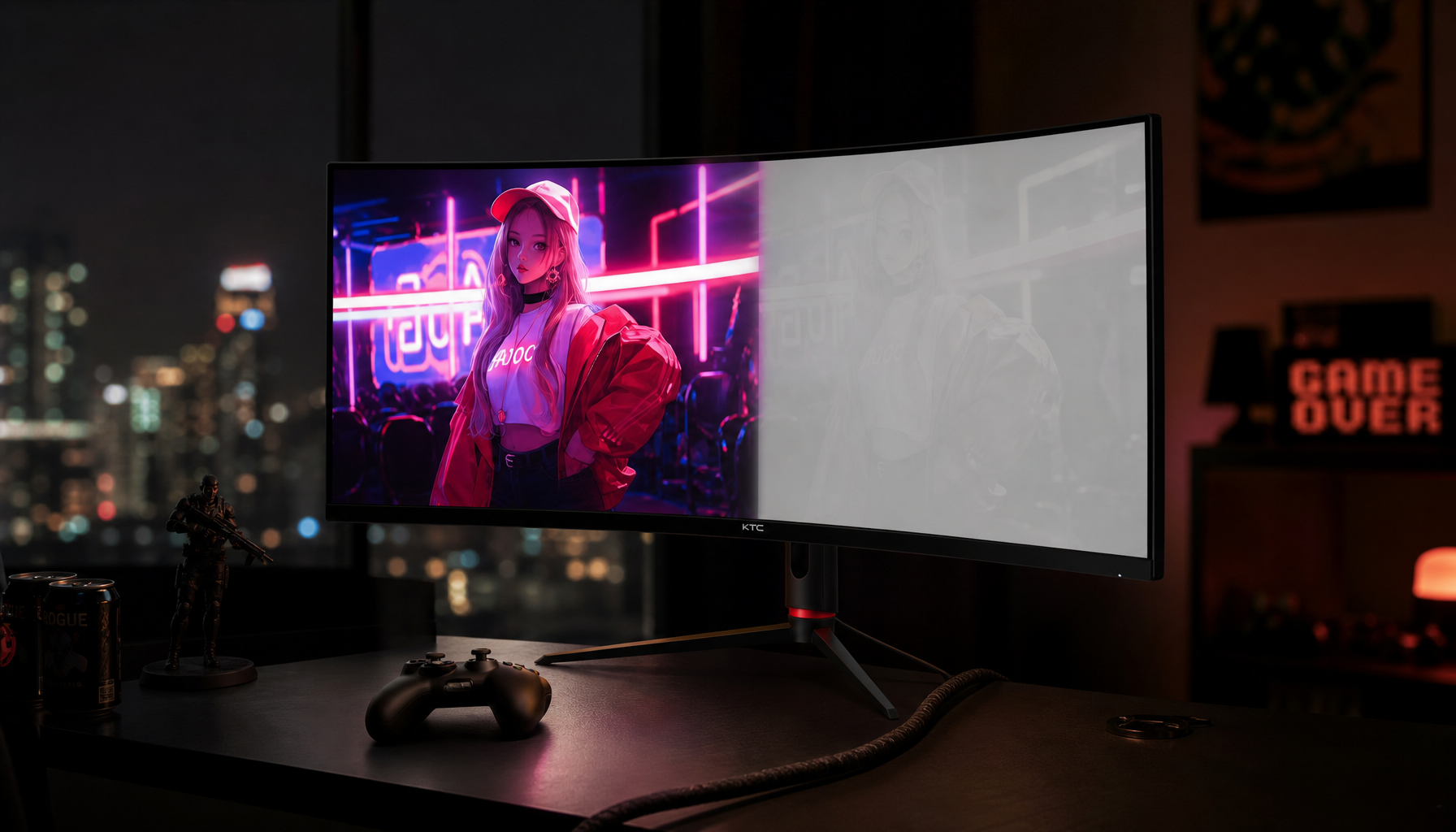
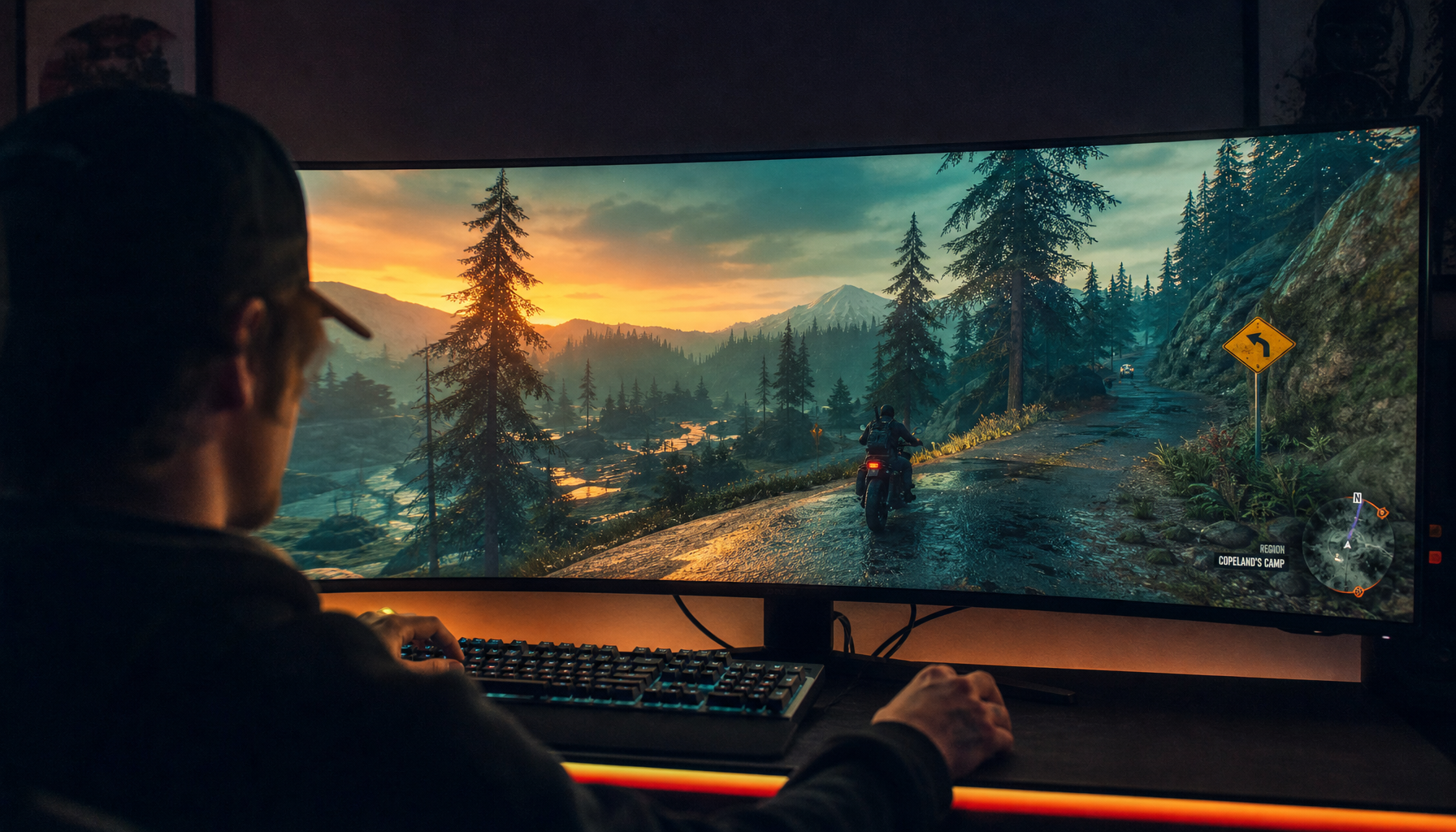
HDR10 can look washed out on HDR400 displays because the content carries a high-range HDR signal, while the monitor often lacks the brightness, contrast control, color volume, and tone mapping strength to reproduce it convincingly.
Does your game look flatter after you turn HDR on, with gray blacks, muted highlights, and colors that somehow feel less alive than SDR? In real-world setup work, the fastest improvement usually comes from checking whether the display is merely accepting HDR10 or actually has enough hardware headroom to show it well. You’ll learn why HDR400 often struggles, when it can still be useful, and how to tune or shop for a better result.
HDR10 and HDR400 Are Not the Same Kind of Claim
The first trap is semantic. HDR10 is a content and signal format. DisplayHDR 400 is a monitor certification tier. One tells you what kind of HDR signal the display can receive; the other gives a minimum performance class for the screen itself.
HDR10 is the most widespread HDR format, and it commonly uses 10-bit color with static metadata. That metadata gives the display broad information about the brightness and color intent of the content, but it does not make a panel brighter, darker, or more colorful. A display still has to map that HDR signal into its own physical limits.
DisplayHDR 400 means the monitor reaches a basic 400-nit peak brightness target. That can be brighter than many older office displays, but it is modest for modern HDR gaming, movie playback, or creative review. A bright explosion, neon sign, or sunlit cloud in HDR10 may have been mastered with much higher highlight targets in mind. When a 400-nit monitor receives that signal, it must compress the image. If that compression is crude, the image lands in the dull middle: lifted shadows, weak highlights, and colors that feel drained.
Here is the practical distinction.
Label |
What It Means |
What It Does Not Guarantee |
HDR10 |
The source signal is HDR-compatible and uses static metadata |
Strong brightness, deep blacks, or good tone mapping |
DisplayHDR 400 |
The monitor meets an entry-level HDR performance tier |
Premium HDR contrast, local dimming, or cinematic highlight impact |
DisplayHDR 600/1000+ |
Higher HDR performance targets |
Perfect image quality on every panel or in every room |
HDR10+ and similar formats |
Dynamic metadata can guide scene-level tone mapping |
Better results without compatible content, device, and display support |
Why HDR400 Often Looks Flat Instead of Immersive
The most common reason is limited contrast, not just limited brightness. HDR is supposed to show bright highlights and deep shadows at the same time. Many HDR400 monitors use edge-lit or globally lit LCD backlights, so the whole panel brightens or dims together. Without local dimming, a small white HUD element, moon, muzzle flash, or reflection can raise the backlight and make black areas look gray.
One display-analysis critique is blunt: DisplayHDR 400 requires only 400 nits, global dimming, sRGB-class color coverage, and true 8-bit color. That is why two monitors can both advertise HDR but behave completely differently. A 27-inch gaming monitor with no local dimming may accept an HDR10 signal, while a mini-LED or OLED display can create much stronger separation between dark and bright image zones.
A simple example makes the issue obvious. Imagine a night racing game with headlights, wet asphalt, and city signage. On a strong HDR display, the headlights punch through while the road stays dark and reflective. On a typical HDR400 LCD, the monitor may lift the whole scene to make the headlights visible, so the road turns gray and the signs lose intensity. The monitor is not failing to receive HDR; it is running out of room to display it.

Static Metadata Makes Weak Displays Work Harder
HDR10 uses static metadata, meaning one set of brightness instructions applies across the whole movie, episode, or game output. That is efficient and widely compatible, but it puts pressure on the display’s tone-mapping engine. A quiet indoor scene and a desert noon scene may need very different handling, yet the display has to make broad decisions with limited scene-specific guidance.
HDR10+ adds dynamic metadata to help compatible displays adjust more intelligently, and other dynamic-metadata formats use a similar idea within their own ecosystems. The practical point is not that HDR10 is bad. The practical point is that HDR10 on a limited HDR400 display leaves more room for rough tone mapping. If the monitor protects highlight detail too aggressively, the whole picture can look dim. If it tries to keep the image bright, highlights may clip and shadows may wash out.
This is why a premium HDR10-only display can outperform a cheap display with more logos on the box. Hardware capability still wins. Brightness, black level control, color volume, and processing quality decide what reaches your eyes.
Desktop Settings, Games, and SDR Apps Can Make the Problem Worse
Many washed-out complaints happen on PCs because the whole desktop path gets involved. The operating system may be running HDR output while your browser, launcher, chat app, or productivity software is still SDR. That mixed environment requires conversion. When the SDR brightness balance is off, the desktop can look hazy, too dim, or oddly pale even before you launch a game.
A community discussion captures the real frustration well: GPU drivers, displays, game settings, and capture tools can all affect whether HDR appears correct. In practice, one wrong mode can sink the experience. The monitor may be in a vivid HDR preset, the game may have its own peak brightness slider set too high, or the operating system may be sending HDR to the wrong display in a multi-monitor setup.
For office productivity, leaving HDR on all day is often not the performance move. Spreadsheets, email, dashboards, and SDR web pages usually look more consistent in calibrated SDR. HDR is best treated as a content mode for HDR games, movies, video review, and photo workflows, not as a universal desktop upgrade.

What to Adjust Before You Blame the Monitor
Start with the obvious but often-missed check: confirm the content is truly HDR. A streaming app, game, or video file can carry an HDR label in one place and still output SDR because of browser support, subscription tier, cable bandwidth, GPU settings, or display mode. For 4K at 60 Hz with HDR, use a cable and port combination that supports the required bandwidth; otherwise, the system may reduce chroma, refresh rate, bit depth, or HDR behavior.
Next, use the monitor’s most accurate HDR mode rather than its most aggressive one. Modes named HDR Standard, HDR Cinema, Creator, BT.2020, DCI-P3, or Custom are usually better starting points than vivid showroom presets. Turn off dynamic contrast tricks, black equalizers, exaggerated saturation boosts, and eco brightness controls while testing. Those features can help in a bright store aisle, but they often destroy repeatability.
Then calibrate inside the actual device or game. Console HDR calibration screens, operating-system HDR calibration, and in-game peak brightness sliders matter because they tell the software how far it can push highlights before the monitor clips or compresses. If the screen asks you to raise a symbol until it barely disappears, do that in your normal room lighting, not under direct sunlight or a desk lamp reflecting off the panel.

Finally, compare against SDR honestly. If HDR on your HDR400 monitor looks worse than a well-tuned SDR mode, use SDR for that title or workflow. That is not a failure of your taste; it is a rational choice. Competitive players often prefer SDR because visibility, latency, and consistency matter more than cinematic highlights.
When HDR400 Is Still Worth Having
HDR400 is not useless. It can be a worthwhile bonus on a reliable monitor with strong SDR quality, good refresh rate, low input lag, decent factory color, and enough brightness for a mixed-use desk. If you are upgrading from an older 250-nit office display, HDR400 can add a little highlight lift and better compatibility with modern content.
The value problem appears when HDR400 is marketed like a premium HDR experience. Entry-level HDR can help with basic playback and occasional games, but it should not drive the purchase by itself. In practice, HDR400 is often closer to enhanced SDR than a dramatic leap, which matches what many display reviewers and users report.
For gaming monitors, prioritize refresh rate, response behavior, adaptive sync, input lag, panel quality, and motion clarity first if esports is the main job. For immersive single-player gaming, HDR becomes more important, but that is where you should look harder at DisplayHDR 600, DisplayHDR 1000, OLED, QD-OLED, or mini-LED models with meaningful dimming.
What to Buy If You Want HDR That Looks Like HDR
A more reliable HDR display usually has higher peak brightness, strong native or active contrast, wide color coverage, and local dimming or per-pixel illumination. OLED and QD-OLED panels can deliver deep blacks because individual pixels emit light, though bright-room black levels and full-screen brightness can vary by model. Mini-LED LCDs can reach higher sustained brightness, but they need enough dimming zones and good algorithms to avoid haloing around bright objects.

HDR does not make a display intrinsically brighter, so a logo is not enough. Treat the box badge as the start of your research, then check measured brightness, contrast behavior, DCI-P3 coverage, bit depth, local dimming, input lag, and independent reviews. For HDR editing or serious visual work, 1,000-nit-class displays or better are a stronger target, especially with controlled lighting and trustworthy factory or hardware calibration.
For portable smart screens, be even more skeptical. Many portable displays advertise HDR10 support because they can accept the signal, but power limits and slim backlights often prevent strong HDR brightness. If you want a portable screen for console gaming, camera monitoring, or travel productivity, look for clear brightness specifications, usable color modes, and manual tone-mapping controls instead of trusting the HDR logo alone.
Quick FAQ
Should I turn HDR off on an HDR400 monitor?
If HDR makes games or movies look gray, dim, or less colorful than SDR, turn it off for that content and use a well-calibrated SDR mode. Keep HDR available for titles that include good calibration controls and look better after tuning.
Is HDR10 the reason the image is washed out?
Usually, no. HDR10 is the delivery format, while the washed-out look usually comes from limited display hardware, weak tone mapping, incorrect system settings, or a mismatch between HDR and SDR content paths.
Is DisplayHDR 600 enough?
DisplayHDR 600 is a more credible starting point because it generally implies higher brightness and stronger HDR requirements than HDR400. It is still not automatically premium, so local dimming quality, contrast, and real review measurements remain important.
The Practical Verdict
HDR400 certification means basic HDR capability, not full HDR impact. For a performance-first setup, use HDR400 as a compatibility bonus, tune it carefully, and do not hesitate to run SDR when it looks cleaner. If you want HDR10 content to look vivid instead of washed out, buy for the panel’s real brightness, contrast control, color volume, and tone mapping, not the smallest HDR badge on the spec sheet.