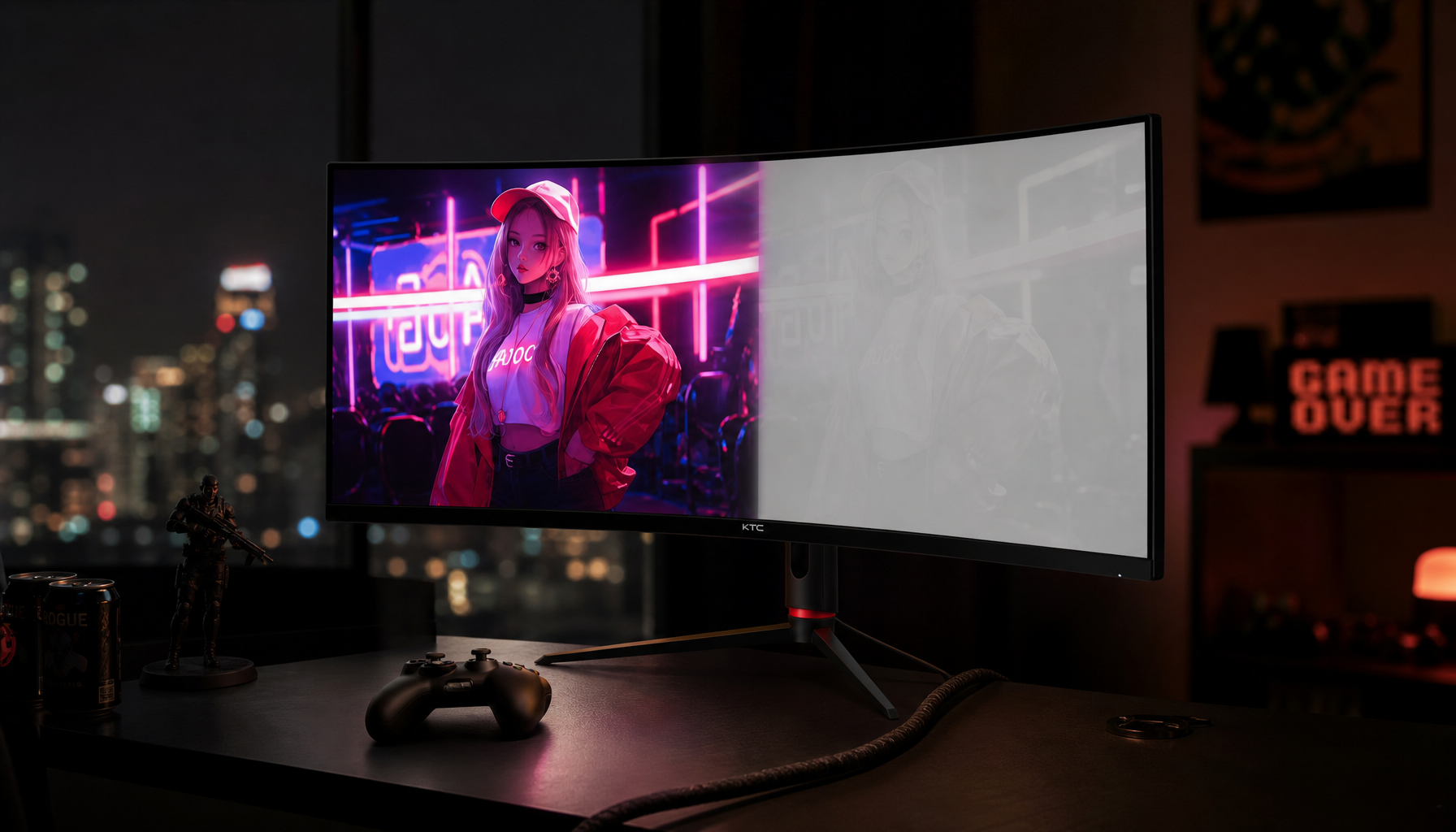
Bright highlight clipping happens when 1,000-nit HDR detail is squeezed into a display that can reproduce only about 600 nits, and the tone-mapping curve runs out of room before it preserves texture, color, and smooth roll-off.
Do explosions, sun glints, clouds, or neon UI elements suddenly turn into flat white patches on your HDR600 monitor? A simple same-scene comparison between SDR, HDR, and a lower HDR brightness setting can usually separate a bad content grade from a display tone-mapping limit. Here’s why it happens, how to spot it, and which settings help protect highlight detail without making the whole image dull.

Why HDR1000 Content Challenges HDR600 Displays
HDR content is built around a much larger brightness container than many real-world screens can fully reproduce. Tone mapping is the display’s process of fitting HDR brightness, black detail, and color volume into its own hardware limits, which is exactly where HDR1000-to-HDR600 clipping begins.
The simple math is unforgiving: if a scene contains highlight detail graded up to 1,000 nits and your screen peaks around 600 nits, the display must compress the top 400 nits of highlight information into a smaller range. If that compression is too aggressive or arrives too late in the curve, everything above the display’s ceiling lands on the same value. A lightning strike that should show a bright core, edge glow, smoke texture, and color variation may instead become one flat patch.
This does not mean HDR600 is useless. For gaming monitors, office displays, and portable smart screens, a well-tuned HDR600 panel can look punchy, responsive, and dramatically better than weak “HDR compatible” hardware. The tradeoff is that the display must choose between preserving peak sparkle and risking clipping, or lowering overall brightness to preserve more gradation.
What Clipping Actually Means on a Screen
In imaging terms, dynamic range is the ratio between the highest and lowest luminance levels an image can represent or display. Clipping occurs when the signal asks for more brightness than the capture, processing, or display pipeline can carry, causing different bright values to collapse into one identical output.
On an HDR600 display, this often appears as clouds with no structure, lamps that lose glass detail, white armor in a game that loses surface texture, or snow that looks like a solid white slab. In some cases, clipping can also look gray or dirty rather than clean white, especially if tone mapping tries to recover information that is no longer meaningfully separated.
The key distinction is recoverable compression versus hard clipping. Recoverable compression still keeps visible steps between bright tones, even if the image is less intense than the HDR1000 master. Hard clipping removes those steps. Once bright detail has been flattened at the display output, you cannot see the original texture on that screen unless another tone-mapping path preserves it.
The Main Causes of Highlight Clipping
The Display Runs Out of Peak Brightness
HDR tone mapping exists because HDR content can exceed the physical brightness limits of the display showing it. An HDR600 monitor cannot reproduce a 1,000-nit specular highlight at 1,000 nits, so it must either compress it downward or clip it at the top.
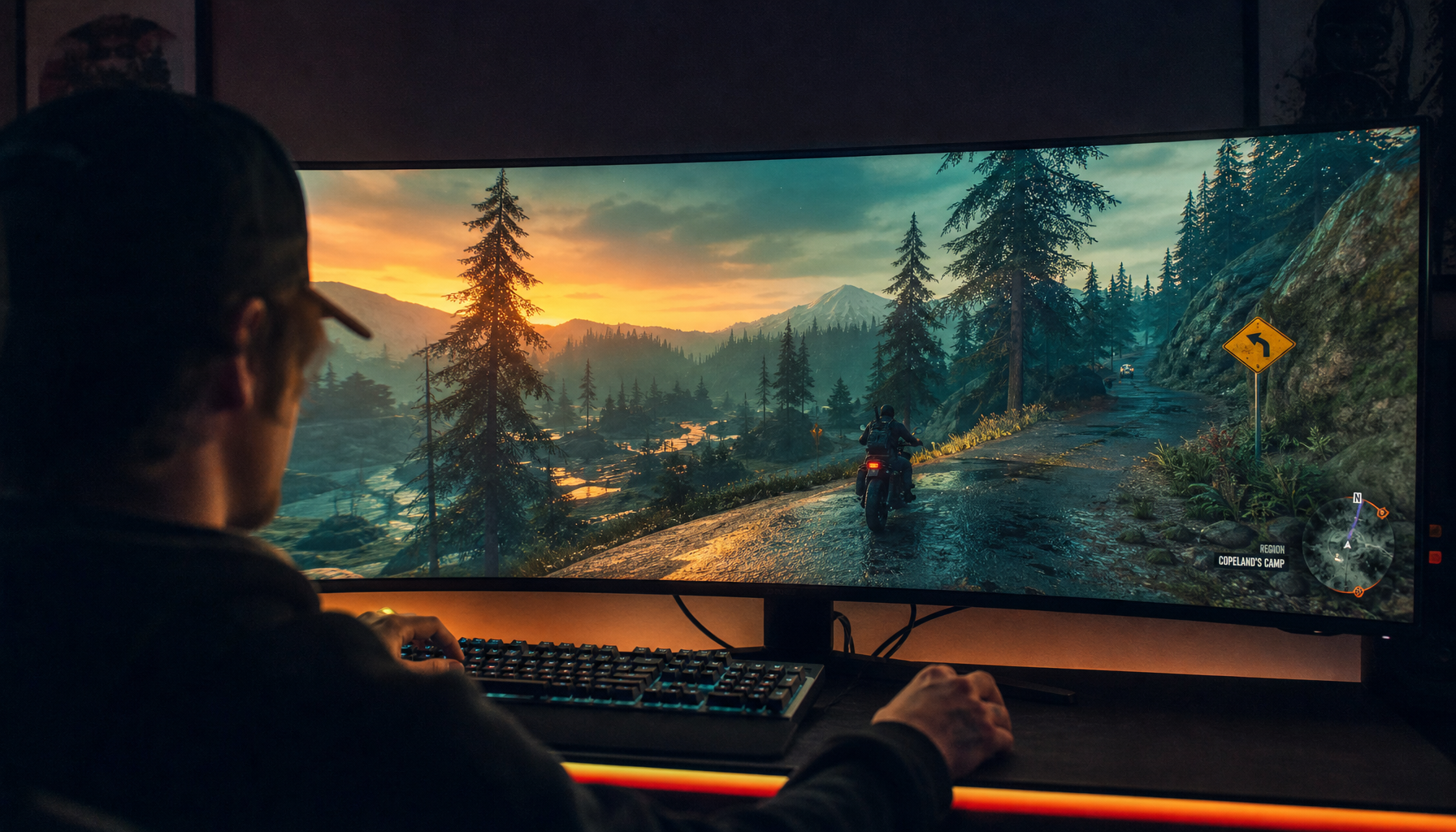
A practical example is a racing game at sunset. The road, cockpit, and sky may sit comfortably within the screen’s range, but sun reflections on wet pavement may be graded far above 600 nits. If the monitor prioritizes midtone brightness, those reflections can hit the ceiling and lose the subtle bands that make wet asphalt look convincing.

An HDR600 display can still deliver strong perceived contrast in a controlled room, especially if it has decent local dimming or OLED-like black levels. Its limitation is reduced highlight headroom compared with an HDR1000 display, which gives the tone-mapping algorithm less space to preserve both brightness impact and fine detail.
Static Tone Mapping Uses One Curve Too Broadly
HDR10 commonly relies on static metadata, meaning the display receives limited brightness guidance for the whole movie, episode, or game rather than precise instructions for every scene. Static tone mapping can therefore create a curve that works for one bright sequence but performs poorly when the scene changes.
Imagine a film with one fireball mastered near 1,000 nits but many scenes that peak much lower. If the monitor uses a conservative curve based on the brightest moment, the whole presentation may look dim. If it uses a more aggressive curve to keep the movie lively, that fireball may clip. Neither result is a failure of HDR itself; it is the cost of applying one mapping strategy to content with changing brightness demands.
Dynamic tone mapping improves this by adjusting scene by scene or frame by frame. It is not magic, because a 600-nit screen is still a 600-nit screen, but it can decide more intelligently when to protect highlight texture and when to let specular highlights stay intense.
The Highlight Roll-Off Is Too Sharp
A good HDR image does not simply stop at peak brightness. It rolls into white smoothly, so bright objects still feel luminous without looking digitally cut off. Tone-mapping techniques are often judged by their ability to reduce dynamic range while preventing halos and highlight clipping, because the transition into peak white matters as much as the peak itself.
On a monitor, a sharp roll-off looks like a cliff. A white cloud may show shape until one brightness level, then abruptly become blank. A smoother roll-off gently compresses the top end so the same cloud keeps contour, even though it cannot reach the original HDR1000 brightness.

For display buyers, this is why the badge alone is not enough. Two HDR600 monitors can behave very differently: one may preserve fine highlight texture but look slightly less explosive, while another may look brighter in a showroom and clip more often in real content.
Color Channels Can Clip Unevenly
Highlight clipping is not always neutral white. In digital imaging, red, green, and blue channels can hit their limits at different times, which can shift bright colors in unnatural ways. HDR photography discussions around over-processing often warn about blown highlights, grainy skies, and halos because the problem is not only brightness; it is also tonal and color integrity.
On a gaming monitor, uneven channel clipping may show up as a bright orange explosion turning yellow-white, a blue energy effect losing saturation, or a sunset cloud becoming oddly pale. The screen may technically be showing HDR, but the color volume has exceeded what the panel and tone map can maintain at that brightness.
This is especially visible on compact or portable HDR screens where peak luminance, color volume, and thermal limits are tighter. A portable smart screen may accept the HDR10 signal cleanly but still compress saturated highlights more severely than a larger, brighter monitor.
How to Tell Whether the Content or Display Is the Problem
The fastest practical test is to compare the same HDR scene across modes and screens. HDR displays depend on both expanded brightness and deeper blacks with visible detail, so a clipping problem may come from the content grade, the operating system HDR path, the cable bandwidth, the monitor’s tone map, or the panel’s real contrast.
Start with a familiar bright scene: a sunlit cloud, an explosion, a lamp, a bright game HUD, or a reflection on metal. Lower the in-game HDR peak brightness from 1,000 nits toward 600 nits if the game allows it. If texture returns, the monitor was being asked to map beyond its comfort zone. If the patch remains blank at lower settings, the highlight may already be clipped in the content or in the rendering pipeline.

For PC users, also check whether enabling HDR changed refresh rate or color settings. A screen that drops from 120 Hz to 60 Hz, switches chroma format, or changes picture mode may look worse for reasons that are not strictly clipping. The performance-minded setup is the one that keeps the full signal path stable: proper cable, correct GPU output, calibrated HDR level, and a monitor mode that does not bury useful controls.
Best Settings for HDR1000 Content on HDR600 Monitors
For games, the cleanest starting point is to set the game’s HDR peak brightness close to the display’s real peak, not the content’s theoretical peak. If the game asks for maximum luminance and your monitor is effectively a 600-nit display, choose a value near 600 nits, then use the test pattern until the brightest symbol is barely visible rather than completely gone.
For movies and streaming, use the most accurate HDR picture mode available before adding extra punch. Dynamic tone mapping can preserve highlight detail and shadow visibility better than a single static curve, but it may also change the creator’s intended brightness balance. If the monitor offers “HGIG,” “HDR Peak,” “Tone Mapping,” or “Brightness Stabilizer” controls, test them with the same bright scene instead of judging from a menu label.
For productivity displays, leave HDR off for everyday SDR desktop work unless you specifically need HDR preview, HDR video playback, or HDR game testing. SDR apps can look washed out or inconsistent under a system-wide HDR mode, and that can make your monitor feel less reliable for spreadsheets, design review, and long office sessions. Turn HDR on when the content benefits from it, then calibrate for that use case.
HDR600 vs. HDR1000: Practical Tradeoffs
HDR1000 displays have more room to reproduce bright highlights, so they usually need less aggressive compression when playing 1,000-nit content. HDR600 displays can still be the better value if they offer strong contrast, accurate color, low input lag, and stable brightness behavior. The right choice depends on whether you prioritize peak spectacle, balanced image quality, or desk-friendly reliability.
Display target |
Strength |
Limitation |
Best fit |
HDR600 |
Better value, lower power, often practical for mixed work and play |
More compression for 1,000-nit highlights |
Office plus gaming, compact setups, portable screens |
HDR1000 |
More highlight headroom and stronger HDR impact |
Higher cost, more heat, quality still depends on dimming and calibration |
Immersive gaming, HDR video, creator review |
HDR with dynamic tone mapping |
Smarter scene adaptation |
Can alter intended brightness balance |
Mixed HDR10 content and varied room lighting |
The most reliable buying question is not “Does it accept HDR?” but “How well does it map real HDR content into its own panel limits?” A strong HDR600 monitor with disciplined tone mapping can outperform a poorly tuned brighter display in day-to-day use, especially for users who move between games, video, documents, and portable workflows.
When Clipping Is Acceptable
Not every clipped pixel is a defect. Direct light sources, sparks, laser effects, and tiny specular reflections can clip without damaging the scene, because our eyes do not expect texture inside the center of a bare bulb or the core of the sun. The problem is clipping in meaningful surfaces: cloud edges, snow, skin sheen, polished metal, game UI elements, or product highlights where detail communicates shape.
HDR photography workflows make the same distinction. Bracketed HDR capture is valuable because it preserves more image data for editing, but even then the goal is not to flatten every bright object into perfect detail. The goal is controlled brightness: preserve what matters, let harmless peaks stay brilliant, and avoid the fake gray look of over-recovered highlights.
That principle applies directly to HDR600 monitors. You do not need to crush the entire image just to save every sparkle. You need a curve that protects important highlight structure while allowing small peaks to feel intense.
FAQ
Should I set every HDR game to 1,000 nits because the content is HDR1000?
No. If your display peaks around 600 nits, setting the game to 1,000 nits can push highlights beyond the monitor’s comfortable mapping range. Use the game’s calibration screen and choose the point where the brightest detail is barely visible, which is often closer to the display’s real peak.
Does dynamic tone mapping eliminate clipping?
Dynamic tone mapping reduces clipping risk by adapting the curve to each scene or moment, but it cannot create brightness the panel cannot produce. It is a smarter compression strategy, not a hardware upgrade.
Is HDR600 enough for serious gaming?
Yes, if the monitor has good contrast control, low input lag, clean motion handling, and useful HDR calibration. For cinematic HDR impact, HDR1000 or better usually gives more highlight headroom, but HDR600 can be a strong value-oriented choice when tuned well.
Final Word
HDR1000-to-HDR600 clipping is not a mystery; it is a headroom problem shaped by tone mapping, metadata, roll-off, and panel capability. Match your game or content peak to the display, use dynamic tone mapping when it genuinely protects detail, and judge HDR quality by real scenes rather than the badge on the box.