Local dimming can make a monitor visibly brighten or dim when you move between a white webpage, a dark app, and a mixed-content tab because the backlight recalculates zones for each new image. The effect is usually a tuning tradeoff, not an immediate sign that the display is defective.
Does your Mini-LED or FALD monitor pulse brighter when you switch from a dark chat page to a white document, then dip again when you go back? A practical test can usually separate local dimming behavior from driver, HDR, or VRR flicker in under 10 minutes by changing only two or three settings. You’ll learn what is happening, when to disable it, and how to keep HDR impact without making office work feel unstable.

What Local Dimming Is Actually Doing
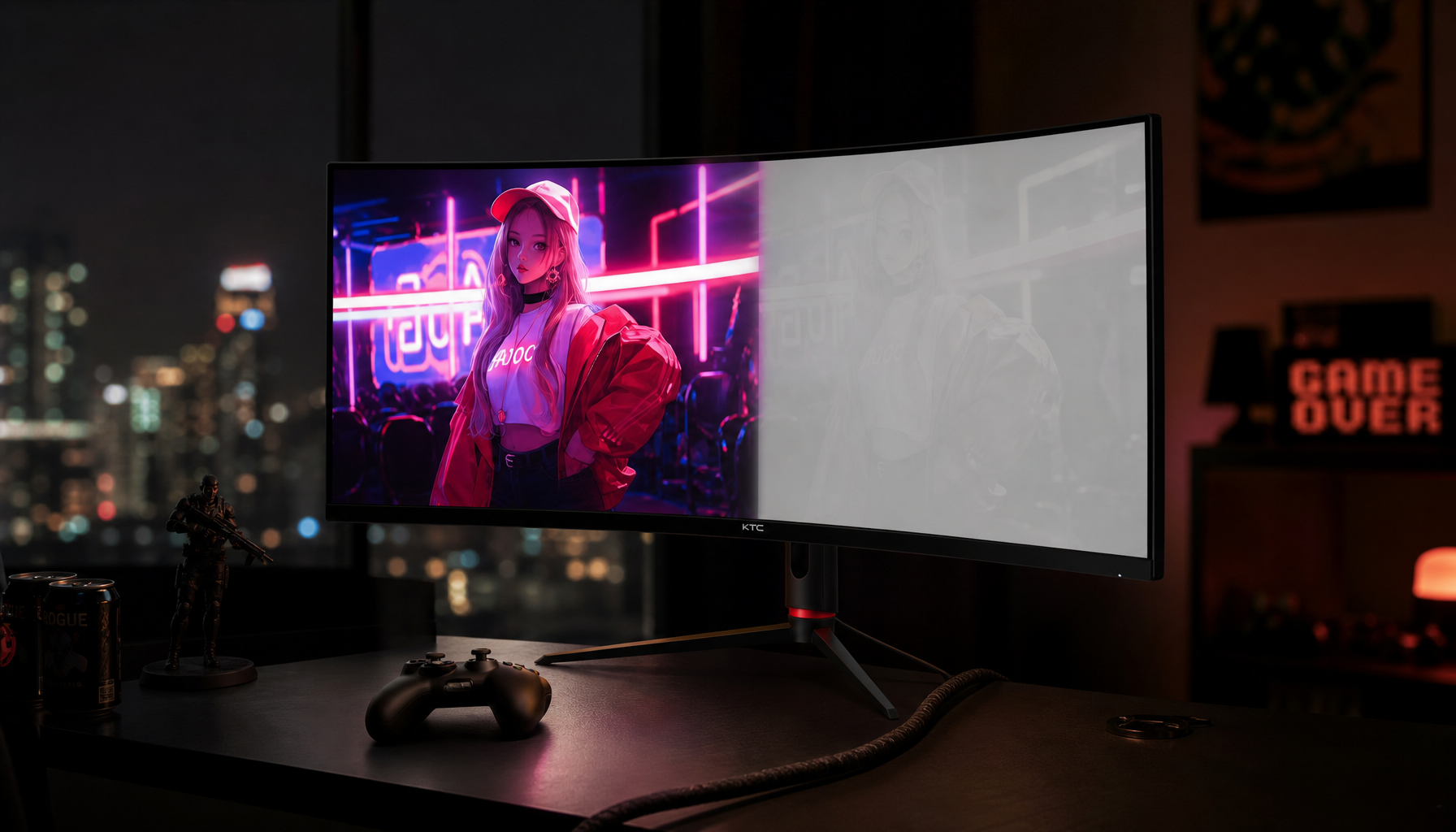
Local dimming is a backlight control system used on LCD monitors to improve contrast. Instead of lighting the whole screen evenly, the monitor divides the backlight into zones and changes each zone’s brightness based on what is shown on screen. That is why local dimming can make dark areas look deeper while keeping bright highlights intense.
The catch is that a dimming zone is much larger than a pixel. A single zone may cover part of a browser toolbar, a white webpage, a black sidebar, and a mouse cursor at the same time. When you switch from a dark tab to a bright spreadsheet or from a white shopping page to a black code editor, the monitor’s dimming processor has to decide how bright each zone should be now. That decision is not always invisible.

On a high-performance display, this behavior is most noticeable during productivity use because browser tabs often have extreme, flat brightness changes. A game scene usually has motion, gradients, and texture. A browser tab can jump from a nearly full-screen white background to a nearly full-screen black background in one frame. That is the perfect stress test for a local dimming algorithm.
Why Browser Tabs Trigger Brightness Flashing
The Average Picture Level Changes Abruptly
When you switch tabs, the monitor sees a new overall brightness pattern. A white document or product page pushes many zones brighter. A dark-mode dashboard pulls those zones down. If the monitor prioritizes contrast aggressively, the backlight may overshoot, settle, then correct. To your eyes, that looks like a brief flash or brightness pump.
This is closely related to blooming behavior. Bright elements such as cursors, subtitles, white text, or small UI highlights can cause nearby dark areas to glow because one zone has to serve multiple image elements. TV and monitor explanations of local dimming zones consistently point to the same limitation: more zones and better processing improve control, but they do not make an LCD behave like OLED at the pixel level.
A simple example makes it clear. Imagine a dark browser tab with a white search bar near the top. The top row of zones may brighten for that bar, while the rest of the screen stays dim. Switch to a full white document and almost every zone ramps up. Switch back to the dark tab and those same zones ramp down. If the transition speed or algorithm is visible, you see flashing.

SDR Desktop Use Is Not What Aggressive Dimming Is Best For
Local dimming shines in HDR video and games, where bright explosions, headlights, sunlight, and neon signs can sit against deep shadows. It is less elegant for static desktop work, where comfort and uniformity matter more than cinematic contrast. Mini-LED setup guidance specifically recommends turning local dimming off for SDR office, web, and desktop use because stable panel brightness is usually more comfortable than maximum contrast.
That recommendation matches what display specialists often find in daily use. For spreadsheets, writing, coding, and browser research, local dimming can make the screen feel unstable. The image may technically have better black levels, but the work experience can feel less consistent because toolbars, white documents, and dark sidebars keep changing the backlight map.
For HDR gaming, the tradeoff flips. You usually want local dimming on because the brightness range is part of the visual experience. For an 8-hour workday with documents and web apps, the same feature may feel like unnecessary backlight drama.
Local Dimming Flashing vs. Other Flicker Problems
Not every brightness flash is local dimming. The fastest way to diagnose it is to change one variable at a time. If the flashing happens mainly when switching between tabs with different backgrounds, and it stops when local dimming is disabled, the cause is probably the dimming system. If it appears in games, menus, scrolling, or only when HDR and VRR are active, the trigger may be more complex.
Variable refresh rate can cause its own brightness fluctuations. A forum report describes game-specific brightness flickering on a 144 Hz monitor, where disabling adaptive sync resolved flicker in one affected title while other games ran normally. That pattern points away from a simple backlight defect and toward timing, frame pacing, or VRR behavior.
Display driver issues can also cause flicker. Troubleshooting guidance for system-level screen flickering focuses on rolling back, updating, or reinstalling the display driver when the whole system flickers or behaves unpredictably. That is a different category from a predictable brightness shift that appears only when local dimming is active.
Symptom |
Likely Cause |
Best First Test |
Brightness changes when switching white and dark browser tabs |
Local dimming zone recalculation |
Turn local dimming off in SDR mode |
Flicker appears in specific games or menus |
VRR, adaptive sync, or frame pacing |
Disable VRR for that game |
Flicker started after a driver update |
Display driver regression |
Roll back or update the GPU driver |
Flicker happens only with HDR plus VRR |
HDR and adaptive sync interaction |
Disable HDR or VRR and compare |
The Pros and Cons of Keeping Local Dimming On
The Upside
The main benefit is contrast. Local dimming can make black backgrounds look darker, reduce washed-out gray shadows, and give HDR scenes more punch. Mini-LED monitors expand this advantage by using many smaller lighting zones, and KTC’s Mini-LED guide notes that premium models often use 1152+ local dimming zones, while value models may use around 576.
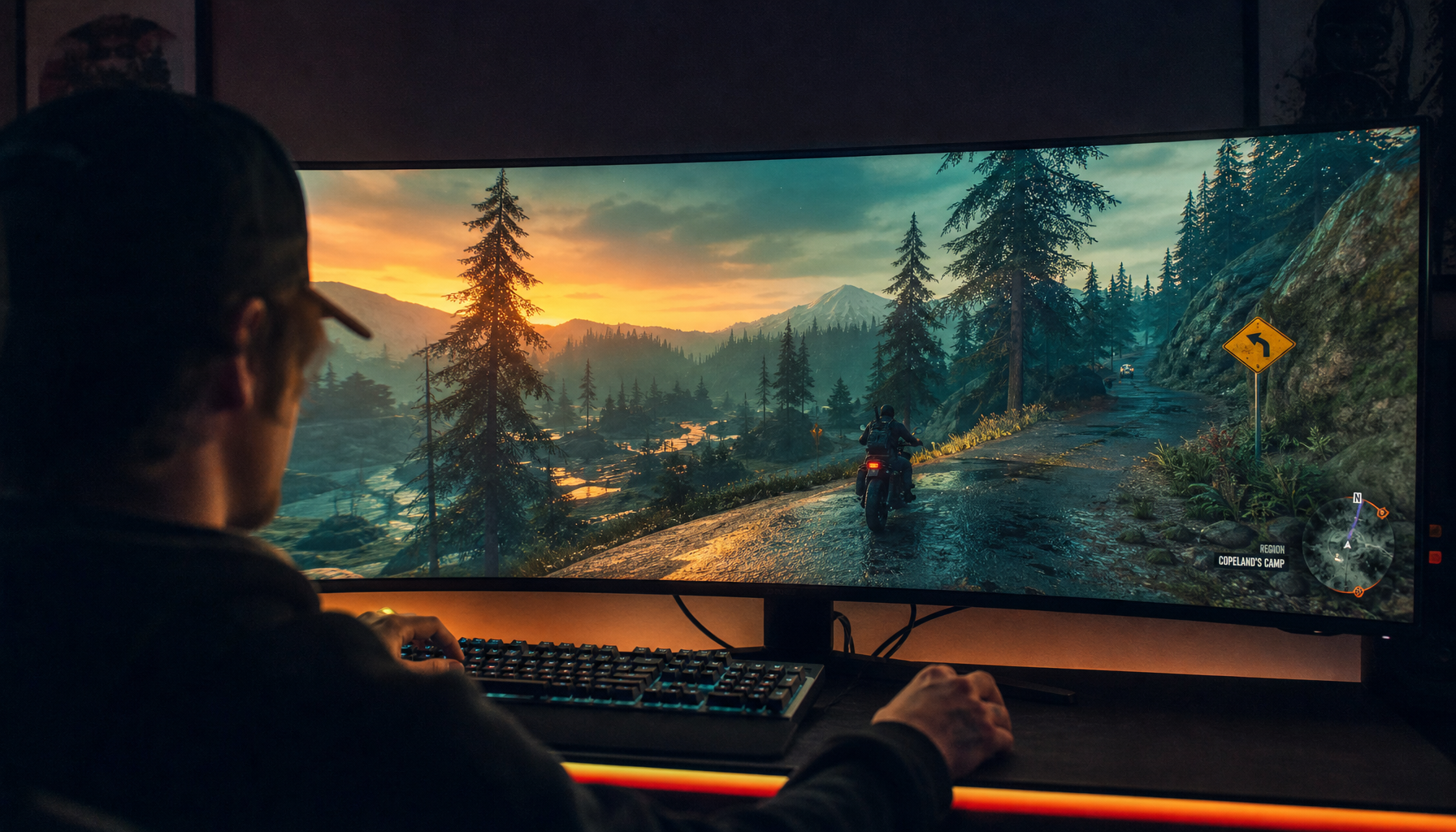
For HDR gaming, this matters. Dark maps, sci-fi interiors, bright spell effects, and high-contrast racing scenes can look flatter with local dimming disabled. If you bought a Mini-LED display for immersion, turning the feature off globally leaves performance on the table.
The Downside
The downside is consistency. Local dimming can introduce brightness pumping, blooming around the pointer, halos around white text, and crushed shadow detail if the setting is too aggressive. On a desktop, those artifacts are not hidden by cinematic motion. They sit right in front of you while you read, type, and compare windows.

There is also what many users experience as a toggle tax. KTC describes this desktop reality directly: users may need to switch local dimming off for SDR productivity and on for HDR media or gaming. That is not a failure of the concept. It is the cost of using a high-brightness HDR LCD for both immersive entertainment and precise office work.
The Best Settings for Browser Work, Gaming, and HDR
For Office and Browser Productivity
Use SDR mode, disable local dimming, and enable any brightness uniformity feature your monitor provides. This gives you a calmer desktop where white tabs, dark tabs, and split windows do not keep forcing backlight transitions. If your monitor has several local dimming levels, choose Off first, then test Low only if you want a little deeper black without obvious pumping.
Set brightness manually for your room instead of relying on dynamic behavior. In a bright office, a moderate fixed brightness often feels better than a constantly reacting backlight. In a dark room, reducing brightness can also make flashes less distracting because each transition covers a smaller perceived range.
For HDR Games and Movies
Turn HDR on only when you are using HDR content, then enable local dimming. Start with the monitor’s balanced or medium local dimming mode rather than the most aggressive mode. Guidance for dark HDR games and video favors a balanced approach because the deepest local dimming settings can hide fine shadow texture.
If a game flickers in menus or loading screens, test VRR separately. Leave HDR and local dimming on, disable adaptive sync for that title, and check whether the flicker disappears. If it does, the problem is likely tied to frame pacing or VRR behavior rather than the dimming zones alone.
For Mixed Work and Play Setups
Create two monitor presets if your display allows it. One should be a work preset with SDR, fixed brightness, and local dimming off. The other should be an HDR preset with local dimming on and tuned for games or movies. This is the most reliable way to get both comfort and impact from the same screen.
For a portable smart screen or office-first display, local dimming should not be the top priority unless HDR content is part of your daily workflow. Business-monitor coverage emphasizes practical work features such as connectivity, webcam integration, USB-C, ergonomics, and color accuracy. Those features often matter more during the workday than dramatic contrast.
When It Might Be a Fault
A brief brightness adjustment during tab switching can be normal. A harsh strobe, random flicker at a static desktop, visible instability with local dimming off, or flashes across all inputs should be treated more seriously. Try a different cable, a different refresh rate, another input, and a GPU driver update or rollback before assuming panel failure.
If the behavior disappears with local dimming off and returns immediately when it is on, the monitor is probably behaving within the limits of its dimming design. If it continues regardless of local dimming, HDR, VRR, cable, input, and driver state, contact the manufacturer or retailer.
FAQ
Should I leave local dimming on all the time?
For most desktop users, no. Keep it off for SDR browsing, writing, spreadsheets, and coding. Turn it on for HDR gaming, movies, and high-contrast media where the benefit is visible and worth the occasional artifact.
Does more zone count eliminate flashing?
More zones can reduce blooming and improve precision, but they do not guarantee perfect transitions. Algorithm quality, response timing, panel type, and firmware tuning matter alongside zone count.
Is OLED better if I hate brightness pumping?
OLED avoids local dimming because each pixel controls its own light. That means no zone-based blooming or backlight pumping, but OLED has its own tradeoffs for static desktop use, especially long sessions with fixed toolbars and app layouts.
Local dimming is powerful when it serves immersion, but it can be too reactive for clean productivity. Treat it like a performance mode: off for stable desktop work, on for HDR impact, and tuned carefully when VRR or dark game menus enter the mix.