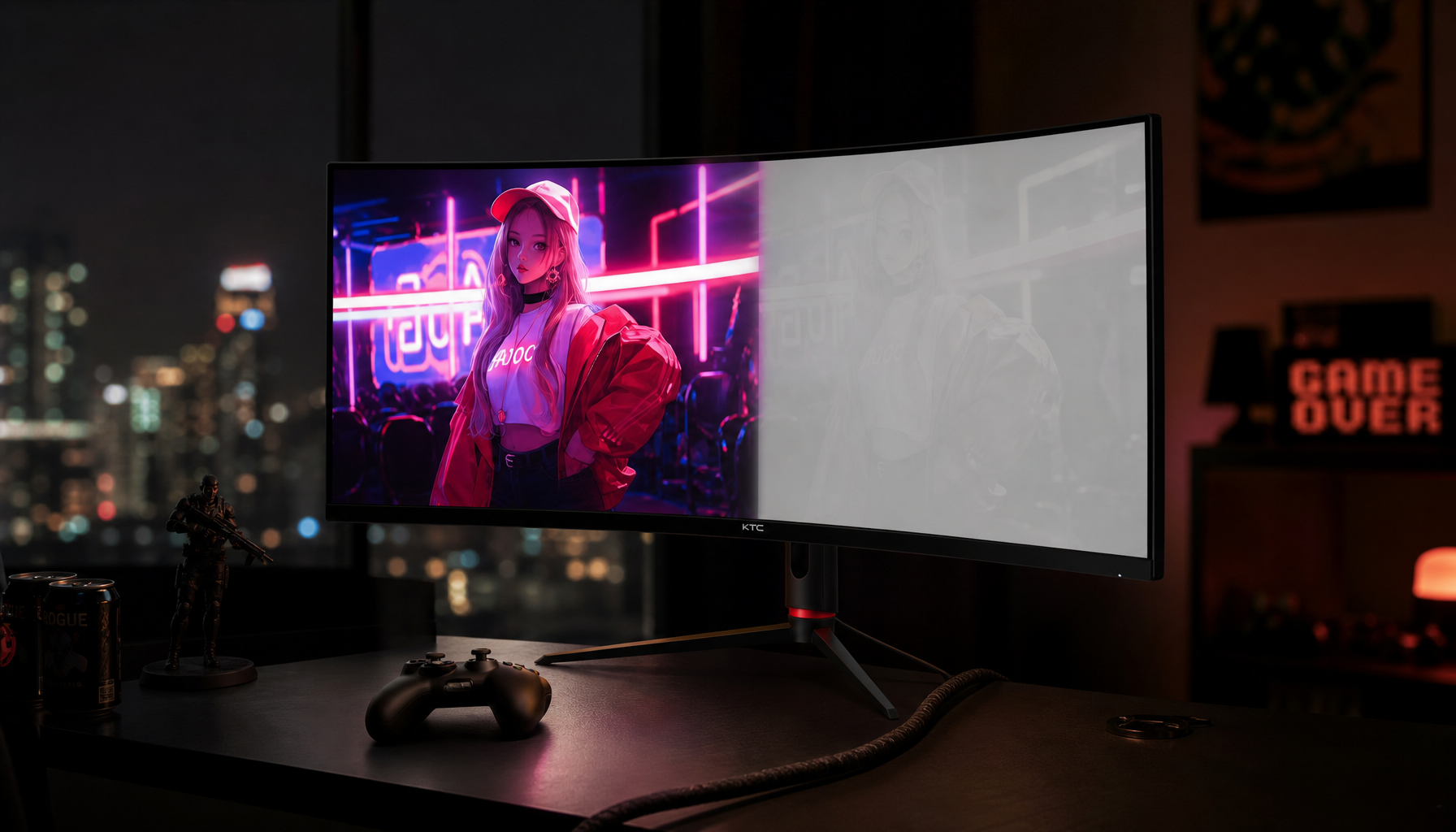
Static metadata gives an HDR display one set of instructions for the whole movie, game, or video; dynamic metadata can update those instructions scene by scene or even frame by frame. Dynamic metadata usually improves accuracy when brightness changes sharply, but only when the screen, source, app, cable, and settings all support it.
Does your HDR monitor make a night scene look muddy, then blast a snowy map so hard that clouds lose texture? That is often a metadata and tone-mapping problem, not just a brightness problem. With the right format support and calibration discipline, you can preserve more highlight texture, shadow separation, and creative intent across real scenes.

Static and Dynamic HDR Metadata, Plainly Explained
HDR metadata is the instruction layer that helps a display understand how content was mastered, including brightness range, color space, and tone-mapping targets. In HDR10, HDR metadata tells the display values such as Maximum Content Light Level and Maximum Frame Average Light Level, then the monitor or TV decides how to fit that content into its own brightness, contrast, and color limits.
Static metadata, used by HDR10, is fixed for the entire title. If a two-hour movie contains one 4,000-nit explosion, one candlelit room, and dozens of moderate indoor scenes, the same overall metadata profile still guides the display throughout playback. That can work well on a strong HDR monitor, but it forces one global compromise.
Dynamic metadata changes the guidance scene by scene or frame by frame. The practical result is more targeted tone mapping. A dark cave can be mapped to preserve shadow steps, while a sunlit sky can be mapped to retain cloud texture and specular highlights without forcing the entire title into the same compression behavior.
Metadata type |
Common format |
How it behaves |
Main strength |
Main limitation |
Static metadata |
HDR10 |
One metadata profile for the full program |
Broad compatibility |
Less precise for mixed dark and bright scenes |
Dynamic metadata |
Dynamic HDR |
Metadata can change by scene, shot, or frame |
Better scene-by-scene tone mapping |
Requires full-chain compatibility |
Why Scene-by-Scene Accuracy Changes So Much
Scene accuracy depends on how well tone mapping preserves the intent of each shot. Tone mapping scales HDR brightness and color to the monitor’s actual capabilities, which matters because a 600-nit monitor cannot simply reproduce every highlight from content mastered for 1,000, 4,000, or higher peak levels.
With static metadata, the display may protect the brightest moment in the entire title. That can prevent highlight clipping, but it may also pull down midtones or make dark scenes look flatter than intended. In practical viewing, this is why a game’s cave sequence may lose texture after a bright outdoor sequence, or why a sci-fi movie may look inconsistent when it jumps between space, cockpit lights, and explosions.

Dynamic metadata improves accuracy because each scene can carry more relevant mapping instructions. Lars Borg’s SMPTE-focused explanation of dynamic metadata describes how scene-specific tone mapping can better handle highlight, midtone, and lowlight rendering when real displays cover far less color volume than HDR media can describe. That is the key: dynamic metadata is not magic brightness. It is better guidance for limited hardware.
A simple monitor example makes the difference clear. If content includes a 4,000-nit highlight but your screen peaks near 600 nits, the display must compress that highlight range. Static metadata may apply a cautious curve across the full program. Dynamic metadata can use a different curve for a bright desert scene than for a dim control room, so fewer scenes pay the penalty for one extreme shot.
The Static Metadata Tradeoff: Reliable, Compatible, Less Adaptive
HDR10 remains the baseline because it works across a huge range of monitors, consoles, Blu-ray players, streaming devices, and PC games. HDR10 static metadata means one fixed brightness and color instruction set applies to the whole video or image sequence.
The upside is reliability. If you buy a gaming monitor, portable OLED screen, or productivity display with HDR support, HDR10 is the format you are most likely to encounter. For PC gamers and office users who switch between games, browser tabs, spreadsheets, and streaming apps, this broad support matters more than spec-sheet elegance.
The downside is that static metadata can miss the needs of individual scenes. MaxCLL describes the brightest pixel in the content, while MaxFALL describes the brightest frame’s average light level; static metadata applies to the entire video, so a rare bright frame can influence tone mapping decisions far beyond the moment where it appears.
For gaming, this can show up as clipped muzzle flashes, washed-out skies, or overly dim interiors. For office productivity displays, the issue is different: always-on HDR can make SDR desktop content look inconsistent. In monitor evaluation, SDR remains the cleaner default for spreadsheets, coding, email, and browser-heavy work, while HDR is best reserved for games, HDR video, and creative review where the source signal actually benefits from it.
The Dynamic Metadata Advantage: Better Control, More Conditions
Dynamic metadata is most valuable when content shifts aggressively between brightness extremes. Snowfields, caves, fireworks, neon streets, sunlit clouds, and dark horror scenes all place different demands on the display. Dynamic HDR allows tone-mapping instructions to change as the content plays.

That adaptive behavior can preserve highlight detail without crushing shadows. On a capable Mini-LED monitor, dynamic metadata can help keep a bright sky from flattening while still giving a night scene enough lift to show texture. On an OLED or QD-OLED screen, it can help retain small highlight intensity while respecting the panel’s full-screen brightness limits.
The catch is the full chain. Dynamic HDR only helps when the content is mastered in a dynamic format and the source device, app, operating system, cable path, and display all pass that format correctly. A monitor that lists dynamic HDR support can still disappoint if the panel lacks meaningful brightness, contrast, local dimming, or color volume.
This is why format support should never outrank panel performance. Good HDR depends mainly on contrast, black levels, brightness, and color performance. A strong HDR10 OLED or high-zone Mini-LED monitor can outperform a weak display that technically accepts a dynamic HDR signal.
Why Monitor Hardware Can Override Metadata Benefits
Metadata is guidance. The panel still has to do the work. OLED monitors deliver pixel-level blacks and fast response, which makes them excellent for dark-scene immersion and competitive clarity. Mini-LED LCDs often sustain higher brightness across larger bright areas, which helps in bright rooms, HDR productivity, and full-screen highlights.
Auto Brightness Limiting is a major real-world factor. It reduces brightness when large bright areas push a panel toward power, heat, or protection limits, especially on OLED and QD-OLED monitors. That means a screen can make sparks, reflections, and neon signs look brilliant while dimming large white menus, snow maps, or bright browser pages.
For scene accuracy, this matters because dynamic metadata cannot fully defeat panel limits. If a display can hit a high peak only in a tiny window but drops heavily on full-screen bright scenes, a bright HDR game map may still look less punchy than the spec sheet suggests. A practical buying move is to look for real-scene brightness, sustained brightness, local dimming quality, and EOTF tracking, not just a single “1,000 nits” claim.
Professional monitoring guidance makes the same point from a production angle. HDR monitoring issues include color processing, highlight handling, viewing conditions, and brightness behavior when large screen areas approach maximum intensity. That maps directly to consumer buying: metadata helps, but display behavior decides what you actually see.
Static vs Dynamic Metadata for Gaming, Movies, and Work
For HDR gaming, dynamic metadata is useful when the game, platform, and monitor support it, but calibration is just as important. Use the monitor’s accurate HDR or Game HDR mode first, then run the console or Windows HDR calibration, then adjust in-game HDR sliders to match the display’s real black level and peak brightness. If you raise every slider until the logo barely disappears, you may create double tone mapping or clip highlights before metadata can help.
For movies and streaming, dynamic metadata is most visible on lower-brightness or midrange displays. It matters most when demanding HDR content needs help fitting into a display’s limits; high-end displays may show a smaller difference unless the title has extreme brightness variation. If your monitor is already excellent at tone mapping HDR10, the upgrade from static to dynamic may be subtle rather than dramatic.
For office productivity, static versus dynamic metadata is usually the wrong first question. A stable SDR mode often gives cleaner whites, more predictable colors, and less fatigue for spreadsheets, documents, dashboards, and coding. HDR becomes valuable when you open HDR media, review HDR creative work, or play a properly configured HDR game.
Portable smart screens need extra scrutiny. Many accept HDR signals, but smaller panels may have limited sustained brightness, weaker local dimming, or restricted color volume. For travel gaming or secondary-screen video, HDR10 compatibility may be enough. For serious HDR review, treat dynamic metadata support as a bonus only after measured brightness, black level, and color coverage check out.
When Static Metadata Is Still the Better Practical Choice
Static metadata is not bad. It is the most dependable HDR baseline, and it is often the format that makes HDR usable across the widest mix of hardware. If your library, console, monitor, and PC apps mainly support HDR10, a well-calibrated static HDR setup is better than chasing dynamic metadata through an unreliable signal chain.
Static metadata can also be appropriate in controlled environments where the display target is known. Professional color-grading discussions often recommend dynamic metadata when consumer displays vary widely, while static metadata can make sense in fixed exhibition systems where display behavior is predictable. For a desk setup, that translates into a simple principle: if you know your monitor well and calibrate for it, HDR10 can still look excellent.
The bigger risk is inaccurate or missing metadata. In production workflows, a transcoding service can add or overwrite HDR metadata when input video has missing or incorrect HDR information, including HDR10 master display values. That reinforces a practical truth for creators: wrong metadata can be worse than basic metadata because the display is making decisions from bad instructions.
How to Choose for a Pro Display Setup
Choose the display first for real HDR capability, then choose the metadata features. For a gaming monitor, prioritize peak brightness, sustained brightness, black control, local dimming quality, panel response, refresh rate, bandwidth, and calibration tools. Dynamic HDR support is valuable, but it should sit on top of capable hardware.
For a productivity-first monitor, look for strong SDR accuracy, stable brightness, text clarity, ergonomic controls, and a reliable HDR mode you can enable only when needed. If the screen spends eight hours a day in documents and browser apps, HDR metadata is not the productivity engine; consistency is.
For a portable smart screen, verify the source path. A USB-C or HDMI connection must carry the required resolution, refresh rate, bit depth, and HDR signal cleanly. If the portable display supports HDR10 only, that is not automatically a dealbreaker. If it claims dynamic HDR but lacks brightness and contrast, scene-by-scene metadata will have limited impact.
For creator review, be stricter. Use accurate HDR picture modes, disable aggressive post-processing, keep separate SDR and HDR presets, and rely on measurement tools when decisions affect deliverables. On-set production guidance emphasizes that true HDR monitoring depends on both high peak brightness and deep blacks, and that “HDR-capable” marketing does not automatically mean a display has enough dynamic range for critical judgment.
The Bottom Line for Scene Accuracy
Dynamic metadata usually improves HDR scene-by-scene accuracy because it lets tone mapping react to the actual brightness and contrast needs of each scene. Static metadata is simpler and more compatible, but it can force one compromise across a whole title.
For the best result, buy the panel for real brightness, contrast, black level, dimming, and color volume first. Then use dynamic HDR when the full chain supports it, calibrate the system, and keep SDR as the stable default for everyday office work.