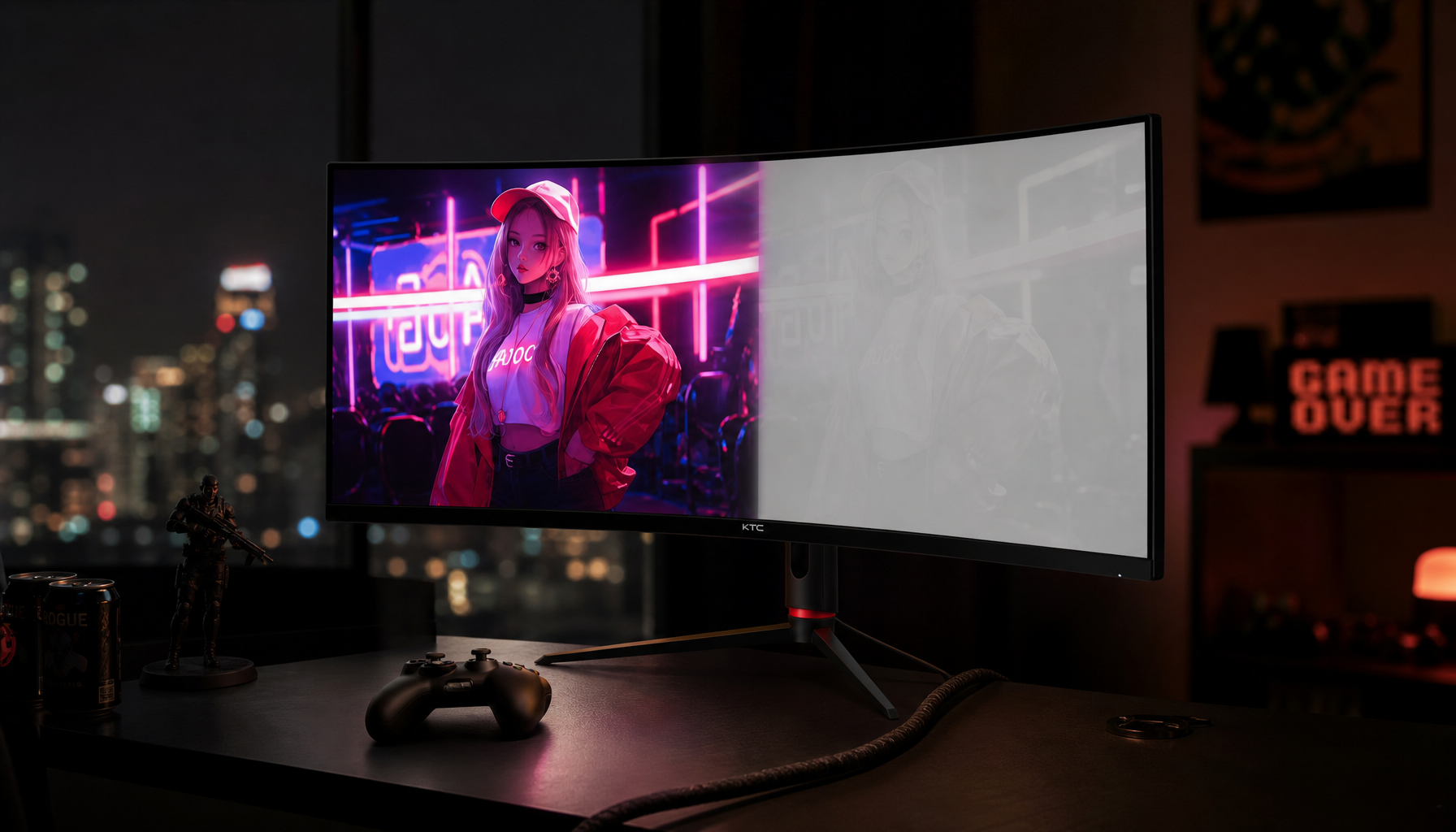
They usually are not the same thing. On most gaming monitors, “Game” and “Gamer” are brand-specific presets meant for different viewing priorities, not universal industry standards.

If your new monitor looks fine on the desktop but suddenly feels too dark, too colorful, or oddly flat once a game starts, those two labels can seem pointless. On modern displays that stretch from 1440p at 165Hz to 4K at up to 240Hz, preset choices can noticeably change shadow detail, motion clarity, and overall image balance. This breakdown will help you tell when the extra mode is useful and when it is mostly menu branding.
Why Brands Split “Game” and “Gamer” Modes
Different monitor jobs need different presets
Mixed-use gaming monitors already vary widely in refresh rate, HDR brightness, contrast, and response behavior, so it is normal for brands to create more than one gaming-oriented picture mode. A 27-inch display used for work during the day and fast shooters at night does not benefit from a single one-size-fits-all profile.
That is especially true on newer models that blur category lines. In one real buying discussion, a user moving from a 27-inch, 1440p, 165Hz monitor model from a brand was comparing 4K-capable replacements, including a model from a brand rated for up to 240Hz over a modern display connection and a model from a brand rated for 160Hz. When a monitor is expected to handle desktop work, HDR media, and competitive play, extra presets make practical sense.
The names are usually menu logic, not a standard
In practice, “Game” often signals a general gaming preset, while “Gamer” may refer to a more aggressive tuning style or a user-facing gamer profile system. The important point is that the label itself does not guarantee better motion, lower input lag, or more accurate color.
That is why two monitors with similar marketing can behave very differently. One model may use the second gaming preset to push darker blacks and punchier contrast, while another may use it as a save slot for custom settings. The names sound similar because they target the same audience, but the actual behavior is decided by the brand.
What These Presets Usually Change
Presets tune the image around the panel’s strengths
Monitor panels are judged by refresh rate, response time, contrast, viewing angle, and color behavior, and picture modes usually adjust how those strengths show up on screen rather than changing the hardware itself. A preset can make dark areas easier to read, add extra edge sharpness, or change how vivid the image looks, but it cannot turn a slower panel into a faster one.
Color saturation shifts while playing games are a common real-world complaint when a preset, app, or signal path changes the image. That is why two nearly identical-sounding modes can still look clearly different in the same game.
Common differences between “Game” and “Gamer”
Mode label |
Common intent |
Typical visible changes |
Best fit |
Main risk |
Game |
Balanced gaming preset |
Slightly boosted contrast, clearer shadows, moderate sharpness |
General gaming on 144Hz to 240Hz monitors |
Can still look oversaturated for desktop use |
Gamer |
More specialized or user-focused gaming preset |
Stronger black boost, higher saturation, more aggressive edge detail, custom save behavior on some brands |
Esports profiles or custom user tuning |
May crush highlights, exaggerate noise, or look unnatural |
Gamer 1 / 2 / 3 |
Multiple gaming profiles |
Different mixes of brightness, black equalizer, color, and response tuning |
Switching between FPS, RPG, and console use |
Easy to forget which profile changed what |
Standard / sRGB |
Neutral everyday preset |
More restrained color and contrast |
Office work, browsing, photo accuracy |
Often looks less exciting in darker games |
The most common picture changes are gamma, black level lift, saturation, sharpness, dynamic contrast, and sometimes overdrive behavior. On a bright showroom floor, that can make a “Gamer” preset look more impressive; in a home office, the same preset may look harsh or tiring after an hour of web browsing.

Which Mode Is Better for Competitive Gaming vs. General Use?
Competitive play usually benefits from restraint, not spectacle
TN panels became a classic 144Hz choice and can still show up in displays above 540Hz because speed and motion clarity matter more than cinematic image quality in competitive play. Even though IPS, OLED, and other panel types now reach 240Hz, the same rule still applies: the best preset for esports is usually the one that keeps motion clean and makes dark targets easier to spot without blowing out the whole image.
That often means the plainer-looking preset wins. If “Game” looks a little flatter than “Gamer” but keeps edges cleaner and shadows more readable, it is probably the better choice for shooters, racing games, and other high-refresh-rate play.
Single-player and mixed-use setups often prefer the richer preset
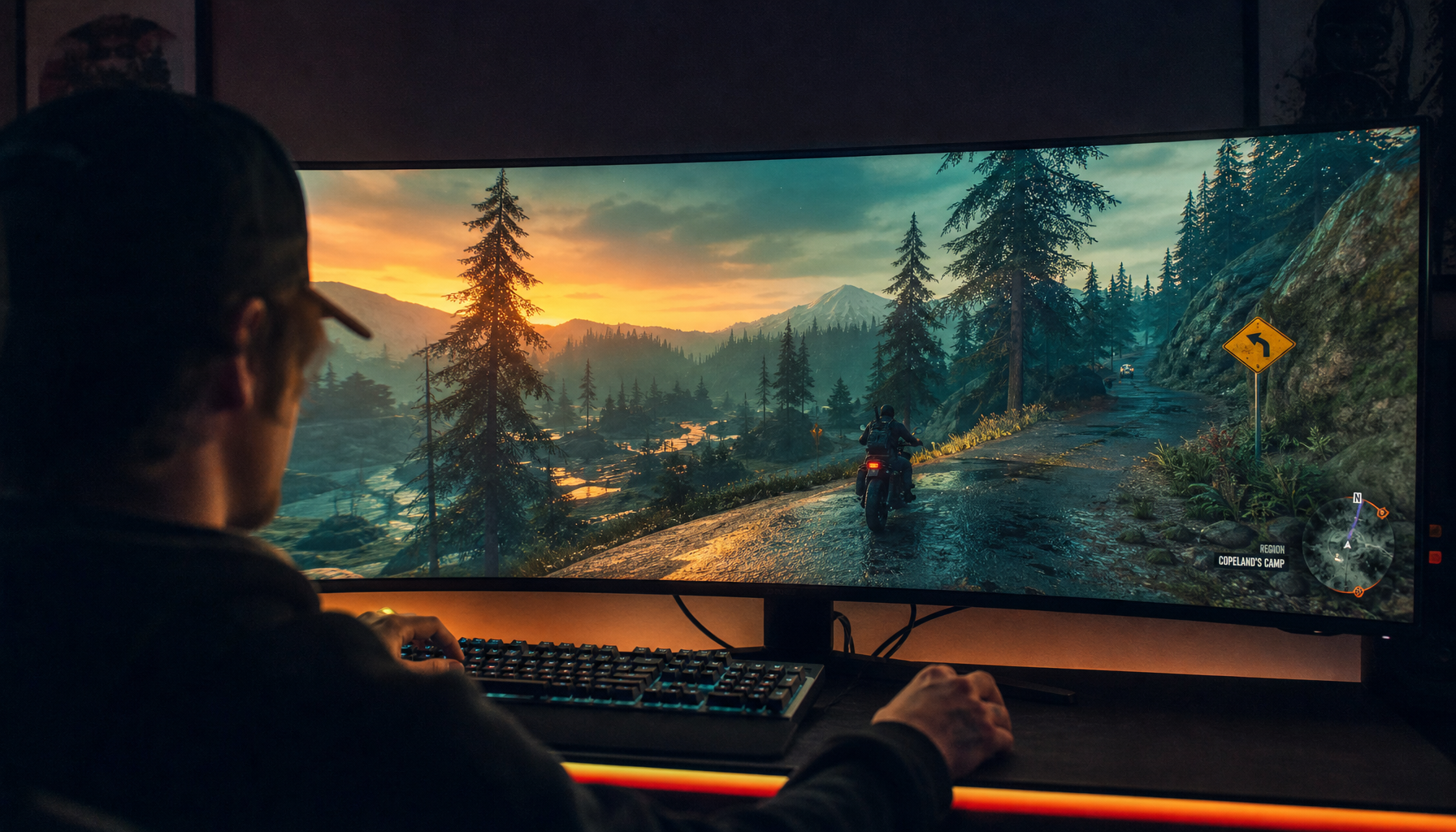
VA panels are known for stronger contrast, and OLED panels can deliver very deep blacks because each pixel emits its own light. On an ultrawide monitor for story-driven games, or on an OLED display used for HDR content, the more dramatic preset may actually be the better-looking option.
One contrast-focused IPS example showed about 1700:1 contrast versus about 1100:1 on a competing model, which helps explain why some brands lean into richer gaming presets on contrast-oriented screens. If you mostly play RPGs, action adventures, or console games from the couch, the punchier mode may be the one you keep.
Why Panel Type Matters More Than the Label
A preset cannot override the panel’s basic behavior
VA, TN, IPS, OLED, and QD-OLED panels all carry different tradeoffs. TN is fast but weaker for color and viewing angles. VA tends to offer stronger blacks but has a history of slower response and ghosting. IPS is strong for color. OLED brings deep black levels and high-end image quality, but it also uses burn-in protection behavior such as brightness management and periodic pixel care.
That means a “Gamer” preset on a VA panel may mainly try to control black visibility and perceived speed, while the same label on an OLED could focus more on HDR punch and color intensity. The name stays the same, but the practical goal changes with the hardware.
Real buying decisions prove the point
An IPS Black panel can offer higher contrast yet still underperform on pixel response at triple-digit refresh rates. That is a useful reminder for anyone shopping for a high-refresh-rate display: no preset name can fix a panel that is not well tuned for the speed you want.
For buyers comparing gaming monitors, portable monitors, or 4K desktop displays with gaming ambitions, this is the safer rule: judge the panel first, then judge the preset. “Game” versus “Gamer” is a finishing detail, not the main performance spec.
How to Test the Right Mode on Your Monitor
Use one repeatable scene and one repeatable desktop task
The fastest way to choose is to test the same dark game area, the same bright HUD, and the same everyday desktop window in each mode. If one preset helps in a match but makes text look rough or skin tones look radioactive on the desktop, it is probably too extreme for mixed use.

Washed-out fullscreen and washed-out HDR complaints are a useful reminder not to blame the panel too quickly. Sometimes the issue is the preset, but sometimes it is the HDR toggle, the game’s fullscreen behavior, or the signal chain between the PC and the monitor.
Action checklist
- Start with Standard, sRGB, or the least aggressive preset so you have a baseline.
- Switch to Game and check shadow detail, motion clarity, and whether white UI elements stay clean.
- Switch to Gamer and look for oversaturation, crushed highlights, or excessive edge sharpening.
- Test both presets in one fast game and one desktop task, such as reading text or editing a spreadsheet.
- If your monitor offers custom gamer slots, copy the better preset and lower only the settings that look exaggerated.
- Recheck after enabling HDR, VRR, or console input, because some monitors change behavior when the signal changes.
If you buy a high-refresh-rate monitor mainly for multiplayer games, keep the cleaner preset as the default. If the monitor doubles as a movie or console screen, save a second preset for richer contrast and color.
FAQ
Q: Is “Gamer” mode always faster than “Game” mode?
A: No. The label does not guarantee lower input lag or better response. Panel behavior matters more, and some higher-contrast panels still struggle with pixel response at triple-digit refresh rates.
Q: Why does one gaming preset look more colorful but worse for everyday use?
A: That preset is usually pushing saturation, black boost, sharpness, or contrast to make games look more dramatic. Those same changes can make text, skin tones, and web pages look unnatural.
Q: Should I keep one preset for everything?
A: Usually not. A neutral preset is often better for work and browsing, while a tuned gaming preset is better for competitive matches or HDR-heavy single-player games.
Final Takeaway
“Game” and “Gamer” picture modes exist because gaming monitors now cover very different jobs, from esports speed to 4K mixed-use desktops to OLED entertainment screens. The names are not a standard. What matters is what the preset changes on your specific panel.
For most buyers, the practical answer is simple: use the cleaner preset for competitive play and everyday desktop use, and keep the punchier preset only if it genuinely improves the games you play most.