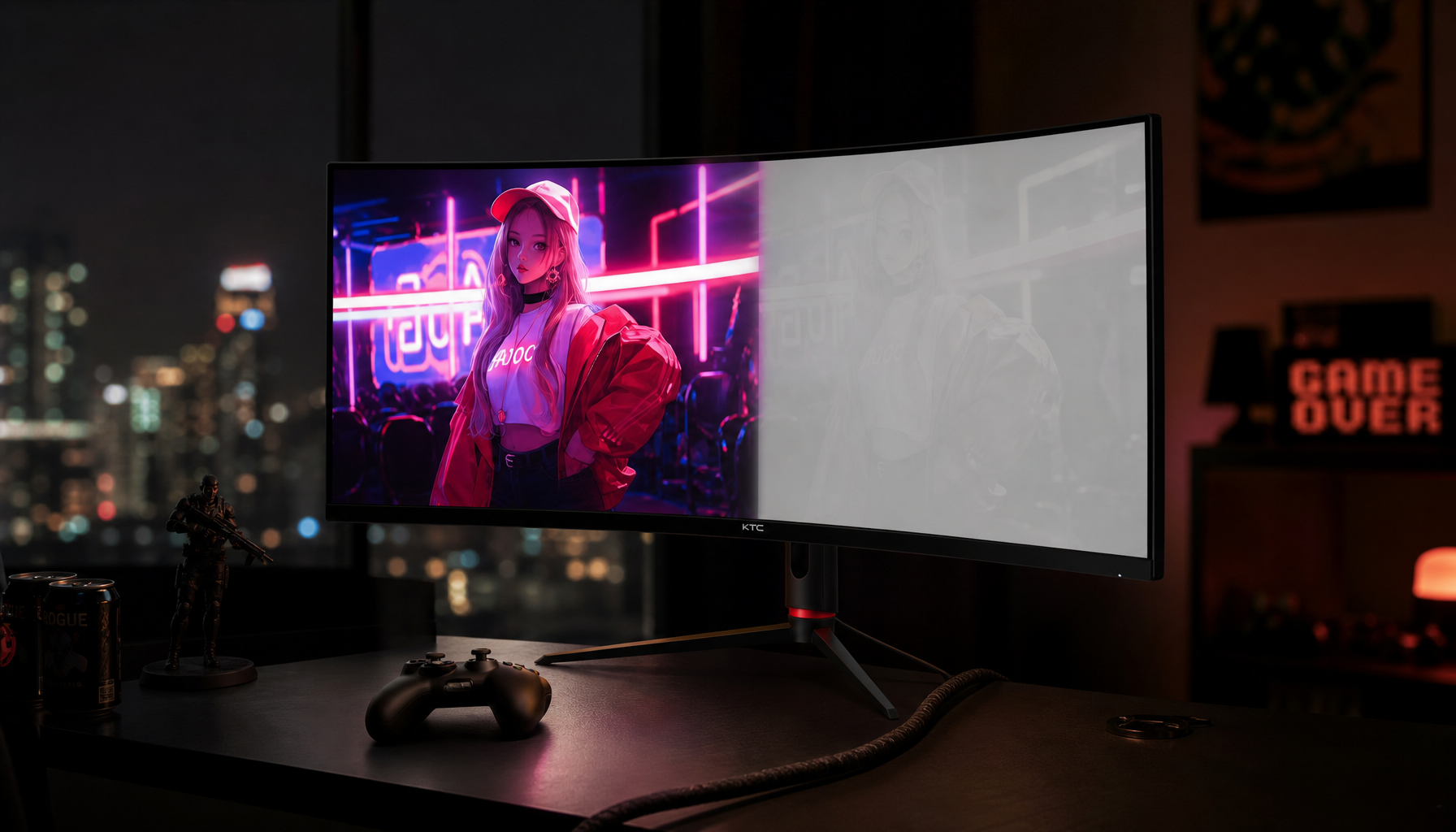
Some OLED panels shift toward green, pink, or blue at certain brightness levels because each subpixel does not always scale evenly as luminance changes. The effect is most visible in dark grays, low-brightness modes, and large uniform backgrounds.
OLED Brightness Is Not Just “More Light”
An OLED pixel creates light directly, so brightness control is tied to how red, green, and blue subpixels are driven. If those subpixels age differently, respond differently at low voltage, or use compensation unevenly, the white point can drift as brightness changes.
That is why a screen may look neutral at 70% brightness but slightly green at 15%. The panel is not simply dimming a backlight; it is recalculating millions of tiny emitters in real time.

Research on OLED calibration highlights how display behavior can vary across brightness and color states, which is exactly where tint shift becomes a practical issue for creators, gamers, and office users.
Why Tint Shift Shows Up in Real Use
Tint shift often appears when the panel is asked to display near-black or low-gray tones. At those levels, tiny drive differences become easier to see because the screen has less luminance to hide them.
Low brightness in a dark room can expose a green or pink bias, while gray backgrounds in apps, spreadsheets, and browser tabs reveal uniformity flaws. Variable refresh and dimming behavior can also change panel drive patterns in gaming modes. Viewing angle matters because some OLED stacks shift color slightly off-center, and panel variation means two units of the same model may not look identical.
This is why productivity users may notice tint on a blank document before gamers see it in motion. A white spreadsheet, code editor, or ecommerce product page is a harder uniformity test than a fast, colorful game scene.

Brightness Controls Can Help or Hurt
Monitor makers use different methods to manage OLED brightness. Some models use uniform brightness modes to reduce distracting luminance swings across full-screen and windowed content. One manufacturer describes this as a way to keep OLED monitors more consistent during desktop use.
That consistency can make tint shift less distracting, but it does not always remove the root cause. If the panel itself has low-gray imbalance, a uniform brightness feature may stabilize brightness while the color cast remains faintly visible.
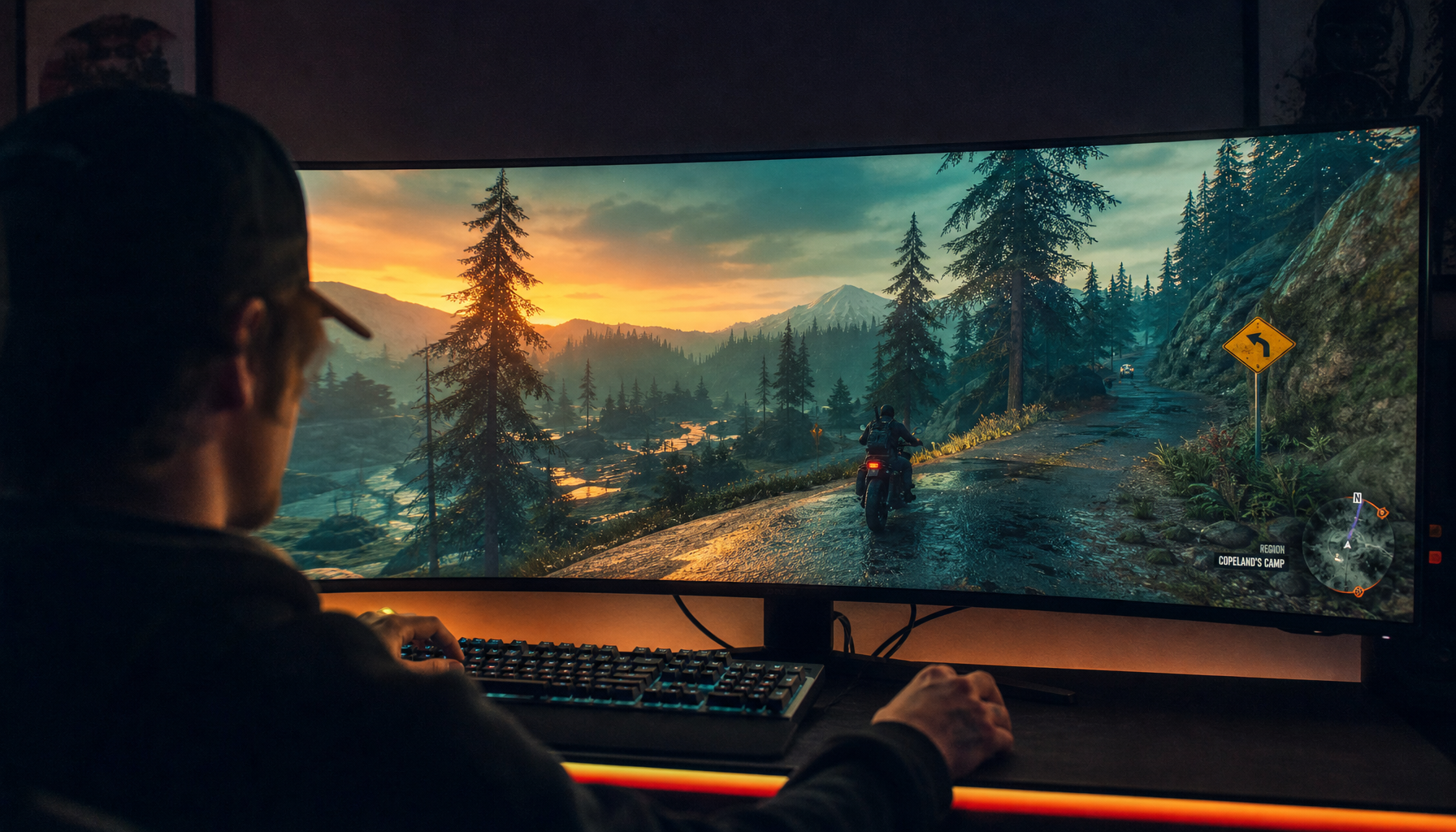
For competitive gaming, many users prefer higher brightness and punchier contrast. For office work, a steadier 120–180-nit desktop feel usually matters more than peak HDR impact. The best setting is the one that keeps whites stable without making dark grays look stained.
How to Diagnose It Without Overreacting
A mild tint at extremely low brightness is common enough that it does not automatically mean the monitor is defective. The question is whether it affects normal use from your typical seat position.
Try this quick check:
- Set brightness to your normal daily level, not the minimum.
- Open a neutral gray full-screen image or blank document.
- View from your usual distance and centered angle.
- Test SDR first, then HDR separately.
- Compare warm, neutral, and sRGB picture modes.

If tint is obvious in normal work or appears as strong vertical patches, it may be panel uniformity rather than calibration. Community investigations into green tint show that uniformity issues can vary by unit, content, and viewing condition.
A phone camera can exaggerate tint or flicker, so judge with your eyes first and use photos only as supporting evidence.
What Buyers and Owners Should Prioritize
For pro gaming, look for stable near-black handling, low input lag, and a mode that does not crush shadow detail. Tint shift in menus is less important than whether it distracts during real gameplay.
For office productivity, prioritize uniform brightness, strong SDR accuracy, and comfortable text rendering. A panel that holds neutral grays across long work sessions is often more valuable than one with the highest peak highlight number.
For portable smart screens, test low brightness carefully. These displays are often used in dim hotel rooms, cafes, or secondary-screen setups, where tint shift becomes easier to notice.

The performance-first takeaway: OLED tint shift is usually a panel-drive and uniformity behavior, not user error. Calibrate what you can, choose stable brightness modes for daily work, and return or exchange the display if the color cast breaks immersion in your real workflow.