Refresh rate controls how often the screen updates, while local dimming response time controls how quickly backlight zones react. When refresh rate rises faster than the dimming system can track, halos, trails, flicker, black crush, or delayed brightness can appear even when the monitor feels fast.
Notice a glowing trail behind a white crosshair in a dark hallway, or subtitles that brighten and dim a split second after the scene moves? Lab-style local dimming tests show that zone transitions, blooming, and delayed illumination are separate from raw refresh rate, so a 240Hz Mini-LED monitor can still look less precise than expected in dark HDR motion. This article explains how the two systems interact, which settings usually work best, and how to choose a monitor that feels fast without sacrificing contrast.

Refresh Rate Is the Screen’s Update Rhythm
Refresh rate is the number of times per second a display redraws the image. A 60Hz display updates 60 times per second, while a 120Hz display updates twice as often, and higher refresh rates generally improve motion clarity and responsiveness for gaming.
The timing window gets shorter as refresh rate rises. At 60Hz, each refresh cycle lasts about 16.7 milliseconds. At 120Hz, it drops to about 8.3 milliseconds. At 240Hz, it is only about 4.2 milliseconds. That shrinking window is excellent for input feel, scrolling smoothness, and fast camera movement, but it also gives the display’s backlight control system less time to analyze the image and adjust brightness zones.
For productivity, this is why a 120Hz or 144Hz office monitor can make cursor movement, spreadsheets, and long documents feel calmer and more immediate. For gaming, it is why fast displays reduce the delay between mouse movement and visible feedback. Your operating system also treats refresh rate as a core display setting, and changing the refresh rate can improve smoothness, responsiveness, and perceived input feel when the hardware supports it.
Local Dimming Response Time Is the Backlight’s Reaction Speed
Local dimming is not the same thing as pixel response time or refresh rate. It is the behavior of the backlight system in an LCD display, where zones behind the LCD panel dim or brighten independently to deepen blacks and raise contrast. In a Mini-LED monitor, local dimming may use hundreds or thousands of smaller LEDs grouped into dimming zones, giving the display finer control than a conventional edge-lit LCD.
Local dimming response time describes how quickly those zones react when bright and dark objects move. If a white HUD element crosses a black background, the backlight zone behind it has to brighten at the right moment, dim again as it passes, and avoid contaminating nearby dark areas. If the zone response is too slow or the algorithm is conservative, you may see a trailing halo, a dark leading edge, delayed brightness, or a pulsing effect.
This is why local dimming can improve contrast and still create artifacts. More zones help because each zone covers a smaller portion of the image, but zone count alone does not guarantee better performance. The processing algorithm, panel type, native contrast, LED driver design, and how aggressively the display prioritizes low input lag all matter.
The Relationship: Refresh Rate Raises the Timing Pressure
The relationship is simple but important: higher refresh rates shorten the available time for local dimming decisions. The display can update the LCD image at 144Hz, 165Hz, 240Hz, or higher, but the backlight system still has to decide how bright each zone should be for each changing frame.
Refresh rate |
Time per refresh |
What it means for dimming |
60Hz |
16.7 ms |
More time for zone analysis, but slower motion feedback |
120Hz |
8.3 ms |
Strong balance for HDR gaming and console play |
144Hz |
6.9 ms |
Common PC sweet spot with tighter dimming timing |
240Hz |
4.2 ms |
Excellent input feel, but dimming must react very quickly |
360Hz |
2.8 ms |
Extreme motion demand; weak dimming algorithms become easier to notice |
A monitor does not need its backlight zones to refresh at the same numeric rate as the panel in a simple one-to-one way. The practical issue is synchronization. If the LCD image changes position faster than the backlight can follow, the image may feel responsive while the brightness envelope lags behind it.
This becomes most visible in dark HDR games. Imagine a 240Hz shooter running near 240 FPS with a flashlight beam moving across a tunnel. The LCD panel can show the beam’s position quickly, but if the dimming zones ramp brightness too slowly, the beam may carry a faint glow behind it. If the algorithm clamps too aggressively to suppress blooming, it may dim small highlights and hide shadow texture. Third-party tests often separate lighting zone precision from lighting zone transitions because transitions reveal flicker, delayed illumination, and trailing halos that static contrast specs do not capture.
Why Mini-LED Makes This More Powerful and More Complicated
Mini-LED improves the equation by shrinking the LEDs and increasing zone density. A full-array Mini-LED monitor can dim dark portions of the image while keeping small highlights bright, which is exactly what HDR needs. Compared with a basic LED backlight, Mini-LED systems can produce deeper blacks, stronger scene contrast, and higher peak brightness without OLED’s permanent burn-in risk.
The tradeoff is control complexity. Hundreds or thousands of zones require fast analysis, fast communication, and well-tuned brightness ramps. If the monitor is built for competitive low latency, the manufacturer may avoid heavy processing that would improve dimming precision but add delay. That is the core tension: aggressive local dimming improves contrast, while simpler or faster processing can preserve input responsiveness.
Panel type also changes what you see. A VA LCD usually blocks stray light better than IPS, so blooming can look less obvious even with similar zone behavior. IPS often offers wider viewing angles and strong color consistency, but its lower native contrast can make halos easier to spot in dark rooms. OLED avoids this entire backlight timing problem because each pixel emits its own light, but Mini-LED remains compelling for bright rooms, long desktop sessions, static UI, and high peak HDR brightness.
Common Artifacts When Timing Falls Behind
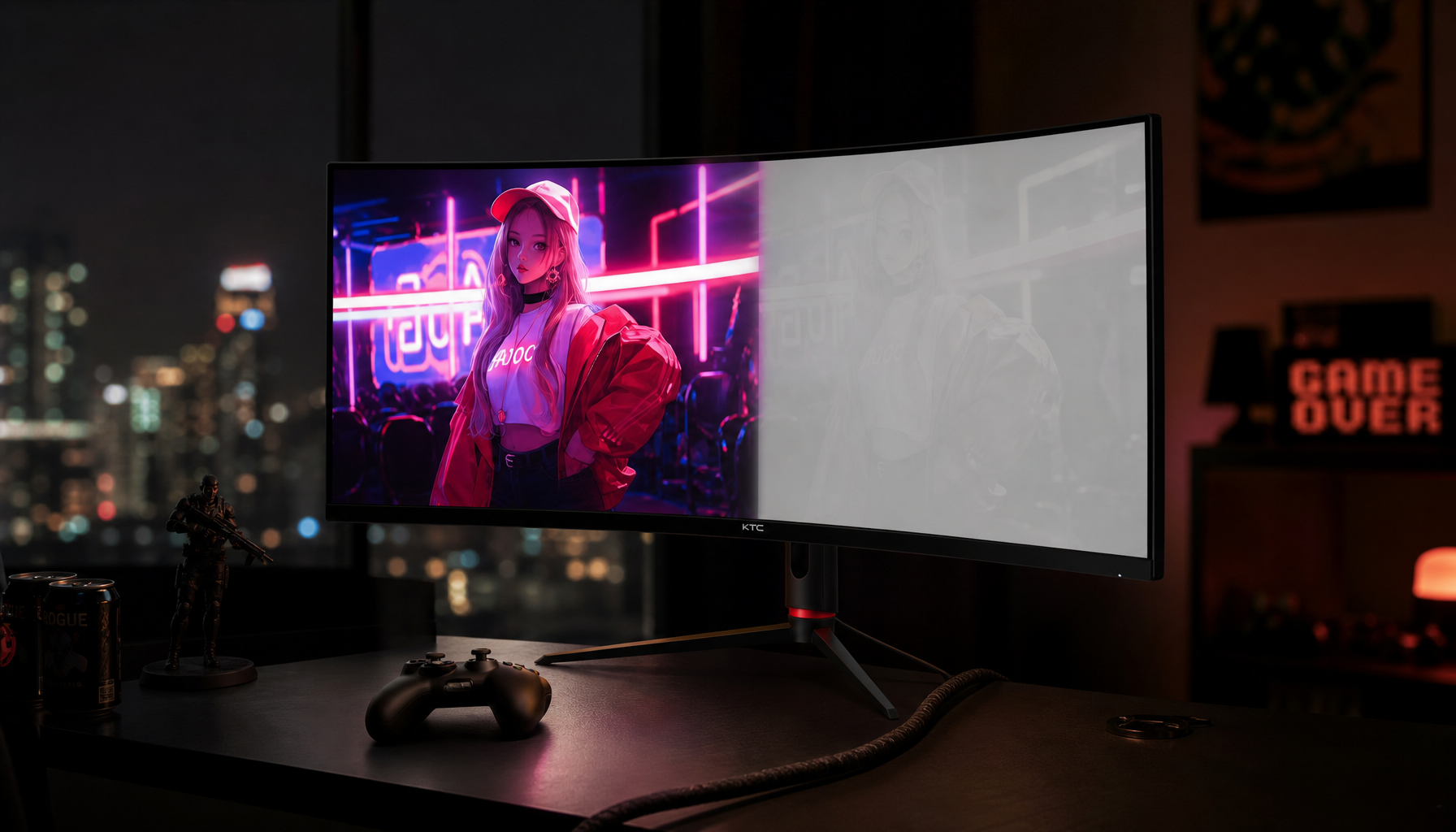
Blooming is the most familiar artifact: a bright object lights a zone larger than the object itself, creating a halo around it. A starfield, white mouse cursor, subtitle line, or small game objective marker on a black background is a classic stress test. Local dimming can reduce the washed-out gray look of standard LCDs, but blooming appears when zone size and algorithm behavior cannot isolate bright and dark details cleanly.
Trailing halos are more specifically tied to response timing. They happen when a bright object moves and the backlight zones do not dim quickly enough after it leaves. Flicker can appear when the algorithm changes zone brightness too abruptly. Black crush happens when the monitor darkens a zone so much that subtle shadow detail disappears, which can make a stealth game look punchy but less readable.
For office work, the biggest issue is usually not dramatic blooming but uneven brightness. A white document window moving over a dark desktop can trigger zone changes that feel distracting. That is why some monitor makers recommend disabling local dimming for SDR productivity, because consistent brightness is often more valuable than maximum contrast when writing, coding, reading, or comparing design layouts.

Should You Prioritize Refresh Rate or Local Dimming?
For competitive esports, prioritize refresh rate, measured input lag, pixel response time, and VRR behavior first. Local dimming can be useful for HDR, but if the display’s dimming mode adds visible trails or darkens targets, it can work against the goal. A 240Hz monitor with local dimming set to a moderate or off mode may be the better competitive setup.
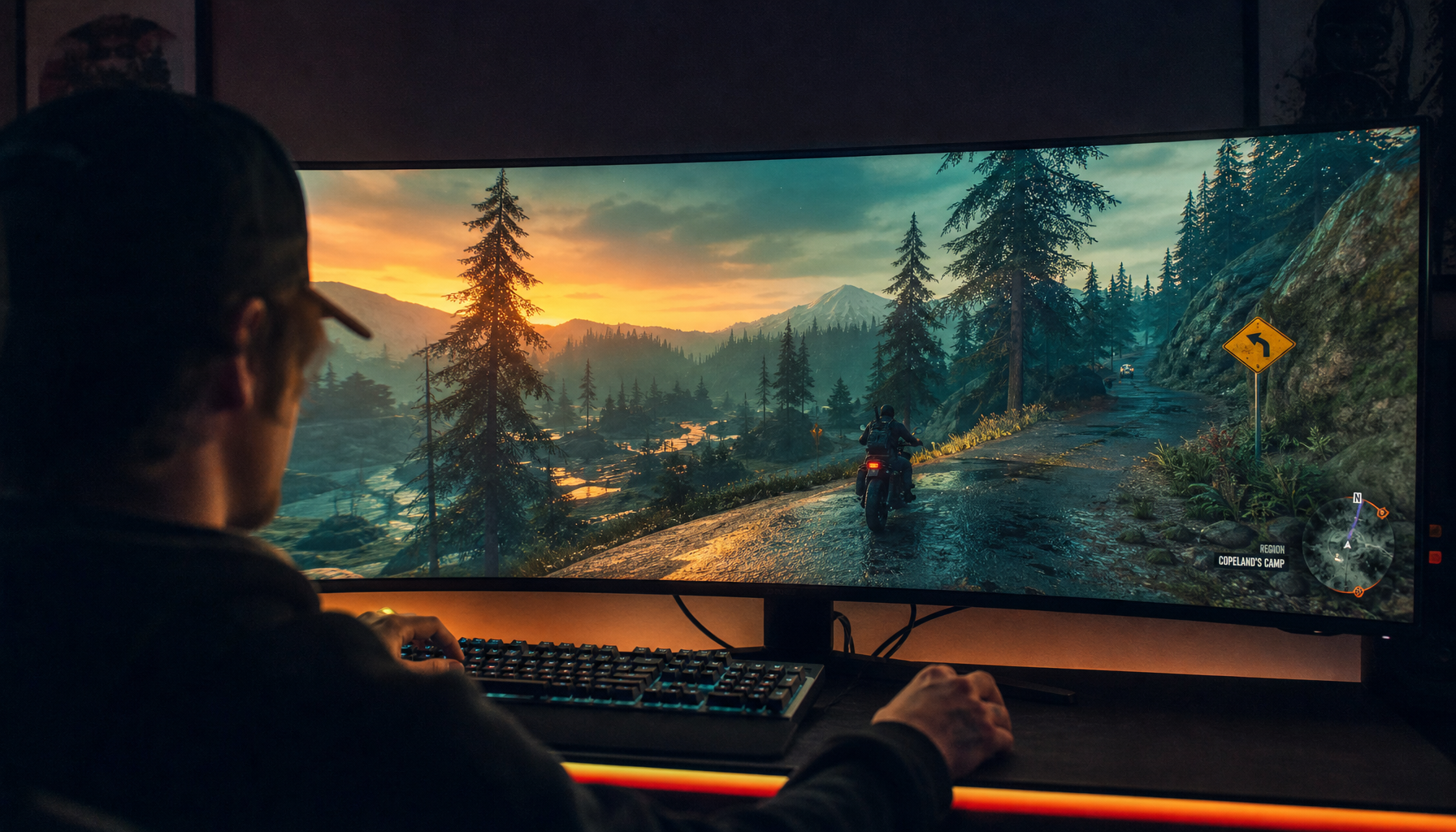
For cinematic single-player games, HDR RPGs, racing, flight sims, and immersive open-world titles, local dimming quality matters more. A well-tuned 144Hz or 165Hz Mini-LED monitor can look more convincing than a faster LCD with weak dimming because bright skies, neon signs, muzzle flashes, and dark interiors keep their depth. In this use case, the best display is not just the fastest one; it is the one whose backlight transitions stay controlled during motion.
For office productivity and portable smart screens, refresh rate improves comfort, but local dimming should be treated carefully. A 120Hz panel can make scrolling and pen input feel smoother, while local dimming can make HDR video pop after work. During spreadsheets, browser tabs, and document editing, uniform brightness usually wins. Some Mini-LED monitor recommendations reflect this split, suggesting Local Dimming Off for SDR office and web use, then enabling it for HDR content.
Practical Settings That Usually Work
Start by setting the monitor to its highest stable refresh rate in your operating system or GPU control panel. Many high-refresh displays do not run at their maximum setting automatically, and gaming refresh rate depends on display settings, GPU settings, game settings, ports, and cables working together.
Then separate SDR and HDR profiles. For SDR desktop work, local dimming off or low is usually the cleanest choice because it prevents brightness pumping around windows and text. For HDR games and movies, enable local dimming and test the middle setting before jumping to the strongest mode. Maximum dimming often gives the deepest blacks, but it can also increase halos, suppress small highlights, or crush dark detail.
Use a repeatable test scene rather than guessing. In a game, stand in a dark room with a bright HUD, flashlight, subtitle, or small white icon, then pan slowly and quickly. If you see a glow dragging behind the object, the dimming response is too slow or too aggressive for that content. If shadow detail disappears, lower the dimming strength or halo suppression. If blacks look gray and HDR lacks impact, raise the dimming level.

VRR adds another wrinkle. Variable refresh rate helps match the monitor’s refresh behavior to the GPU’s frame output, reducing tearing and improving smoothness, but changing frame timing can expose weak dimming transitions in scenes with unstable frame rates. If a game swings between 70 FPS and 140 FPS, the backlight algorithm has less predictable pacing than it would at a locked frame rate. In visually rich HDR games, a slightly lower capped frame rate can sometimes look cleaner than an uncapped frame rate that constantly fluctuates.
Buying Advice for Monitors and Smart Displays
Do not buy from refresh rate alone, and do not buy from dimming zone count alone. A 240Hz Mini-LED monitor with poor zone transitions may disappoint in HDR motion, while a 144Hz model with better tuning may deliver a more convincing image. Look for third-party testing that evaluates input lag, pixel response, blooming, black uniformity, and local dimming behavior in game mode.
Full-array local dimming is usually the stronger LCD approach because LEDs sit behind the screen in controllable zones, while edge-lit local dimming works across larger regions and is less precise. Backlight comparisons generally make the same broad distinction: controllable zones can deliver deeper blacks and richer contrast because they manage light more precisely than edge-lit designs.
For a 27-inch to 32-inch gaming monitor, treat zone count as a starting clue, not a verdict. Hundreds of zones can deliver entry-level HDR improvement, while higher-end Mini-LED designs with more zones can reduce blooming further. Still, the dimming algorithm decides whether those zones transition smoothly at high refresh rates. Strong hardware with weak tuning still looks weak.
For portable smart screens and productivity displays, also consider power and heat. Local dimming can improve efficiency by lighting only active bright areas, but dense Mini-LED arrays need careful thermal design. High refresh rate also uses more power. On a portable display, a 120Hz mode with sensible brightness may be more practical than chasing maximum refresh and maximum HDR output at all times.
The Best Balance by Use Case
For esports, aim for 240Hz or higher with excellent pixel response, low input lag, and VRR, then use local dimming only if it does not distract from target visibility. For mixed gaming and HDR, 144Hz to 180Hz with a well-reviewed Mini-LED implementation is often the value-oriented sweet spot. For office-first users, 100Hz to 120Hz improves comfort, while local dimming should be reserved for HDR video, creative review, or after-hours gaming.
The relationship between refresh rate and local dimming response time is not a rivalry; it is a coordination problem. The panel must update quickly, the pixels must transition cleanly, and the backlight must follow the image without adding its own delay. When all three line up, an LCD monitor can feel fast, look deep, and stay reliable for both work and play.