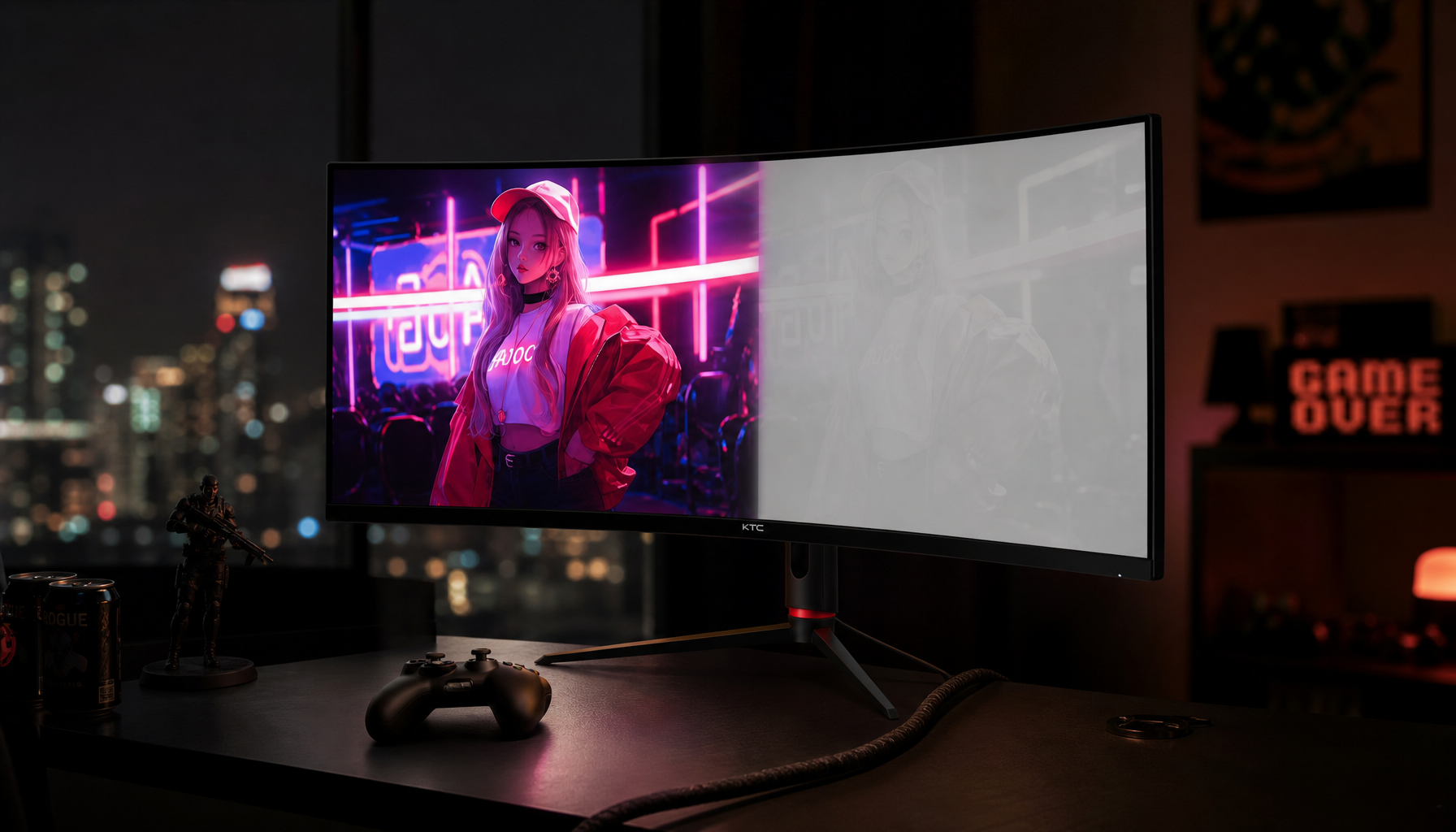
Some monitors dim broadly because their backlight zones are large, limited in number, or controlled by conservative algorithms that protect black levels over small-area brightness. In practice, one dark corner can make the monitor lower a whole column, row, or neighboring zone cluster, so the entire image feels like it is “breathing.”

Local Dimming Is Not Pixel-Level Control
Most local dimming monitors are still LCDs, so the image layer does not create light by itself. The LCD blocks or passes light from an LED backlight, and local dimming works by splitting that backlight into controllable sections. One display standard resource explains that global dimming adjusts the whole backlight as one zone, while local dimming splits it into independently adjusted segments.
That “independently” part has limits. If a monitor has edge-lit local dimming, a single zone may cover a tall strip of the screen. If it has full-array local dimming, each zone may still cover hundreds or thousands of pixels.
So when one corner turns dark, the monitor is not asking, “Should this one corner get darker?” It is asking, “What should this entire backlight zone do?”
Why One Dark Corner Can Pull Down the Whole Image
The dimming processor reads the frame, predicts what the next frame needs, and chooses a backlight level for each zone. If the content has a dark corner, a bright HUD, subtitles, a mouse pointer, or a high-contrast window edge, the algorithm has to compromise.
The effect can look almost global when the monitor has a low zone count, because each zone covers too much screen area. Edge-lit layouts can make the issue more obvious by dimming a whole vertical or horizontal strip at once. Firmware tuning also matters: some monitors protect black levels aggressively, dim nearby zones to reduce halos, or transition slowly enough that brightness changes lag behind fast scene changes.
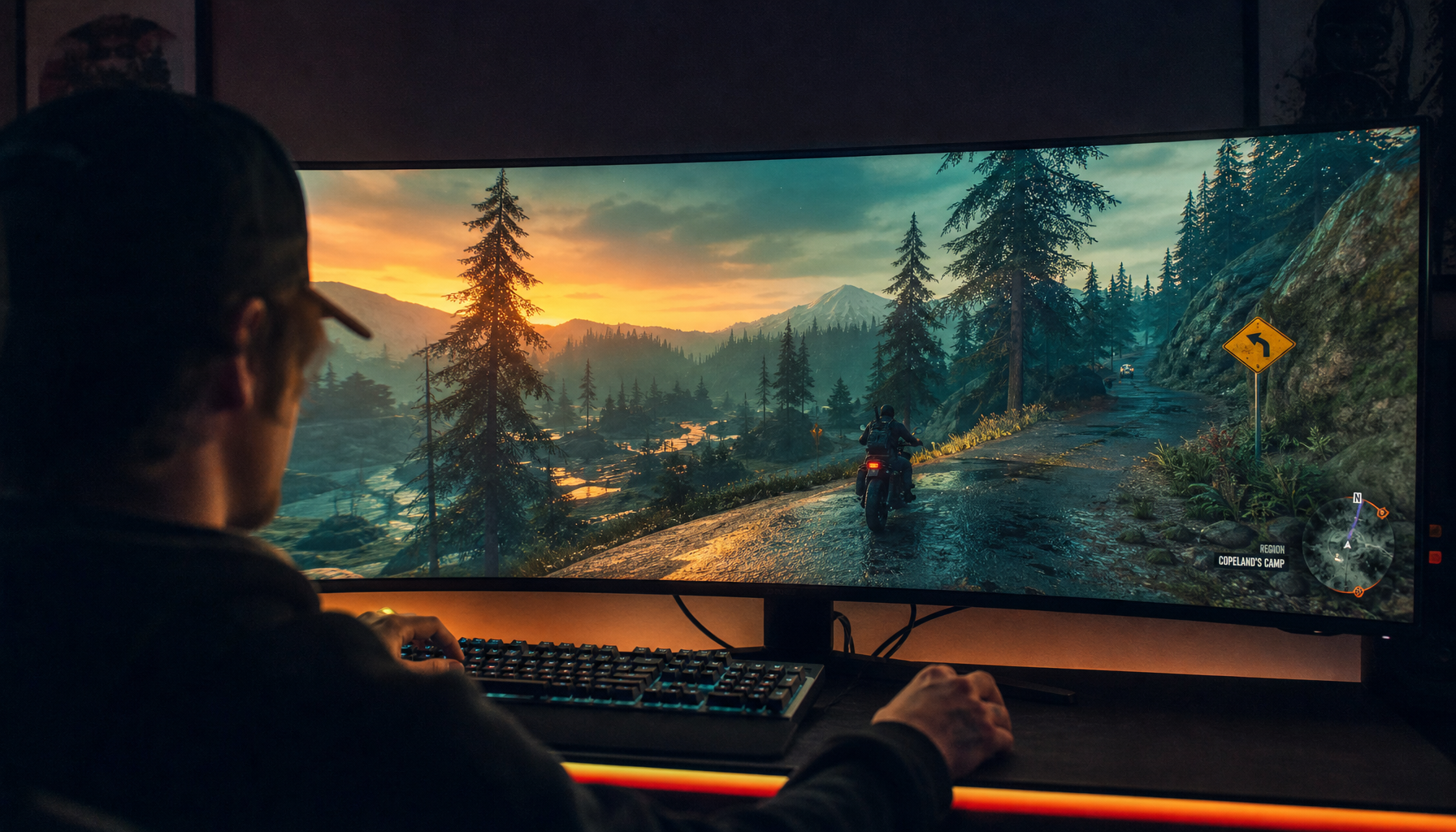
This is especially visible in games with dark maps, night skies, inventory screens, or corner-based UI. A mini-LED monitor with more zones usually handles this better, but more zones do not guarantee better tuning.

Contrast Gains Come With Trade-Offs
Local dimming exists because LCD panels struggle to produce deep blacks with a constant backlight. Higher contrast improves perceived depth, shadow separation, and HDR punch; contrast ratio is the gap between the brightest white and darkest black a display can produce.
The trade-off is control precision. A monitor can make blacks darker by lowering the backlight, but if the zone is too large, nearby midtones and highlights may drop too. That is the dimming you notice across the desktop or game image.
This is why a monitor can look impressive in a full-screen HDR scene but awkward with mixed content: a bright spreadsheet beside a dark video, a white cursor over a black background, or a game HUD floating over a shadowy corner.

Two monitors with the same zone count can behave very differently because firmware tuning matters as much as hardware layout.
What You Can Do About It
You usually cannot fix the zone grid, but you can reduce the distraction.
Try these quick adjustments:

- Use local dimming on medium: High often deepens blacks but increases brightness pumping.
- Disable it for desktop work: Static windows make zone transitions more obvious.
- Keep HDR for real HDR content: SDR desktop use often exposes dimming quirks.
- Check black equalizer settings: Raised shadow detail can reduce sudden zone drops.
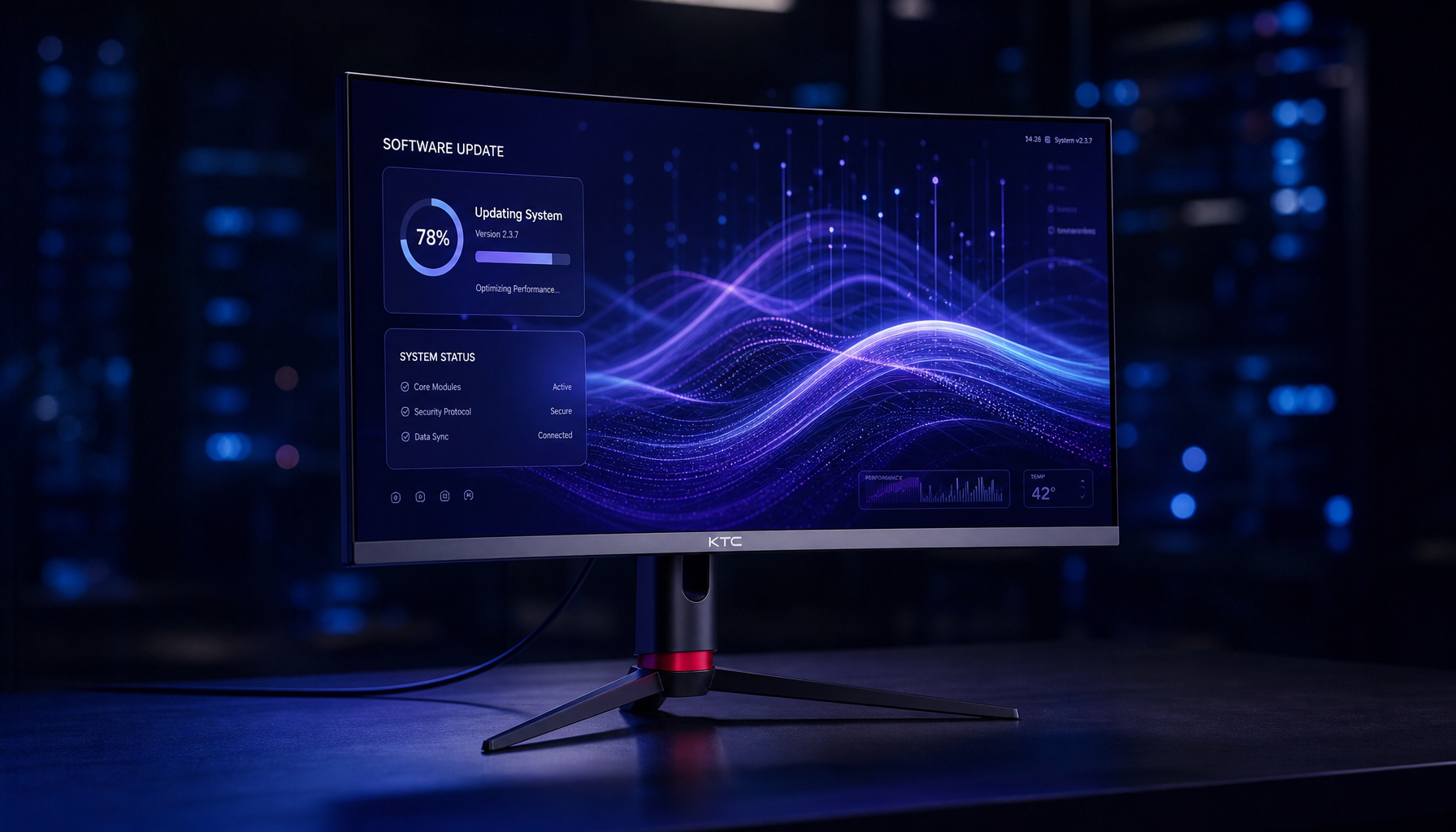
- Update firmware: Manufacturers sometimes improve dimming behavior after launch.
For calibration, avoid copying someone else’s settings blindly. Monitor settings vary by unit, room lighting, and use case, so tune for your desk and your content.
The Buying Lesson
If you want reliable office productivity, smooth desktop brightness, and clean text work, a strong native-contrast IPS, VA, or OLED-style alternative may feel steadier than a low-zone local dimming monitor. If you want immersive HDR gaming, prioritize full-array mini-LED with many zones, strong blooming control in independent reviews, and adjustable dimming strength.
The best-value monitor is not the one with the loudest HDR badge. It is the one whose dimming behavior matches how you actually play, work, and watch.