Some local dimming systems cause eye strain because the monitor keeps changing backlight zones as documents, cursors, windows, and dark UI panels move, forcing your eyes to adapt to shifting brightness, contrast, halos, and flicker-like behavior for hours.
Do your eyes feel fine for the first spreadsheet, then irritated by midafternoon when you switch between dark-mode apps, white web pages, and HDR video previews? A practical monitor-settings pass can often reduce brightness swings, glare contrast, and dry-eye triggers without giving up the display’s sharpness or color depth. You’ll learn what local dimming does, why it can feel harsh during work, and how to tune or choose a screen that stays comfortable through a full session.
What Local Dimming Actually Does
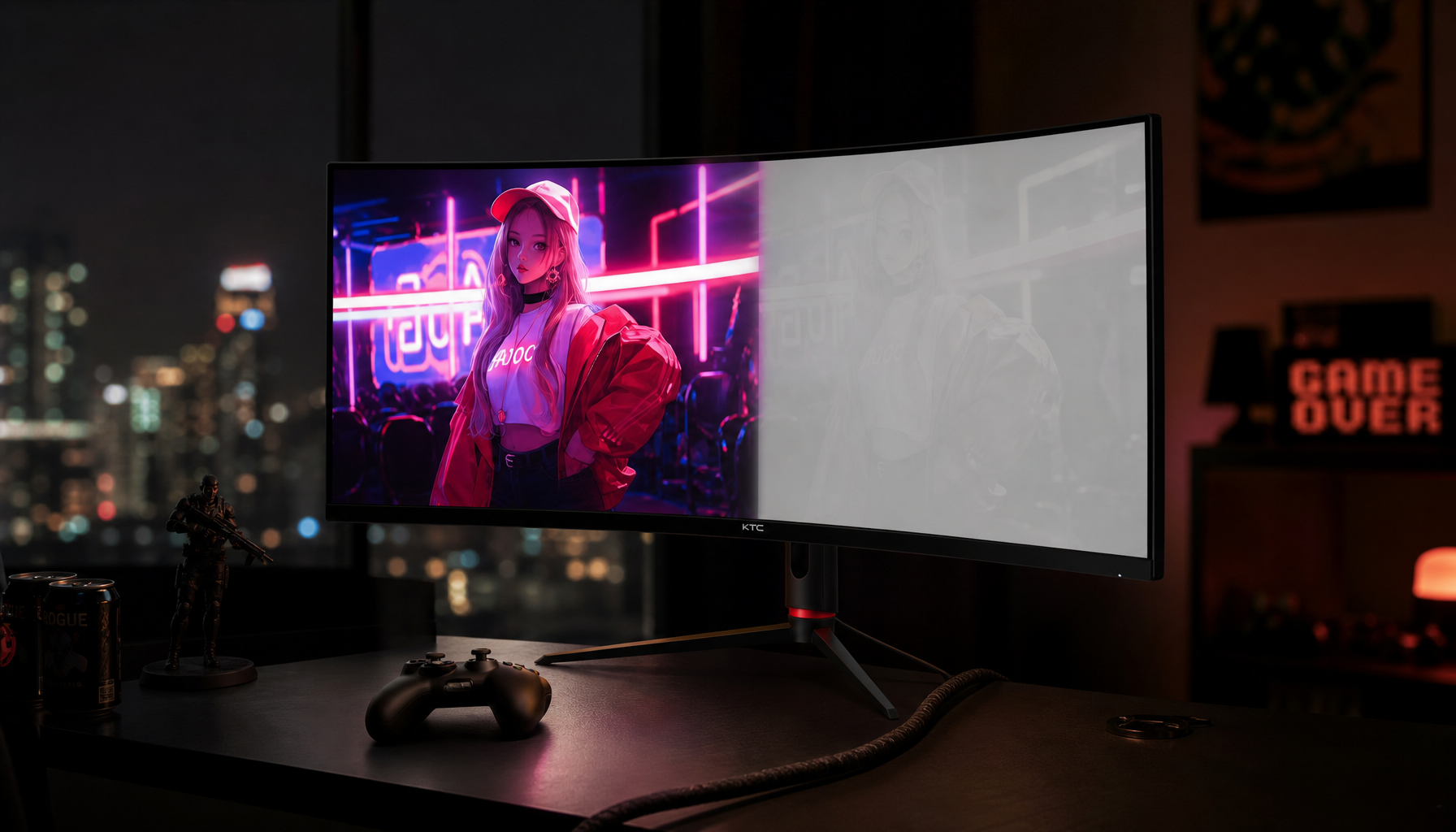
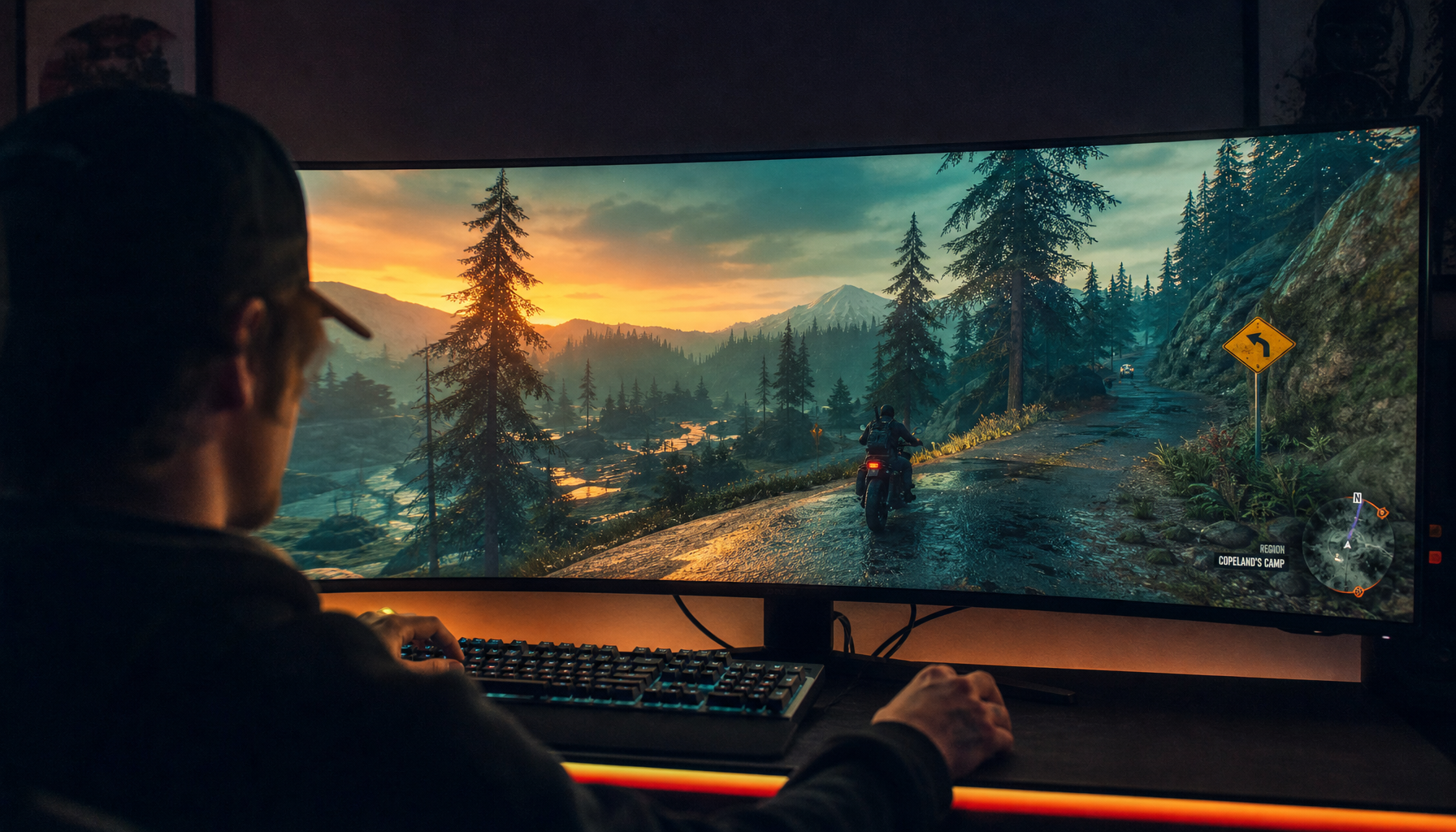
Local dimming is a backlight control system that brightens and darkens specific zones of an LCD monitor instead of lighting the whole screen evenly. The goal is simple: make black areas look darker while keeping bright highlights punchy, especially for HDR movies, cinematic games, and dark scenes with bright effects.
The catch is that backlight zones are much larger than individual pixels. When a white mouse pointer crosses a dark coding window, the monitor may brighten the zone behind it. When a small notification appears over a black desktop, that zone may pulse brighter. When you scroll a document, the algorithm keeps recalculating where light should go. In entertainment, these changes can look dramatic. In office work, they can become visual noise.
That is why a monitor can feel premium during a night-racing game but tiring during eight hours of tabs, text editors, dashboards, and video calls. Local dimming was built to improve contrast, not necessarily to keep a static work surface visually calm.
Why It Can Strain Your Eyes During Work
Your Eyes Keep Re-Adapting to Moving Brightness
Eye strain is rarely caused by one setting alone. Digital eye strain commonly involves dry eyes, tired eyes, blurred vision, headaches, and neck or shoulder discomfort during prolonged screen use. Local dimming can add another load: repeated micro-adjustments in brightness across the screen.
A real-world example is dark mode with a bright white document pane. If your email client, calendar, and browser each sit in different zones, the backlight may dim behind sidebars and lift behind white content. Every time you move a window or open a menu, the screen’s perceived contrast changes. Your eyes are not only reading text; they are also adapting to a display surface that is subtly re-lighting itself.

For gaming, this behavior may increase depth. For work, stable luminance usually matters more than dramatic black levels.
Blooming and Halos Make Text Edges Feel Less Stable
Blooming is the glow around bright objects on dark backgrounds. On a Mini LED monitor, it may show up around subtitles, cursors, white icons, spreadsheet gridlines, or text in dark mode. The fewer or larger the dimming zones, the more obvious the halo can become.

This matters because office work depends on clean edge recognition. If the cursor, text, or selection highlight appears to glow, your visual system has to separate useful detail from the backlight artifact. Over a long work block, that can feel like reduced clarity even when the panel resolution is excellent.
A 27-inch 4K screen can deliver crisp text, but if aggressive dimming creates halos around small UI elements, perceived comfort may fall below what the specs suggest. Sharpness on paper and stability in use are not the same thing.
Bright Screen, Dark Room Is a Bad Pairing
Local dimming often looks most impressive in a dark room because blacks appear deeper. Unfortunately, a very bright monitor against a dark wall can make your pupils and focusing system work harder. Eye strain is a workstation issue involving lighting, glare, viewing habits, and screen setup, not just the display panel.
For a simple test, open a white document at night with the room lights off. If the screen feels like the main light source in the room, local dimming may exaggerate the jump between white windows and dark UI panels. Bias lighting behind the monitor can soften that contrast by making the wall less dark, which often makes black levels feel better without forcing the display to run aggressively.
Dimming Behavior Can Interact With Flicker Sensitivity
Not every uncomfortable monitor is flickering in the same way. Some discomfort comes from pulse-width modulation, some from backlight transitions, some from wide color gamut backlights, and some from OLED-style brightness behavior. Display comfort discussions often compare backlight technologies, dimming methods, and color-gamut systems when diagnosing strain.
For local dimming specifically, the issue is often not classic visible flicker but perceived instability. A zone brightens, dims, trails a moving object, or crushes shadow detail. If you are sensitive to brightness modulation, migraines, dry eye, or contact lens discomfort, those changes can become more noticeable than they are for another user sitting at the same desk.
Pros and Cons for Work and Gaming
Local dimming behavior |
Benefit |
Possible work-session downside |
Deeper blacks |
Better HDR contrast and dark-scene immersion |
Dark mode can show halos around text, cursor, and icons |
Brighter highlights |
More impact in games, movies, and HDR previews |
White windows may feel too intense in a dim room |
Zone-based backlight control |
Better contrast than basic edge lighting |
Brightness shifts as windows and UI elements move |
High local dimming strength |
Stronger perceived depth |
More blooming, black crush, and adaptation fatigue |
Low or off setting |
More stable desktop image |
Weaker HDR effect and grayer blacks |
The value judgment depends on what you do most. A gaming setup benefits from contrast, low blur, high refresh rate, and HDR impact. A productivity setup benefits from steady whites, clean text, comfortable brightness, and low glare. A hybrid setup needs quick control over both.
How to Tune Local Dimming for Long Work Sessions
Start by separating work mode from entertainment mode. For documents, coding, spreadsheets, and web research, set local dimming to low or off if your monitor allows it. Save high local dimming for HDR gaming, movies, and visual content where dynamic contrast is worth the artifacts.
Next, lower brightness until a white page looks similar to a sheet of paper on your desk, not like a light panel. If you work in a dim room, add soft indirect light behind or near the monitor instead of pushing the screen brighter. This broader eye-comfort point matters because real viewing behavior includes brightness, flicker control, and ambient conditions, not only blue-light reduction.

Use SDR for routine work unless HDR is required. Desktop HDR can make ordinary windows look too bright or inconsistent, especially on monitors that aggressively manage dimming zones. If you need HDR for content review, switch it on for that task, then return to an SDR work preset.
Avoid extreme dark-mode contrast if it bothers you. A pure black background with pure white text is a stress test for local dimming. A charcoal gray theme with slightly softened text often reduces halo visibility while preserving the low-glare feel. For example, a code editor with a dark gray background and off-white text will usually feel calmer than one using black and bright white.
Clean the screen and remove reflected glare. Smudges and reflections reduce text clarity, which makes blooming and brightness shifts feel worse. Position windows to the side rather than directly behind the monitor, and keep glossy desk surfaces from reflecting bright UI areas back into your eyes.
Ergonomics Still Matter More Than One Display Feature
Local dimming can be the trigger you notice, but the whole workstation decides whether your eyes recover or accumulate fatigue. Eye-strain prevention commonly points to monitor distance, height, room lighting, posture, and breaks as practical causes to fix.
Place the screen about an arm’s length away, with the top edge at or slightly below eye level. A slight downward gaze is usually easier on the eyes and neck than looking upward. If you use two displays, put the primary monitor directly in front of you and angle the secondary inward so you are not rotating your neck all day.

Breaks are not a productivity tax; they are part of stable visual performance. The 10-10-10 rule asks heavy screen users to look at something 10 ft away for 10 seconds every 10 minutes, while the familiar 20-20-20 pattern uses 20 ft, 20 seconds, and 20-minute intervals. Either habit gives your focusing muscles and blink pattern a reset before discomfort builds.
When to Choose Mini LED, OLED, or Standard LCD
Mini LED with many dimming zones can be excellent for HDR gaming and media because it improves brightness and contrast while avoiding OLED burn-in concerns. For long office days, choose a model with adjustable local dimming levels, a usable SDR mode, good text clarity, and ergonomic height and tilt controls. Zone count helps, but tuning quality matters just as much.
OLED avoids LCD local dimming artifacts because each pixel emits its own light. That means no backlight blooming around a cursor. However, OLED can bring other tradeoffs, including text-rendering quirks on some panels, brightness management, and burn-in risk for static taskbars and office layouts.
A conventional IPS or VA LCD without aggressive local dimming may look less cinematic, but it can be more predictable for office work. If your day is mostly writing, spreadsheets, browser tabs, and video meetings, stable backlighting can beat dramatic contrast.
When Eye Strain Means More Than Monitor Settings
If discomfort continues after lowering brightness, reducing local dimming, improving room lighting, and taking breaks, treat it as a health signal rather than a specs problem. Screen use can make dry eye, uncorrected vision, contact lens irritation, migraine sensitivity, or focusing issues more obvious. Persistent pain, double vision, severe headaches, or blur that does not improve with rest deserves an eye exam.
A high-performance display should extend your focus, not make you negotiate with your eyes by lunchtime. For work, tune for stability first and spectacle second; for play, bring back the contrast when immersion matters. The best monitor setup is the one that lets you stay sharp at 4:00 PM, not just impressed at first boot.