Competitive players usually turn per-object motion blur off because it softens enemy edges at the same moment a high-refresh monitor is trying to make motion easier to read. On modern gaming displays, cleaner motion usually comes from more real FPS, faster pixel response, and lower-persistence display modes, not from adding blur back into the image.
You buy a 240Hz monitor, load up a shooter, flick to a target, and the image still looks softer than you expected right when you need a clean shot. On 144Hz to 360Hz displays, that softness stands out more because the panel is already revealing more motion detail than an older 60Hz screen. The payoff here is simple: once you separate game-added blur from monitor blur, it becomes much easier to tune your setup and buy the right display.
Why Per-Object Motion Blur Still Costs Accuracy
The target is the part being blurred
Many competitive players disable motion blur, including per-object blur, because crisp target edges are easier to track than softened ones. Even when a game limits blur to moving objects instead of the entire screen, those moving objects are often the enemy model, your weapon, muzzle flash, or a fast-moving visual cue you need for timing.

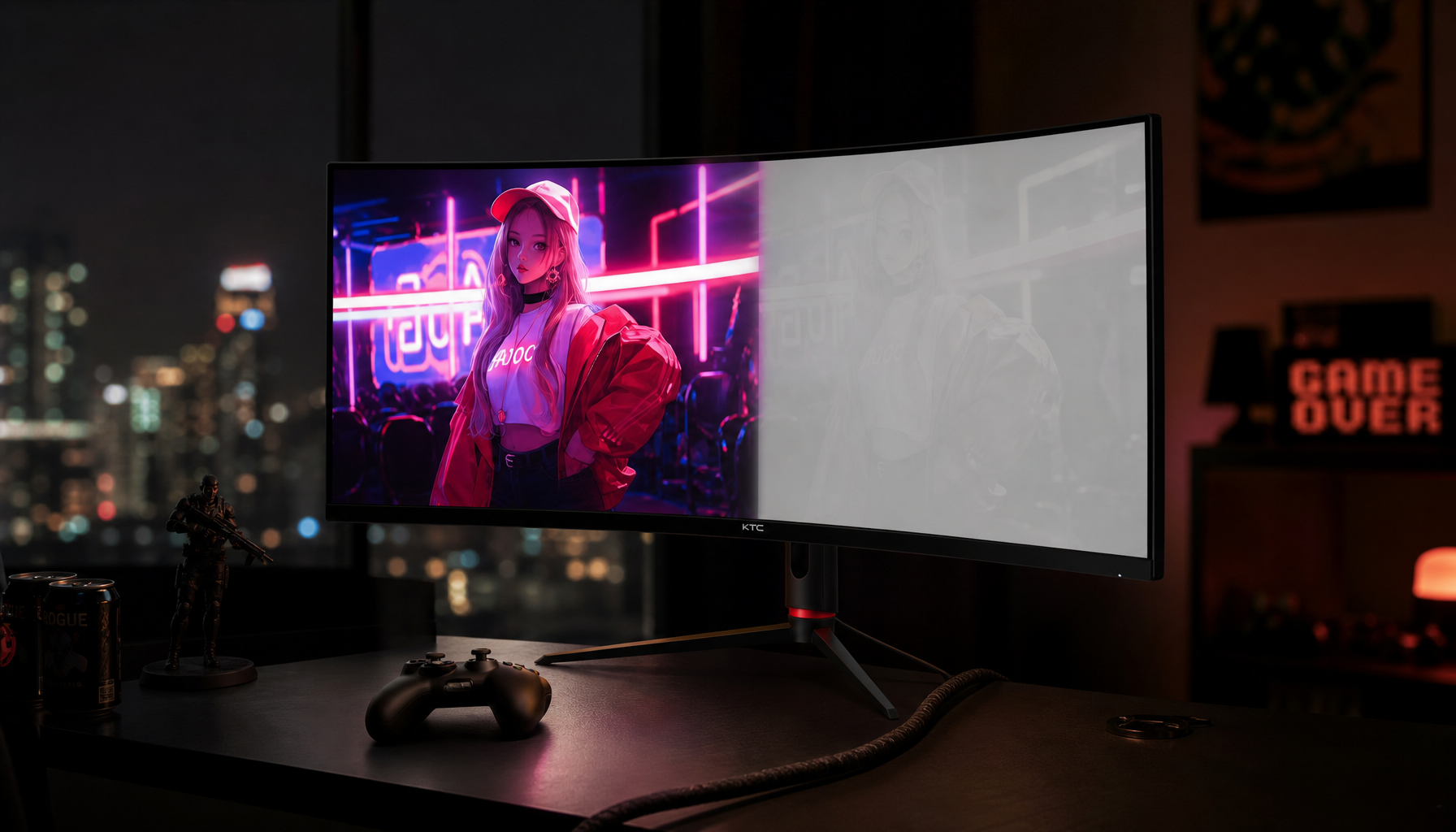
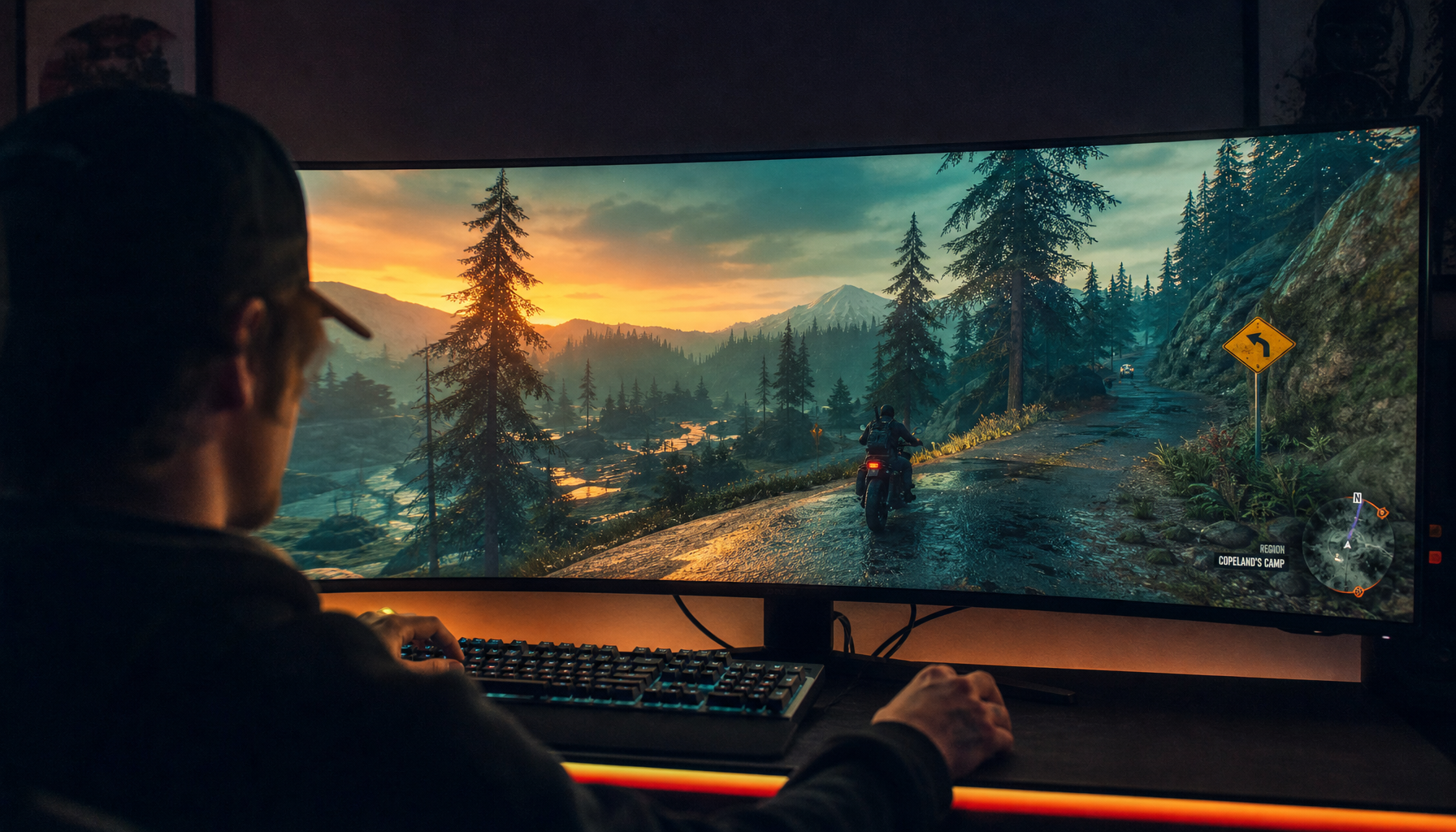
Motion clarity helps players track targets and react faster, which is why blur feels especially costly in shooters, racing games, and any title built around fast camera movement. On a 24-inch esports monitor or a 27-inch 1440p panel, the benefit of high refresh is that motion becomes easier to parse frame by frame. Per-object blur works against that by smoothing detail that the monitor is finally showing more clearly.
That tradeoff is why competitive settings often look less “cinematic” than default presets. The goal is not prettier motion during a replay or a scripted animation. The goal is faster recognition of a shoulder peek, a head-level strafe, or a target crossing the edge of the screen.
Higher Refresh Rate Reduces Blur, but It Does Not Remove It
High Hz lowers persistence, not to zero
Sample-and-hold blur happens because a display holds each frame until the next refresh, and your eyes smear that held image across the retina while tracking motion. Higher refresh helps by shortening that hold time, but it never reaches zero on a normal sample-and-hold display. That matters because in-game blur is being layered on top of blur the display already creates by design.

Approx. frame hold time |
Motion at 960 px/s |
|
60Hz |
16.7 ms |
16 px |
120Hz |
8.3 ms |
8 px |
240Hz |
4.2 ms |
4 px |
360Hz |
2.8 ms |
3 px |
480Hz |
2.1 ms |
2 px |
A monitor’s refresh rate is not the same as unique motion detail, because the game still has to deliver matching frame rate. A 240Hz monitor running a game at 80 fps is not giving you 240 distinct motion positions per second. That is one reason competitive players usually see less value in motion blur as they move up to faster displays: the monitor already needs every clean frame it can get.
The practical takeaway for display buyers is that a 240Hz or 360Hz monitor reduces the need for blur as a “smoother motion” crutch. Once frame hold time drops and target motion becomes easier to read, extra blur often feels like giving back clarity you just paid for.
Not All Blur Comes From the Same Place
Game blur, persistence blur, and ghosting are different problems
High-refresh monitors can still look blurry for several different reasons, and that is where a lot of confusion starts. In-game motion blur is an effect the developer adds. Sample-and-hold blur comes from frame persistence on the display. Ghosting comes from pixels changing too slowly and leaving trails. Competitive players disable per-object blur because it is the one blur source they can remove immediately with no hardware change.

Motion clarity depends heavily on response time, panel type, and blur-reduction modes, which is why two 144Hz monitors can look very different in motion. A fast OLED can sit around 0.02 ms to 0.03 ms response time, while some VA panels can show visible dark smearing and may behave more like 5 ms to 10 ms in harder transitions. Fast IPS remains the safer LCD choice for buyers who want strong motion handling without OLED pricing or burn-in concerns.
Monitor overdrive speeds transitions but can also create inverse ghosting, so the “fastest” setting is not always the best one. This is one of the easiest mistakes to make on a new gaming monitor: users leave the panel on default or max out overdrive, then blame the game when the real problem is overshoot, smear, or poor tuning.
The Monitor Specs That Matter More Than the Blur Toggle
What to prioritize when buying for competitive play
Higher refresh rate helps, but motion clarity is shaped by more than refresh alone. If your goal is ranked shooters or aim-heavy play, the order of importance is usually stable FPS, suitable refresh rate, fast response behavior, and only then extra features like strobing or black frame insertion.
Option or spec |
What it improves |
Competitive benefit |
Main tradeoff |
Disable per-object blur |
Removes game-added softness |
Cleaner target edges |
Less cinematic look |
Unique motion positions |
Better tracking and timing |
Higher GPU load |
|
144Hz to 165Hz |
Big jump from 60Hz |
Strong value for most players |
Less headroom than 240Hz+ |
240Hz to 360Hz |
Lower persistence |
Better tracking in esports titles |
Requires stronger hardware |
Fast IPS |
Lower smear than many VA panels |
Safer LCD choice for FPS |
Weaker contrast than VA |
Near-instant transitions |
Excellent motion clarity |
Burn-in risk, higher price |
|
Strobing or BFI |
Lower perceived persistence blur |
Very sharp motion |
Lower brightness, possible VRR limits |
Display size and panel choice also affect what feels “clean” in motion. A 24-inch screen is still the esports standard because it keeps more of the action in central vision. A 27-inch 1440p monitor is the strongest all-around choice for many PC players, especially if the system can stay near 144 fps or higher. A model like a brand’s 27-inch QHD high-refresh gaming monitor fits that same lane as a 27-inch QHD high-refresh display suited to competitive play. For pure competitive play, that is often a better buy than a larger, more immersive screen with weaker motion handling.
Curved ultrawides can make edge softness easier to notice during flicks, strafes, and cornering, especially on 21:9 or 32:9 models with aggressive curves. That does not make ultrawides bad monitors. It just means they are usually better matched to racing, flight, and open-world games than to the strictest competitive FPS use case, where a flat 24-inch to 27-inch display remains the cleaner tool.
Spec-sheet traps to avoid
Time-only blur metrics like MPRT are incomplete, so buyers should not treat a single “1 ms” claim as proof of great motion clarity. An industry clarity rating is more useful because it is based on high-speed-camera testing of clear versus blurry pixels. In practical terms, that makes it a better hint than marketing-grade gray-to-gray claims when you are trying to compare motion performance across gaming monitors.
Before You Blame the Panel, Check the Setup
A blurry game is not always a bad monitor
A good first troubleshooting step is an FPS counter, because a 144Hz monitor is only as clear as the frame delivery feeding it. One player who moved from 60Hz to a 144Hz display with sync technology reported blurry glory-kill animations even though normal gameplay felt smooth. Another player on a 1440p 144Hz monitor running up to 200 fps reported no such issue and said they disable both motion blur and depth of field.

That same case showed why frame pacing and engine behavior matter. The player saw 144 fps with V-Sync on and 144 fps to 200 fps with V-Sync off, but capping the game to 60 fps removed the blur in the affected sequences. Later replies pointed out that some cutscenes are capped at 60 fps, while the rest of the game can run much higher, and that some variable-refresh monitors may need to be manually reset from 60Hz back to 144Hz after a mode switch.
If only one game looks blurry, the in-game blur setting may be the cause. If every game looks blurry, check whether the monitor is actually running at its maximum refresh rate, whether overdrive is set sensibly, whether VRR is active, and whether the panel itself is known for dark smear or overshoot. In other words, disable per-object blur first, but do not stop the diagnosis there.
FAQ
Q: If I have a 240Hz monitor, should motion blur always be off?
A: For competitive shooters, usually yes. A 240Hz display already reduces persistence blur compared with 60Hz or 144Hz, so adding per-object blur often takes away target definition you would rather keep. For slower single-player games, it becomes a preference choice instead of a performance choice.
Q: Is per-object motion blur less harmful than full-screen motion blur?
A: Usually yes, because it does not smear the entire camera view. The problem is that it still blurs the exact moving objects you are trying to read, such as enemies, weapon animations, and fast effects.
Q: What helps more than leaving blur on: a better monitor or better settings?
A: Better settings come first, especially turning blur off and keeping FPS close to refresh rate. After that, a faster monitor with good response behavior, sensible overdrive, and strong real-world motion handling will do more for clarity than motion blur ever will.
Practical Next Steps
The short version is that competitive players disable per-object motion blur because it hides detail on the very objects they need to track. High-refresh gaming monitors already spend their performance budget reducing persistence and improving motion clarity, so adding blur back into the image usually cuts against the reason to own a fast display in the first place.
Use this checklist before your next match or your next monitor purchase:
- Turn off per-object motion blur first, then test tracking in a repeatable aim drill or training map.
- Confirm the monitor is actually running at its rated refresh rate in the operating system and in the GPU control panel.
- Use an FPS counter and aim for stable frame rate close to the monitor’s refresh rate.
- Test one or two overdrive modes and keep the one with the least visible smear or inverse ghosting.
- If you are buying a new display for esports, prioritize a flat 24-inch to 27-inch fast IPS or OLED panel with proven motion handling.
- If you want the sharpest motion possible, test strobing or BFI, but expect lower brightness and possible VRR limitations.
References
- Just bought a 144hz and regret it…. :: DOOM 综合讨论
- Sample-and-Hold Blur: Why High Refresh Rates Aren’t Enough
- Please stop using your high refresh rate monitor on default settings
- Why do I see motion blur at 240Hz compared to 60Hz?
- Motion clarity: what it is, why it matters, and how to pick the right gaming monitor for your setup
- How to Choose a Gaming Monitor for Your PC
- Curved Gaming Monitor Motion Blur: Why It Feels Worse
- 3 monitor specs that affect motion clarity more than refresh rate
- Nvidia’s new G-Sync Pulsar monitors target motion blur at the …