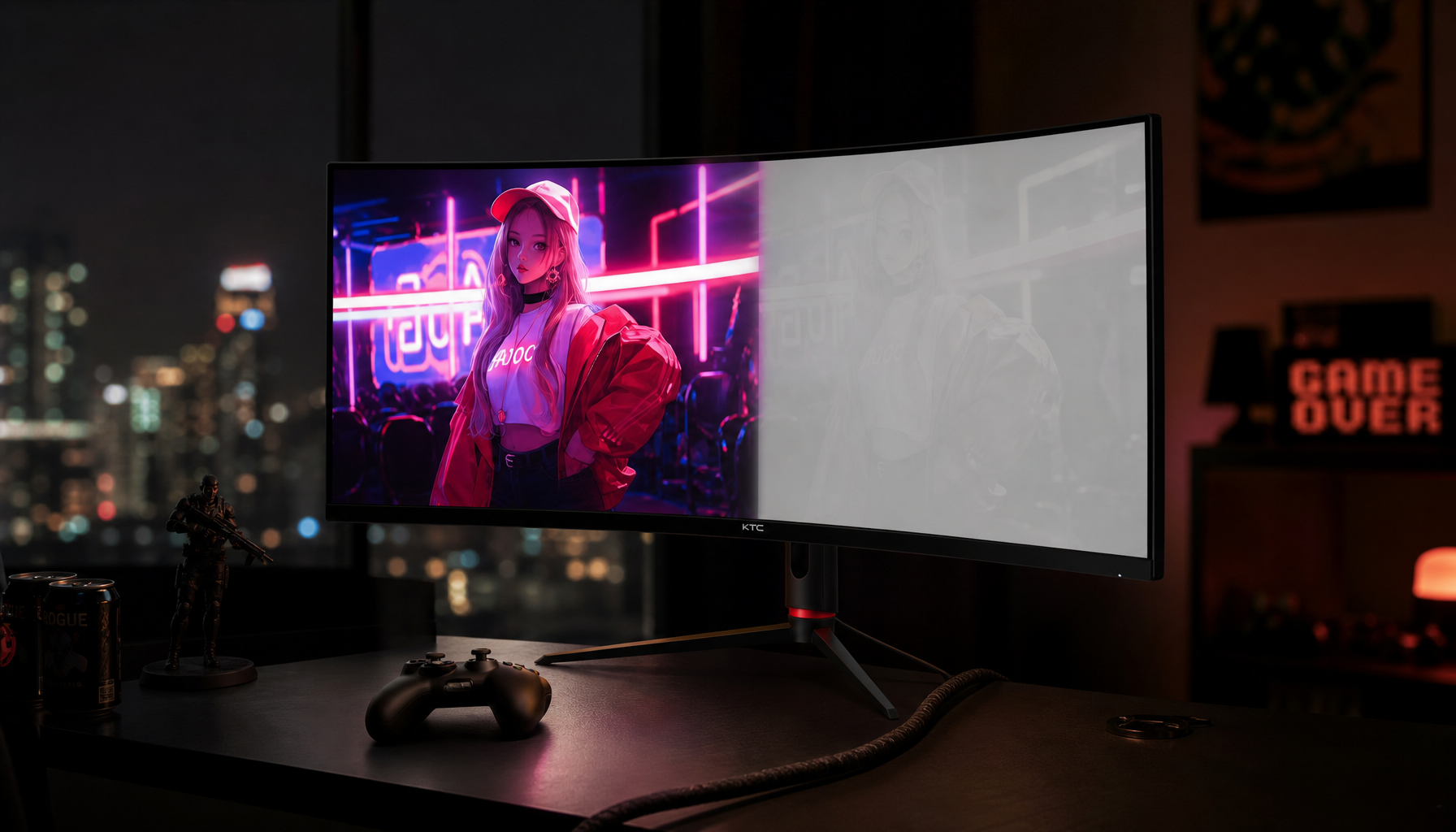
Uneven panel aging happens because different parts of a screen handle different levels of brightness, heat, pressure, and static content over time.
The Core Cause: Unequal Workload Across the Screen
A display does not age as one perfectly even surface. Some areas simply work harder than others.
On LCD monitors, the backlight is usually the main wear point. Over time, LEDs lose output, optical films shift, adhesives age, and panel materials respond differently to heat and light. Display lifecycle problems often include backlight dimming and color shift, especially in products that run for long hours.
On OLED and other self-emissive panels, each pixel produces its own light. Static taskbars, HUDs, scoreboards, browser tabs, editing timelines, and office ribbons can age those pixel groups faster because they stay bright in the same places day after day.
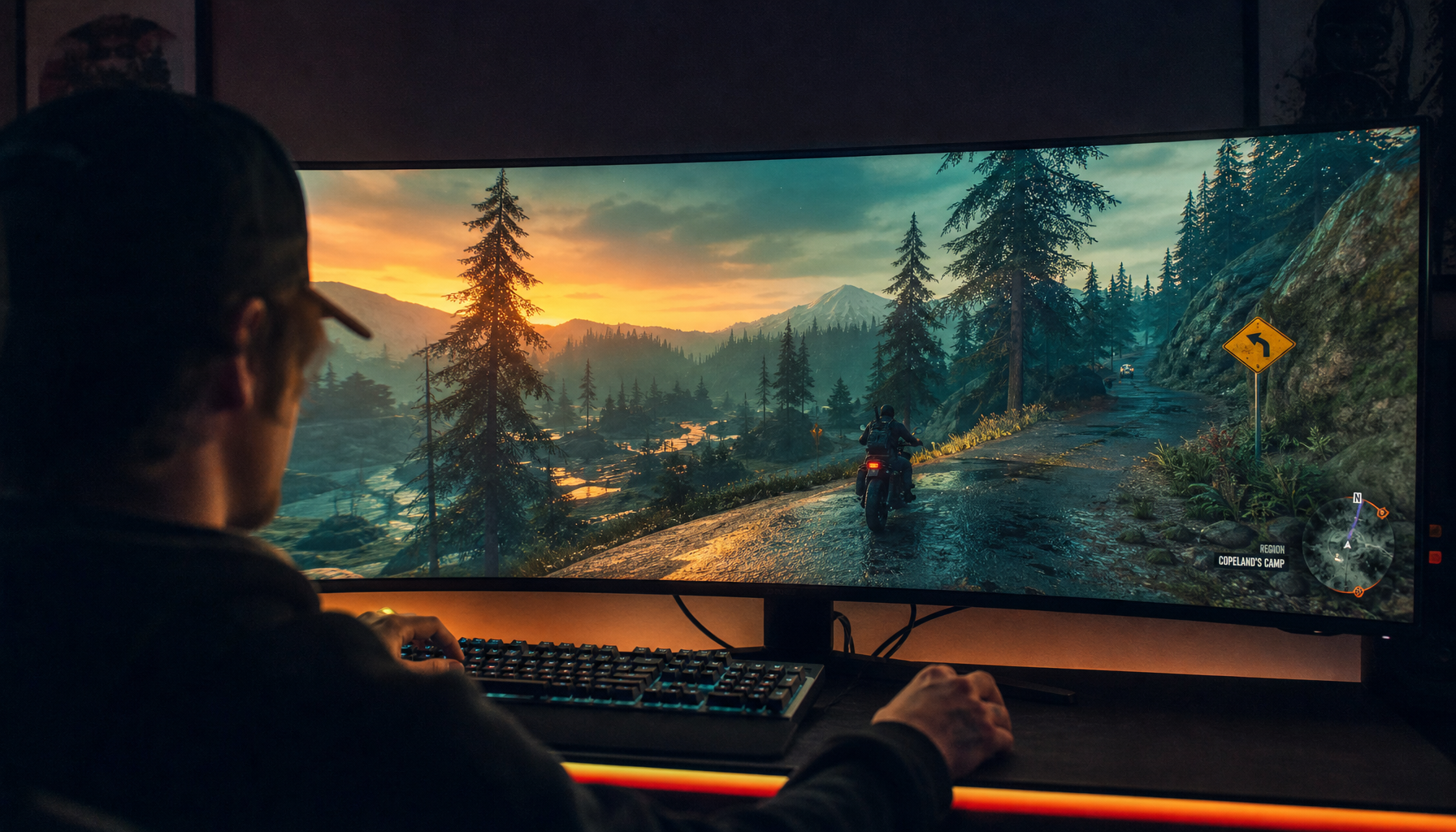
For a gamer, that may look like a faint minimap shadow. For a spreadsheet-heavy office setup, it may appear as a slightly dull band where toolbars always sit.

Heat, Brightness, and Static Content Speed Up Local Wear
Brightness improves visibility, but it also adds stress. Running a monitor near maximum brightness all day pushes more heat through the backlight or emissive layer, and heat accelerates material aging.
High temperatures, humidity, and UV exposure can cause dimming or discoloration. That matters for desks near windows, retail displays, portable screens used outdoors, and gaming rooms with poor airflow.

Static content is another major accelerant. A display used 8 hours per workday reaches roughly 10,400 hours in 5 years. If the same bright toolbar, logo, or status panel sits in the same spot for those hours, aging becomes patterned instead of uniform. A bright HDR desktop all day, a fixed game HUD, direct sunlight, blocked vents, or maximum brightness in a dark room can all increase local wear without much practical benefit.
Why Edges and Corners Often Dim First
Edges and corners are mechanically and thermally different from the center. The panel stack is held by bezels, adhesives, screws, frames, and light guides, so pressure and heat do not distribute perfectly.
In LCDs, edge-lit designs can show corner darkening, bright leakage, or hazy strips as LEDs and light-guide materials age. In very thin portable monitors, small pressure changes from travel, storage, or tight casing can make uniformity problems more visible.

Professional displays reduce this risk with sensors and correction systems. Medical-grade monitors, for example, use luminance monitoring and active compensation because brightness uniformity can affect image interpretation.
A small amount of LCD edge variation can be normal, especially in dark-room tests. A fixed dim patch that grows or appears during normal use is more likely to indicate real wear or damage.
How to Slow Uneven Aging
The goal is not to baby the screen. It is to reduce unnecessary stress while keeping the image punchy and readable.
Set brightness for the room, not for the spec sheet. A white page should look like lit paper, not a desk lamp. Use higher brightness in daylight, then step it down at night.

Control glare as well. Digital screen discomfort increases with poor lighting, reflections, and long viewing periods, and the American Optometric Association recommends breaks such as the 20-20-20 rule.
Use auto-sleep or screen blanking after short idle periods, hide static taskbars when practical, rotate layouts for dashboards and OLED gaming HUDs, avoid direct sun and blocked rear vents, and clean with a microfiber cloth without pressing hard on the panel.
When Dimming Means It Is Time to Replace
Recalibration can help if the issue is color drift, white point shift, or mild brightness loss. It cannot restore a worn backlight zone, damaged optical layer, or unevenly aged emissive pixels.
Consider replacement when dim areas remain after warm-up, appear across devices and cables, affect normal work, or return quickly after calibration. For competitive gaming, creative review, coding, finance dashboards, and portable productivity, uniformity is not cosmetic; it protects focus, accuracy, and trust in what the screen is showing.