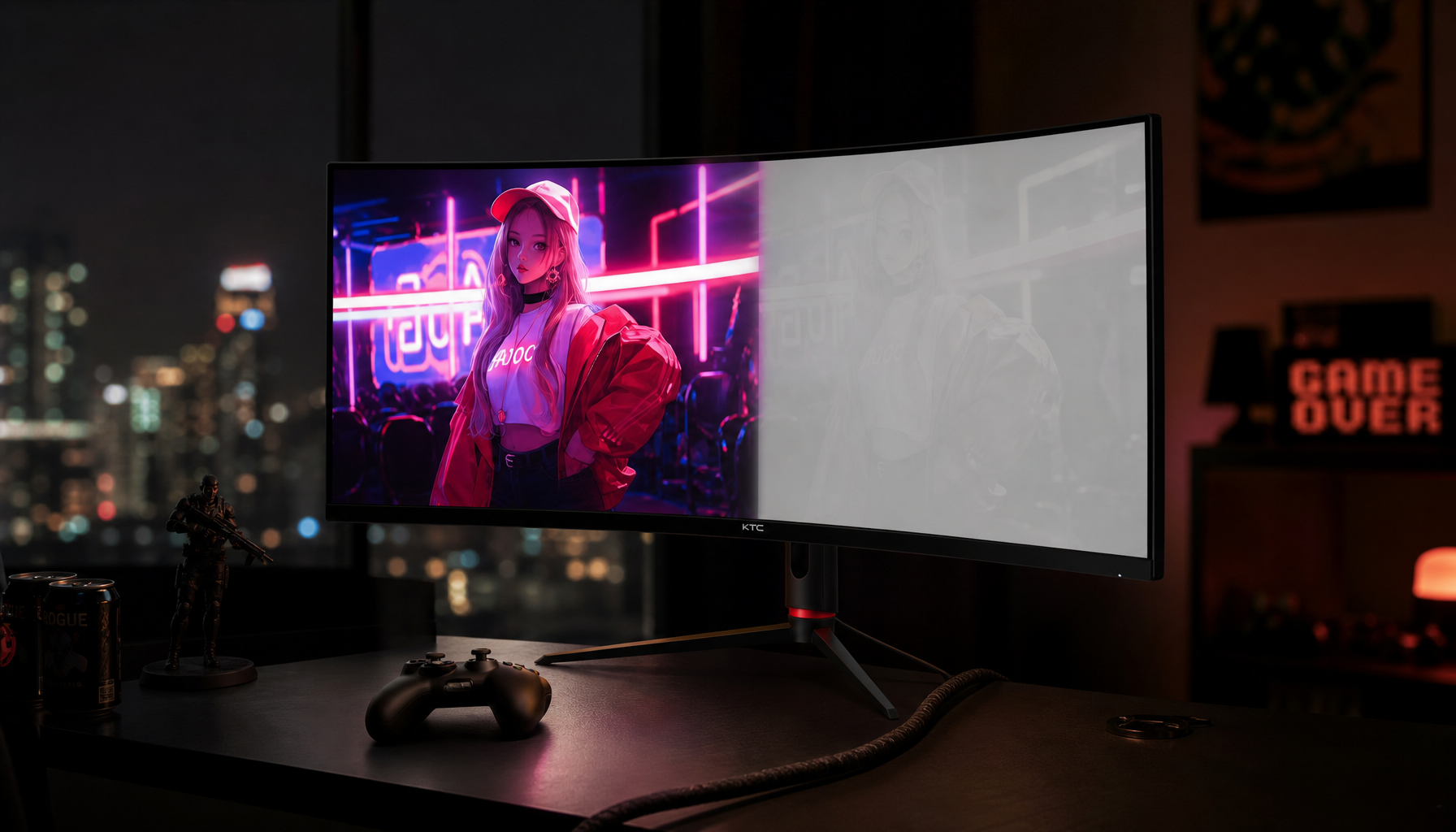
Temporary image retention on VA panels occurs when fixed, high-contrast content keeps the same liquid crystals driven in one pattern long enough that they relax slowly after the image changes. It is usually reversible, unlike permanent burn-in, and is most noticeable on gray or dark solid backgrounds.
Why VA Panels Can Hold a Faint Afterimage
VA monitors are LCDs, so they rely on liquid crystals changing alignment to control light. When a taskbar, scoreboard, browser bar, spreadsheet grid, or game HUD stays in the same spot for hours, the pixels in that area can briefly “remember” the previous voltage state, creating faint visual traces.

VA panels are valued for deeper blacks and higher contrast than many IPS displays, which is exactly why retained shadows can look more obvious. A white desktop icon on a dark wallpaper, or a bright health bar over a dim game scene, creates a sharp contrast boundary that stresses the same subpixels repeatedly.
This is not the same as OLED burn-in. On modern LCD monitors, including VA, most “burn-in” scares are temporary retention rather than permanent pixel wear; VA risk is generally low, with possible temporary effects from bright static elements during long sessions.
The Main Triggers: Time, Contrast, Brightness, and Heat
Static time is the biggest trigger. The longer fixed content stays in one place, the more likely the panel is to show a ghost outline after you switch to a uniform background.
High brightness and contrast make the effect easier to trigger and easier to see. Running a monitor at maximum brightness for a full workday or an all-night gaming session increases the electrical and thermal load on the panel; LCD retention is often tied to liquid crystals staying partially aligned after static content, and high settings can intensify that behavior in LCD panels.
Heat matters too. A warm panel after hours of HDR-like brightness, sunlight exposure, or poor airflow may recover more slowly because liquid crystal response can become less consistent under thermal stress.
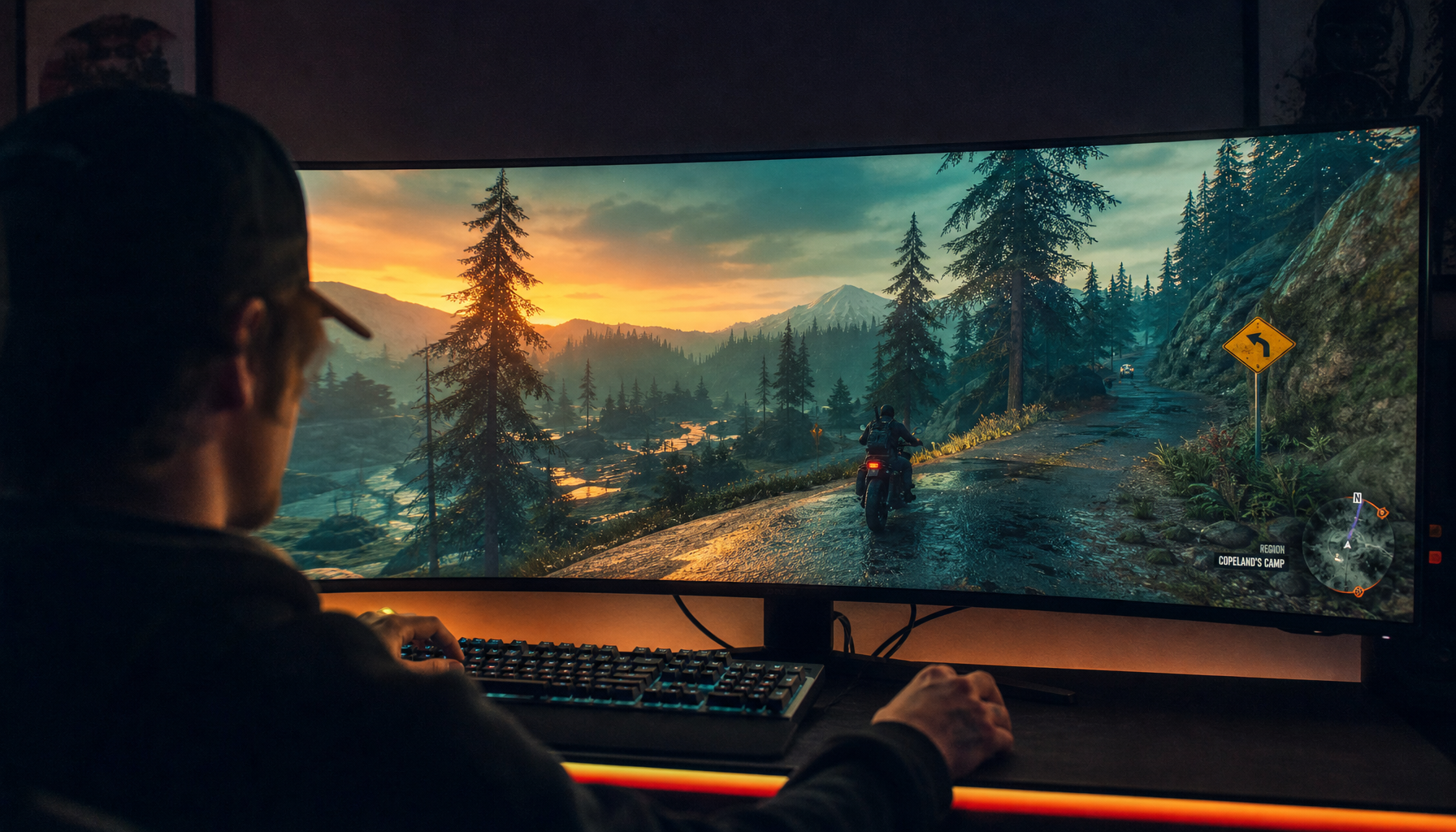
Common real-world triggers include a visible taskbar or dock left on all day, fixed game HUDs and minimaps, trading dashboards, spreadsheets, code editors, paused videos, static menus, idle console screens, and bright logos on dark backgrounds.

How to Tell Retention From Real Damage
A quick gray-screen check is useful because temporary retention often appears most clearly on neutral gray. If the shadow fades after varied content, a moving screensaver, or a few hours powered off, you are likely seeing retention, not permanent damage.
True burn-in is persistent. It remains visible across content and does not meaningfully improve after rest or varied motion. On LCD monitors, that is much less common than on OLED displays, where uneven pixel aging is the larger long-term risk.
A practical test is to switch to a mid-gray full-screen image after a long static session. If the afterimage is faint, only visible during inspection, and fades within minutes or hours, it is normal temporary image retention behavior.

Some sources use “burn-in,” “persistence,” and “retention” loosely, but for VA LCD buying and troubleshooting, the key difference is whether the mark recovers.
Fast Fixes and Smarter Prevention
Start with the least aggressive fix: remove static content and turn the monitor off. Mild retention often clears with normal varied use, while stronger LCD cases may need an overnight rest or up to 24 to 48 hours off, a recovery window commonly recommended for image retention fixes.
Then reduce the conditions that caused it. You do not need to baby a VA gaming monitor, but brightness discipline is performance maintenance: a monitor at 60% to 70% brightness can still look punchy in most rooms while reducing static-image stress.
Use these habits:
- Enable display sleep after 5 to 10 minutes of inactivity
- Auto-hide taskbars, docks, and static toolbars
- Lower brightness and contrast from showroom-style levels
- Use moving screensavers instead of static wallpapers
- Vary content after long HUD-heavy gaming or office sessions
A VA panel gives you immersive contrast and strong value, especially for gaming and productivity. Treat static content as a workload to manage, not a reason to panic, and temporary image retention usually stays temporary.