Panel uniformity does not replace refresh rate or response time, but it can decide whether targets, shadows, and HUD elements stay readable across the whole screen during a match.
Ever notice that an enemy looks clear in the middle of the screen but disappears into a hazy corner or muddy dark area? That usually feels like a game-settings problem, yet a fast monitor can still lose real visibility if its brightness or color shifts across the panel. You’ll leave with a practical way to judge when uniformity is “normal enough” for esports and when it is the reason a display should go back.
What Panel Uniformity Changes in a Match
Bright Scenes and Edge Targets
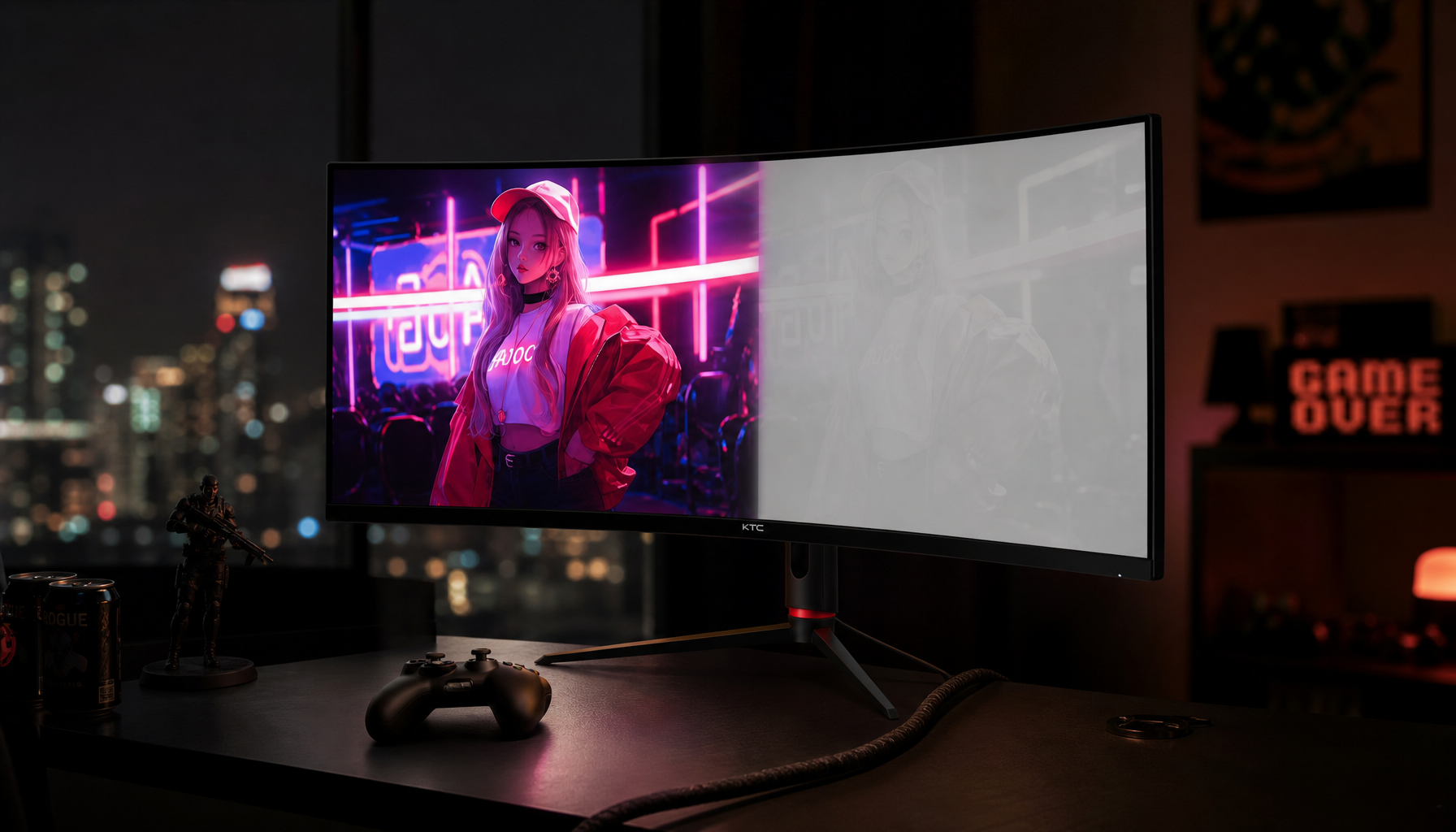
Panel uniformity is the evenness of brightness and color across the display, and when it drifts, smoke, white walls, sky boxes, and translucent HUD layers stop looking consistent from center to edge. On a gaming monitor, that matters because competitive visibility is not only about peak clarity in the center; it is also about whether the whole screen gives you a stable read while you flick, track, and scan.
White uniformity problems are easiest to spot on white or gray test screens, but the same yellow, blue, warm, or dim patches can carry into real play. In practice, this shows up when a bright doorway looks slightly dirtier on one side, or when a pale enemy outline near the edge of the panel blends into a tinted background more than it should.

Dark Scenes Are Less Forgiving
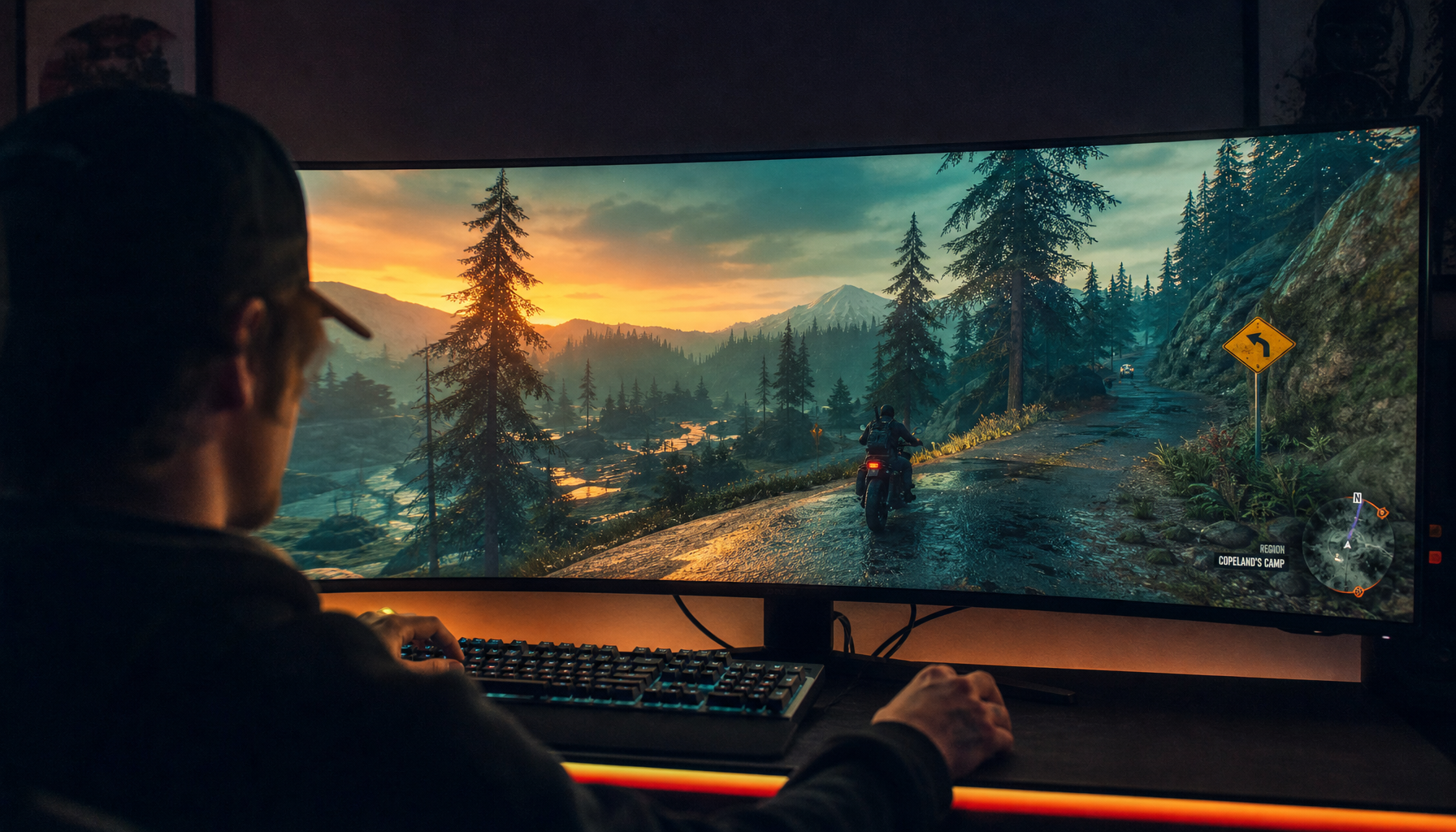
Dark-scene visibility is where many players first notice the problem, especially on IPS gaming monitors with visible glow in the corners. Bright games can look excellent, then a title with repeated transitions between bright and dark areas can suddenly make objects hard to separate from the background.
Brightness and contrast ratio still matter here because higher contrast improves shadow and highlight separation, while sensible brightness helps you match the screen to the room. A panel with decent contrast but poor black uniformity can still hide details in one corner, which is why dark-room testing is more revealing than a quick desktop check under bright lights.
Is Uniformity More Important Than Refresh Rate or Response Time?
Motion Performance Still Comes First
Refresh rate and response time remain the first buying filters for competitive gaming monitors. If you mainly play ranked shooters, the jump from 60 Hz to 144 Hz or 240 Hz changes what you can track every second, and response behavior determines whether fast movement stays clean or leaves trails.
Higher refresh rates cut frame duration from about 4.17 ms at 240 Hz to 3.33 ms at 300 Hz and 2.5 ms at 400 Hz, which is why strong esports systems feel more immediate at the top end. But those gains do not erase a panel that looks patchy or glowy across the screen, so uniformity becomes the quality check after motion fundamentals are covered.
When Uniformity Becomes the Deciding Factor
Poor panel uniformity usually cannot be fixed by calibration because the issue is physical variation across the panel rather than a simple color-balance mistake. If only the center calibrates well and the edges still shift in brightness or gamma, exchanging the monitor is often the more realistic fix.
A good buying order is simple: lock in the refresh rate, response behavior, and resolution your system can actually drive, then reject displays with uniformity flaws that are visible in normal play. Small edge variation is common on gaming panels; center tint bands, obvious left-to-right brightness gradients, and dark-corner haze that hides targets are not worth rationalizing.
Factor |
Why It Matters in Competitive Play |
Strong Target |
Uniformity Impact |
Refresh rate |
Reduces motion persistence and improves tracking |
144 Hz minimum, 240 Hz+ for serious esports |
More frames help only if the image stays readable across the panel |
Response time |
Controls ghosting and dark trailing |
Roughly 1 ms to 5 ms class behavior |
Slow dark transitions can mask shadow detail even on a uniform screen |
Contrast |
Improves separation in dark scenes |
Around 1,000:1 or higher on LCDs |
Good contrast does not compensate for corner glow or patchy blacks |
Panel uniformity |
Keeps brightness and color consistent |
Minor edge variance, no obvious central shift |
Directly affects target visibility, smoke, and HUD consistency |
Resolution and aspect ratio |
Changes sharpness and screen coverage |
1080p or 1440p for most competitive setups |
More screen area can make edge flaws and eye travel more noticeable |
How Panel Type Changes the Visibility Tradeoff
Fast IPS and TN
Panel types affect visibility traits in different ways: IPS usually gives wider viewing angles and better color accuracy, while TN remains attractive for very high refresh rates, low input lag, and fast-feeling motion. For most players, that means Fast IPS is easier to live with for mixed use, but pure esports buyers may still accept image-quality compromises to maximize motion clarity.
Portable TN monitors show the downside clearly because off-axis viewing can dim the side and bottom of the image enough to make grayscale steps harder to separate. Even on desktop monitors, that same viewing-angle behavior can make edge uniformity look worse if you sit too close or slightly off-center.
VA Panels and Dark-Level Tradeoffs
VA smearing is a separate problem from panel uniformity, but competitive players feel both at the same time. VA often gives stronger native contrast and deeper blacks than IPS or TN, which can help dark-scene visibility, yet slow black-to-gray transitions can leave dark trails behind moving objects and make shadow detail harder to parse while tracking.
At 144 Hz, each frame lasts about 6.94 ms, so a dark transition that takes far longer than that will stay visible across multiple frames. If you are considering a high-refresh-rate VA monitor, test overdrive carefully after the display warms up, and do not assume the advertised response-time number reflects the darker transitions that matter most in real matches.
Special Cases: Ultrawide and Portable Monitors
Ultrawide Screens Add More Than Immersion
Ultrawide gaming changes visibility in ways that matter for competitive play even before uniformity enters the picture. Some games still show 16:9 cutscenes, some shooters stretch edge content, and many ranked titles limit aspect ratio so ultrawide users do not gain a field-of-view advantage.
That same format also moves HUD elements farther from the center and asks your eyes to scan a wider span during fast fights. On a 3440x1440 panel, you are rendering nearly 5 million pixels, about 35% more than 2560x1440, so sustaining high frame rates gets harder and any existing edge tint or brightness roll-off becomes more distracting simply because you spend more time reading the edges.
Portable Displays Need Tighter Expectations
Portable monitor testing also shows why compact second screens are usually convenience tools first and competitive displays second. In one nine-point measurement example, white-field uniformity ranged from 89.53% to 102.17% of the center, which is acceptable for travel use but still illustrates how much variation can exist across a small panel.
If you use a portable monitor for tournaments, hotel practice, or a secondary setup, sit centered and keep the panel as square to your face as possible. The closer your use case gets to serious competitive play, the less forgiving you should be about weak viewing angles and inconsistent edge brightness.
How to Test a Gaming Monitor Before Keeping It
Use Test Patterns That Expose Real Problems
Dirty screen effect is easiest to spot on full-screen white, light gray, 50% gray, and near-black images, so start there rather than jumping straight into a game. Check from your normal seat first, then lean back 1 to 2 ft and look for yellow patches, dim corners, or a left-to-right brightness gradient that stays visible instead of disappearing with angle changes.

A 5x5 uniformity test is useful if you already calibrate displays, because it shows whether the screen is only accurate in a small central zone. It is also smart to test the monitor’s standard and sRGB-like modes, since some full-screen games can reset LUT behavior and make dark grays look flatter than they did on the desktop.
Decide What Is Acceptable for Esports
Competitive monitor buying should treat panel uniformity as a pass-fail comfort and visibility check, not as a lab-grade perfection chase. If the center is stable, motion is clean, and edge variation disappears during actual matches, the monitor is probably good enough.
Unit-to-unit variation is real, though, and buyers regularly report seeing meaningful differences between replacements of the same model. If the defect cuts through the center, shows up during normal browsing before you even launch a game, or makes dark scenes consistently harder to read, return it while you still can.
Quick Uniformity Checklist
- Set the monitor to the brightness level you will actually use for gaming, not maximum brightness.
- Open full-screen white, light gray, 50% gray, and near-black images.
- Check the panel from a centered seat in both daytime room light and a dim evening setup.
- Play one bright map and one dark map for at least 15 minutes each.
- Test at least two OSD modes, plus overdrive if the monitor offers it.
- Exchange the unit if you see a central tint band, a strong side-to-side brightness gradient, or corner glow that hides targets in play.
FAQ
Q: Can calibration fix bad panel uniformity?
A: Usually no. Calibration can improve color balance and gamma, but physical brightness or tint variation across the screen normally stays, which is why exchange policies matter more than fine-tuning software tools.
Q: Should competitive players avoid VA panels?
A: Not automatically. VA can improve black depth, but you should test dark-level smearing carefully at your real refresh rate because slow dark transitions can cancel out the visibility advantage.
Q: Is an ultrawide monitor a bad choice for ranked shooters?
A: Often, yes, if your priority is pure focus and consistent frame rate. Wider HUD placement, more eye travel, aspect-ratio restrictions, and the extra rendering load all work against the cleanest competitive experience.
Final Takeaway
Panel uniformity is not the first spec to shop for, but it is one of the first reasons a fast gaming monitor can feel worse than its numbers suggest. For competitive play, treat it as the screen-wide visibility layer that supports everything else: refresh rate helps motion, response time helps clarity, contrast helps shadow separation, and uniformity makes those advantages hold together across the whole panel.
The safest buying path is still a centered, high-refresh desktop monitor in a size and resolution your PC can sustain comfortably. If you are choosing between two otherwise similar displays, keep the one with the more even screen, especially if you play in dark rooms, rely on edge scanning, or split your time between esports and everyday desktop work.
References
- a platform, “White uniformity issues - do you have them too, did you check?” https://community.acer.com/en/discussion/547117/white-uniformity-issues-do-you-have-them-too-did-you-check
- a platform, “Best approach for calibrating a non-uniform screen?” https://hub.displaycal.net/forums/topic/best-approach-for-calibrating-a-non-uniform-screen/
- a platform, “Can´t see anything in dark videogames with my IPS panel!” https://forums.tomshardware.com/threads/can%C2%B4t-see-anything-in-dark-videogames-with-my-ips-panel-any-idea-on-how-to-fix-this.3159290/
- a company, “Why Monitor Brightness and Contrast Ratios are Key to Display Quality” https://www.lenovo.com/us/en/knowledgebase/why-monitor-brightness-and-contrast-ratios-are-key-to-display-quality/
- a company, “Understanding the Best Monitor Panel for Gaming Across Various Workflows” https://www.lenovo.com/ph/en/knowledgebase/understanding-the-best-monitor-panel-for-gaming-across-various-workflows/?srsltid=AfmBOooST0s3f_7H92MB3eN2q5FCqSJyCohq0caIIhCtquK06UhGRKbx
- a platform, “Dirty Screen Effect” https://www.gadgetreview.com/dirty-screen-effect
- a platform, “What Is VA Smearing And Can You Fix It?” https://www.displayninja.com/what-is-va-smearing/
- KTC Play, “240Hz vs 300Hz vs 400Hz Monitor” https://us.ktcplay.com/blogs/product-comparisons/240hz-300hz-or-400hz-monitor-which-refresh-rate-should-you-choose?srsltid=AfmBOop2OfBjazsWAZdGfSEOSkjk74m2a2cjXteTt_F0AHpFccDrE9cQ
- a platform, “4 things I wish I knew before buying an ultrawide monitor” https://www.xda-developers.com/what-i-wish-i-knew-before-buying-an-ultrawide/
- a platform, “a brand 15.6-inch Battery-Powered Monitor, Tested” https://www.tomshardware.com/reviews/on-lap-2501m-portable-monitor-review,3450-8.html
- a company, “What to Know before Buying a Gaming Monitor” https://www.bestbuy.com/discover-learn/what-to-know-before-buying-a-gaming-monitor/pcmcat1689173146798