Operating system color management does not replace display hardware calibration; it identifies the calibrated display state and helps color-managed apps send the right corrected color values to that specific screen mode.
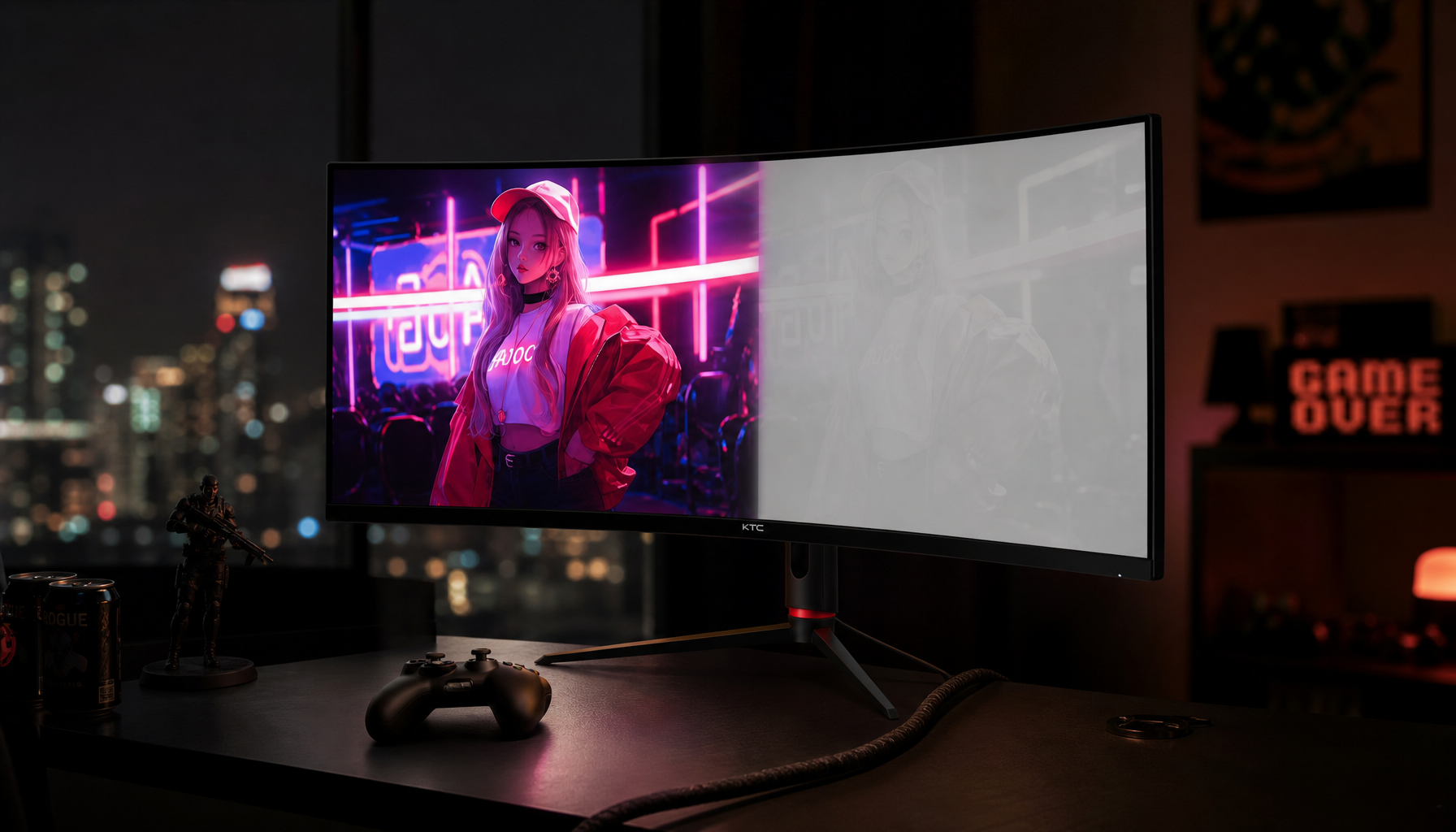
Does your game capture look punchy on your main monitor but dull on the portable screen, while the same product photo shifts warm on a second display? A practical setup can make each calibrated preset behave predictably across editing, office, and review workflows without guessing at sliders every morning. Here is how the monitor, OS profile, GPU, and app each fit into the color chain.
The Short Version: Calibration Changes, Profiles Describe
The cleanest way to understand the relationship is this: hardware calibration changes how the display behaves, while the operating system uses an ICC profile to describe that behavior to software. A hardware-calibrated monitor stores correction data inside the display’s internal processing or LUT, so the monitor itself moves closer to targets such as D65 white point, gamma 2.2, and a practical luminance level.
An ICC profile is not magic firmware. It tells the OS and color-managed applications what the display is doing in its current state. That distinction matters because an ICC profile is a software description, and changing brightness, contrast, preset, HDR mode, or GPU settings after profiling can make it inaccurate.
For a real-world example, imagine a 27-inch 1440p gaming monitor used for both ranked play and product image editing. You might keep a high-refresh gaming preset for low latency and a calibrated sRGB or wide-gamut preset for content work. The OS profile assigned to that monitor must match the active preset, or color-managed apps will compensate for the wrong display behavior.

What Hardware Calibration Actually Does
Hardware calibration writes correction data into the monitor, usually through an internal LUT. The display measures or receives measurements from a colorimeter, compares its real output against the target, and then stores corrections internally. This is why hardware calibration is valuable for pro displays, studio monitors, and higher-end creative screens shared across multiple PCs.
The display’s LUT matters. A 1D LUT adjusts red, green, and blue channels separately, which is useful for tone response and gray balance. A 3D LUT can handle combined color relationships more precisely, so it is better suited for complex gamut mapping and color-critical work. A 3D LUT uses a three-dimensional color chart, which helps explain why true hardware-calibrated creator displays can outperform simple software-only correction.
The practical advantage is portability across systems. If your monitor stores a wide-gamut calibration internally, that calibrated behavior remains with the display when you move from a desktop workstation to a laptop over USB-C. The OS still needs the right profile selected, but the heavy correction is no longer dependent entirely on the GPU LUT or a startup profile loader.
What the Operating System Adds
The OS acts as the traffic controller. It assigns a default display profile to each connected screen, loads calibration curves when required, and exposes that profile to color-managed applications. This is usually handled through system display or color-management settings.
A “default display profile” is the active ICC profile selected for a particular display. The active/current ICC profile can differ per monitor and per preset, which is essential in multi-monitor setups. If your ultrawide is in Display P3 mode and your portable monitor is in sRGB mode, each display should have its own matching profile.
Color-managed apps then use that profile to convert content into the display’s color space. Photo editors, browser engines, and design tools may all use color management differently, but the basic principle is consistent: source content such as sRGB, wide-gamut RGB, or Display P3 is interpreted, converted, and sent to the display in a way that should look correct on that specific screen.
Why Matching Preset and ICC Profile Is Non-Negotiable
The most common failure point is mixing a monitor preset with the wrong OS profile. If you calibrate separate sRGB, wide-gamut, and native gamut modes, each mode needs its own ICC profile and a clear naming convention. A profile named “Main Display Wide Gamut 120 nits D65” should not be active while the monitor OSD is set to sRGB.
In one community workflow, a user calibrated two identical displays across sRGB, wide-gamut, and native modes, then created separate profile-only ICC files for each calibrated state. The key practice was pairing the active monitor preset with the matching OS profile, which made the two displays appear consistent after prior visible mismatch.
Here is the practical calculation: two monitors with three calibrated presets each require six profiles. That sounds tedious, but it is far less painful than editing in a wide native gamut state while the OS thinks the display is in sRGB. The mismatch can make color-managed apps overcorrect or undercorrect, and non-color-managed apps may look wildly saturated on wide-gamut panels.
Display State |
Monitor OSD Mode |
OS ICC Profile |
Best Use |
Web and office |
sRGB |
Matching sRGB-mode profile |
Browsing, UI work, SDR office tasks |
Wide-gamut RGB |
Matching wide-gamut profile |
Photography, print-aware editing |
|
Maximum panel gamut |
Native or user gamut |
Custom measured profile |
Controlled workflows that understand wide gamut |
Competitive gaming |
Gaming preset |
Usually factory or measured gaming-state profile |
Speed, visibility, low latency |
Avoiding Double Correction
Double correction happens when the monitor and the computer both try to correct the same issue. A true hardware-calibrated monitor may already have white point, gamma, and tone response corrected internally. If the OS then loads a profile with heavy video-card gamma table corrections on top, the result can be crushed shadows, tinted grays, or odd gradients.

For self-calibrating displays, some workflow discussions recommend using a profile that describes gamut and tone behavior rather than applying another full correction LUT. In one photo-editing workflow, the suggested approach is often to use the system display profile when the OS color profile is configured correctly. A warning from that workflow is direct: using an ICC profile with a color lookup table on a self-calibrating monitor can cause correction to be applied twice.
The reliable rule is to let correction live in one primary place. If the monitor has true hardware calibration, let the monitor handle the calibration and let the OS profile describe the result. If the display lacks internal calibration, use the best monitor controls first, then let software calibration and profiling handle the remaining correction.
Software Calibration Still Has a Place
Not every productivity display, gaming monitor, or portable smart screen has internal LUT calibration. Many screens only offer brightness, contrast, color temperature, gamma, and a few presets. That does not make calibration pointless; it just changes the workflow.
Start with the display itself. Reset the picture mode, disable dynamic contrast, Eco brightness, eye-saver modes, oversaturated vivid modes, and SDR-inappropriate HDR behavior. Then choose the most neutral preset and adjust brightness before color. Gamma 2.2 is the safest default for most office, gaming, web, and SDR workflows, while D65 or 6500K is the common white target for general monitor use.
After the hardware controls are close, profiling software has less work to do. This keeps gradients smoother and reduces the risk of banding from aggressive GPU LUT correction. For a portable monitor used in a bright office by day and a dim apartment at night, you may need two measured states because the same luminance target will not feel right in both spaces.
Multi-Monitor Workflows Need Discipline
Multi-monitor productivity is powerful because it reduces window switching and keeps tools visible, but color consistency becomes harder as soon as you mix panels. A designer might keep the main calibrated display centered for the canvas, a secondary monitor for reference images, and a portable screen for chat or asset folders. That layout works well only when the color-critical screen is trusted and the supporting screens do not mislead decisions.

For multi-display work, creative professionals should prioritize color consistency, matching display models where practical and calibrating the primary display carefully. If you cannot match models, match the role instead. Put final color decisions on the most accurate panel, keep the secondary display for tools and scopes, and avoid judging skin tone or brand color on the weakest screen.
A good naming system helps. Use profile names that include display location, preset, target, and date, such as “Center WideGamut D65 120nits May 2026.” That makes OS profile switching less error-prone and helps teams spot stale profiles during maintenance.
Gaming, HDR, and Preset Switching Complicate the Chain
Gaming monitors add another layer because presets can change more than color. A preset may alter overdrive, adaptive sync, local dimming, HDR tone mapping, black equalizer behavior, refresh behavior, and input processing. That is why a brief black screen can appear when switching modes: the display chain may be renegotiating the signal.
For mixed work and play, keep signal-level settings stable when possible. A display preset is more than a color filter, so switching from SDR editing at 120 nits to HDR gaming with different tone mapping is not just an ICC profile change. The OS profile can help SDR color management, but it cannot replace HDR tone mapping, response tuning, panel uniformity, or game-mode latency behavior.
The strongest workflow is separate and intentional. Use a calibrated SDR profile for editing, office, streaming thumbnails, and web review. Use the gaming preset for refresh rate, VRR, and motion clarity. Do not expect one profile to make both states reference-accurate.
Pros and Cons of Each Approach
Hardware calibration gives the most reliable foundation because corrections live inside the display and can follow the monitor across systems. It is better for photography, video grading, product imagery, multi-monitor matching, and studio workflows. The downside is cost, monitor compatibility, and the need to understand whether the display has a real internal LUT, a basic 1D LUT, or more advanced 3D LUT support.
Software calibration is more accessible. It works with ordinary office monitors, gaming displays, and portable screens, and it can greatly improve a screen that ships too bright, too cool, or too saturated. Its weakness is dependency: the OS, GPU driver, profile loader, and app color-management behavior all matter. On wide-gamut displays, non-color-managed apps may still look oversaturated.
Factory calibration sits between the two. It is useful, especially on better monitors, but it is not a permanent guarantee. Manufacturing variation, panel aging, heat, firmware changes, and room lighting all affect what you actually see. Manufacturing differences mean even monitors from the same model line can reproduce color slightly differently.
Practical Setup for Reliable Color
Warm up the display for about 30 minutes before serious calibration. Set native resolution, use a digital connection such as DisplayPort, HDMI, or USB-C, and stabilize room lighting. Pick the monitor preset first, set brightness for the room, then calibrate or profile that exact state.
For general SDR productivity and gaming, a sensible baseline is D65, gamma 2.2, and roughly 100 to 120 nits depending on room brightness. For photo or print-aware work, wide-gamut RGB may make sense if the workflow and output require it. For web, office, and most consumer delivery, sRGB remains the safer working and review space.
Do not copy another user’s ICC profile and treat it as calibration. It may be a rough starting point for the same monitor model, but every panel, cable path, brightness setting, and room differs. A measured profile is the reliable route when color decisions affect client work, product listings, printed output, or brand assets.
FAQ
Can the OS fix a badly calibrated monitor?
It can compensate to a point, but it is better to correct the monitor first. When the display is close to target through its own controls or hardware calibration, the OS profile only needs minor correction, which usually preserves smoother gradients and cleaner gray balance.
Should I use sRGB, wide-gamut RGB, Display P3, or native gamut?
Use the color space that matches the job. sRGB is the safest choice for web, office, and most games. Wide-gamut RGB fits photography and print-aware workflows. Display P3 is common for modern media and wide-color viewing. Native gamut is powerful, but it requires disciplined color-managed apps and accurate profiling.
How often should I recalibrate?
For casual office and gaming use, every few months is usually practical. For photography, product work, video grading, or multi-monitor matching, monthly checks are more defensible, and any preset, brightness, HDR, GPU driver, cable, or room-lighting change should trigger a recheck.
A calibrated display is the performance baseline; the OS profile is the map that tells your apps where that calibrated display actually lands. Keep the monitor state, ICC profile, and workflow target aligned, and your screen becomes dependable instead of misleading.