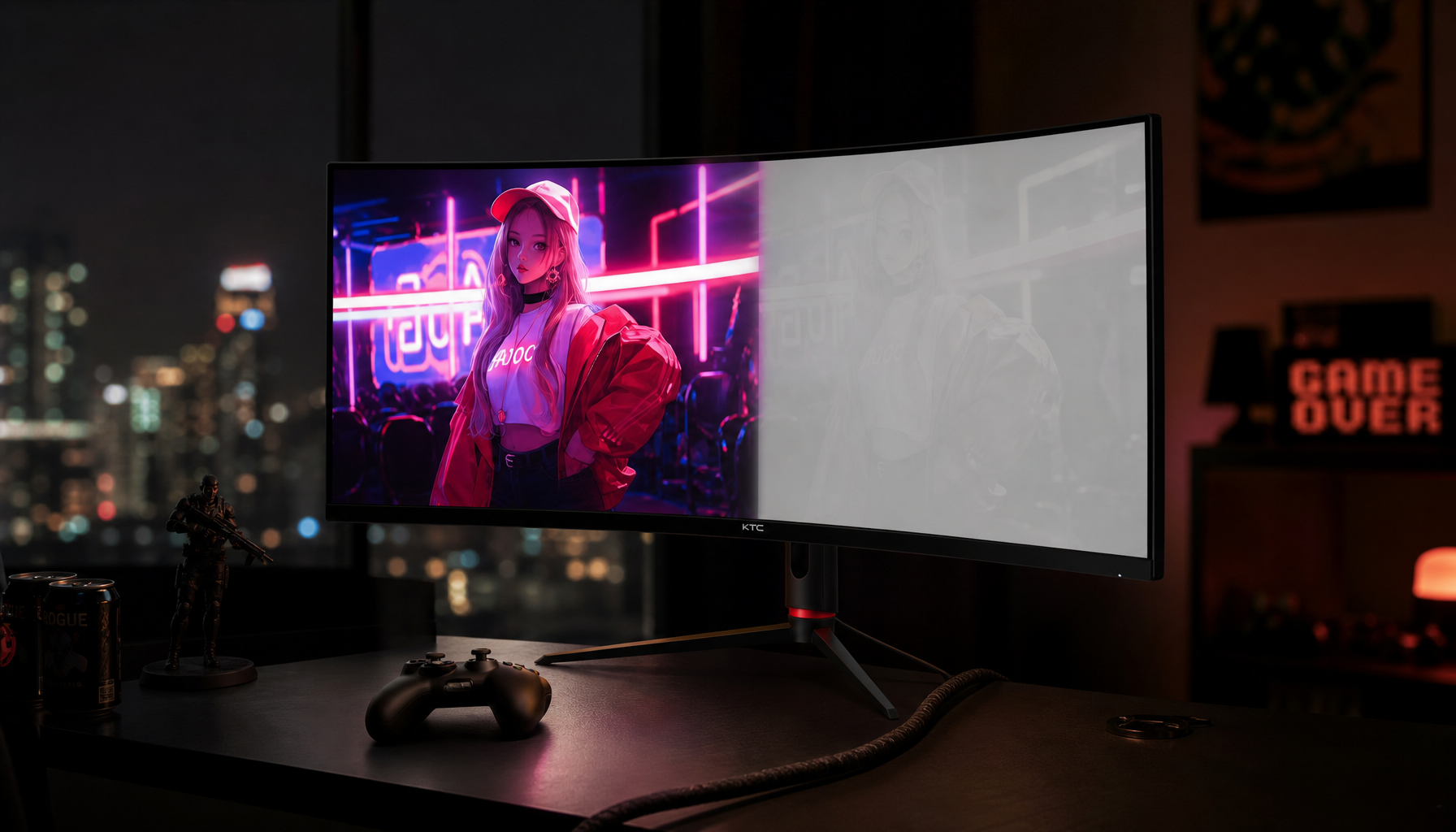
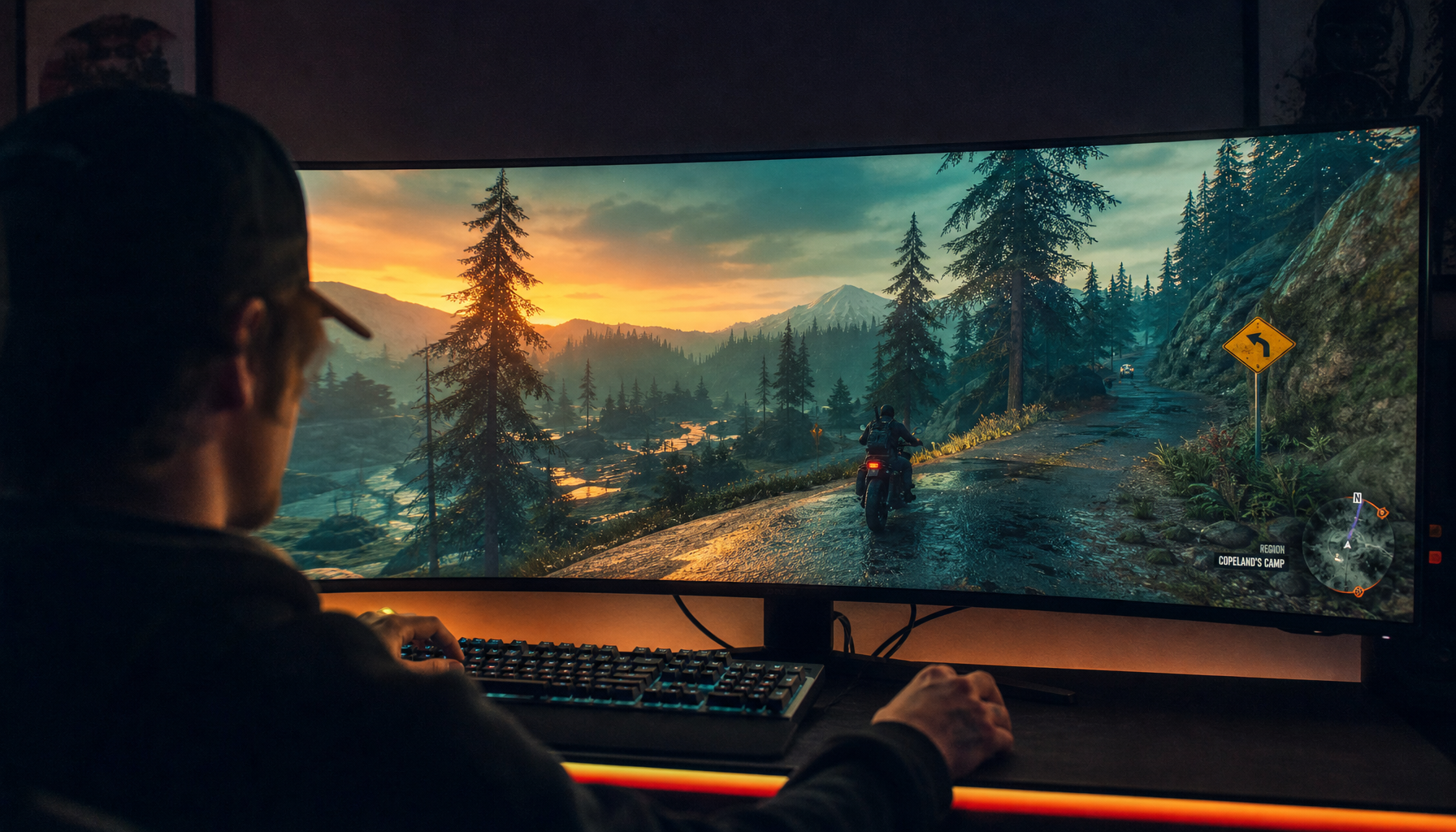
Yes. Motion blur reduction can affect color-critical work because strobing or black-frame-style modes often reduce brightness, change perceived contrast, introduce flicker, and may lock picture controls needed for calibration.
Does your timeline look sharp during a fast pan, while skin tones suddenly look dim, harsh, or harder to judge? A practical A/B check between your calibrated preset and blur-reduction mode can reveal whether the feature is helping motion review or quietly undermining color decisions. Here is how to use it without compromising edits, grades, product images, or client approvals.
The Short Answer for Creators
Motion blur reduction is built for motion clarity, not color trust. On gaming monitors, it usually works by shortening the visible time of each frame, commonly through backlight strobing on LCDs or black-frame insertion-style behavior on some emissive displays. That can make fast motion look cleaner, but the tradeoff is that the image may become dimmer, flicker more, or behave differently from the calibrated mode you use for editing.
For content creation, that matters because color accuracy is not just “nice colors.” It means the monitor is reproducing a known target, such as sRGB for web work or Rec.709 for SDR video. Color accuracy matters most when the display must match the source image closely enough for photos, presentations, shopping visuals, medical imaging, and other trust-based viewing.
The practical rule is simple: use motion blur reduction to inspect motion, not to make final color decisions.
What Motion Blur Reduction Actually Changes
Motion blur on modern displays often comes from persistence. Each frame stays visible for a short period, and your eyes track motion across that held image. Higher refresh rates reduce that hold time, but they do not eliminate blur. Blur-reduction modes attack the problem by making each frame visible for less time, which improves perceived sharpness during movement.
This is different from ghosting. Ghosting is a lingering trail caused mainly by slow pixel transitions, while motion blur is the smearing or loss of definition you perceive during movement. A monitor can have low ghosting but still show sample-and-hold blur, especially at lower refresh rates.
The issue for creators is that the cure changes the viewing condition. If a monitor strobes the backlight, it is no longer presenting a continuous light output. That can reduce brightness, alter the way your eyes perceive contrast, and make subtle shadow or highlight judgments less stable. If you are grading a low-key scene, retouching product photos, or matching a brand color, those changes are not cosmetic.
Why Color Accuracy Can Drift in Blur-Reduction Mode
Brightness Is Usually the First Casualty

Many blur-reduction modes lower brightness because the display is lit for a shorter portion of each refresh cycle. That can make whites less punchy, shadows look denser, and midtones feel heavier. For video and photo work, brightness consistency is part of the reference environment.
A simple example makes the risk obvious. If you edit product photos with motion blur reduction enabled in a bright office, you may raise exposure or open shadows to compensate for the dimmer image. When that file is later viewed on a normal calibrated display, the same product can look too bright or washed out. That is not a creative choice; it is a display-mode error.
Moderate and consistent brightness is important when judging color because screens that are too bright or too dim distort decisions about pale, dark, and textured materials.
Picture Modes May Lock Useful Controls
Some monitors separate “gaming” image modes from “creator” or “sRGB” modes. Blur reduction may only work in a fast gaming preset, while the accurate sRGB or Rec.709 preset may disable it. In other cases, enabling blur reduction can lock brightness, overdrive, adaptive sync, or color controls.
That matters because a calibrated workflow depends on stable settings. A colorimeter profile is made for a specific display state. Change the backlight behavior, brightness, gamma, color temperature, or preset, and the profile may no longer describe what the monitor is actually doing.
Factory calibration and ICC profiles can improve a setup, but they do not measure your exact unit after room lighting, aging, and setting changes. That warning becomes more important when you toggle performance features that alter luminance behavior.
Flicker Can Affect Visual Judgment
Strobing can make motion look crisper, but it can also introduce visible or subconscious flicker. Some users handle it well. Others experience eye strain or find that fine color and contrast decisions feel less comfortable after a long session.
For gaming, a little flicker may be worth the sharper target tracking. For a two-hour color grade, it is usually a poor trade. If your eyes fatigue faster, your judgment of neutral grays, skin warmth, and shadow separation becomes less reliable.
Where Motion Blur Reduction Helps Creators
Blur reduction is not useless for creative work. It can be valuable when you are reviewing motion itself. If you edit sports footage, esports clips, product spin videos, UI animations, or fast camera moves, a blur-reduction mode can help you catch judder, tracking issues, motion cadence problems, or compression artifacts that feel hidden on a smeary display.
The key is to separate motion review from color approval. Watch the fast sequence with blur reduction enabled, judge timing and clarity, then return to the calibrated preset before adjusting color, contrast, saturation, or exposure. This two-pass workflow is practical performance discipline: one mode for motion inspection, one mode for final image decisions.

A good real-world setup is a 27-inch high-refresh IPS display used in sRGB mode for editing, with blur reduction saved as a separate custom gaming or review preset. IPS is often the safer LCD choice when color consistency matters because wider viewing angles and more stable brightness help preserve the image when viewed off-center.

IPS, VA, OLED, and Portable Screens: What to Watch

Panel type changes how risky blur reduction feels in practice. IPS generally gives the best balance for creators who also game because it combines color consistency with increasingly fast response times. VA often brings better contrast and deeper blacks, but slower dark transitions can produce smearing that blur reduction may not fully solve. OLED can deliver extremely fast pixel response and strong contrast, but it still needs proper profiling for critical work.
Portable smart screens add another wrinkle. Many prioritize convenience, USB-C simplicity, battery-friendly brightness, and slim hardware over deep calibration controls. If you are using one as a second screen for palettes, scripts, dashboards, or client previews, that is fine. If you are making final color calls on it, treat every enhancement mode with suspicion.
Use Case |
Blur Reduction Setting |
Color Recommendation |
Competitive gaming after work |
On if it feels comfortable |
Use a separate gaming preset |
Video motion review |
On briefly for playback checks |
Do not grade in this mode |
Photo editing |
Off |
Use sRGB or calibrated mode |
Product color approval |
Off |
Use measured calibration and stable lighting |
Portable second-screen workflow |
Usually off |
Use for tools, not final color |
A Practical Setup Workflow
Start with the monitor’s most accurate preset, usually sRGB, Rec.709, Standard, or a factory-calibrated mode. Avoid Vivid, Dynamic, Movie, and boosted color modes when accuracy matters. Set your white point near D65 for most web and SDR video workflows, use gamma 2.2 for typical office lighting, and keep brightness consistent from session to session.
Let the display warm up before judging color. Displays should warm up for roughly 15 to 30 minutes because brightness and color can shift after power-on. Turn off night modes, blue-light filters, automatic brightness, dynamic contrast, and local enhancement features during color-sensitive work.
Then create a separate motion preset. Enable blur reduction there, set a fixed refresh rate that the monitor handles well, and compare the same fast clip against your calibrated mode. If the motion preset looks dimmer, cooler, warmer, or more contrasty, that is expected. Use it as a diagnostic tool, not a reference monitor mode.
For paid work, use a colorimeter. Visual setup can get you into a reasonable range, but it cannot confirm your exact Delta E, white point, gamma, or luminance. Delta E measures the difference between intended and displayed color, and lower values are better; demanding workflows often treat values under 2 as a strong target.
Pros and Cons for Content Creators
Pros |
Cons |
Sharper motion during fast playback |
Lower brightness can skew exposure decisions |
Easier to spot motion cadence issues |
Flicker may cause fatigue |
Useful for gaming on the same monitor |
May disable VRR or lock picture controls |
Can improve fast UI or animation review |
Calibration may no longer apply |
Helps separate ghosting from persistence blur |
Not suitable for final color approval |
When You Should Leave It Off
Leave motion blur reduction off when retouching photos, grading skin tones, matching brand colors, preparing print files, reviewing fabric or product color, or approving client deliverables. These tasks depend on stable luminance, neutral grayscale, predictable gamma, and a known color space.
The sRGB color space remains central for web-based imagery and e-commerce product photos, which is why creator workflows should prioritize accurate sRGB behavior over exaggerated gamut or aggressive gaming enhancements. Wider color can look impressive, but wider is not automatically more accurate.
FAQ
Can I calibrate the monitor with motion blur reduction turned on?
You can, if your calibration software and monitor allow the mode to stay enabled during measurement, but it is usually not the best default. The resulting profile would apply only to that exact strobing mode and brightness state. For most creators, calibrate the normal creator preset and keep blur reduction as a separate review mode.
Does a higher refresh rate protect color accuracy better than strobing?
Usually, yes. A high refresh rate improves motion clarity without necessarily changing the backlight behavior as aggressively as strobing. It still depends on the monitor, but for hybrid gaming and creative work, a fast IPS or OLED panel at a high refresh rate is often cleaner than relying on blur reduction for everything.
Is motion blur reduction bad for office productivity?
Not necessarily, but it is rarely needed for spreadsheets, writing, coding, browsing, or presentation work. If it causes flicker or lowers brightness, turn it off. Clear text, stable brightness, and comfortable viewing matter more for long productivity sessions.
Final Guidance
Motion blur reduction is a performance tool, not a color-accuracy tool. Use it when motion clarity is the job, then switch back to your calibrated sRGB or Rec.709 preset when the image itself has to be trusted. For a display that serves gaming, office productivity, and creation, the best setup is not one perfect mode; it is disciplined mode switching with calibration where the stakes justify it.