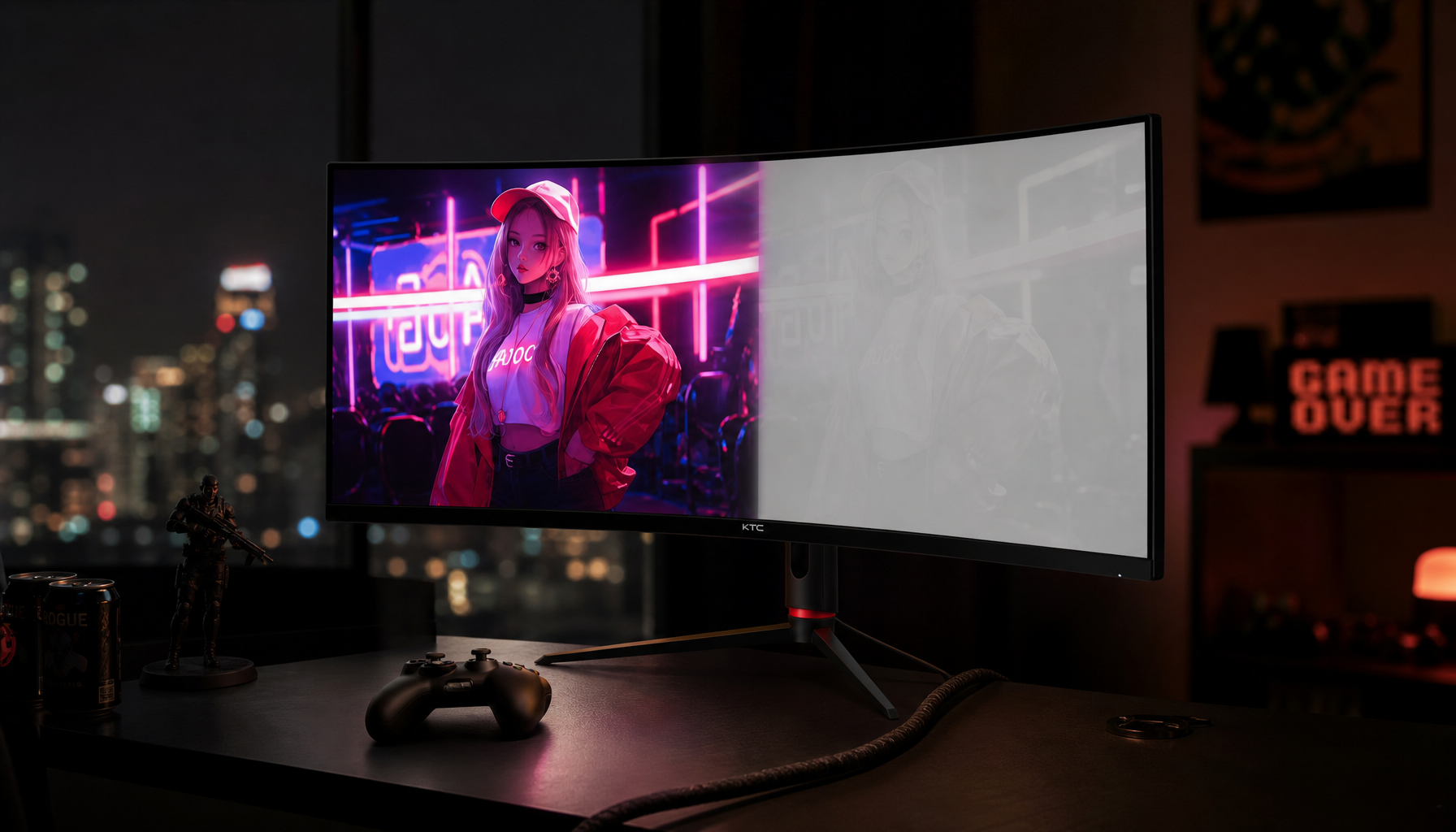
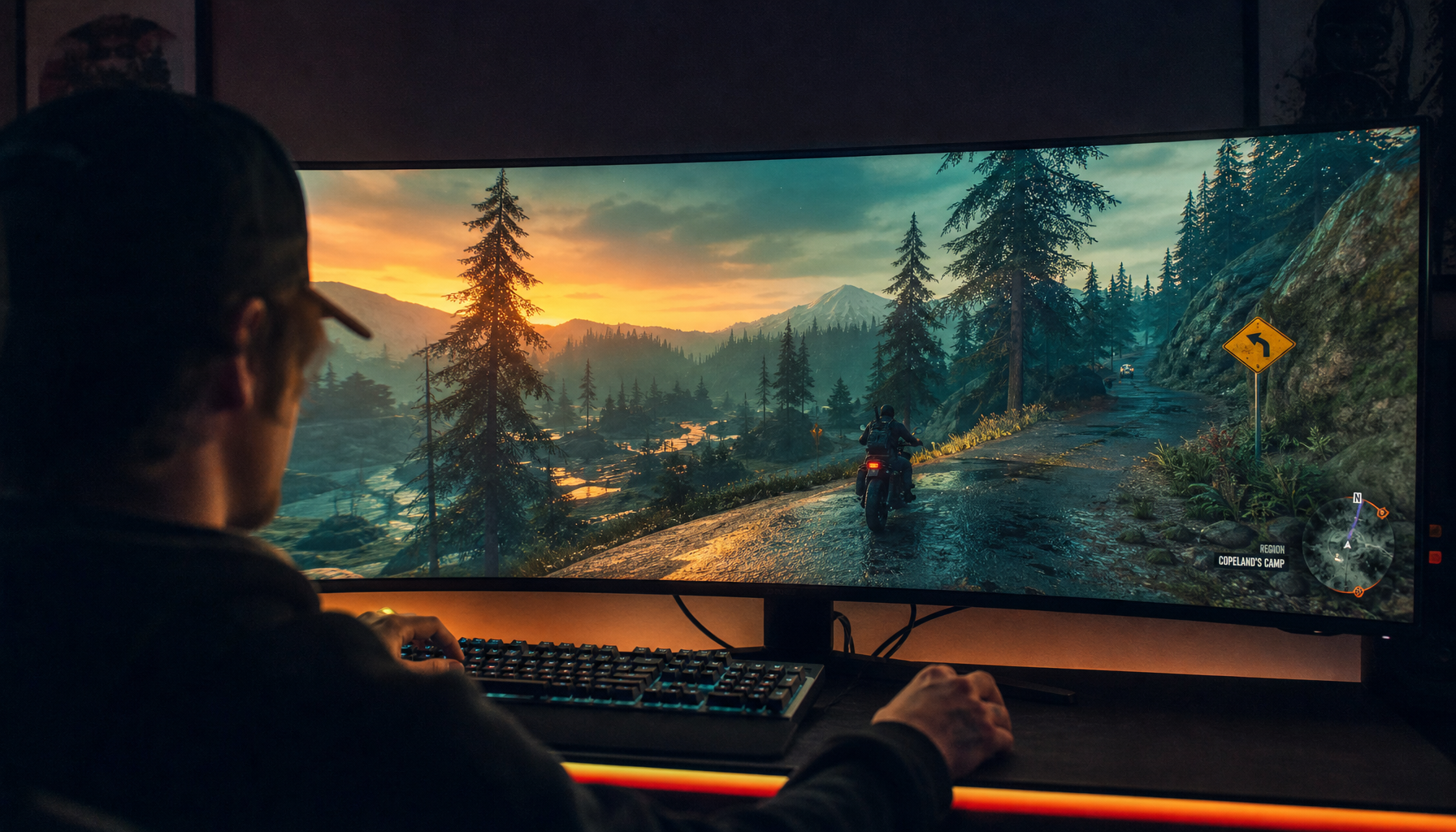
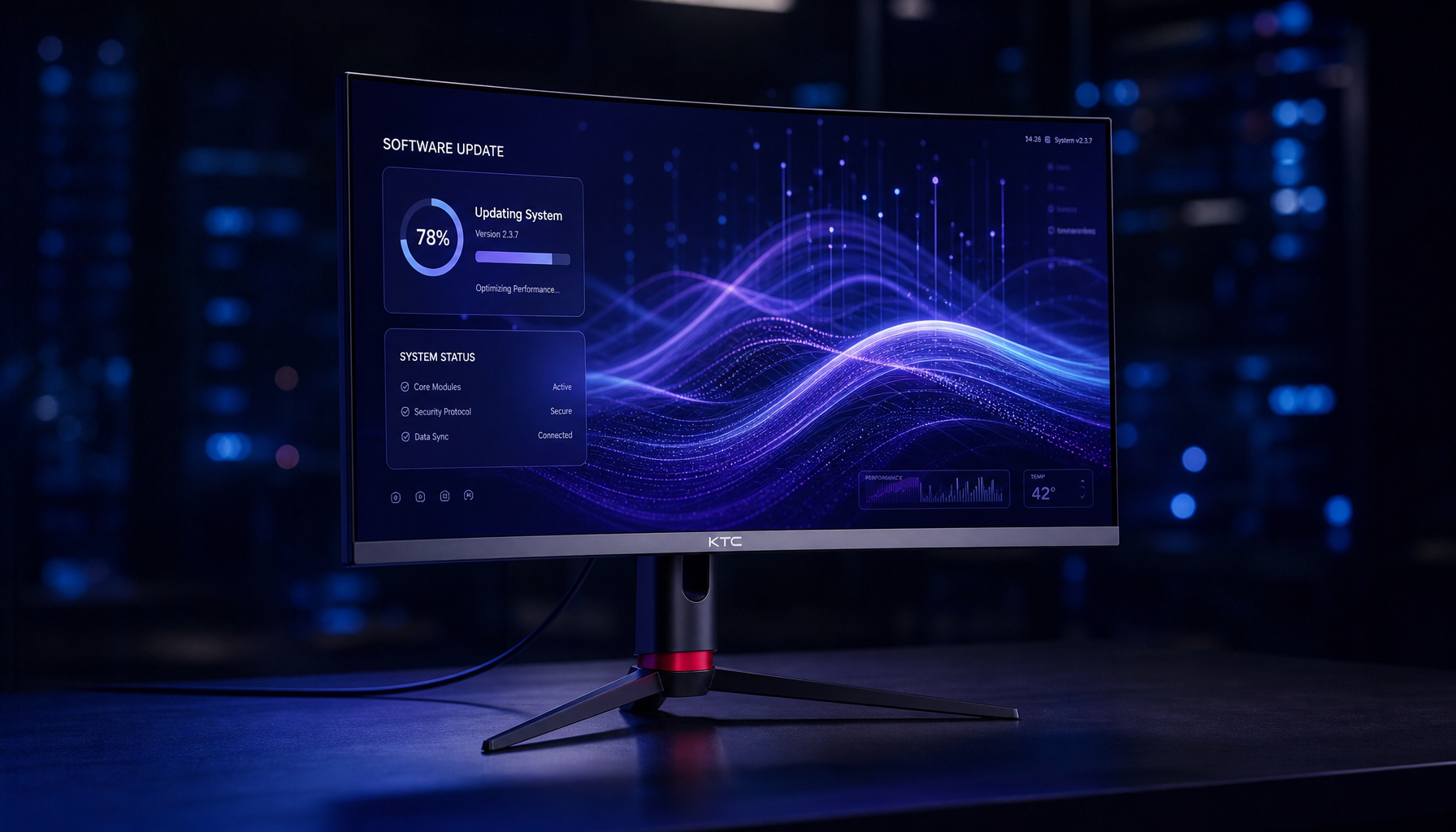
Mini LED monitors can take longer to wake because they are not just turning on a simple backlight; they must reinitialize dense local dimming hardware, brightness control, HDR behavior, and the video signal chain. If wake takes a few extra seconds, that is often normal; if the screen stays black, the cause is more likely the GPU driver, cable, port, or power setting.
Does your high-end Mini LED display sit black for a beat while your old office LCD snapped awake instantly? In real desk setups, the practical win is knowing whether that delay is normal processing time or a fixable sleep/wake fault. You’ll leave with a clear way to separate monitor behavior from PC, cable, and settings problems.
The Short Technical Answer
A traditional LCD monitor often uses a simpler LED backlight design. When it detects a video signal, it can light the panel and present an image with fewer image-processing decisions. A Mini LED monitor is still an LCD, but Mini LED is not a panel type; it is a more advanced backlight system using many tiny LEDs grouped into independently controlled dimming zones.
That extra control is the reason Mini LED looks so strong in HDR games, dark-room movies, and bright office environments. It is also why wake behavior can feel slower. The monitor may need to restore its backlight driver state, local dimming map, HDR mode, brightness limits, color profile, refresh rate, and input handshake before it shows the desktop.
What Happens When a Mini LED Monitor Wakes Up?
Signal Detection Comes First
Before the backlight matters, the monitor has to detect a live signal from the computer. Sleep and wake problems are frequently rooted in the source device rather than the display itself. In multi-monitor PC setups, dual monitors failing to wake is a known troubleshooting pattern involving drivers, ports, cables, display modes, and power behavior.
For example, a 32-inch 4K Mini LED monitor connected over DisplayPort may need to renegotiate 4K resolution, high refresh rate, HDR capability, adaptive sync, and color depth after the PC wakes. If the same monitor is connected through USB-C with power delivery, the system may also be restoring the hub, charging negotiation, and display alternate mode. A basic 1080p office LCD on HDMI has far less to re-establish.
The Backlight System Has More Work to Do

Mini LED’s advantage is precision. Instead of a single broad backlight or a small number of edge-lit zones, the display can brighten and dim many regions independently. One display maker describes local dimming as dynamic control over individual backlight zones to optimize brightness and contrast.
That means wake is not just “panel on.” The monitor’s controller has to bring up the LCD panel, activate the Mini LED backlight array, apply dimming behavior, and synchronize the backlight with the incoming image. On higher-end models, the firmware may also apply algorithms that reduce blooming around small bright objects, smooth transitions between dark and bright areas, and keep HDR highlights from looking unstable.
Color and Brightness Control Can Add Delay
Mini LED displays are harder to control consistently than simpler LCDs because each dimming region can behave slightly differently. Precise color calibration is harder when a display contains many Mini LED backlights across hundreds or thousands of zones, especially as brightness, temperature, and ambient conditions change.
That does not mean your monitor is recalibrating from scratch every morning. It does mean the display may restore lookup tables, gamma behavior, brightness limits, local compensation data, and HDR tone handling before it presents the final image. On a performance gaming monitor, that extra second can be the cost of the same system that gives you punchy highlights without turning the whole screen gray.
Mini LED Delay vs. a Real Wake Problem
A short delay is different from a failure. If the screen appears after two to eight seconds, especially on a high-refresh 4K or ultrawide model, the monitor may simply be completing a more complex startup sequence. If the display stays black, flickers endlessly, wakes only after unplugging the cable, or forgets its resolution, you are dealing with a fault in the signal chain.
Sleep mode itself can create glitches because the system is not fully off. It stores the active session in RAM and keeps parts of the machine in a low-power state, and wake-from-sleep problems can include external devices not being detected, Wi-Fi failing to reconnect, and apps freezing after resume.
Here is the clean distinction:

Symptom |
Likely Meaning |
Best First Move |
Image appears after a short pause |
Normal Mini LED initialization or signal renegotiation |
Leave it alone unless it worsens |
Black screen until cable is replugged |
Port, cable, GPU driver, or input detection issue |
Try another cable or port |
Only one monitor wakes in a dual setup |
OS display detection or driver issue |
Restart the graphics driver shortcut |
Wake delay appears only with HDR or high refresh enabled |
Bandwidth or handshake complexity |
Test lower refresh or SDR mode |
Monitor wakes but brightness changes slowly |
Local dimming or HDR tone behavior |
Update monitor firmware if available |
Why Traditional LCDs Often Feel Faster
A conventional office LCD usually has fewer variables. Many models use simpler edge-lit backlights, lower brightness targets, fewer dimming calculations, and more modest refresh-rate demands. If it is a 60Hz 1080p panel connected through HDMI, the wake path is short: detect signal, light the backlight, show image.
Mini LED monitors are often bought for the opposite use case. They may run 144Hz, 160Hz, 180Hz, 240Hz, or even dual-mode refresh behavior. Many are paired with HDR1000 or HDR1400 brightness claims, 4K resolution, adaptive sync, wide color modes, and USB-C docking. Connectivity should include modern standards such as HDMI 2.1, DisplayPort 1.4a with DSC, and ideally USB-C power delivery because older ports can bottleneck high refresh rates and HDR.

A simple comparison makes the tradeoff clear. A basic LCD may wake faster because it is doing less. A Mini LED monitor may wake slower because it is preparing a more demanding image pipeline. For gaming, HDR editing, or bright-office productivity, that tradeoff is usually acceptable as long as the delay is consistent and short.
The Pros and Cons Behind the Wake Delay
Pros
The payoff is image depth. Mini LED can deliver brighter HDR highlights, better contrast, and stronger dark-scene detail than standard LCD monitors. Independent display testing has found improved local dimming, better black-level control, stronger dark-scene performance, and reduced haloing in some Mini LED models.
Mini LED also avoids the burn-in anxiety that can come with static OLED desktop use. For office productivity, that matters. Spreadsheets, dashboards, browser tabs, taskbars, and design tool panels can sit on screen for hours. A Mini LED monitor gives you much of the HDR impact without making static UI elements feel like a long-term liability.
Cons
The wake delay is one of several complexity costs. Mini LED can show blooming around cursors, subtitles, stars, or bright HUD elements because dimming zones are still much larger than individual pixels. Some models also use aggressive dimming to chase deeper blacks, which can hide shadow detail or make brightness shifts feel unnatural. Some display testing has criticized mid-range sets for pushing contrast and brightness too hard instead of preserving a stable, content-faithful image.
For competitive esports, Mini LED is not automatically the best choice. A fast IPS monitor with excellent overdrive tuning may feel more immediate if you play SDR shooters at high frame rates and do not care about HDR contrast. Testing of an RGB-Mini LED monitor also notes that response time remains an area where OLED can still be faster.
Practical Fixes That Actually Matter
Start with the signal path. Use a certified DisplayPort or HDMI cable that matches the monitor’s resolution and refresh rate. If you are running 4K at high refresh with HDR, avoid old HDMI 2.0 or DisplayPort 1.2 paths when the monitor and GPU support better options. If wake improves after dropping from 160Hz to 60Hz, the monitor is not “slow” by itself; the high-bandwidth handshake is part of the delay.

Next, test one change at a time. Turn HDR off, then test wake. Disable USB-C docking and connect video directly, then test again. Try another port on the GPU. If you use multiple displays, test the Mini LED monitor alone. This isolates whether the delay comes from local dimming startup, OS display detection, or a multi-monitor negotiation issue.
For PC users, the quickest recovery shortcut is often Ctrl + Shift + Win + B, which resets the graphics driver without a full reboot. That is especially useful when the computer wakes but the monitor stays black. If the problem repeats, update the GPU driver, check monitor firmware, and review power settings such as hybrid sleep, hibernation timers, USB selective suspend, and fast startup.
Finally, set expectations by workload. A creator using a 32-inch 4K Mini LED display with HDR and local dimming enabled should accept a slightly slower wake if the image is stable afterward. A trading desk, esports station, or office front desk that needs instant wake may be better served by a simpler IPS LCD or by disabling deep sleep modes in the monitor’s on-screen menu when available.
When Should You Worry?
Worry when the delay changes suddenly, when the monitor wakes inconsistently, when it appears only after an OS update, or when the display requires cable unplugging to recover. Also worry if the monitor wakes with the wrong refresh rate, washed-out color, disabled HDR, or missing USB-C devices. Those symptoms point away from normal Mini LED behavior and toward firmware, driver, cable, or power-management trouble.
Do not worry about a brief, repeatable pause if the monitor always returns correctly. That pause is the display rebuilding a more sophisticated visual system than a traditional LCD. For a performance desk, the right target is not the fastest possible wake at any cost; it is a reliable wake, stable signal, clean HDR, sharp text, and motion that matches the way you actually work and play.
A Mini LED monitor wakes more slowly because it has more intelligence to bring online. Keep the cable path modern, the firmware current, and the sleep settings sane, and that extra moment becomes a small price for a brighter, deeper, more capable screen.