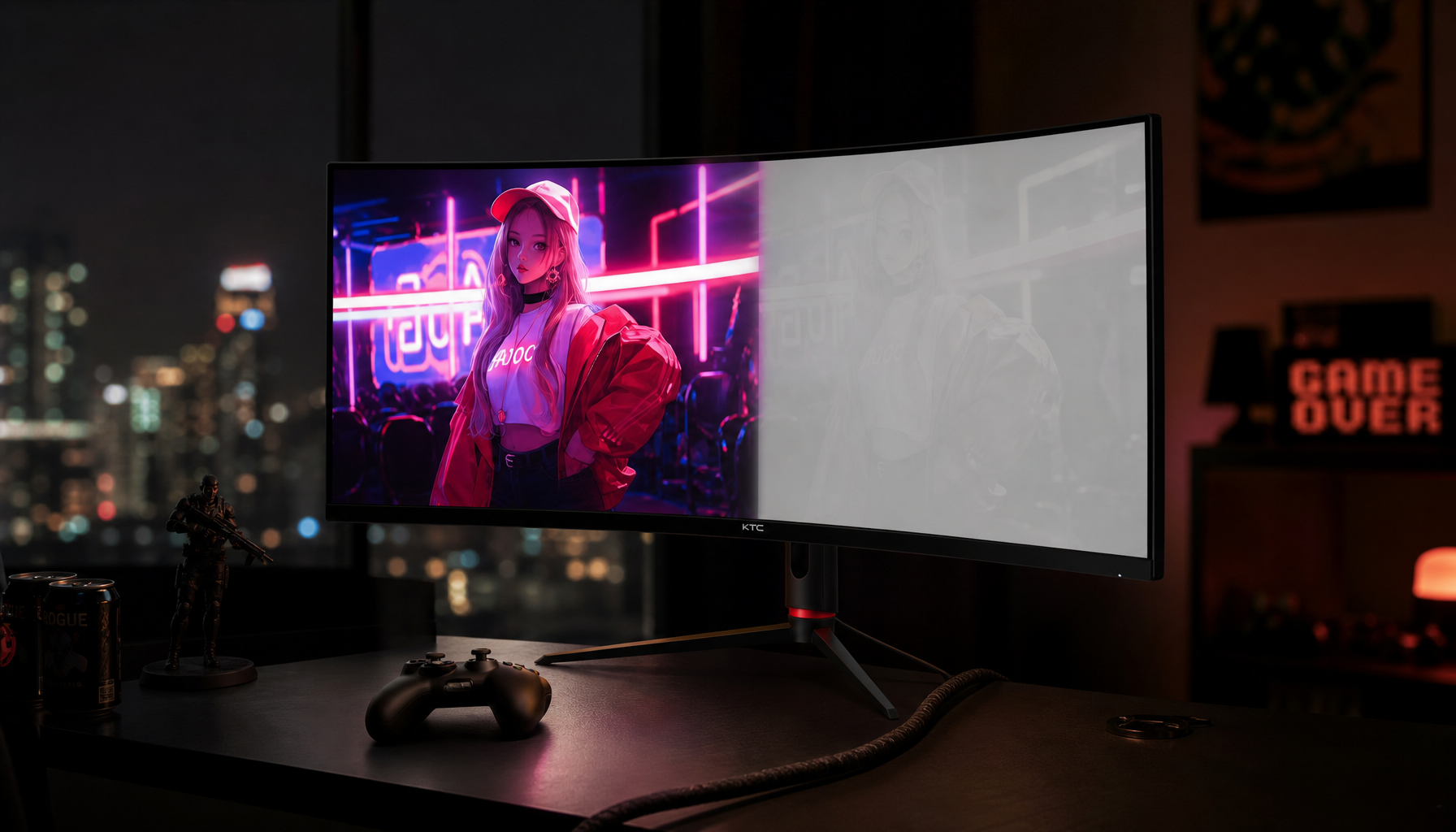
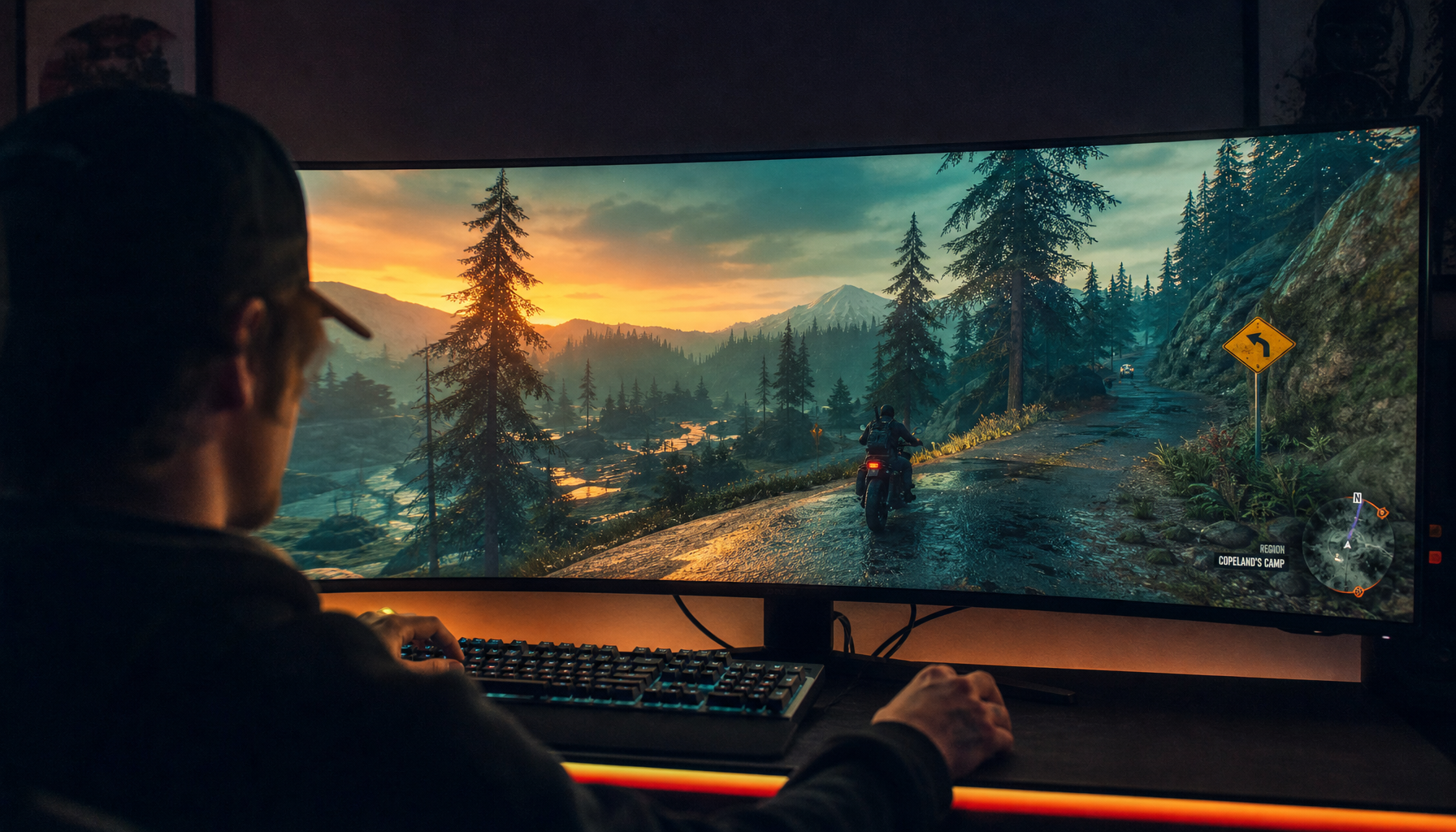
Mini-LED monitor blooming on desktop is a tradeoff, not a universal defect. If you use HDR games, video, or bright-room mixed work, local dimming can be worth keeping on. If you spend long stretches in white docs, browser tabs, or split-screen office layouts, halos may become the thing you notice first.

Why Mini-LED Blooming Shows Up on a Desk
Blooming, or the halo effect, happens when light from a bright object bleeds into nearby dark areas because local dimming zones are larger than the bright pixels themselves, as How-To Geek explains. On a desk, that usually shows up around taskbars, browser chrome, document windows, and overlays, especially when the rest of the screen is dark.
That is why a mini-LED monitor can look excellent in HDR and still feel a little busy in everyday productivity. The issue is not just the panel. It changes with content, brightness, room light, and how close you sit.
For a practical starting point, think of blooming as a visibility problem, not a spec-sheet problem. A monitor that looks clean in games may still draw your eye to halos on white backgrounds. If you want a deeper technical look at why zone counts matter, this local-dimming breakdown is a useful follow-up.

When Local Dimming Helps and When It Hurts
Local dimming helps most when the picture changes a lot. HDR games, video, and dark scenes are the easy case because highlights move, the image has more contrast, and your attention is not locked onto static UI. In that situation, leaving local dimming on usually makes more sense than chasing a "perfect" desktop preset.
It hurts most in office-heavy work. White documents, spreadsheets, email, and persistent taskbars make halos easier to see because the screen has more static bright elements. If you work that way most of the day, that is the point where blooming stops being a minor annoyance and starts becoming a comfort issue.
Room light matters too. RTINGS' Mini-LED vs. OLED comparison notes that Mini-LED tends to be the more comfortable choice in bright rooms, while darker rooms make haloing easier to notice. That does not eliminate blooming, but it can change whether it bothers you.
A simple rule: if you keep noticing halos around fixed UI during normal work, lower the dimming aggressiveness before you decide to shut it off completely. For a quick zone-count sanity check, this zone guide is a decent background read, but zone count alone does not decide desktop comfort.
Best Settings for Mixed Work and Play
Start with the least disruptive change first. If the monitor has an HDR toggle and a local dimming preset, keep HDR for HDR content and try a softer local-dimming mode for SDR desktop work. That usually gives you the biggest reduction in halo distraction with the least amount of compromise.
- Keep HDR on for games and video that benefit from it.
- Lower SDR brightness if the desktop feels too punchy.
- Try a less aggressive local-dimming preset before turning it off.
- Save a separate productivity profile if your monitor supports it.
- Use a gaming profile when you switch back to HDR-heavy play.
The point is not to find one universal setting. It is to avoid the toggle tax of changing everything by feel every time you open a spreadsheet. A mixed-use setup works better when you accept that office comfort and HDR impact are not always the same setting.
Which Mini-LED Model Fits Your Desk
If you want a natural product starting point, the KTC Mini LED 27" 4K 160Hz HDR1400 Gaming Monitor | M27P6 is the most text-focused option in the lineup. It pairs 4K resolution with a 27-inch panel, 160Hz refresh, Fast IPS, and 1,152 local dimming zones, so it fits buyers who care about sharp desktop text and still want serious HDR headroom.
If your desk is more about value and motion, the M27T6 leans toward 1440p at 180Hz with an HVA Mini-LED panel and HDR1400. If you want a faster 1440p option with a slightly different tradeoff, the M27T6S moves to 200Hz, Fast IPS, and HDR1000.
| Model | Resolution | Refresh Rate | Panel | Best Fit |
|---|---|---|---|---|
| M27P6 | 3840x2160 | 160Hz | Fast IPS | Sharp text, mixed work, premium HDR |
| M27T6 | 2560x1440 | 180Hz | HVA Mini-LED | Value-focused mixed use and HDR gaming |
| M27T6S | 2560x1440 | 200Hz | Fast IPS | Faster QHD gaming with strong creator-friendly color |
The right choice depends on what you notice first at your desk. If text clarity matters most, the 4K model is the cleanest fit. If motion speed and budget matter more, one of the 1440p models is easier to justify. For browsing the full lineup, All-Mini-LED Monitors is the broad category page.
When Mini-LED Makes More Sense Than OLED
Mini-LED is usually the safer default when your desk is bright, your workflow is static, or you want one screen to do office work and gaming without overthinking burn-in. RTINGS says Mini-LED is generally preferred in bright rooms because higher peak brightness helps content stand out under real desk lighting.
OLED still makes sense for some buyers. If your top priority is black level and you are comfortable managing static desktop exposure, OLED can be a better visual match. But for many office-heavy users, the question is not which panel is "better" overall. It is which tradeoff they will notice more during a normal day.
That is why Mini-LED often feels like the conservative choice for mixed use. Reolink's Mini LED vs OLED overview also points out why static desktop elements are a common reason buyers prefer Mini-LED for work. If you want a broader comparison angle, the Mini-LED vs. OLED gaming discussion is worth a look.
For office-first buyers who do not need local dimming, the Office Monitor collection is the cleaner path. For gaming-first shoppers who still want HDR, the Gaming Monitor category is the easier starting point.
Final Checks Before You Buy
Before you order a mini-LED monitor, check four things: your room light, how often you keep static UI on screen, whether you want one profile or two, and how much HDR you actually use. If you spend most of your day in bright documents and browser windows, treat local dimming as a feature you may soften, not a feature you must keep maxed out.
If you want the most balanced mixed-use pick, start with the model that matches your desk habits, then verify ports, refresh-rate support, warranty, and return policy before checkout. That keeps the decision practical instead of speculative.
FAQ
How Can I Reduce Mini-LED Blooming on a Desktop?
Start by lowering SDR brightness or using a less aggressive local-dimming preset. Keep local dimming on for HDR games if it works for you, but treat office use separately. You can reduce blooming, but you usually cannot remove it completely.
What Zone Count Is Actually Useful for Mixed Work?
Zone count helps, but it is not the whole answer. Desk comfort also depends on tuning, room light, and how much static UI you leave on screen. A spec sheet can rule a monitor in, but it cannot guarantee comfort by itself.
Can Mini-LED Feel Comfortable for Email, Spreadsheets, and Browsing?
Yes, for many people it can. The catch is that the best experience usually comes from a softer dimming preset and sensible SDR brightness. If your day is mostly white documents and browser tabs, comfort matters more than peak HDR impact.
Why Does Blooming Look Worse in Dark Rooms?
Dark rooms make bright UI elements stand out more against the background, so halos feel more obvious. That is why the same monitor can seem fine in daylight and more distracting at night, even though the panel has not changed.
Can Mini-LED Replace OLED for a Desk Setup?
It can for many mixed-use buyers, especially in bright rooms or when static desktop elements matter. OLED still has its own strengths, so the better choice depends on whether you care more about office comfort and brightness or black-level presentation.