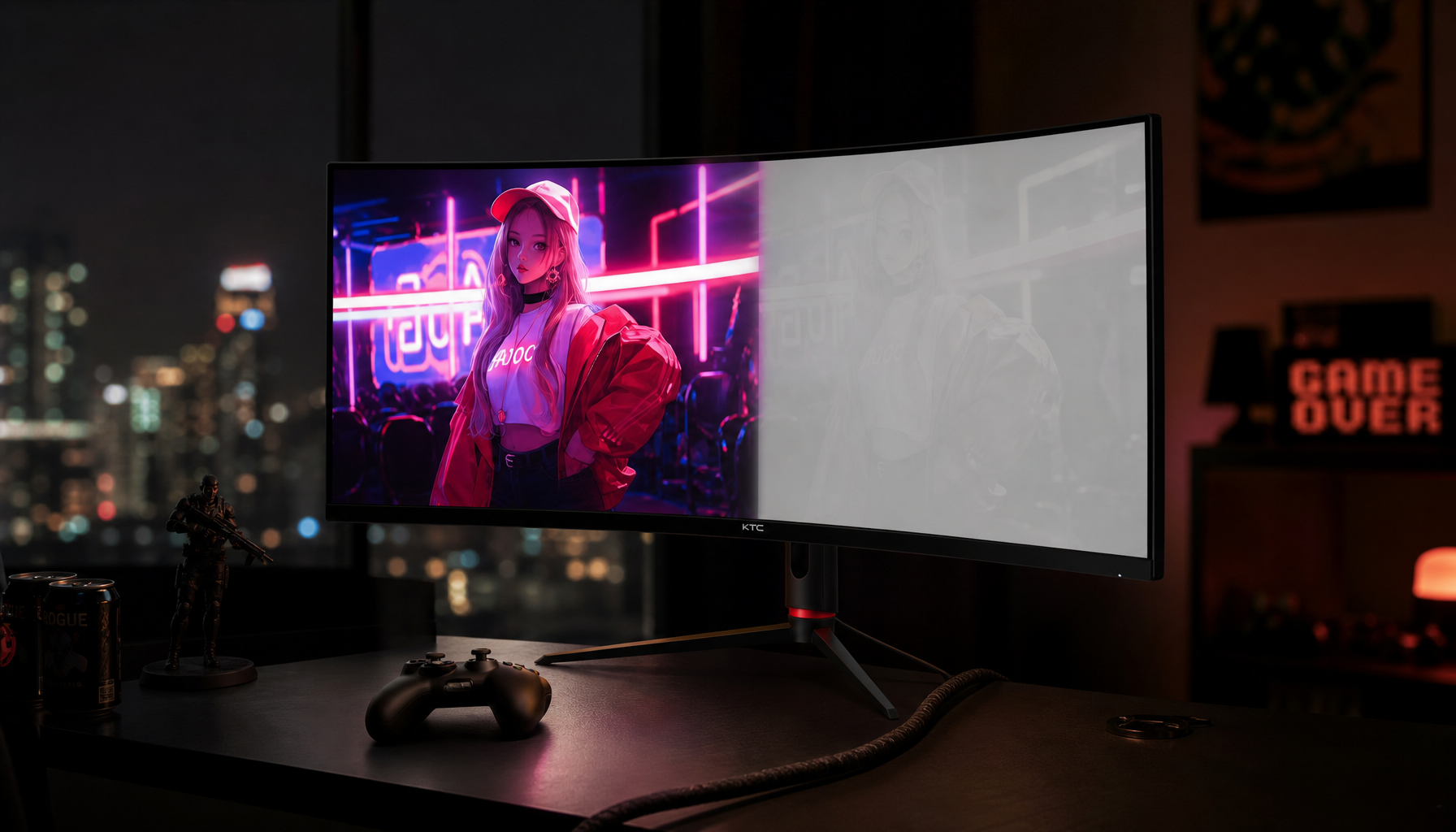
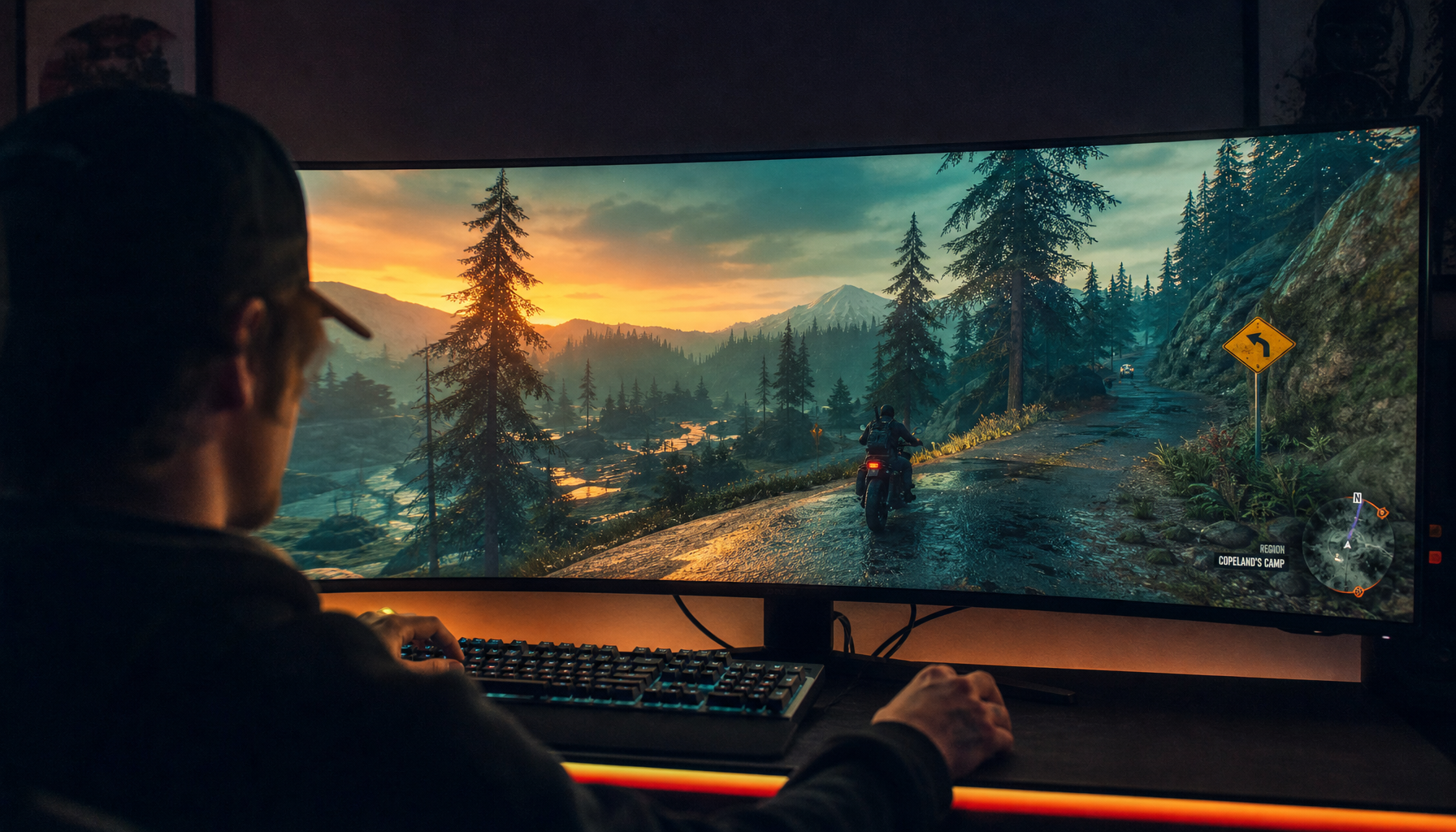
Good HDR can make enemies easier to spot by preserving shadow detail and controlling highlights, but weak HDR often does the opposite. In competitive shooters, the display and setup matter more than the HDR label.

HDR Can Improve Enemy Visibility, but Only When the Whole Chain Is Good
Proper HDR image quality is not just more brightness. It combines higher contrast, wider color, controlled highlights, and enough hardware capability to show dark and bright detail at the same time. In competitive shooters, that matters because enemies are often detected at the edge of visibility: a shoulder peeking from a dim hallway, a helmet under a blown-out skybox, or movement against a smoky background.
On capable OLED and mini-LED panels, that extra range can help you read scenes faster. Tone mapping and contrast behavior are the real reasons. If the display can keep black levels low while still lifting a flashlight beam, muzzle flash, or sunlit doorway, the enemy outline can stand apart instead of collapsing into a muddy blur. Independent monitor testing points to the same conclusion: brightness alone is not enough; contrast and local dimming determine whether highlights pop without crushing nearby detail.
That said, competitive visibility is not the same as cinematic spectacle. Competitive display advice still prioritizes refresh rate, response time, and consistency first. If HDR introduces unpredictability from one map or one title to the next, many serious players will choose a flatter but more readable SDR image every time.
Why HDR Sometimes Makes Enemies Harder to See
Poor HDR implementation can absolutely reduce visibility. The most common failure is a monitor that accepts an HDR signal but lacks the brightness control, local dimming, or contrast needed to render it properly. In that case, dark areas often look murky, blacks rise toward gray, and the middle of the image loses clarity. That is exactly where enemy models usually hide.
Real-world gaming impressions back this up. In one gameplay example from Shadow of the Tomb Raider, HDR looked striking in screenshots but initially hurt play because dark scenes became too hard to see. That lines up with what many display tuners find in practice: flashy HDR can impress in a demo and still be worse for actual combat readability.
Settings also sabotage HDR more often than people expect. Dynamic contrast and aggressive picture modes can clip highlights and crush shadow detail, which is disastrous in shooters. If you push the image into a punchy vivid style, a dark stairwell may look dramatic, but the crouched enemy inside it can disappear.

Room light matters too. Ambient light and reflections can change perceived contrast enough to affect whether HDR helps at all. In a bright room, glare raises the effective black floor, so the shadow separation you paid for can vanish. That problem is especially noticeable on glossy OLED and QD-OLED panels, which can look superb in a dim room and less convincing in daylight.

The Monitor Matters More Than the HDR Label
A monitor with DisplayHDR 400 capability versus 1000-level capability does not just differ in brightness. Entry-level HDR usually lacks the local dimming hardware needed to show bright and dark regions together with authority, so it often behaves more like slightly brighter SDR. For enemy visibility, that means fewer gains in shadow separation and a higher risk of washed-out scenes.
A good shorthand is this: if your monitor is OLED or a well-executed mini-LED with strong local dimming, HDR has a real chance to help. If it is a basic LCD with an HDR sticker and little else, it may not. Creator-focused display analysis reaches a similar conclusion: monitors below roughly 600 nits often provide limited HDR impact, while stronger implementations become much more compelling around 1,000 nits and above. Discussion from experienced users adds a useful nuance: lower-brightness HDR can still look good when tone mapping and wide color gamut are done properly, but that is an exception built on competent implementation, not a free pass for weak hardware.
Monitor class |
What usually happens in shooters |
Visibility risk |
Basic HDR400 LCD |
Brighter image, limited contrast control, weak shadow separation |
High |
Good mini-LED HDR1000 |
Strong highlight control and better dark detail if tuned well |
Moderate to low |
OLED / QD-OLED |
Excellent per-pixel contrast in dim rooms, very clear silhouettes |
Low in dark rooms, higher in bright rooms |
When HDR Helps Competitive Players the Most
Strong OLED and QD-OLED gaming monitors help most when a match includes both bright effects and dark geometry. Think of a map with sunlight at the end of a corridor, sparks from gunfire, and opponents crossing from shadow into open space. In SDR, you often tune the whole image to a safe middle. In HDR, a capable panel can keep the bright doorway intense without flattening the rest of the hallway.
The biggest practical win is not usually seeing farther. It is seeing faster. High contrast and true black behavior can improve edge separation, so your eye spends less time deciding whether a shape is scenery or a player. That does not replace map knowledge or aim, but it can reduce hesitation in those split-second first-peek moments.
When You Should Turn HDR Off
If your favorite games are competitive esports titles, HDR often matters less than refresh rate, motion clarity, and stable brightness. Many esports players still prefer SDR because it is easier to standardize. You set black equalizer, gamma, and brightness once, then you know exactly how a dim tunnel, enclosed room, or dark warehouse will look every session.
Turning HDR off also makes sense when a game’s implementation is inconsistent. HDR setup is still fiddly across games, and not every title exposes calibration controls that behave intelligently. If one shooter looks excellent and another makes every corner unreadable, the feature is not serving competition; it is becoming maintenance.
How to Tune HDR for Better Enemy Spotting
The first rule is to start from an accurate mode. Cinema-like presets and restrained processing usually preserve more real detail than vivid or standard modes. In plain terms, you want the monitor to stop helping so much. Disable dynamic contrast, keep black levels near correct defaults, and avoid oversharpening.
The second rule is to control the room. Dim viewing conditions improve perceived shadow depth more than many players realize. If you play ranked at 9:00 PM with low lights and no window glare, OLED and mini-LED HDR can look substantially cleaner than the same setup at 2:00 PM next to an uncovered window.
The third rule is to calibrate per game, not by marketing numbers. Game-side HDR sliders and tone mapping can behave differently from title to title. If a white-point slider pushed to the monitor’s advertised peak starts erasing detail, back it down. A slightly less dramatic image that preserves doorway texture and dark clothing is better for winning fights than a brighter screenshot.

The Real Competitive Verdict
The most reliable buying advice for HDR gaming is still practical: choose HDR for shooters only if the monitor already nails the basics and has real hardware behind the feature. A fast OLED or a strong mini-LED can improve visibility in the right room and the right game. A weak HDR LCD can make enemy spotting worse while adding setup friction.
For pure ranked consistency, SDR remains the safer baseline. For players who want both immersion and performance, well-implemented HDR is worth using only when it helps you read the map faster than it distracts you. That is the standard that matters on the scoreboard, not the sticker on the box.