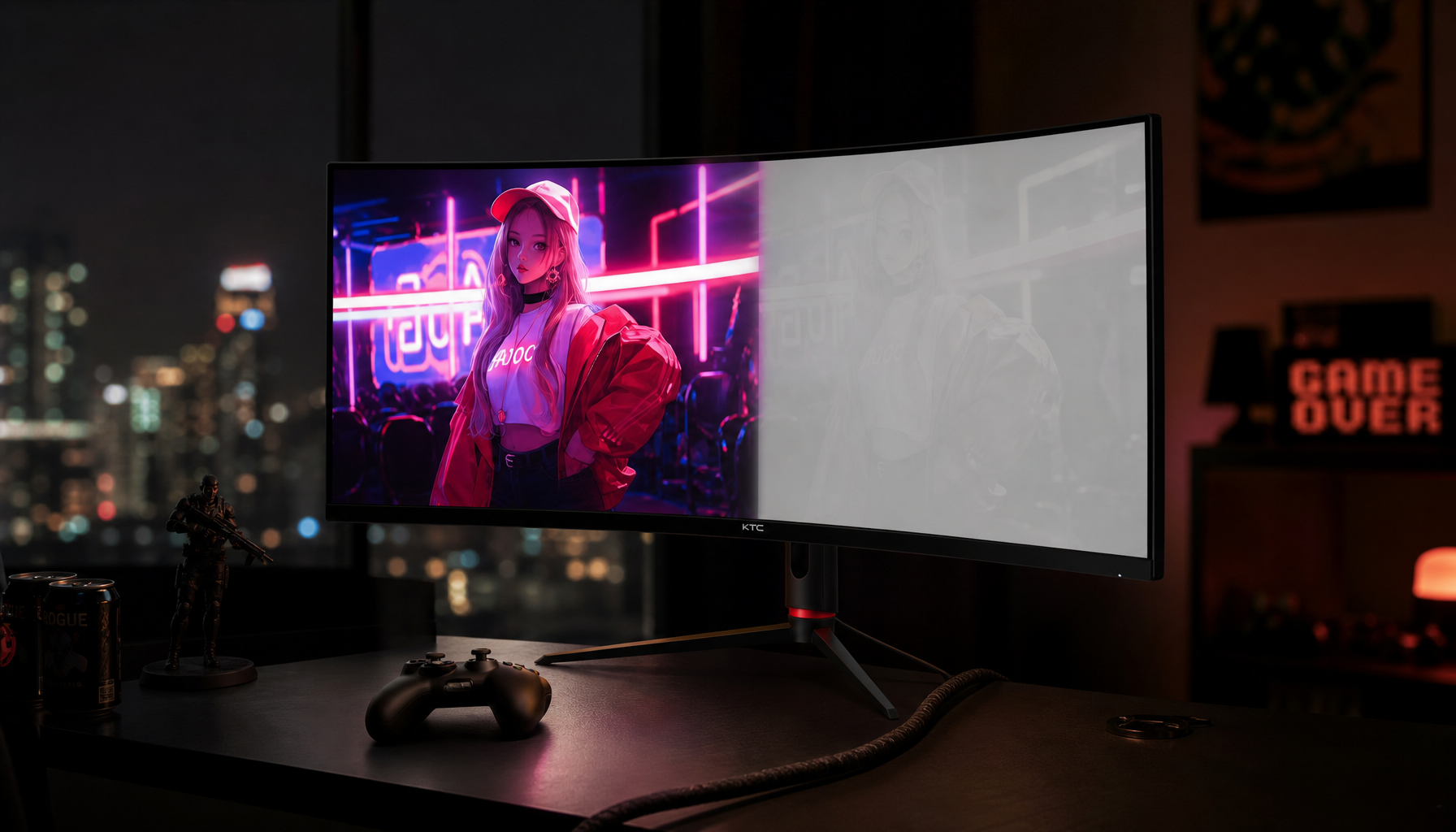
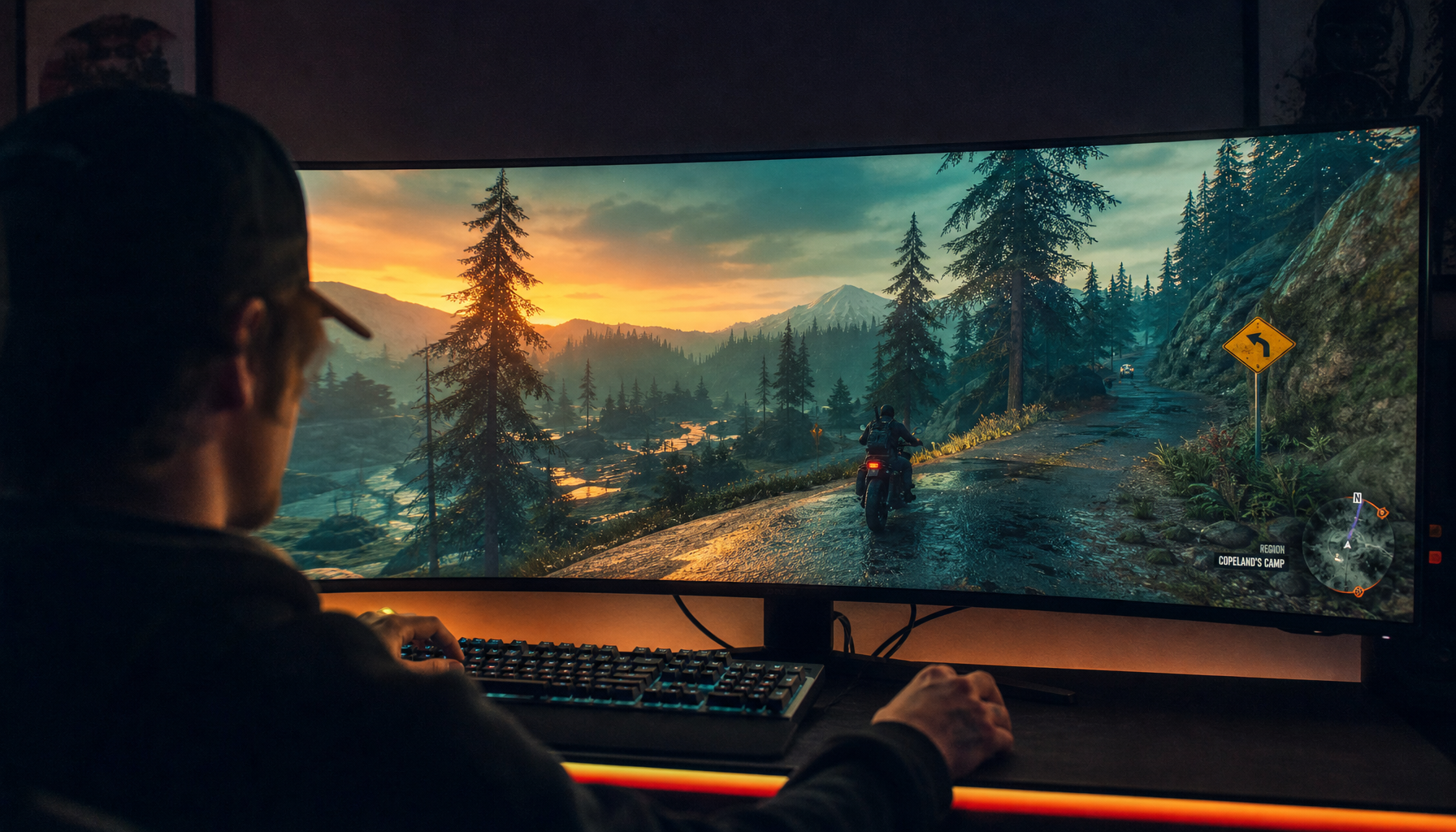
Display bit depth controls how many tonal steps each RGB channel can show, directly affecting gradient smoothness, shadow detail, and how cleanly rendered materials survive lighting and post-processing. For 3D rendering, 10-bit output is less about “more vivid color” and more about fewer visible steps between colors.
Bit Depth Is Shade Precision, Not Just More Color
In an 8-bit RGB signal, each red, green, and blue channel has 256 steps, creating about 16.7 million possible colors. A 10-bit signal raises that to 1,024 steps per channel, or about 1.07 billion combinations, which is why color depth matters most in subtle transitions.
That precision shows up in 3D scenes with sky gradients, volumetric fog, brushed metal, skin shaders, glass reflections, and near-black interiors. These areas often reveal banding before saturated objects do.

The key distinction is that color gamut defines the range of colors a display can reach, while bit depth defines how smoothly it moves between them. A wide-gamut screen with poor bit depth can still show harsh steps in a clean render.
Why 3D Renders Expose 8-Bit Limits
3D rendering stacks many color decisions: texture maps, lighting, global illumination, tone mapping, bloom, depth of field, and color grading. Each pass can compress or stretch tonal values, making small bit-depth gaps easier to see.
For example, a soft sunset background rendered in 8-bit has only 256 levels per channel to describe the fade from orange to blue. In 10-bit, the same channel has four times more steps, so the transition can look smoother before compression or export.
This is especially important in HDR previews. HDR10 is built around 10-bit color, and higher bit depth helps preserve highlight roll-off, shadow separation, and fine atmospheric effects. In practical display terms, 10-bit is most visible in smooth gradients, not in every object on screen.

The Full Pipeline Must Support It
A 10-bit monitor does not guarantee a 10-bit render preview. The whole chain has to cooperate: graphics hardware, cable, port bandwidth, operating system setting, app viewport, monitor input mode, and panel processing.
For rendering work, Full Range RGB is usually the cleanest default for desktop use. Some component-video modes can work well, but RGB avoids unnecessary compromises for text clarity and fine shade handling in normal monitor workflows, as noted in PC display settings.
Before judging your render, confirm that 10-bit color depth is enabled in the graphics output, the cable and port have enough bandwidth for the selected resolution and refresh rate, and the renderer or grading tool can output a 10-bit preview. High refresh rates at high resolution can limit bit depth, and oversaturated monitor modes should be avoided when accuracy matters.

Many “10-bit” monitors use 8-bit panels with frame-rate control, which can still look very good. Native 10-bit remains the stronger choice for critical grading.
Accuracy Still Needs Calibration
Bit depth reduces banding, but it does not fix inaccurate color. A poorly calibrated 10-bit display can still show the wrong white point, crushed shadows, or oversaturated colors.
For rendering decisions, accuracy depends on gamut, gamma, grayscale tracking, uniformity, contrast, and calibration. A display can cover 100% sRGB and still miss the intended look if its factory tuning is off; color accuracy is about matching a reference, not looking punchier.
A hardware calibrator is worth it when renders must match client approvals, print output, product colors, or video delivery standards. Even a value-focused setup benefits from a calibrated sRGB mode for office work and a controlled HDR or 10-bit mode for immersive review.
Best Practical Choice for Renderers
Use 8-bit for fast SDR previews, office work, basic modeling, and competitive gaming where refresh rate matters more than tonal finesse. It is reliable, efficient, and still fits most web and desktop content.
Choose 10-bit for cinematic 3D scenes, HDR lighting, product visualization, skin, skies, smoke, fog, glossy materials, and any workflow involving heavy color grading. If you are buying a monitor for both rendering and gaming, prioritize strong panel quality, accurate modes, contrast, and stable 10-bit support over the bit-depth label alone.
The best display is not the one with the biggest spec sheet. It is the one that lets your render look intentional, consistent, and immersive from viewport to final delivery.