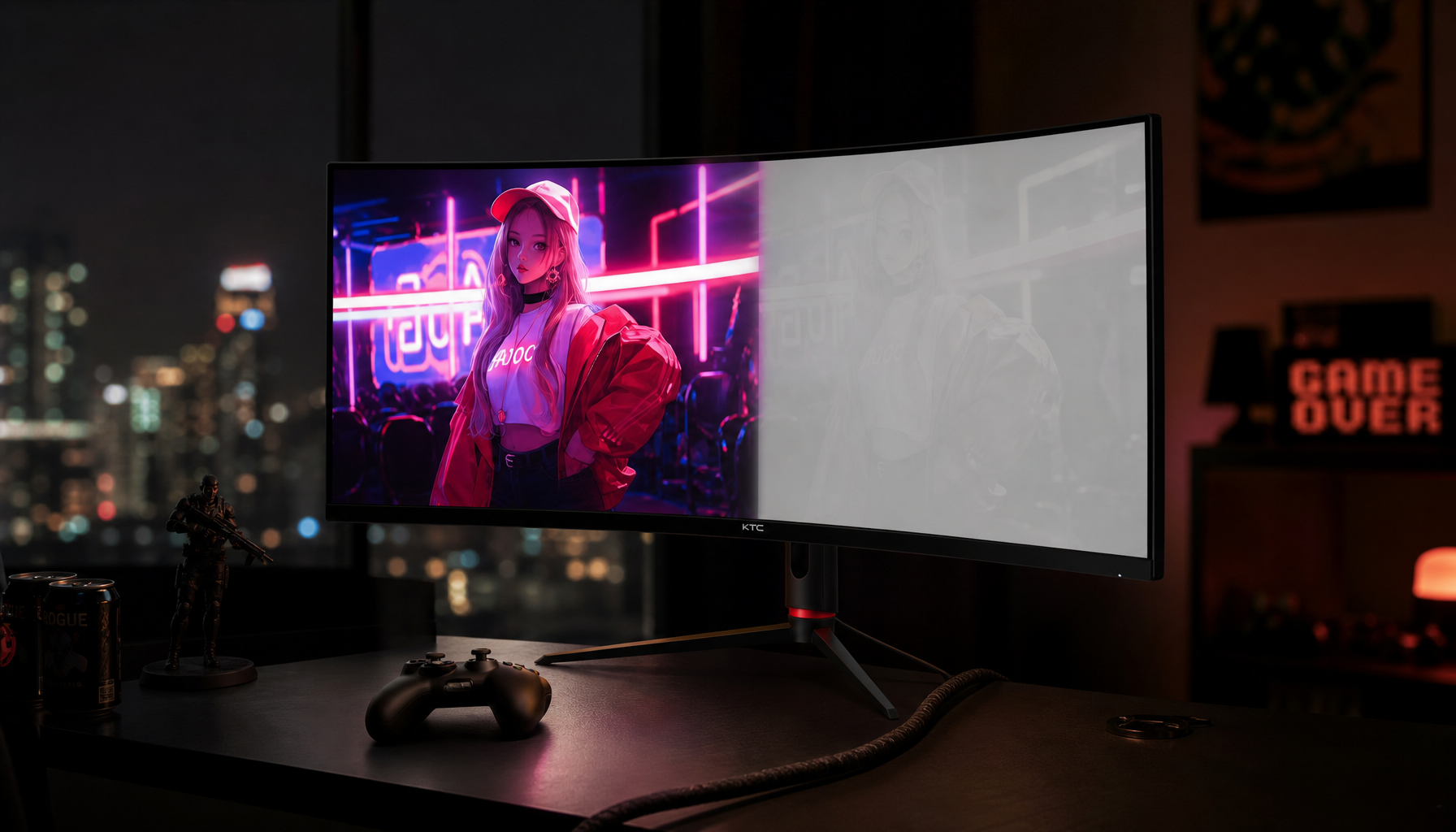
Display aging can quietly reduce HDR brightness, contrast, color accuracy, and uniformity. The right fix depends on the panel type and how far the wear has progressed.
Does your once-impressive HDR monitor now look flat in games, gray in dark scenes, or uneven during work? Practical checks such as brightness testing, uniformity inspection, HDR certification review, and calibration can quickly show whether the panel is aging gracefully or holding back the experience. You will know what changes with age, how to diagnose it, and when tuning is smarter than replacing.
Why HDR Suffers as a Display Gets Older
HDR depends on controlled brightness, deep blacks, wide color, and fast tone changes. As a monitor ages, those pillars can drift. The backlight may dim, OLED pixels may wear unevenly, LCD uniformity may worsen, and color output may move away from its original calibration. The result is not always dramatic failure. More often, it is a slow loss of impact: highlights stop looking sharp, shadows lose depth, and bright UI elements feel less clean against dark scenes.
The important point is that HDR is not just “higher brightness.” The Certified DisplayHDR program exists because HDR performance needs measurable checks for luminance, color gamut, bit depth, and response behavior. A monitor that barely met a basic HDR claim when new has little margin left after years of heat, dust, power cycling, and heavy daily use.
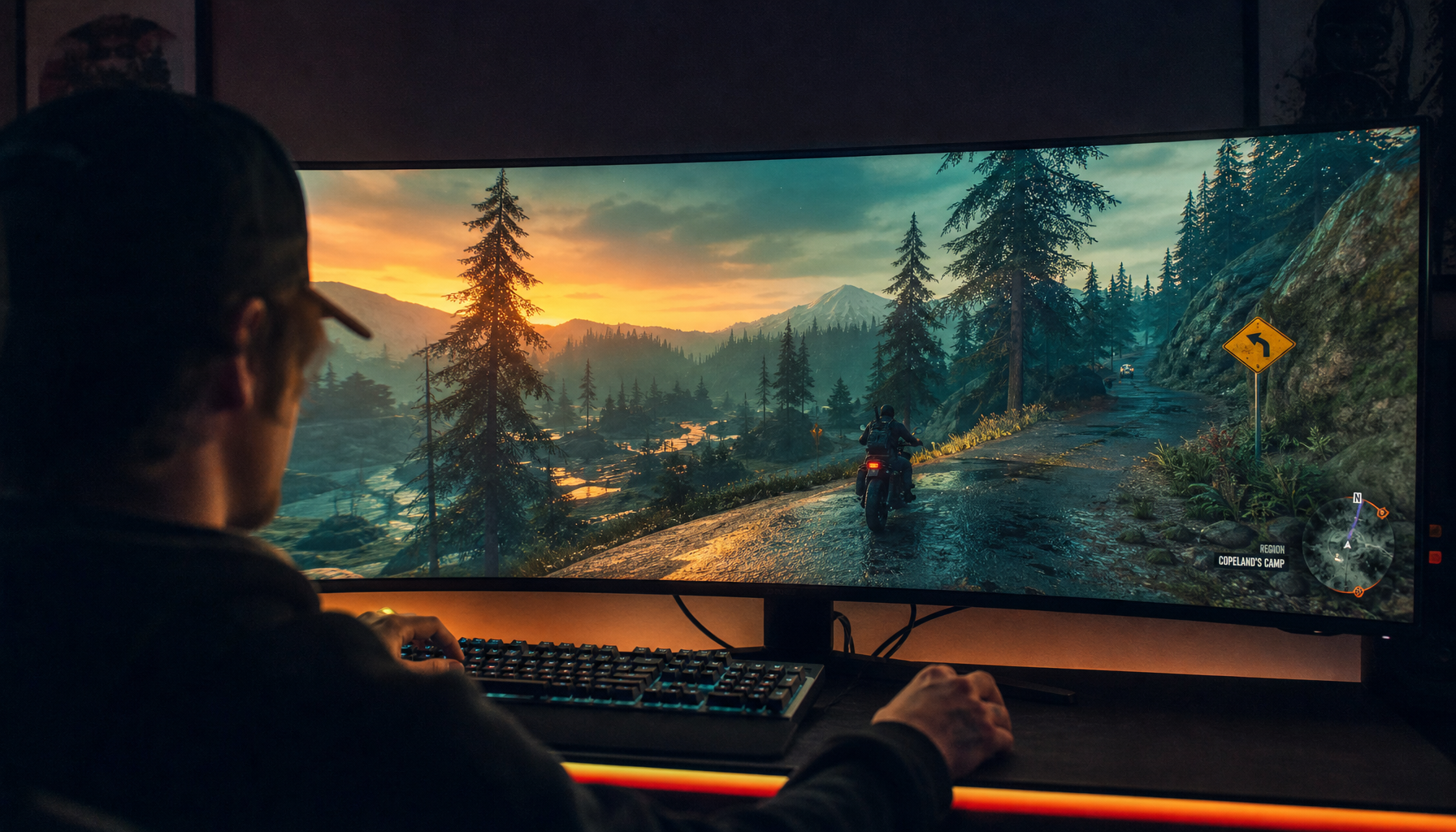
For a gaming monitor, that degradation can make night maps harder to read or bright explosions look clipped instead of detailed. For an office display, it can mean spreadsheets look dull, video calls lose natural skin tones, and long sessions feel more tiring because you keep raising brightness to compensate. For a portable smart display, battery-saving brightness limits can make panel aging even more noticeable outdoors or near a window.

What “Panel Degradation” Actually Means
Panel degradation is the gradual change in a display’s light output, color behavior, contrast, and uniformity over time. It can come from LED backlight wear, OLED organic material aging, thermal stress, image retention, electronics drift, or simple mechanical wear in power and signal components.
On LCD monitors, including IPS and VA, the panel uses a backlight. As that light source ages, peak brightness can fall. If a monitor once reached a useful HDR highlight level but now struggles, HDR tone mapping may compress the image, making it look flatter than expected. Uneven backlight wear can also create cloudy corners or patches that are especially visible in dark HDR games and movies.
On OLED monitors, each pixel emits its own light. That gives OLED its signature black level and near-instant response, but it also means pixels age based on usage. Static elements such as taskbars, game HUDs, browser tabs, and dashboards can create uneven wear over long periods. Modern OLED monitors use mitigation features, and real-world use can be better than fear suggests; one long-term OLED desktop test reported little to no visible burn-in after 2,656 hours, with faint marks mainly visible only in test patterns at high brightness.

How Display Age Changes Core HDR Performance
Peak Brightness Drops
HDR highlights need brightness headroom. When a backlight or emissive pixel system loses output, spec-sheet HDR becomes harder to achieve. A monitor rated for modest HDR when new may still accept an HDR signal, but the visual result can look like a brighter version of SDR rather than a true high-dynamic-range image.
This matters most on entry-level HDR monitors. If a display only had basic peak brightness and no strong dimming hardware, age can push it from “acceptable in a dark room” to “barely worth enabling.” In practice, if a sun reflection in a racing game, muzzle flash in a shooter, or specular highlight in a video no longer pops, brightness loss is one likely cause.
Black Levels and Contrast Become Less Convincing
HDR impact comes from bright and dark detail appearing together. LCDs with weak or aging backlights may show elevated blacks, backlight bleed, or blooming. VA panels can keep stronger native contrast than many IPS panels, but they are not immune to uniformity problems. IPS panels often remain excellent for productivity and color stability, yet their native contrast limits can become more obvious when HDR content demands deep blacks.
OLED behaves differently. Because pixels can turn off, black levels remain a strength, but uneven pixel wear can reduce consistency across the screen. A static productivity layout at high brightness for thousands of hours can create subtle brightness differences that appear in full-screen gray, dark blue, or near-black HDR scenes.
Color Accuracy Drifts
HDR usually involves wider color and more aggressive tone mapping than SDR. As panels age, white point, gamma, and saturation can drift. That is why creator-grade displays and serious gaming setups benefit from periodic calibration rather than trusting factory settings forever.
Color accuracy is not the same as color excitement. A wide-gamut HDR monitor can look vivid while still being wrong for SDR office work or web content. Wide-gamut screens may oversaturate unmanaged SDR content, so using an sRGB mode for normal desktop work and HDR mode only for HDR content can preserve both accuracy and immersion. OLED remains attractive in premium gaming and creator setups because it combines strong contrast, wide color, and fast response.
Uniformity Defects Become Easier to Notice
Aging does not always affect the whole screen evenly. Corners can dim, one side can warm in color temperature, or central work areas can age differently from edges. HDR makes this more visible because it pushes the panel harder. A gray desktop background may look fine, while a dark HDR movie scene reveals cloudy patches or a faint toolbar outline.
For office users, uniformity problems show up as eye strain and repeated brightness adjustments. Older displays are not just cosmetic issues; business display modernization research frames dim backlights, uneven brightness, blurry visuals, and aging hardware as contributors to accuracy and comfort problems in workplace environments outdated monitors.
OLED vs IPS vs VA: Aging Tradeoffs for HDR
Panel type |
HDR strength when new |
Main aging risk |
Best fit as it ages |
OLED |
Excellent blacks, strong contrast, fast response |
Uneven pixel wear and burn-in risk from static elements |
HDR gaming, video, dark-room immersion with mitigation enabled |
IPS LCD |
Stable color, wide viewing angles, strong office reliability |
Backlight dimming, lower native contrast, possible image retention |
Productivity, coding, design, mixed office use |
VA LCD |
Better native contrast than typical IPS |
Smearing on some models, backlight and uniformity issues |
Media, office work, budget HDR with realistic expectations |
Mini-LED LCD |
High brightness and local dimming potential |
Blooming, zone behavior, backlight aging |
Bright-room HDR, gaming, mixed-use setups |
True permanent image retention is far less common on IPS than on OLED because IPS uses a shared backlight rather than individually aging emissive pixels. Practical IPS care is still worthwhile: moderate brightness, display sleep, moving content, and avoiding static maximum-brightness screens help preserve consistency over time IPS image retention.
How to Test Whether Age Is Hurting Your HDR
Start with the symptoms you can see. Set the monitor to its native resolution, reset the picture mode if it has been heavily adjusted, and compare SDR and HDR using the same familiar game, movie, or test clip. If HDR looks washed out, check the operating system’s HDR calibration, in-game HDR sliders, and the monitor’s HDR mode before blaming age.

Then inspect the hardware behavior. In a dim room, display full-screen black, dark gray, mid-gray, white, red, green, and blue screens. Look for dim zones, color tinting, persistent outlines, cloudy corners, or patches that were not there before. If your monitor supports built-in panel refresh, pixel cleaning, or compensation cycles, run the manufacturer’s process exactly as intended.
A simple calculation helps with replacement decisions. If a monitor has been used eight hours per workday for four years, it has roughly 8,000 hours of active use before weekends and overtime. Add gaming nights, static dashboards, or high-brightness HDR sessions, and the number climbs quickly. That does not mean the display is finished, but it explains why a once-premium HDR image may no longer match reviews from launch day.
When Calibration Helps and When It Cannot
Calibration can correct color drift, white balance, and gamma behavior. It can make SDR work cleaner and HDR tone mapping more predictable. For photographers, video editors, and designers, calibration is routine maintenance, not a luxury. Display guidance for creative workflows consistently emphasizes that monitor choice, color accuracy, and external display quality matter because visual work is more demanding than basic office use photo editing workflows.
Calibration cannot restore lost peak brightness, fix severe burn-in, add real local dimming, or turn a low-tier HDR panel into a high-performance HDR display. If a monitor’s HDR mode lacks enough brightness, contrast control, or color depth, software tuning can only polish the limits that remain.
When to Keep, Tune, or Replace
Keep the display if HDR still looks natural after calibration, uniformity is acceptable, and your work does not depend on exact brightness or color. A three-year-old IPS productivity monitor can still be a reliable office display even if its HDR mode is not exciting. It may serve better as a secondary screen for chat, documents, or monitoring tools.
Tune the display if the problem is inconsistent settings. Many HDR complaints come from mismatched app settings, wrong color modes, excessive brightness, or using HDR permanently on the desktop. For mixed use, a practical setup is SDR or sRGB mode for office work, HDR only for supported games and media, moderate desktop brightness, sleep timers, and panel protection features enabled.
Replace the display when peak brightness is clearly weak, uniformity defects distract you, OLED wear is visible in normal content, ports or firmware limit modern HDR sources, or the monitor is beyond the performance tier your workflow now needs. Used monitors can be good value, but buyers should inspect for dead pixels, backlight bleed, uniformity, ghosting, port function, and condition because used 32-inch displays often trade lower price for limited warranty and possible aging defects used monitor inspection.
Practical Care Settings That Extend HDR Life
For OLED, avoid running desktop brightness at maximum all day. Use auto-hide for static bars, enable pixel shift, allow compensation cycles to run after shutdown, and let the screen sleep quickly during breaks. For IPS and VA, keep brightness comfortable rather than excessive, avoid static high-contrast screens for very long periods, and use a screen saver or sleep timer in office environments.
For any HDR monitor, heat management matters. Keep vents clear, avoid direct sun on the panel, and do not treat HDR peak brightness as the default desktop mode. Competitive gamers can keep fast refresh and low latency without forcing maximum luminance on static menus. Office users can preserve clarity and comfort by choosing ergonomic brightness, sharp native resolution, and a color mode matched to the workday.
FAQ
Does an old monitor lose HDR even if it still turns on?
Yes. A display can function normally while losing HDR impact through lower brightness, weaker uniformity, color drift, or visible wear. Basic desktop use may still look fine, while HDR scenes reveal the decline.
Is OLED burn-in guaranteed?
Over enough time, OLED materials wear, but visible burn-in depends heavily on brightness, static content, usage hours, and mitigation features. Modern OLED monitors are much more practical than early fears suggest, but they still reward smart settings.
Is DisplayHDR certification enough?
It is useful, but the tier matters. A certification gives you a measurable starting point, while real HDR quality still depends on brightness, dimming behavior, color capability, panel type, and how the monitor performs after years of use.
Aging does not make a display useless overnight; it narrows the gap between what the spec sheet promised and what your eyes actually get. Treat HDR performance like a living part of the setup: test it, tune it, protect it, and replace it only when the panel can no longer deliver the brightness, contrast, and confidence your games, work, and content deserve.