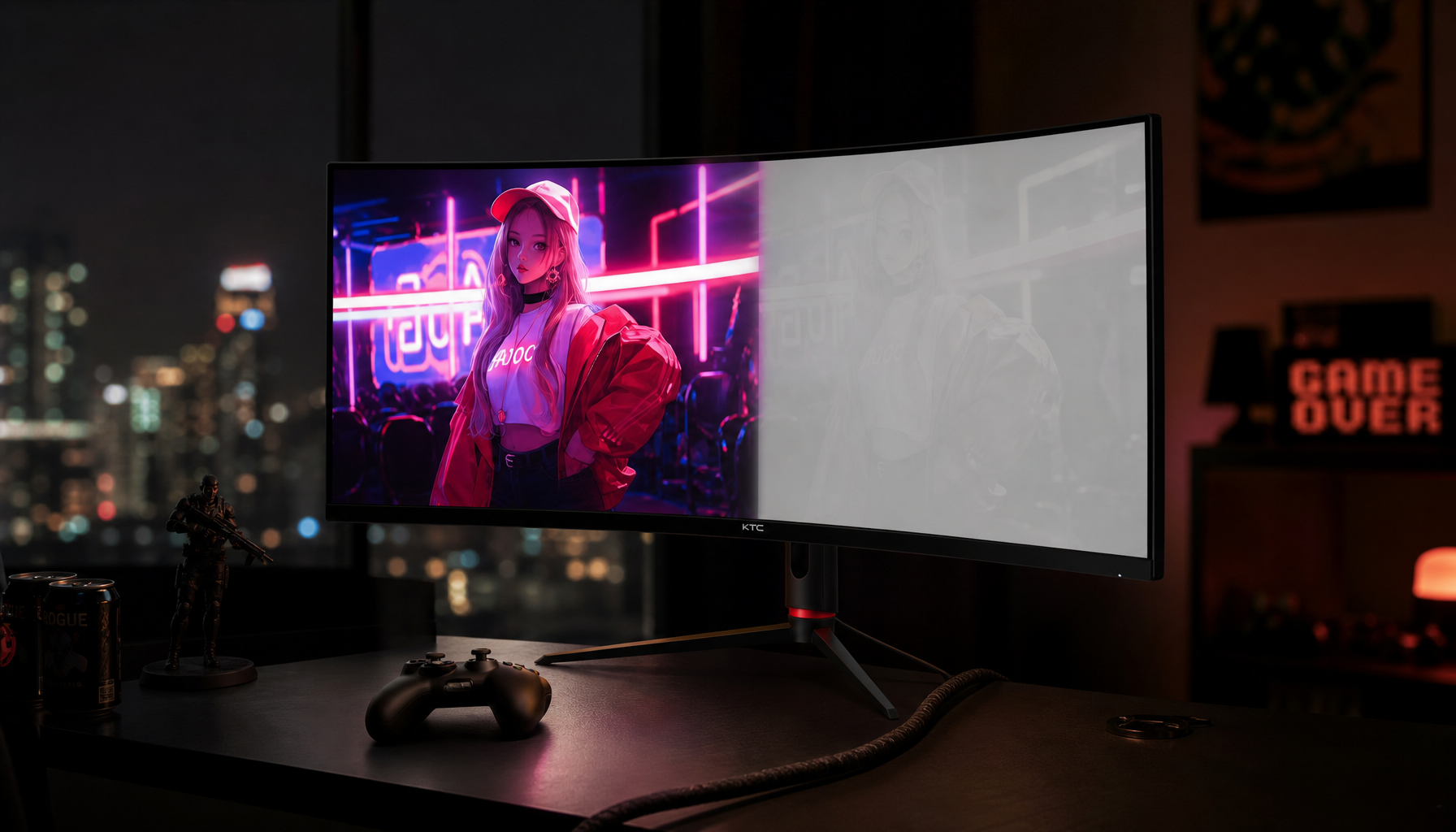
For true cinematic black levels, OLED’s pixel-level black is the gold standard; for LCD gaming monitors, target at least 3,000:1 native or static contrast, with 4,000:1 to 6,000:1 feeling much more convincing in a dark room.
Does a night mission look like gray fog instead of darkness, even after you lower brightness? A quick black-level and gamma check can reveal whether your display is preserving shadow detail or simply hiding it. Here’s how to read contrast specs, avoid marketing traps, and choose a screen that makes single-player worlds feel deeper without crushing the scene.
Why Black Level Matters More Than the Big Contrast Number
Black level is the darkest black a display can produce when the image calls for black, and poor black levels make dark scenes look gray, flat, and less believable. A display with weak blacks can still be bright, colorful, and fast, but horror games, space scenes, rainy city streets, and torch-lit caves lose the cinematic depth that makes single-player games feel authored rather than merely rendered.

Contrast ratio is the relationship between the brightest white and darkest black a display can show. A 1,000:1 ratio means white is 1,000 times brighter than black, and higher ratios usually create stronger separation between highlights and shadows. The key is that contrast ratio only predicts cinematic impact when it reflects real, stable performance rather than a best-case marketing mode.
The practical reason black level dominates is simple: if the darkest parts of the image glow, every scene starts from gray. Raising peak brightness can make explosions brighter, but lowering the black floor makes the entire image gain depth. In a dark room, cutting black output from 0.3 nits to 0.1 nits changes a 300-nit display from 1,000:1 to 3,000:1, which is why a VA panel can feel more movie-like than many standard IPS screens in story-driven games.
The Real Target: 3,000:1 Minimum, 4,000:1+ Preferred, OLED Best
For single-player gaming, 1,000:1 is usable but not cinematic. It is common on many LCD monitors and fine for office work, browsing, esports, and well-lit rooms, but in a dark bedroom or gaming den it often makes black areas look lifted. Many IPS monitors live around this zone, which is why their color and viewing angles can be excellent while their nighttime scenes still feel washed out.
A 3,000:1 native or static contrast ratio is the first serious threshold for cinematic gaming. That level is commonly associated with VA-style performance and gives caves, forests, space backdrops, and dim interiors more weight. Gaming-focused guidance frames 2,000:1 as an improvement for atmospheric games and positions 3,500:1 to 4,000:1 as better suited to vivid, immersive play.
For a premium LCD experience, 4,000:1 to 6,000:1 is the range to look for if single-player immersion matters more than pure competitive speed. Display guidance places 4,000:1 to 6,000:1 in the range for gaming, video editing, and movies, while 8,000:1 and above moves into premium theater-style expectations. That does not mean every 6,000:1 monitor is automatically better, but it does mean the panel has enough native contrast headroom to make dark scenes feel intentional.
OLED is different. Because each pixel can turn off completely, OLED can produce effectively perfect black in a dark room, which gives it near-infinite contrast in practical viewing. Monitor testing roundups often single out OLED gaming monitors for their black levels and contrast, and that matches real setup experience: when a game cuts from a bright skyline to a black loading tunnel, OLED does not leave a gray veil behind.

Display Type |
Typical Black-Level Feel |
Best Use Case |
IPS LCD around 1,000:1 |
Clean and bright, but grayish blacks in dark rooms |
Productivity, competitive gaming, bright rooms |
VA LCD around 3,000:1 |
Noticeably deeper blacks, stronger depth |
Story games, RPGs, horror, mixed entertainment |
High-contrast LCD around 4,000:1 to 6,000:1 |
More cinematic shadow weight |
Dark-room gaming and movie-style visuals |
OLED |
Pixel-off black and strongest perceived depth |
Premium single-player immersion and HDR scenes |
Native, Static, Dynamic: Which Contrast Spec Should You Trust?
Native and static contrast are the numbers that matter most. They describe how bright white and dark black look under stable conditions, which is much closer to actual game content where fire, UI elements, moonlight, and shadows often appear at the same time. If a monitor lists 1,000:1 typical and 1,000,000:1 dynamic, the 1,000:1 number is the one that better predicts mixed-scene performance.
Dynamic contrast is a processing trick that changes brightness, gamma, or backlight behavior scene by scene. It can make a full dark screen look deeper or a bright scene pop harder, but it does not change the panel’s real native contrast. KTC’s gaming explanation notes that dynamic contrast can add drama while also risking crushed shadows, clipped highlights, and inconsistent visibility.
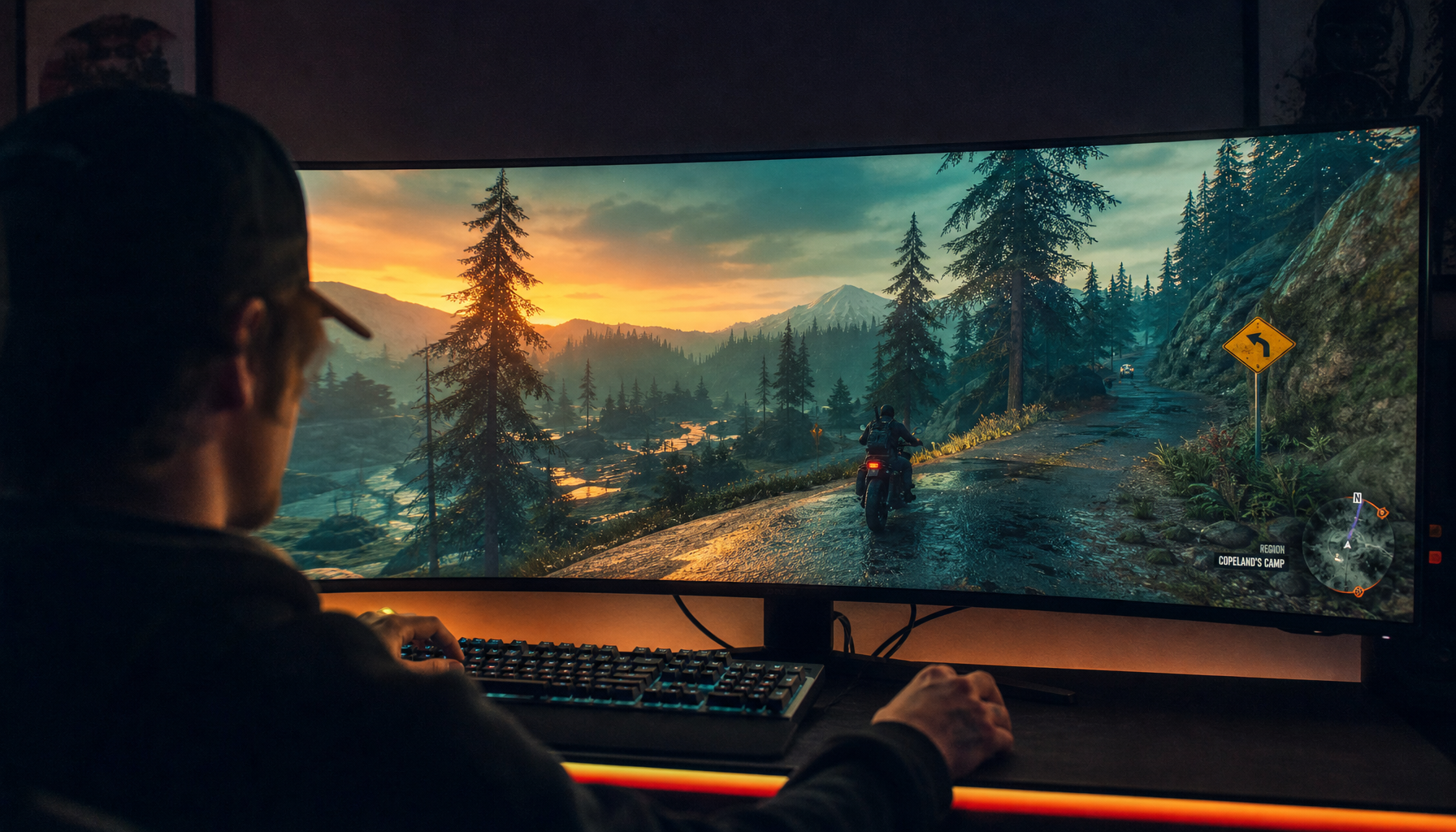
This matters in single-player games because cinematic does not mean “as dark as possible.” It means the black floor is low while shadow detail remains readable. If a dungeon wall, black jacket, and distant doorway all collapse into the same black patch, the display is not delivering cinematic depth; it is deleting information.
Theater-focused guidance makes a similar point: full on/off contrast can produce bigger numbers than real mixed-scene contrast, while ANSI-style measurements better represent bright and dark areas appearing together. For monitors, the buying lesson is the same: native contrast and measured mixed-scene behavior matter more than a giant dynamic ratio on a product page.
Panel Choice: IPS, VA, OLED, and the Tradeoffs
IPS is the safe productivity and color-consistency choice, especially for office displays and multi-monitor workstations. It usually has strong viewing angles and good color behavior, but its black levels are often limited. If your desk setup does double duty for spreadsheets by day and cinematic gaming by night, IPS can work, but you should temper expectations for horror or space games in a dark room.
VA is often the value-oriented sweet spot for cinematic LCD gaming because it generally delivers much deeper native contrast than IPS. The drawback is motion behavior: some VA panels can smear dark transitions, especially in fast camera pans or low-frame-rate scenes. For single-player RPGs, adventure games, and slower cinematic titles, that tradeoff is often acceptable; for fast shooters or racing, you need to check response-time reviews, not just contrast.
OLED delivers the cleanest black level and the most immediate sense of depth, but it comes with practical considerations. It can cost more, may have brightness limits compared with some Mini LED or bright LCD options, and requires sensible use around static desktop elements. For a user who splits time between office productivity and long gaming sessions, OLED is a premium choice rather than an automatic one.
Portable displays add another wrinkle. A portable smart screen can advertise a respectable contrast ratio, but reflections, window light, glossy coatings, and off-angle viewing can raise perceived black levels. Portable display guidance correctly frames contrast ratio as use-dependent, and portable users should treat anti-glare behavior and brightness as part of the black-level equation.
Room Light Can Destroy Contrast Faster Than Specs Can Save It
A monitor does not create cinematic black levels alone; the room participates. In a bright room, light bouncing off the panel raises perceived blacks, so a high-contrast screen may look only modestly better than a cheaper one. In a dark room, the same display’s native black floor becomes much more visible, which is why contrast upgrades feel stronger at night.

For single-player gaming, set the room first. Avoid placing a bright lamp or window reflection directly across the screen. Bias lighting behind the monitor can reduce eye strain without washing out the panel. If you use a portable screen in a hotel room, apartment kitchen, or shared office, rotate the display away from bright reflections before judging its black level.
A 21:9 ultrawide can also deepen the cinematic feel, but aspect ratio is not a replacement for contrast. Display-format guidance describes 21:9 as a panoramic cinematic format, and games that support ultrawide can feel more expansive. Still, a 21:9 IPS monitor with weak blacks will not outperform a high-contrast VA or OLED simply because it is wider.
Calibration: Preserve Detail, Don’t Just Darken the Screen
The fastest mistake is lowering brightness until blacks look dark, then discovering that dark gray detail has disappeared. Brightness, black level, gamma, and contrast controls interact. Gaming setup discussions often point to black level and gamma as key settings because the wrong value can cause raised blacks or crushed shadow detail.

For a practical check, load a dark game area with a visible object in shadow, such as a doorway, rock texture, or black clothing. Lower brightness until the scene gains depth, then stop before separate dark details merge together. If your monitor has gamma presets, 2.2 usually reveals more shadow detail, while 2.4 gives a punchier, more theater-like image that may hide some near-black information.
Leave aggressive dynamic contrast off at first. Then, if you play only cinematic single-player titles and your room is bright, try its low setting and watch for brightness pumping or missing shadow detail. If the image changes more than the game’s own lighting design, the feature is taking control away from the content.
What to Buy for True Cinematic Blacks
If your priority is cinematic single-player gaming, choose the display by black-level ambition. A 1,000:1 IPS monitor is acceptable when productivity, color stability, and competitive responsiveness matter more than dark-room depth. A 3,000:1 VA monitor is the value pick for deeper blacks without OLED pricing. A 4,000:1 to 6,000:1 LCD with credible reviews, good uniformity, and sensible local dimming can feel meaningfully more immersive. OLED is the reference choice when true black and HDR depth matter most.
Do not buy from contrast ratio alone. Check panel type, measured reviews, black uniformity, local dimming behavior, HDR brightness, response time, input lag, ports, and warranty terms. Shopping guidance treats higher contrast as important for realism and immersion, but the best gaming display is still the one whose strengths match your room, hardware, and game library.
True cinematic black levels start with the black floor, not the biggest number on the box. For LCD, 3,000:1 is the real entry point and 4,000:1 or higher is where single-player worlds gain serious depth. For the cleanest result, OLED remains the benchmark: when black should disappear, it actually disappears.