The best RTS monitors prioritize readable detail, smooth motion, stable frame pacing, and a screen size you can scan quickly. Resolution, refresh rate, response behavior, contrast, and aspect-ratio support all matter more than a single headline spec.
Ever lose a flank because your eyes were stuck hunting for one control group while three fights broke out across the map? A well-matched monitor can make panning smoother, health bars easier to read, and late-game unit movement less visually messy. Here’s how to choose the display traits that actually help you track more units at once.
Why RTS Tracking Is Different From Shooter Speed
Real-time strategy games ask you to manage resources, bases, technology, map control, and multiple units continuously rather than waiting for turns. That makes unit tracking a core visual workload rather than a side effect. The monitor has to support fast scanning, not just fast reaction.
That difference matters because RTS vision is distributed. You are watching the minimap, checking production, reading resource counts, selecting control groups, tracking army position, and catching attack alerts. In hands-on tuning, the most effective RTS screens are not always the flashiest esports panels. They are the ones that let your eyes move from minimap to battlefield to command panel without blur, squinting, or excessive head movement.
A shooter player may gain more from 240Hz or 360Hz. An RTS player usually gains more from a balanced 1440p or 4K image, stable motion, a comfortable size, and clear UI readability.
Screen Size: Bigger Helps Only When You Can Scan It
A larger screen can make unit icons, health bars, and dense interface panels easier to read, but it does not automatically show more battlefield at the same resolution and aspect ratio. The practical sweet spot for many RTS players is a 27-inch 1440p monitor because it balances map awareness, UI readability, and quick eye travel at a typical desk distance of about 2 to 2.7 ft, a recommendation echoed in 27-inch 1440p RTS buying guidance.

A 24-inch display can still be excellent for highly competitive RTS play, especially on a shallow desk. The full HUD stays inside your central vision, which reduces the time it takes to glance between the minimap and a skirmish. The tradeoff is that late-game interfaces, build queues, and large armies can feel cramped.
A 32-inch screen or 34-inch ultrawide becomes attractive when your desk is deeper and your games are slower, larger-scale, or more information-heavy. For example, in a title where you routinely manage several fronts and long production chains, the added physical space can reduce visual crowding. The downside is eye travel. If a 32-inch display sits too close, the minimap may feel too far from the center of play.
Display Type |
Best RTS Use |
Main Advantage |
Main Risk |
24-inch 1080p |
Close, competitive desk play |
Fast scanning |
Less room for dense UI |
27-inch 1440p |
Most balanced RTS setups |
Sharp text and manageable eye travel |
Needs a capable GPU |
32-inch 1440p or 4K |
Bigger maps and relaxed macro play |
Larger UI and battlefield detail |
Requires more viewing distance |
34-inch ultrawide |
Supported strategy titles and multitasking |
Wider horizontal awareness |
Game UI support can vary |
Resolution: Sharpness Makes Armies Easier to Separate
Resolution is not just about prettier terrain. It directly affects how cleanly you can distinguish selected units, cooldowns, resource numbers, rally points, and tiny map signals. The reason 1440p is so useful at 27 inches is pixel density: it keeps text and UI edges crisp without pushing the GPU as hard as 4K.

For most players, 1080p is still workable at 24 inches. At 27 inches, 1080p can look soft from a desk distance, which makes small labels and health bars harder to parse. At 32 inches, 4K becomes more compelling because it preserves clarity across the larger panel. Broader gaming monitor guidance also treats 1440p as the balance point between sharpness and performance.
The real-world calculation is simple: if your PC can hold high frame rates at 1440p but struggles at 4K, a 27-inch 1440p monitor will usually help you track units better than a 4K monitor running with compromised settings or unstable motion.
Refresh Rate: Smooth Panning Beats Spec Chasing
Refresh rate controls how often the display updates each second. In RTS games, that matters during camera pans, minimap jumps, army movement, and fast drag-select actions. A 144Hz monitor makes the map feel smoother than 60Hz, which helps your eyes follow moving units and reduces the stuttery feeling when you snap between fights.
For RTS specifically, 144Hz to 165Hz is a strong performance target. It is responsive enough for serious play while leaving more budget and GPU headroom for resolution, panel quality, and size. A 240Hz panel can feel excellent, but only if your system can feed it consistently. If your RTS dips to 90 FPS in large battles, the extra refresh ceiling is not doing the critical work.
This is where value-oriented buying matters. Spending more on extreme refresh while accepting blurry text or poor contrast is backwards for strategy games. Put the first dollars into clarity, stable motion, and adaptive sync.
Response Time and Motion Clarity: Keep Units From Smearing
Response time describes how quickly pixels change from one visual state to another. Low response times reduce ghosting, which is the trailing or smearing you may see behind moving objects. For RTS, ghosting is most obvious when panning over terrain full of units, projectiles, nameplates, and shadows.

A good target is 1ms to 5ms, but the marketing number is not the whole story. Many monitors include overdrive modes that force faster transitions. Normal or Fast modes often work well, while Extreme modes can create inverse ghosting, where bright halos trail behind moving objects. Practical monitor-setting advice recommends avoiding Extreme modes when they introduce overshoot.
For a simple test, load a replay with a large army, pan diagonally across the battlefield, and watch health bars and unit outlines. If they smear, lower overdrive one step. If they leave bright trails, the overdrive setting is too aggressive.
Adaptive Sync: Stability During Big Battles
Adaptive sync helps match the monitor’s refresh behavior to changing GPU output. That is useful in RTS games because frame rate often falls during big engagements, particle-heavy attacks, or late-game unit floods.
In large-scale RTS games where players can command armies numbering in the thousands and the game simulates projectiles in real time, frame pacing can matter as much as peak FPS because thousands of units create visually busy battle states. Adaptive sync will not make a weak GPU powerful, but it can reduce tearing and stutter when performance fluctuates.
The pro is smoother perceived motion during chaos. The con is that you still need to configure it correctly in the monitor menu, GPU control panel, and sometimes the game itself. Also confirm your cable supports the resolution and refresh rate you plan to use.
Panel Type, Contrast, and Color: Readability Over Drama
IPS, VA, OLED, and TN panels all have tradeoffs. IPS is often the safest RTS choice because it offers wide viewing angles, solid color consistency, and good text clarity. VA can provide stronger contrast, which helps dark terrain and fog-of-war zones feel deeper, though slower VA panels may smear in dark transitions. OLED brings superb contrast and very fast pixel response, but price and long-term static UI considerations can matter for players who keep the same RTS HUD on-screen for long sessions. TN is fast, but its weaker viewing angles and color are less compelling now unless budget and pure speed dominate.
RTS monitor presets can help when they are used carefully. Some presets increase saturation and sharpness so battlefield elements and units are easier to distinguish, making them useful starting points rather than guaranteed best settings.
The risk is overprocessing. Too much sharpness can create halos around text, and oversaturated colors can hide subtle team-color differences. Start with the RTS preset if your monitor has one, then dial sharpness back until UI edges look clean instead of crunchy.
Aspect Ratio and Multi-Monitor Setups
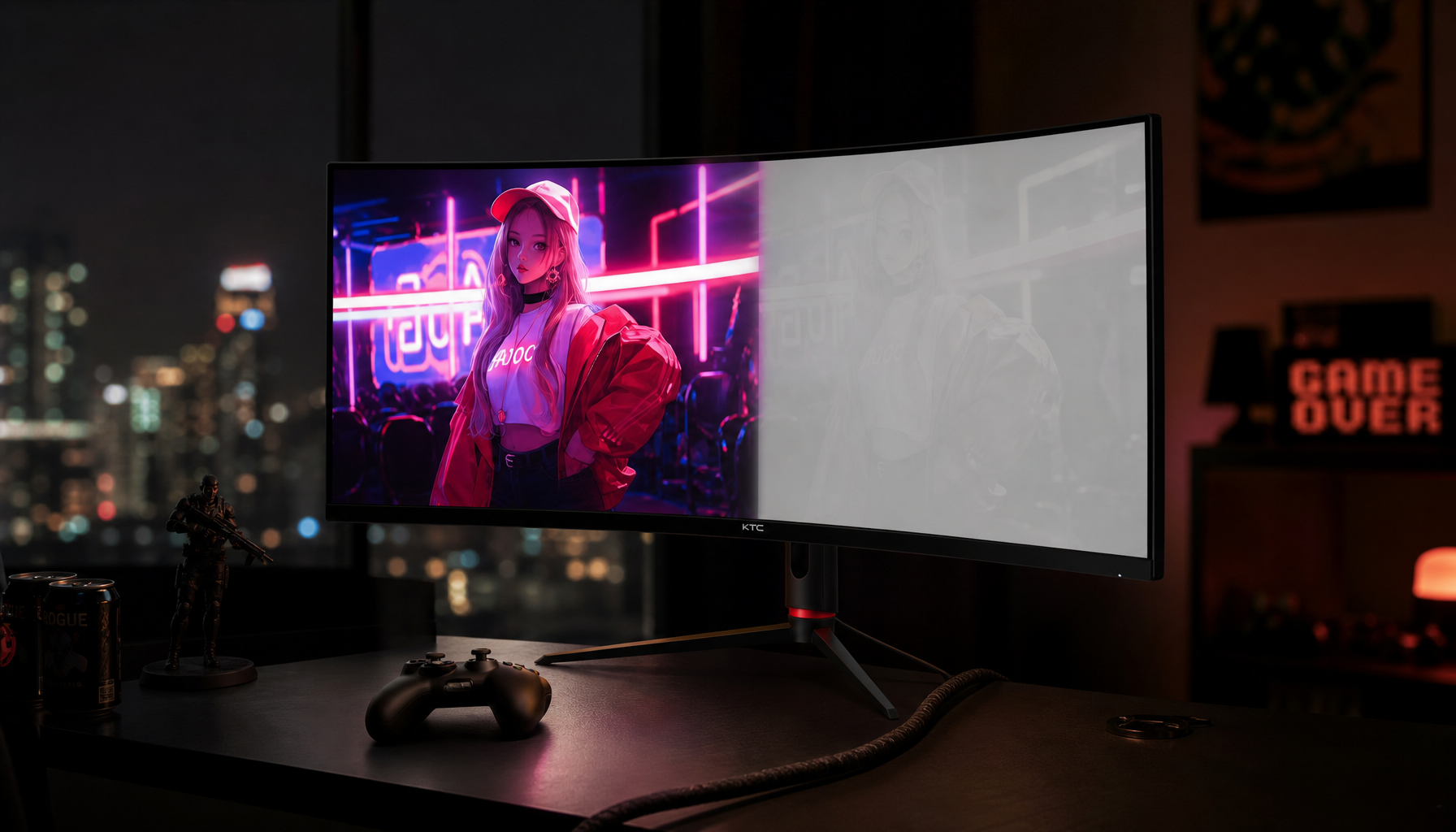
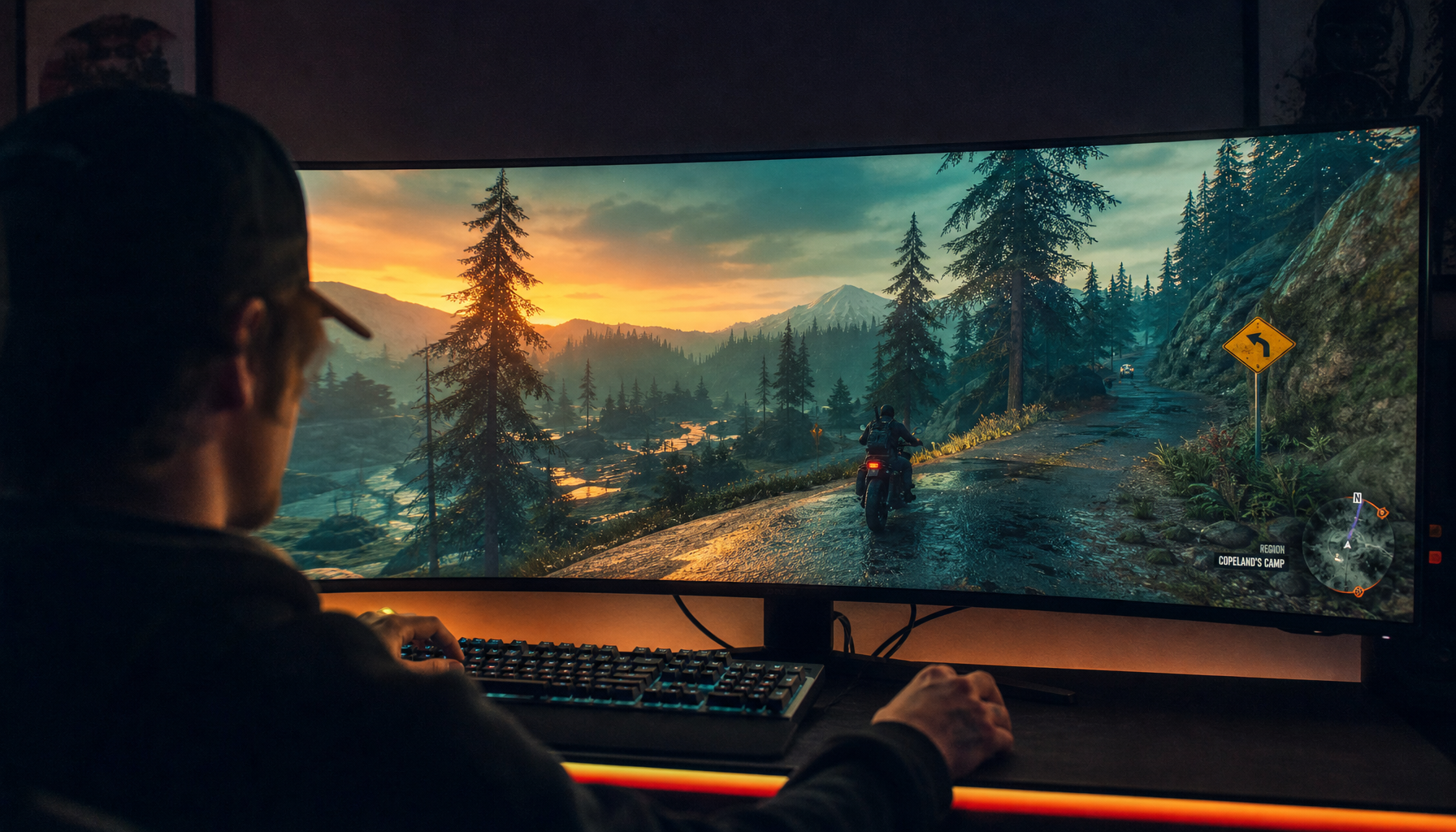
Ultrawide monitors can help with horizontal awareness, especially in strategy games that support 21:9 properly. The benefit is obvious when side areas, production panels, or map edges feel less cramped. The limitation is also real: some games handle ultrawide poorly, with stretched UI, black bars, or competitive view restrictions.
A second monitor is valuable, but usually not for live unit control. It is better for build orders, voice chat, streaming controls, match notes, or a browser guide. For the active RTS window, splitting attention across two screens can cost more than it gives. If you do use dual displays, keep the game on the better primary monitor and place the secondary slightly angled, close enough that a glance does not become a head turn.
Best Practical Setup for Most RTS Players
For the majority of serious RTS players, the best all-around display is a 27-inch 1440p IPS monitor with 144Hz or 165Hz refresh, adaptive sync, good stand adjustment, and a response mode that avoids ghosting. Use the highest-quality supported display cable when possible, run the monitor at native resolution, and confirm your operating system or GPU software is actually set to the maximum refresh rate.

If you sit very close or play intensely competitive titles, a 24-inch 1080p or 1440p screen can still be the sharper tactical tool. If you play slower, large-scale, simulation-heavy RTS games and have a deeper desk, a 32-inch 4K or 34-inch ultrawide can make command layers feel more spacious. The winning feature set is not the largest number on the box; it is the screen that lets you read the battle state fastest.
FAQ
Is 4K Better Than 1440p for RTS Games?
4K is better when your screen is 32 inches or larger, your GPU can sustain smooth performance, and you value fine UI detail. At 27 inches, 1440p is usually the better value because it is sharp, fast, and easier to drive.
Is 240Hz Necessary for RTS?
No. A stable 144Hz or 165Hz experience is usually enough for camera movement, unit tracking, and responsive commands. Spend the saved budget on resolution, panel quality, and ergonomics before chasing 240Hz.
Are Ultrawide Monitors Good for RTS?
They can be excellent when the game supports them cleanly. Before buying, check whether your favorite RTS handles 21:9 or 32:9 without distorted UI, black bars, or competitive limitations.
Track more units by making the battlefield readable first and spectacular second. The strongest RTS monitor is the one that keeps your decisions clear when the map gets busy, the armies stack up, and every second of attention matters.