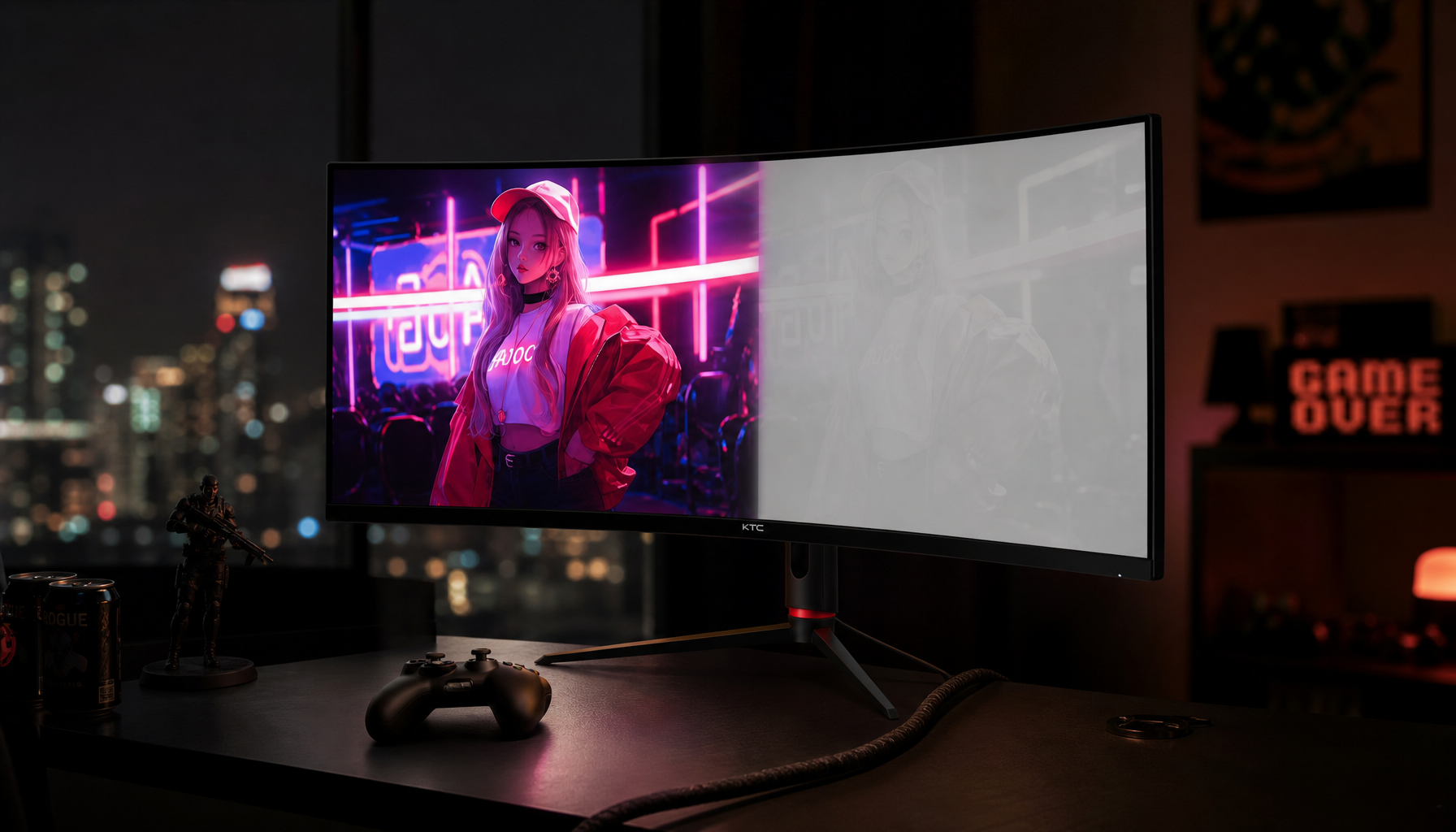
Zone overlap design reduces blooming by blending brightness commands across neighboring dimming zones instead of switching one zone sharply on while the next stays dark.
Why Blooming Happens at Zone Boundaries
Mini-LED and FALD monitors use many backlight zones behind the LCD panel. When a bright object appears on a black background, the zone behind that object brightens, but the LCD layer cannot block every bit of that light perfectly.
That is why blooming is most visible around small bright elements in dark scenes, especially in HDR. On LCD-based displays, the problem comes from the fact that a backlight zone is larger than individual pixels, so light can spill into adjacent dark areas and create a visible halo effect.

Zone boundaries make the issue easier to see. If one zone jumps to high brightness while the next stays low, your eye catches the hard transition as a glow, band, or lifted black level.
What Zone Overlap Actually Does
Zone overlap design lets adjacent dimming zones share part of the brightness workload near an edge. Instead of treating every zone like a hard square, the dimming algorithm builds a transition area where brightness tapers across neighboring zones.
Think of a white mouse cursor crossing a dark desktop. Without overlap, one zone may brighten aggressively while the next waits, so the halo appears to snap from block to block. With overlap, the monitor predicts the cursor’s edge and gradually blends neighboring zone output.

That matters because blooming is not only a hardware problem. More zones help, but the local dimming algorithm also strongly affects how visible halos become. Modern mini-LED displays can use hundreds or thousands of zones, yet algorithm quality still decides how clean the boundary looks, as noted in discussions of modern mini-LED TVs.
The Performance Tradeoff: Less Halo, Still Punchy HDR
The goal is not to dim every highlight until blooming disappears. That would flatten HDR impact, making explosions, reflections, neon signs, and sun glints look dull.
A good overlap system preserves peak brightness for convincing HDR highlights, spreads zone transitions enough to hide hard borders, protects nearby dark pixels from lifted blacks, and reacts quickly enough for gaming motion and UI movement.
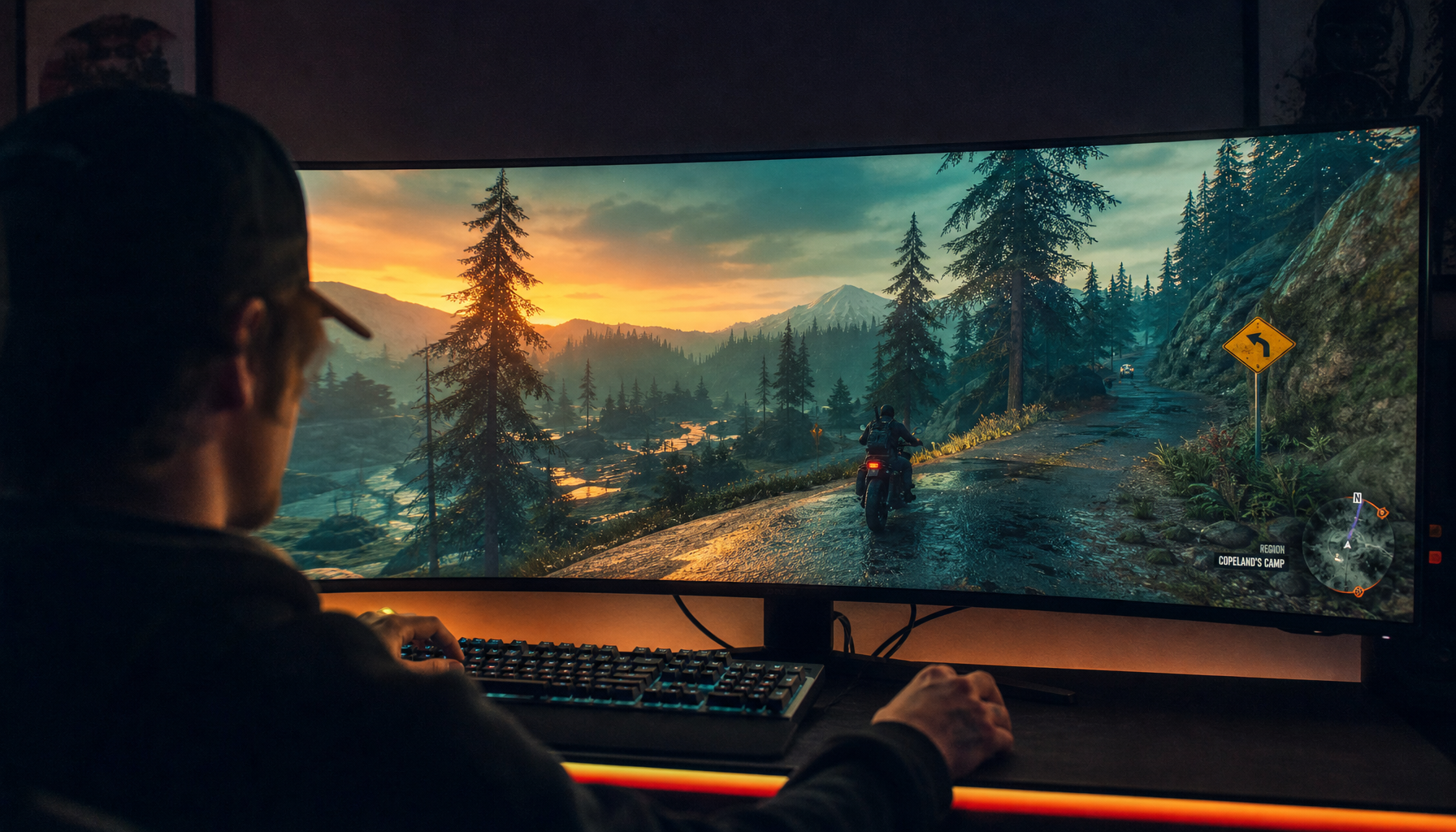
For gaming monitors, response behavior is critical. If overlap is too slow or too broad, a fast-moving HUD element can leave a soft trail. If it is too strict, the display keeps sharper highlights but exposes halos around zone edges.

For office productivity displays, the balance shifts. Text clarity, dark-mode UI, spreadsheets, code editors, and white windows on dark backgrounds benefit from controlled dimming because static high-contrast edges can make blooming more obvious during long work sessions.
Why Zone Count Alone Is Not Enough
A higher zone count gives the display finer control, but it does not automatically guarantee low blooming. A 1,152-zone mini-LED monitor can still show halos if its brightness mapping is too aggressive or if the content has tiny bright details against black.
The best designs combine small zones, fast processing, and intelligent overlap. They analyze where the bright object sits, how large it is, how fast it is moving, and how much dark detail must be protected around it.
Manufacturers often advertise zone count, but they rarely explain how their overlap logic handles edge transitions, so hands-on testing still matters.
What to Look For in a Monitor
If you want cleaner zone-boundary behavior, look beyond the spec sheet. Watch star fields, subtitles, dark loading screens, and white UI elements on black backgrounds. These scenes expose whether the backlight fades naturally or creates blocky halos.

For gaming, test HDR highlights in motion. For productivity, test dark-mode apps with small white text and bright panels. If blooming bothers you, displays with stronger local dimming control, more zones, and well-tuned overlap will usually look more immersive than models that chase brightness alone.
OLED avoids true backlight blooming because each pixel controls its own light, but mini-LED remains a strong value play when you want high brightness, strong HDR, and lower burn-in concern. Zone overlap is one of the key reasons modern mini-LED monitors can feel much more precise than older FALD designs.