A wider color gamut does not make competitive gaming harder by itself, but it can make many SDR games and desktop elements look too saturated if your monitor lacks a good sRGB clamp. For most competitive players, color control and motion clarity matter more than chasing the widest gamut on the spec sheet.
If enemies feel harder to read, snow looks faintly purple, or bright UI colors seem louder than the scene around them, the problem is usually the monitor setup rather than the game. Real-world reports from wide-gamut users consistently describe oranges pushing too red, yellows shifting off target, and desktop colors looking harsh in unmanaged apps. You can fix that without giving up fast refresh, and the right monitor features make it much easier.
Why Wide Gamut Sometimes Looks Wrong on Gaming Monitors
Most competitive game content is still treated like sRGB
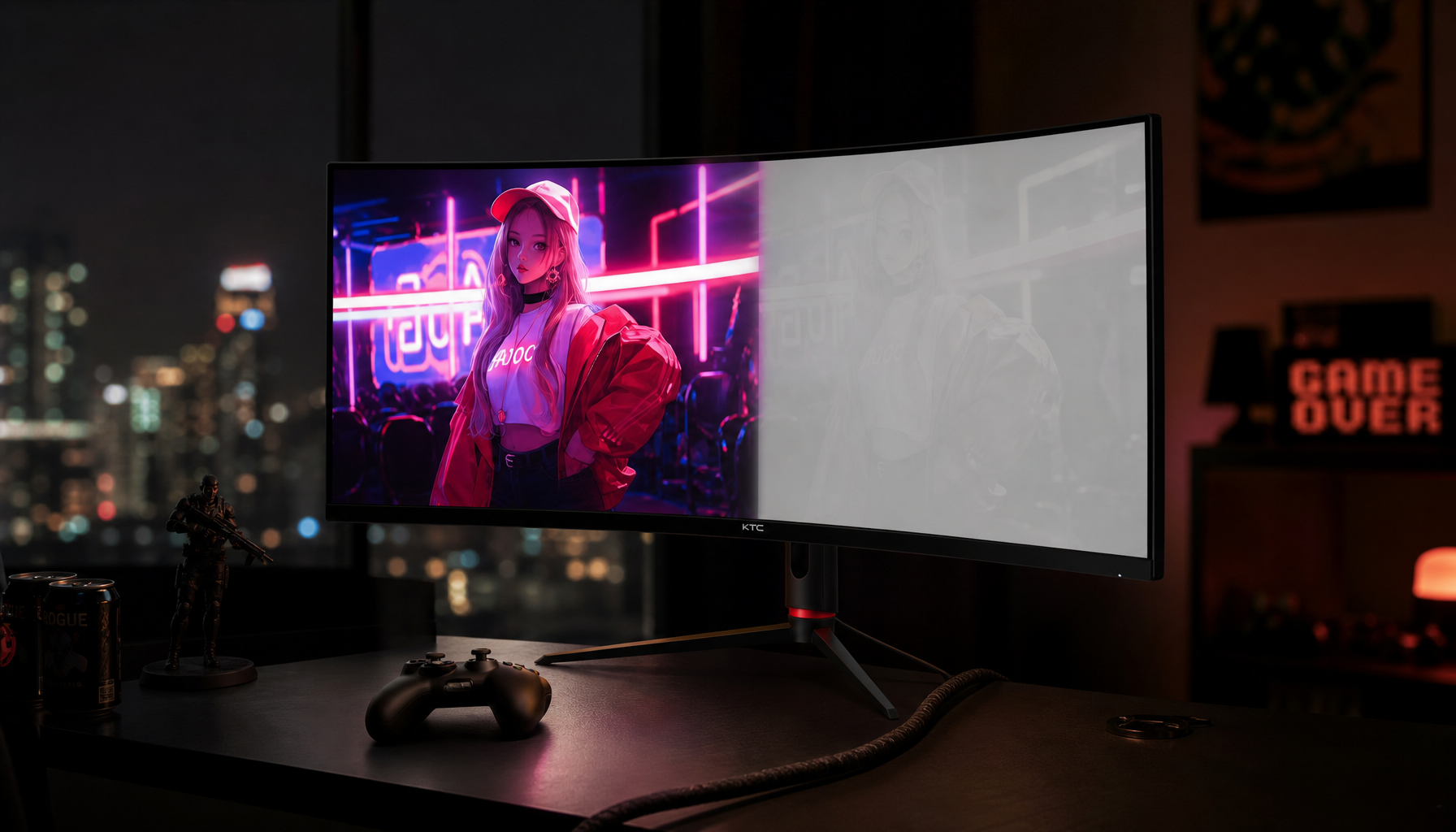
On many gaming monitors, wide-gamut panels can oversaturate sRGB content in an operating system when the screen runs in its native gamut and the app does not remap colors correctly. That matters because most web content, SDR video, and many SDR game pipelines are still effectively aimed at sRGB, so a monitor with much wider coverage can make reds, oranges, and greens look stronger than intended.
The operating system and non-color-managed apps are the real trouble spot
In practice, non-color-managed apps show bigger color errors on wide-gamut displays than they do in sRGB mode. That is why a monitor can look fine in one app and harsh in another: the display is not necessarily bad, but the software path is inconsistent.
The symptom is easy to recognize once you know it
User complaints about oversaturation are usually concrete, not subtle. In one support-thread example, colors appeared “extremely harsh” across games, desktop, and videos, with snow looking almost purple and yellows leaning orange. If your new high-refresh monitor produces that kind of shift, the issue is not “better color”; it is poor matching between the monitor gamut and the content you are viewing.

Does Oversaturation Actually Hurt Competitive Visibility?
It can reduce visual consistency more than raw visibility
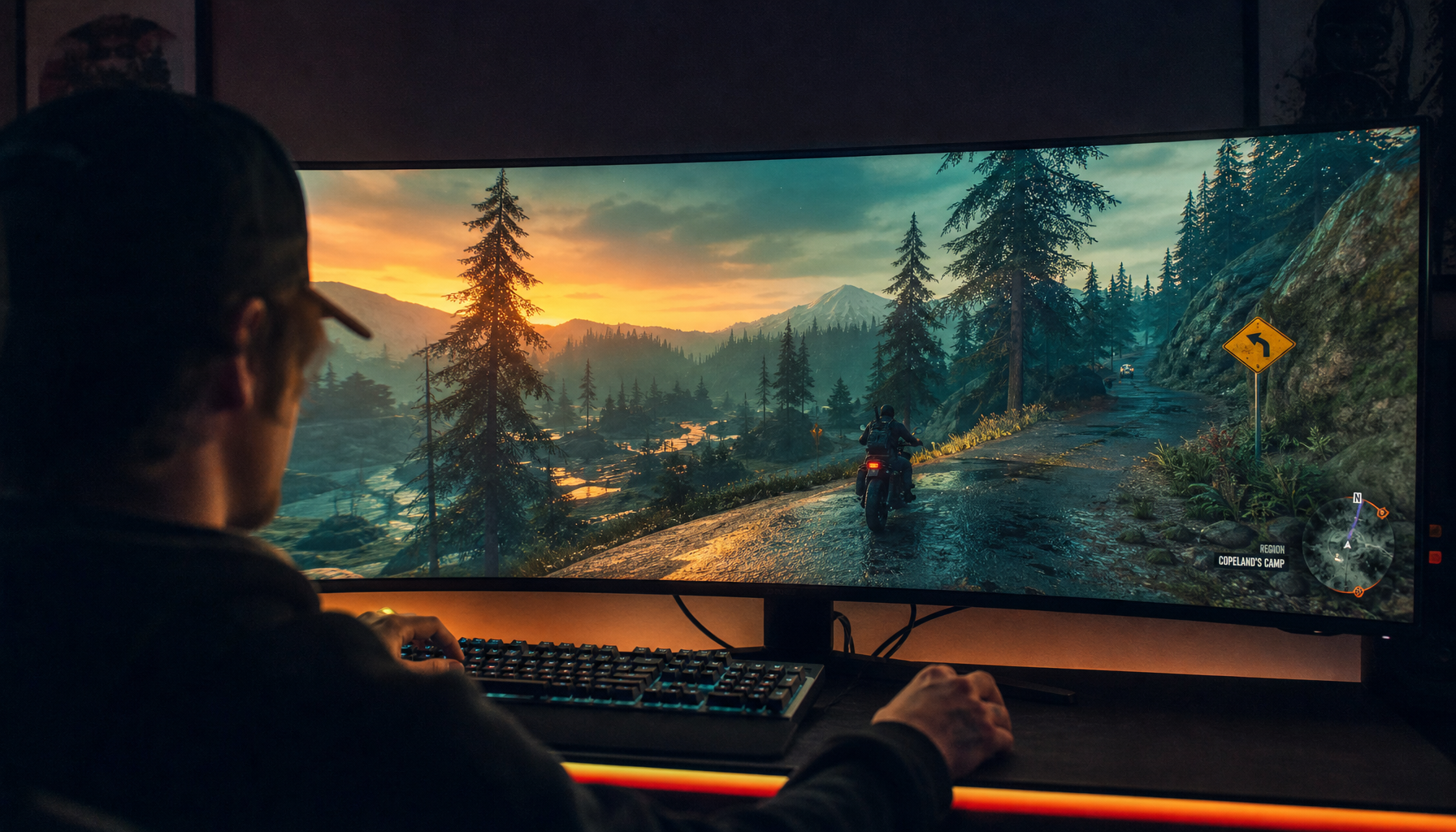
For competitive play, wide-gamut oversaturation often shifts familiar colors away from their intended balance. Common examples include yellows moving toward orange, oranges moving toward red, and earthy tones becoming too reddish-brown. In a fast match, that does not always hide an enemy, but it can make map surfaces, character outlines, tracer colors, and warning cues feel less predictable from one scene to the next.

Wide gamut can still help when the implementation is good
That said, a wider gamut can improve tonal separation and color-coded cues when the monitor is well tuned. Better differentiation in dark scenes, stronger contrast between hazard colors, and less washed-out lighting can help some players read a scene faster, especially on IPS, OLED, or Mini LED gaming monitors with good factory tuning.
The real question is control, not maximum color volume
A wide-gamut monitor is not automatically better or worse for esports. In a color-managed workflow, the exported image can stay consistent across apps that honor profiles, while unmanaged apps can still look wrong. The same logic applies to gaming monitors: wide gamut is useful if you can clamp it when needed, and distracting if you cannot.
Wide Gamut Does Not Slow a Fast Gaming Monitor
Oversaturation is a color problem, not a speed problem
For monitor buyers, wide color gamut does not inherently reduce frame rate or add meaningful input lag. If your 240 Hz display feels worse in a shooter after switching to a wider-gamut monitor, the likely cause is picture tuning, locked preset behavior, or motion settings, not the gamut itself.
Motion clarity still depends on refresh rate and response time
In high-refresh competitive gaming, ghosting comes from pixel response limitations, not from color gamut. A useful way to think about it is frame time: 144 Hz gives you about 6.9 ms per frame, 240 Hz about 4.17 ms, and 360 Hz about 2.78 ms. If the panel is too slow for that cadence, trails show up even if the colors are perfect.

Competitive presets should stay restrained
For actual match play, Vivid-style presets often push brightness and saturation too far, which can make bright HUD elements pop at the expense of subtle detail. A safer starting point is a Standard or Game preset, moderate overdrive, the highest supported refresh rate, and VRR enabled if your system and display support it.
What to Prioritize When Buying a Competitive Gaming Monitor
An accurate sRGB mode is often more valuable than the widest gamut
On a gaming monitor used for desktop use, esports titles, streaming overlays, and SDR content, a good sRGB emulation mode is one of the most useful quality-of-life features. The best versions clamp close to 100% sRGB without locking you into unusable brightness or a bad white point.

Buy enough gamut, but not at the expense of control
For most buyers, about 95% or better sRGB coverage is a strong baseline, while 90%+ DCI-P3 is worth paying for only if you also want richer modern-game color, HDR impact, or mixed creative use. A sub-90% sRGB gaming monitor is easier to avoid than to justify in 2026, but a very wide-gamut screen without usable clamping can be just as annoying.
Preset behavior matters as much as the panel spec
In day-to-day use, some sRGB modes look darker or tinted and some Game modes feel faster, so you cannot judge a monitor by gamut coverage alone. On a 144 Hz or 240 Hz display, the best competitive monitor is usually the one that gives you both: neutral-enough color in SDR and full access to the speed settings you actually need.
Use case |
Native wide-gamut mode |
Accurate sRGB mode |
Better fit |
SDR esports shooter |
Can make UI and map colors more vivid, but may oversaturate textures and effects |
Keeps color relationships closer to what most SDR content expects |
Usually sRGB mode |
Mixed desktop + competitive gaming |
Punchy for wallpapers and some games, inconsistent across apps |
More consistent for browser, launcher, overlays, and older games |
Usually sRGB mode |
HDR single-player gaming |
Better match for richer color and highlight-heavy scenes |
Can look flatter if HDR is not the goal |
Usually native wide gamut |
Gaming + content creation |
Useful for wider-color work if the workflow is managed properly |
Necessary for accurate SDR exports and previews |
Best if the monitor offers both well |
How to Fix Oversaturation Without Ruining Motion Clarity
Start with the least aggressive picture preset
For fast gaming monitors, a gaming-oriented or standard preset is a better starting point than Vivid. Then tune brightness first so black areas still look black but enemies and obstacles remain visible, raise contrast only slightly, and keep white balance near the typical 6500K target unless your room lighting clearly calls for a warmer image.
Moderate settings usually beat maxed-out settings
Forum users comparing monitor modes often end up with more moderate brightness and contrast settings than the factory gaming presets suggest. One practical pattern is to keep brightness below the top end and avoid contrast so high that white detail clips; if faint white-level patterns disappear, your display is probably too aggressive for competitive consistency.
Use software clamping only when the hardware mode is weak
If your monitor’s sRGB mode is poor or too restrictive, software-based sRGB clamping and LUT workflows can tame a wide-gamut display. The tradeoff is complexity: ICC profiles help color-aware apps, driver-level sRGB emulation can help unmanaged content, and 3D LUT approaches can work across more cases, but some shader-based methods may conflict with online anti-cheat systems.
Practical Next Steps
If you play mostly competitive SDR titles, do not treat “wider gamut” as an automatic upgrade. Treat it like HDR: useful when implemented well, distracting when it is not.
- Set the monitor to Standard, Game, or sRGB first; avoid Vivid.
- Confirm the display is actually running at 144 Hz, 240 Hz, or your target refresh rate in the operating system and in-game.
- Compare native gamut and sRGB mode on the same map, menu, and desktop screen.
- Lower saturation or contrast if whites clip, yellows turn orange, or dark textures lose separation.
- Keep overdrive at a normal or middle setting, then test motion in a fast pan or motion test.
- If desktop apps and older games still look harsh, use a GPU-level sRGB clamp or a calibrated LUT workflow.
A buyer choosing between two similar gaming monitors should usually pick the one with the better sRGB mode, more usable picture controls, and proven high-refresh behavior over the one advertising the widest color space alone.
FAQ
Q: Should competitive players avoid wide-gamut monitors entirely?
A: No. Wide gamut is useful for HDR, richer single-player visuals, and mixed creative use. The problem is a wide-gamut monitor that cannot switch cleanly into an accurate SDR-friendly mode.
Q: Why does my desktop look oversaturated while one game looks fine?
A: Different apps handle color differently. A color-aware app can map content properly, while an unmanaged app may simply send sRGB-like values straight to a wide-gamut screen.
Q: Is sRGB mode always the best mode for esports?
A: Not always. Some monitors lock brightness or white balance in sRGB mode, and some users find those presets darker or oddly tinted. The best esports mode is the one that keeps colors neutral enough without hurting motion clarity or comfort.