Shadow noise often stays hidden because your monitor, picture mode, or room setup crushes near-black detail while you edit. After export, a different player, codec, display, or brightness curve can lift those shadows and expose grain, blotches, banding, or flicker.
Your Monitor May Be Hiding the Problem
A display is not a neutral window. Its panel type, contrast behavior, gamma curve, brightness setting, and black-level handling determine how much shadow detail you can actually see.
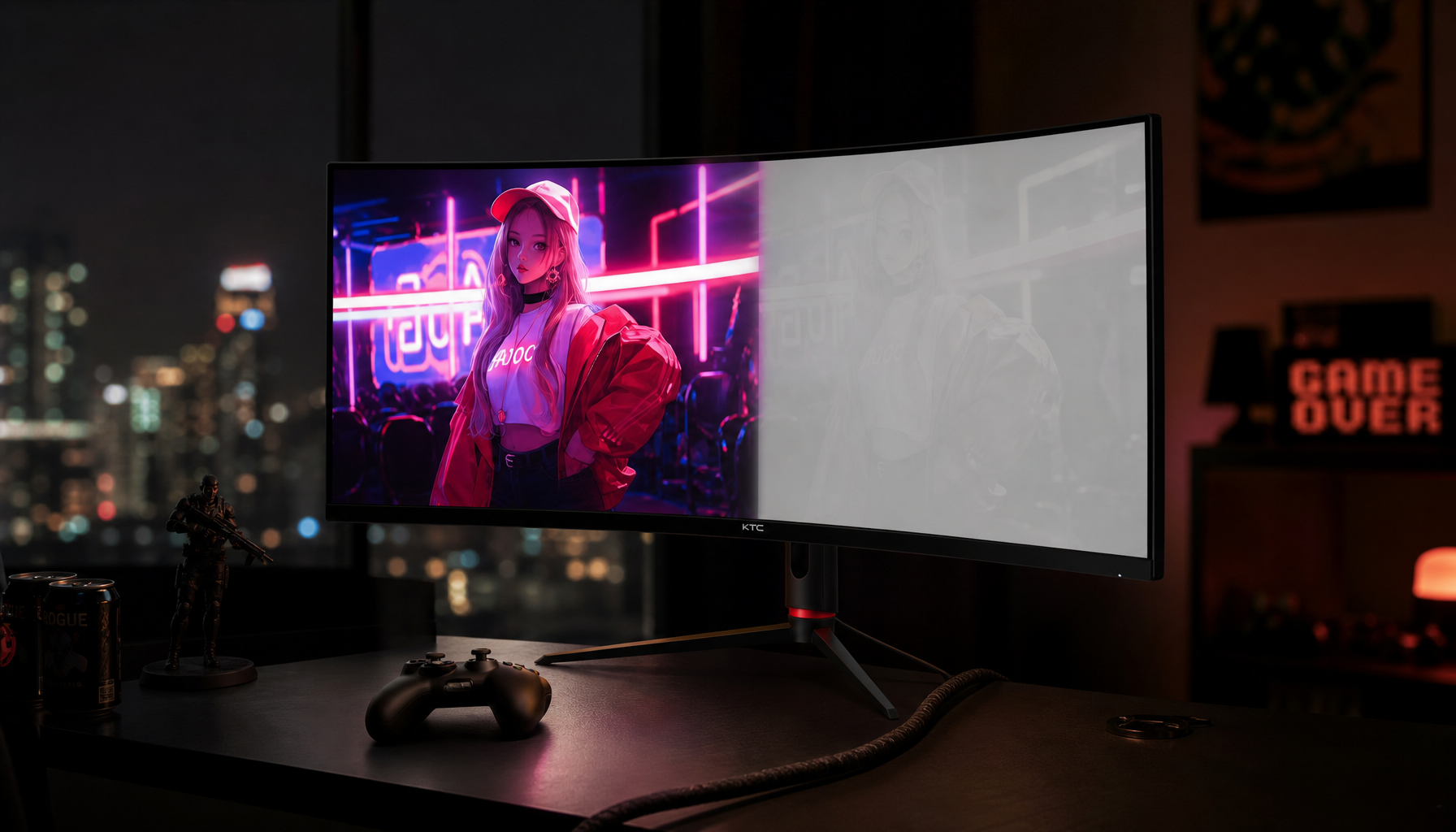
If your monitor maps near-black tones too aggressively, subtle texture in dark areas turns into solid black. That may look clean while gaming, editing, or reviewing footage, but the noise is still in the file. It is just buried on your screen.

This is why contrast matters more than many spec sheets suggest. A monitor’s static contrast ratio affects how well it separates black, near-black, and dark gray tones. Low contrast can wash shadows out; overly aggressive contrast can hide them.
For creators and competitive players, that is a visibility problem, not just a color problem.
Black Crush Makes Noise Look Fixed
Black crush is the classic trap. You lower brightness, raise contrast, enable a punchy gaming preset, or leave dynamic contrast on. Suddenly, dark scenes look deeper, cleaner, and more cinematic.

But crushed shadows do not remove noise. They mask it.
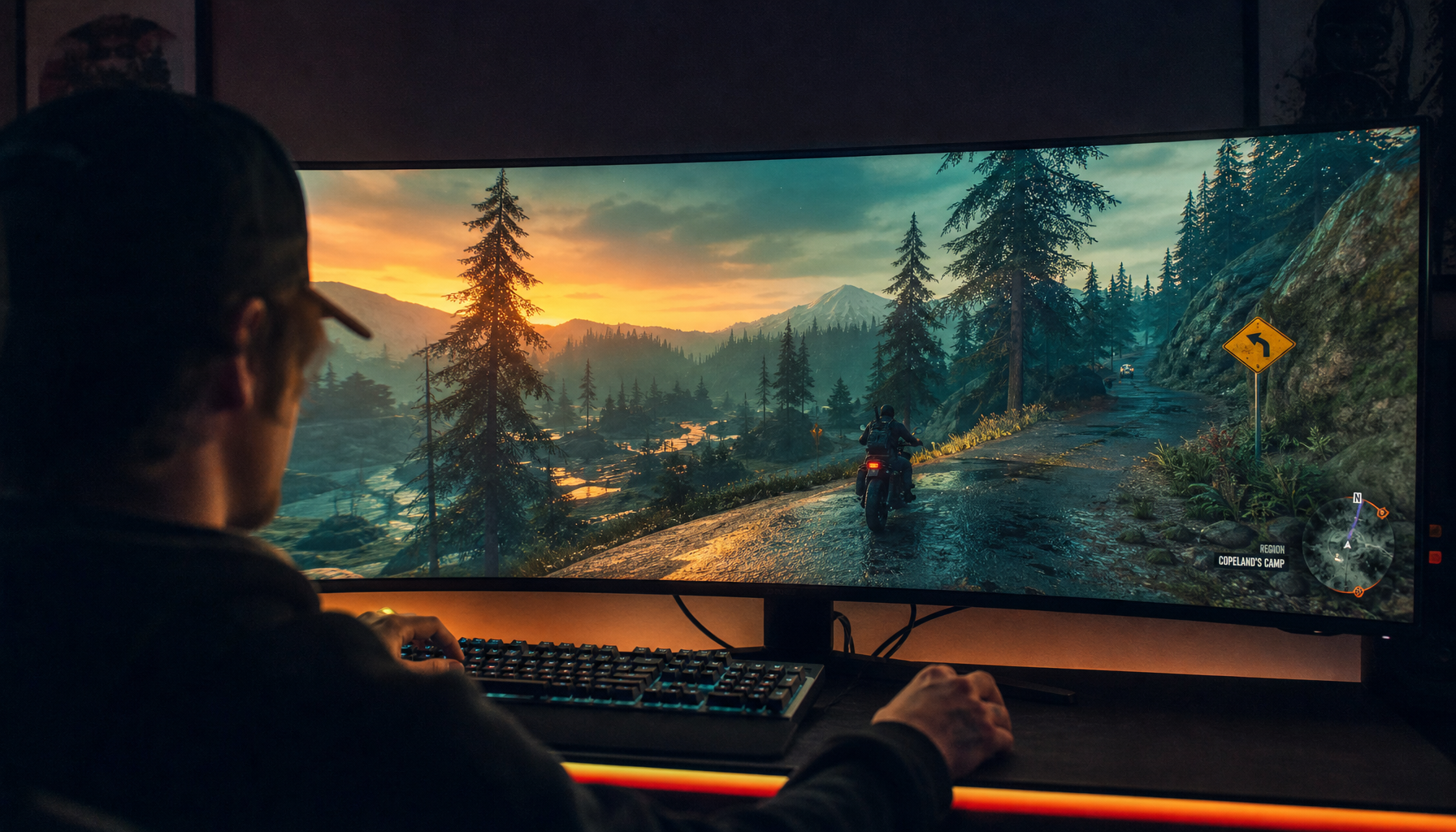
A user-reported gaming case described dark areas as blotchy and distorted until brightness and display settings were adjusted, showing how dark colors can shift from hidden to obvious with small changes.
The same logic applies to exported video, screenshots, engine captures, and game clips. When the export is viewed on a brighter display, a cell phone, a TV, or a browser player, the black floor rises. That clean-looking shadow becomes visible noise.
If only one game, scene, or render pass shows the issue, the source lighting or engine settings may be the cause, not the monitor alone.
Export Changes the Viewing Chain
During editing or gameplay, you may be looking through one chain: GPU output, monitor profile, HDR mode, game mode, local dimming, black equalizer, and room lighting.
After export, the chain changes. The file may be tone-mapped, compressed, viewed in a different app, uploaded to a platform, or played on another screen. Each step can reveal shadow artifacts that your original display concealed.

Shadow noise in real-time rendering is especially sensitive. Engine users continue to report shadow noise in dark regions, where lighting samples, denoising, global illumination, ray tracing, and virtual shadow behavior can interact.
Compression makes this worse. Codecs spend fewer bits where detail is subtle, and dark gradients are fragile. If your display hides near-black texture, you may miss macroblocking, banding, or dancing speckles until the final file is played elsewhere.
The Display Specs That Matter Most
For shadow work, do not buy only by size or refresh rate. Motion clarity matters for gaming, but shadow evaluation needs black-level honesty.
VA panels often deliver stronger contrast, which can help dark-scene immersion, but dark transitions may smear. IPS panels usually offer better viewing angles and consistency, but blacks can look gray in dark rooms. OLED gives true blacks, yet near-black calibration still matters.
Gaming buyers are often told to chase 144Hz, 240Hz, or faster, and that is valid for responsiveness. A 240Hz screen can feel smoother when the system can feed it enough frames, but correct system settings and cables still determine what you actually see.
For office and creator setups, resolution and workspace also matter. A 27-inch 1440p or 4K monitor gives more room to inspect scopes, timelines, and dark preview windows without constant zooming, which aligns with modern productivity monitor priorities.
Quick Fix Before You Export
Run this short check before calling a file final:
- Reset the monitor picture mode, then disable dynamic contrast and eco dimming.
- Set gamma near 2.2 for SDR work unless your workflow requires otherwise.
- Review shadows on at least one brighter display or cell phone.
- Use a full-screen black and near-black test image to check glow, bleed, and crush.
- Export a short dark-scene sample before rendering the full project.

Your display should reveal problems early, not flatter them. A reliable screen makes shadow noise visible while you can still fix it.