Ultrawide monitors are uncommon in esports because tournaments prioritize fair, repeatable conditions over a wider field of view. Most competitive setups favor 24-inch or 27-inch 16:9 monitors with very high refresh rates, low latency, and predictable screen framing.
Ever feel like a 34-inch ultrawide should be an obvious upgrade for competitive gaming, only to see pros still playing on smaller 16:9 screens? The practical reason is simple: a 21:9 1440p ultrawide can show about 29% more game area than a 16:9 1440p monitor in supported games, which immediately raises fairness and rule questions. Here is how monitor size, aspect ratio, refresh rate, and tournament standards fit together when choosing a serious esports display.
The Esports Standard Is Built Around Consistency
Why 24-Inch and 27-Inch Monitors Dominate
Most esports events standardize hardware so each player competes under the same visual conditions. That usually means a 16:9 monitor in the 24-inch to 27-inch range, not because wider screens are technically inferior, but because this size range is easier to control across venues, teams, practice rooms, and broadcasts. Competitive display guidance commonly describes the 24-inch display as a global esports standard because it lets players keep the full interface within view without excessive eye or neck movement.

That matters in real play. In a tactical shooter, a player may need to track the crosshair, minimap, ability status, kill feed, timer, and teammate positions in fast succession. On a 24-inch screen viewed from roughly 20 to 30 inches away, the whole game state stays compact enough to scan quickly. On a much wider display, useful peripheral information may be farther from the center of attention, even if the image feels more immersive.
Why 16:9 Became the Default Competitive Frame
The 16:9 aspect ratio is also the default for broadcasts, online video, consoles, many laptops, and most standard gaming monitors. Tournaments benefit from using a display format that is easy to capture, stream, review, and replicate. A 16:9 match feed fits cleanly on streaming platforms, online video platforms, TVs, and spectator displays without unusual cropping or black bars.
This standardization also protects practice quality. If a pro player trains for months on a 21:9 ultrawide but the tournament stage uses 16:9 monitors, their visual habits, minimap glances, and spacing expectations can change on match day. That mismatch is one reason professional players usually practice on hardware close to what they will use in competition.
Ultrawide Screens Can Create Fairness Problems
Extra Field of View Is Not Just Cosmetic
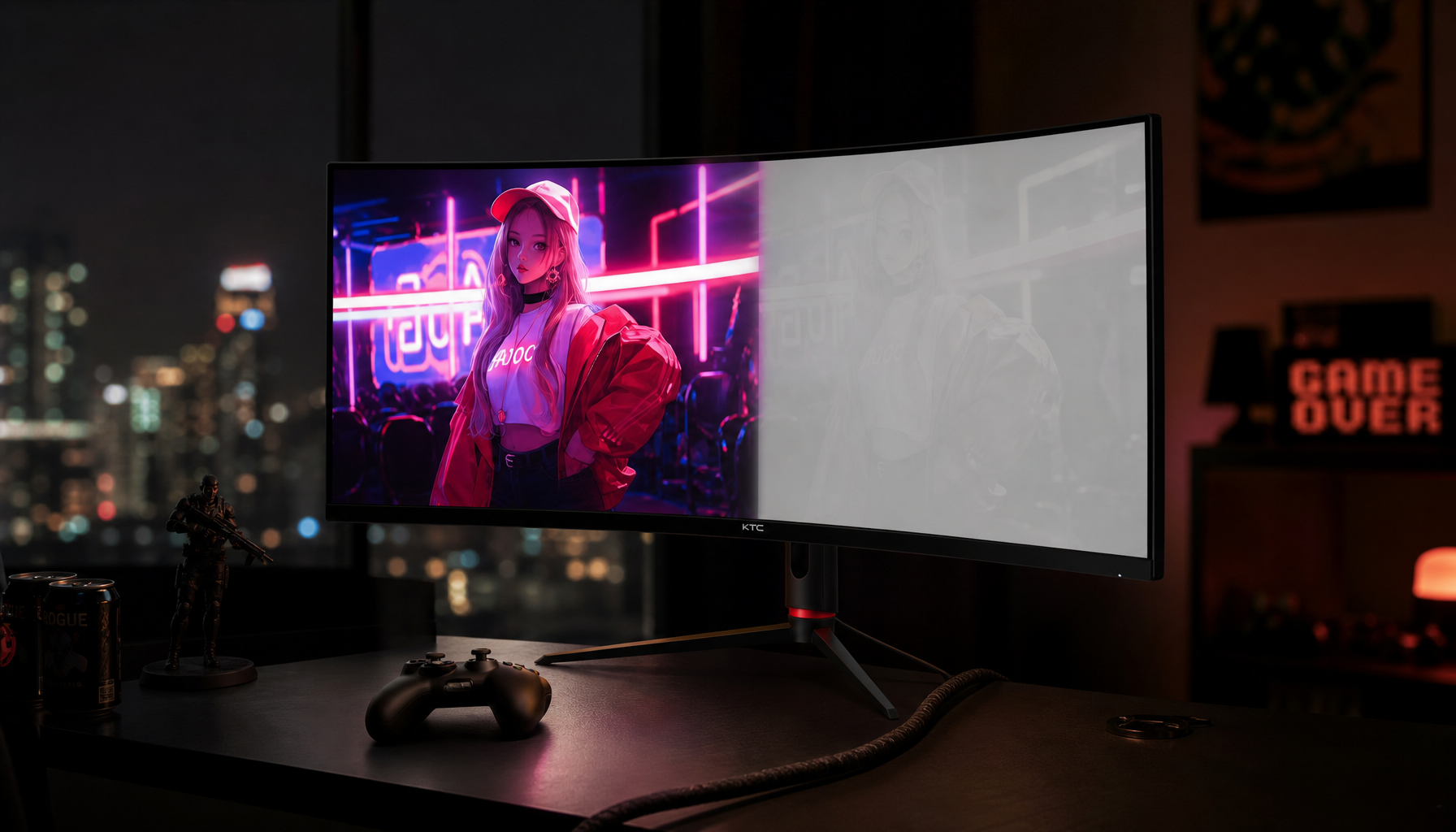
A standard 16:9 1440p monitor uses 2,560 x 1,440 resolution, which is about 3.69 million pixels. A typical 21:9 1440p ultrawide uses 3,440 x 1,440 resolution, or about 4.95 million pixels. In games that expand the horizontal view instead of cropping or stretching the image, that wider canvas can expose more map area, enemy movement, or peripheral action; one MOBA ultrawide analysis calculated 29% more game area at 21:9 versus 16:9.

That extra information may be harmless in a single-player RPG, but it becomes sensitive in a ranked or tournament setting. If one player can see a flank, lane movement, or incoming threat earlier because their monitor shows more horizontal space, the display is no longer just a preference. It becomes part of the competitive ruleset.
Games Handle Ultrawide Differently
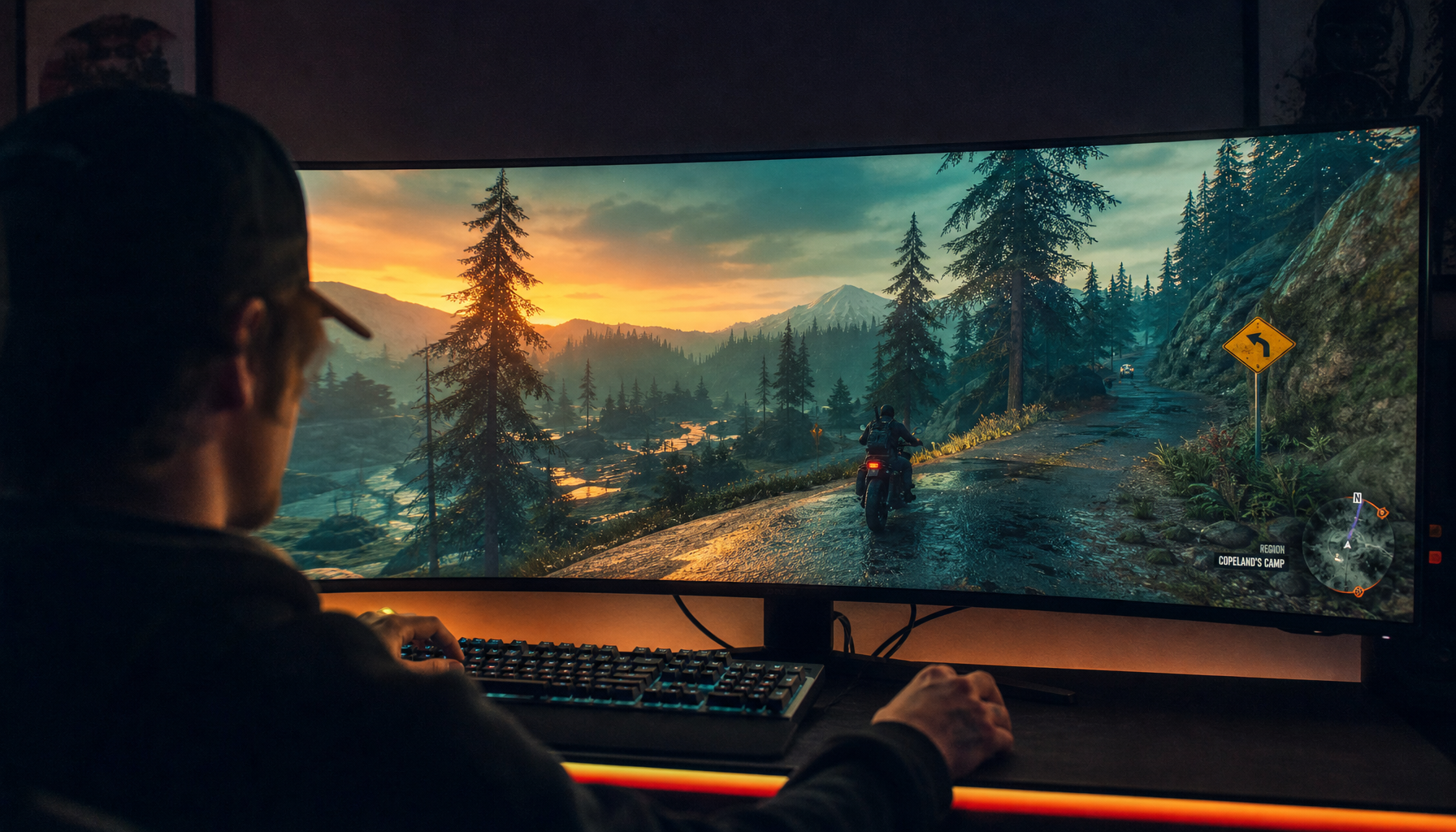
Not every game treats ultrawide resolutions the same way. Some titles support native 21:9 and extend the view. Others crop, stretch, lock the field of view, adjust the user interface awkwardly, or lack proper support in older engines. Display buying guidance for gaming monitors notes that ultrawide monitors can provide strong peripheral vision, especially for racing and flight simulators, but some older games do not support ultrawide resolutions natively.
For esports organizers, inconsistent support is a problem. A tournament cannot afford confusion over whether the game expands vision, crops the scene, shifts HUD elements, or gives some players a cleaner layout than others. Using the same 16:9 monitor for every station keeps the visual rules easier to enforce.
Performance Matters More Than Width in Competitive Play
More Pixels Can Mean More GPU Load
Ultrawide monitors ask the graphics card to render more pixels than a comparable 16:9 display at the same vertical resolution. Moving from 2,560 x 1,440 to 3,440 x 1,440 adds roughly 1.26 million pixels per frame. At 240 Hz, 360 Hz, 480 Hz, or 500 Hz, that extra workload can make it harder to hold stable frame rates, especially in visually busy scenes.
Competitive players usually care less about scenic width and more about frame consistency. A clean 240 Hz or higher 16:9 setup that maintains stable frame pacing is often more valuable than a wider view with fluctuating performance. For shooters, display guidance commonly recommends 24-inch or 27-inch 1080p monitors and prioritizes 240Hz or higher when budget allows; a 27-inch FHD option such as a 27-inch FHD 280Hz/1ms gaming monitor is a neutral example of a display that prioritizes refresh rate and predictable 16:9 framing over extra screen width.

Motion Clarity Is More Than Refresh Rate
A high refresh rate is only part of a competitive monitor’s feel. Pixel response, frame persistence, overdrive tuning, strobing behavior, variable refresh rate settings, and input latency all affect whether fast motion looks clear. Current esports monitor guidance points to 480 Hz and 500 Hz panels as part of the high-end competitive trend, while also emphasizing motion clarity metrics such as certification-style clarity indicators over simple “1 ms” marketing claims.
This is where ultrawide monitors often face a buying tradeoff. Many excellent ultrawides exist, but they are typically positioned around immersion, productivity, OLED contrast, or cinematic gaming rather than tournament-standard speed. A competitive player choosing between a 34-inch ultrawide at a lower refresh rate and a 24.5-inch 16:9 monitor at 360 Hz, 480 Hz, or 500 Hz should usually prioritize the faster, clearer display for ranked shooters.
Monitor Option |
Common Size |
Aspect Ratio |
Main Strength |
Competitive Concern |
Best Fit |
Standard esports monitor |
24-25 inches |
16:9 |
Fast scanning, tournament familiarity, high refresh options |
Less immersive than wider displays |
FPS, MOBA, fighting games, ranked competitive play |
Larger standard monitor |
27 inches |
16:9 |
More screen detail while staying familiar |
Slightly more eye movement than 24 inches |
Competitive and mixed-use gaming |
Ultrawide gaming monitor |
34 inches |
21:9 |
Wider view, stronger immersion, multitasking |
Possible field-of-view advantage, higher GPU load, stage mismatch |
Casual gaming, racing, flight sims, productivity |
Super ultrawide monitor |
49 inches |
32:9 |
Replaces dual monitors, panoramic play |
Rarely practical for tournaments, large scan distance |
Simulation, workstations, content creation |
Ergonomics and Stage Logistics Work Against Ultrawide Displays
Competitive Aiming Rewards a Controlled Viewing Zone
Display size affects aiming because the player has to convert hand movement, eye tracking, and target recognition into fast decisions. Research from a company on FPS aiming found that performance improved as display size increased across smaller screens, but gains began to decline near 30 inches; the study specifically compared 12.5-inch, 17.3-inch, 24-inch, 24.5-inch, and 27-inch displays in FPS aiming tasks involving stationary, moving, and very small targets display size.
That finding lines up with practical esports setups. A 24-inch to 27-inch monitor gives players enough image size for target recognition without forcing large head movement. A 34-inch ultrawide can be comfortable for immersion, but in a high-pressure match, the outer edges may demand more eye travel than a player wants when checking HUD elements or reacting to a threat.
Tournament Desks Need Repeatable Layouts
Tournament stations are built for repeatability. Organizers have to manage desk depth, monitor arms or stands, camera angles, player peripherals, cable routing, referee visibility, and broadcast capture. A row of identical 24-inch or 27-inch displays is easier to deploy and troubleshoot than a mix of ultrawide models with different curves, stand footprints, firmware settings, and aspect-ratio behavior.

There is also the matter of posture. Competitive monitor guidance recommends a viewing distance of about 20 to 30 inches for 24-inch to 27-inch displays, with the top edge at or slightly below eye level viewing distance. A large ultrawide can still be ergonomic at home, but it needs more desk space and careful positioning to avoid neck rotation, edge glare, and inconsistent viewing angles.
When Ultrawide Monitors Still Make Sense
Immersion, Simulators, and Everyday Use
Ultrawide monitors are not bad gaming monitors. They are often excellent for racing games, flight simulators, open-world games, RPGs, strategy games, and cinematic single-player titles. The wider frame can make a cockpit, track, or landscape feel more natural, and a 34-inch ultrawide can also replace a dual-monitor setup for work, streaming tools, chat windows, timelines, and browser-based research.
For a home gaming desk, this can be a smart tradeoff. If you spend half your time in ranked FPS matches and half your time editing video, working with spreadsheets, or playing immersive games, an ultrawide may provide more daily value than a pure esports monitor. The key is being honest about whether your priority is tournament-like consistency or broader comfort.
Competitive Players Can Still Use Ultrawide Carefully
If you play competitive games on an ultrawide, use settings that match the ranked or tournament environment you care about. Many players choose to run games in 16:9 mode on an ultrawide, either centered with black bars or through game-specific resolution settings. That preserves the wider desktop for non-match use while keeping competitive practice closer to standard framing.
Before buying, check the exact games you play. Confirm whether they support 21:9, whether ranked modes allow the wider view, whether the HUD scales properly, and whether your graphics card can hold your target frame rate. A monitor that looks impressive on a product page may still be the wrong choice if your main goal is consistent aim training at 240 Hz or higher.
Buying Guidance for Competitive Players
What to Prioritize First
For esports-focused buying, start with the monitor specs that change match feel: refresh rate, response behavior, input latency, motion clarity, and ergonomic size. A 24-inch or 25-inch 1080p 16:9 monitor remains a practical choice for serious FPS players because it is fast, familiar, and easy to scan. A 27-inch 16:9 monitor can make sense if you want a slightly larger image, play more visually detailed games, or split time between competition and general PC use.
Panel quality still matters, but it should not distract from competitive fundamentals. OLED and Fast IPS panels can deliver excellent speed and clarity, while older TN options may still appeal to players who care mainly about response and cost. Instead of buying from the refresh-rate number alone, tune overdrive, variable refresh rate, strobing, brightness, and sharpness settings before assuming the monitor is the limiting factor.
Action Checklist
-
- Match your tournament target: If your league or local event uses 24-inch or 27-inch 16:9 monitors, practice on a similar setup.
-
- Choose refresh rate by game type: For competitive shooters, aim for 240 Hz or higher when your PC can sustain the frame rate.
-
- Check motion clarity: Look beyond “1 ms” claims and compare response behavior, overshoot, strobing quality, and certification-style clarity indicators where available.
-
- Test the game’s aspect-ratio behavior: Confirm whether 21:9 expands field of view, crops, stretches, or changes HUD placement.
-
- Keep the viewing distance controlled: Use roughly 20 to 30 inches for 24-inch to 27-inch screens and place the top edge at or slightly below eye level.
-
- Use ultrawide for the right reasons: Pick 21:9 or 32:9 for immersion, simulators, multitasking, or content creation, not because it is the standard esports path.
-
- Avoid stage-day surprises: If you plan to compete in person, practice with the resolution, size, and aspect ratio you expect on-site.
FAQ
Q: Are ultrawide monitors banned in esports?
A: Not universally. Rules vary by game, league, and event organizer. The bigger issue is that tournaments usually standardize monitors, and that standard is commonly 16:9. Even if a game supports ultrawide at home, the stage setup may not.
Q: Do ultrawide monitors give an unfair advantage?
A: They can in games where 21:9 expands the horizontal field of view. If a wider monitor shows more map area or earlier peripheral movement than a 16:9 display, that can become a competitive advantage. Some games avoid this by limiting field of view, cropping, or handling ultrawide modes differently.
Q: Should I avoid ultrawide if I play ranked games?
A: Not necessarily. Avoid ultrawide only if your main goal is tournament-like practice, maximum refresh rate, and consistent 16:9 framing. If you also play immersive games, stream, work from the same desk, or enjoy racing and flight simulators, an ultrawide can still be a strong purchase.
Final Takeaway
Ultrawide monitors are rare in esports because competitive play values equal information, repeatable hardware, fast motion clarity, and easy screen scanning more than immersion. For serious tournament practice, a 24-inch or 27-inch 16:9 high-refresh-rate monitor is still the safer choice. For mixed gaming, productivity, and simulation, an ultrawide can be excellent, as long as you understand that it may not match the conditions used in competitive events.
References
- KTC, 2026 Esports Monitor Specs: Clarity, Latency & Ergonomics
- Good Rebel, League of Legends in 21:9 UltraWide - is this CHEATING?
- NVIDIA Research, Toward Understanding Display Size for FPS Esports Aiming
- KTC, How to Choose a Gaming Monitor for Your PC
- KTC, How to Choose a Gaming Monitor for Your PC