









OLED panels dim bright full-screen scenes because every pixel makes its own light, so a white desktop, browser, or snowfield can demand far more power and heat control than a small HDR highlight. Automatic dimming keeps the panel within safe operating limits while slowing long-term pixel wear.
OLED Brightness Is Pixel-Level, Not Backlight-Level
On an LCD monitor, a backlight does most of the heavy lifting. On an OLED, each pixel is self-emissive, meaning it produces its own light instead of relying on a separate lamp behind the screen; that is the core advantage behind OLED’s deep blacks and pixel-level contrast, as explained in OLED basics.
That same design changes the brightness math. A small 2% HDR sparkle can blast intensely because only a few pixels are working hard. A full-screen white spreadsheet asks millions of pixels to run bright at once, raising power draw, heat, and wear.
This is why OLED specs often show two very different numbers: peak highlight brightness and sustained full-screen brightness. For gaming and movies, the first number feels spectacular. For office work, the second number matters more.
What ABL Actually Does
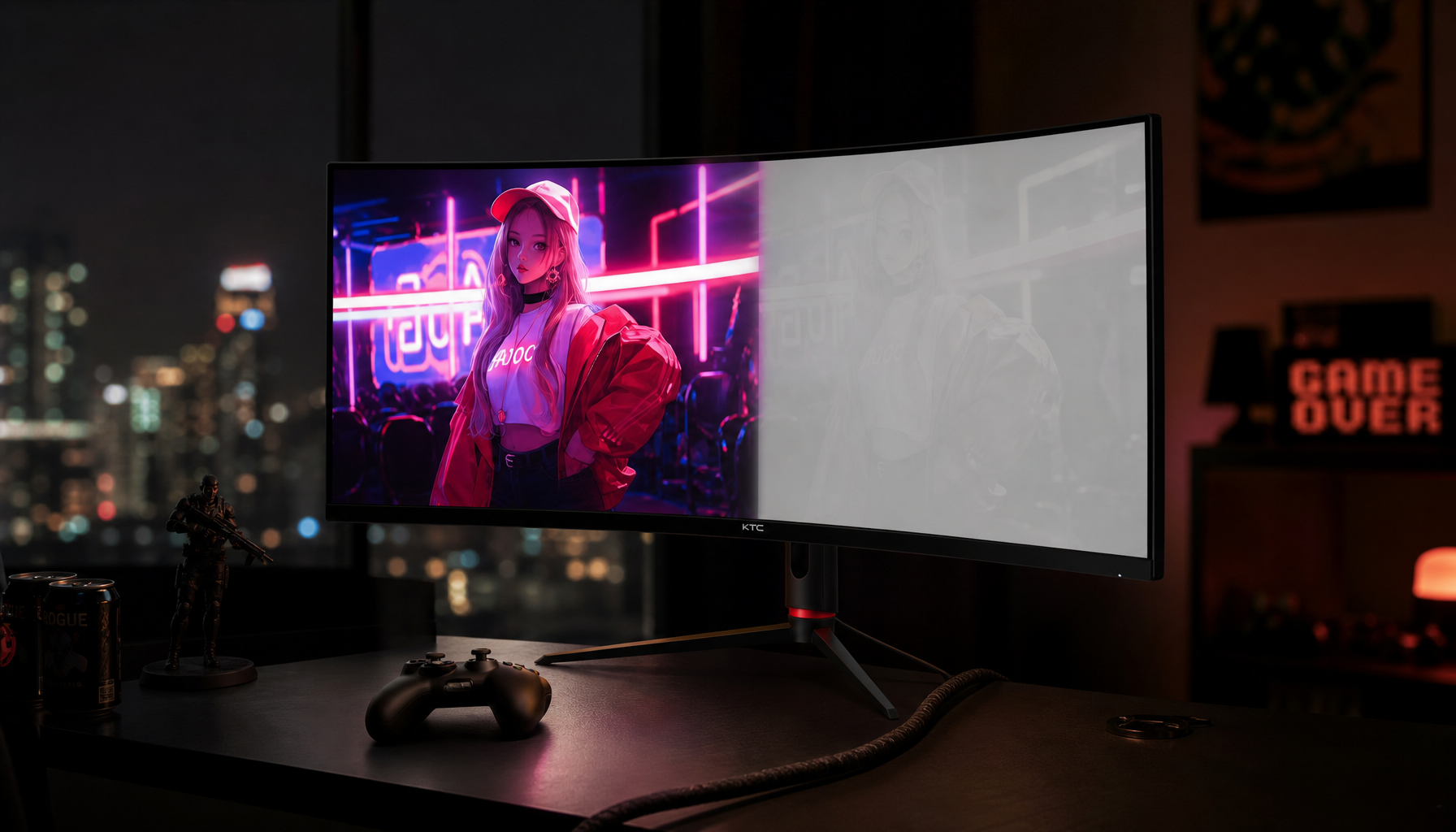
Automatic Brightness Limiting, often called ABL, reduces luminance when a large portion of the screen is bright. It is not a random defect or a bad setting; it is a panel protection and power-management system.
Think of Average Picture Level as the screen’s “how much is lit” score. A dark game scene with bright muzzle flashes has a low average picture level. A full-screen white document has a high one, so the display pulls brightness down.
The tradeoff is visible on desktop monitors because apps constantly resize, switch themes, and expose bright windows. You may notice a browser window looks punchy at half size, then dims when maximized.
 Why It Protects the Panel
OLED materials age as they emit light. Higher brightness, static interface elements, and long sessions accelerate uneven pixel wear, which is why OLED burn-in is tied to cumulative exposure rather than one dramatic moment.
Auto-dimming helps control three things at once: heat, power demand, and pixel aging. It is especially relevant for PC use, where taskbars, menu bars, white pages, spreadsheets, and game HUDs can sit in the same place for hours.
 Modern OLEDs also use protective features like pixel shifting, screen savers, logo dimming, and refresh cycles. These do not make burn-in impossible, but they make OLED more practical for real-world gaming and mixed use.
Why Games and Movies Still Look So Good
ABL is least intrusive when content is naturally varied. HDR movies usually place the brightest detail in small highlights: headlights, reflections, explosions, neon, and sun glints. OLED can drive those highlights hard while keeping black areas truly black.
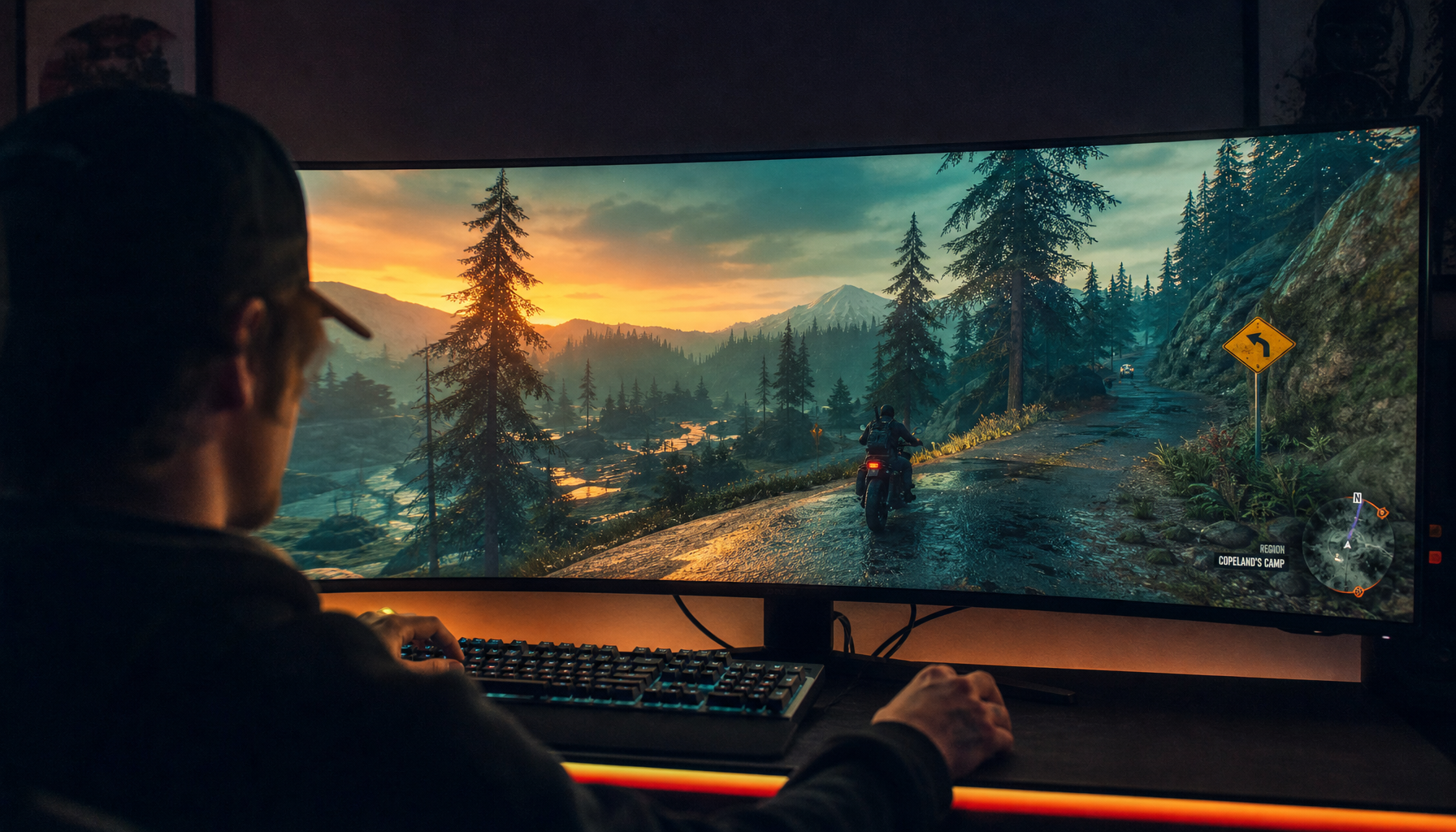
 Games are more mixed. A dark RPG, racing game at night, or space sim can look stunning. A snow map, bright skybox, or static HUD-heavy competitive title can trigger more brightness control.
That is why peak brightness alone is not enough when buying. A monitor advertised with 1,000-nit HDR may only hit that in a small window, while full-screen brightness can be far lower. OLED panels can deliver elite contrast, but real brightness behavior still depends on the specific model, panel generation, cooling, firmware, and mode settings.
How to Reduce Annoying Brightness Shifts
You usually cannot disable ABL completely, and trying to bypass panel protections is not worth the reliability risk. Instead, tune the setup around how you actually use the screen.
- Use dark mode for browsers, office apps, and coding tools.
- Lower SDR brightness for daily work, then use HDR modes for games and movies.
- Hide static UI elements like taskbars and desktop icons.
- Enable panel care features instead of turning them off.
- If you need stable full-screen brightness all day, consider IPS, VA, or mini-LED.
The practical takeaway: OLED is a premium immersion display first, not a full-screen white-canvas machine. For cinematic gaming, HDR video, and contrast-rich creative review, the dimming tradeoff is often worth it; for all-day spreadsheets under bright office lights, sustained brightness stability may matter more than perfect black.


%20that%20manages%20power%20draw,%20heat,%20and%20pixel%20longevity.
)