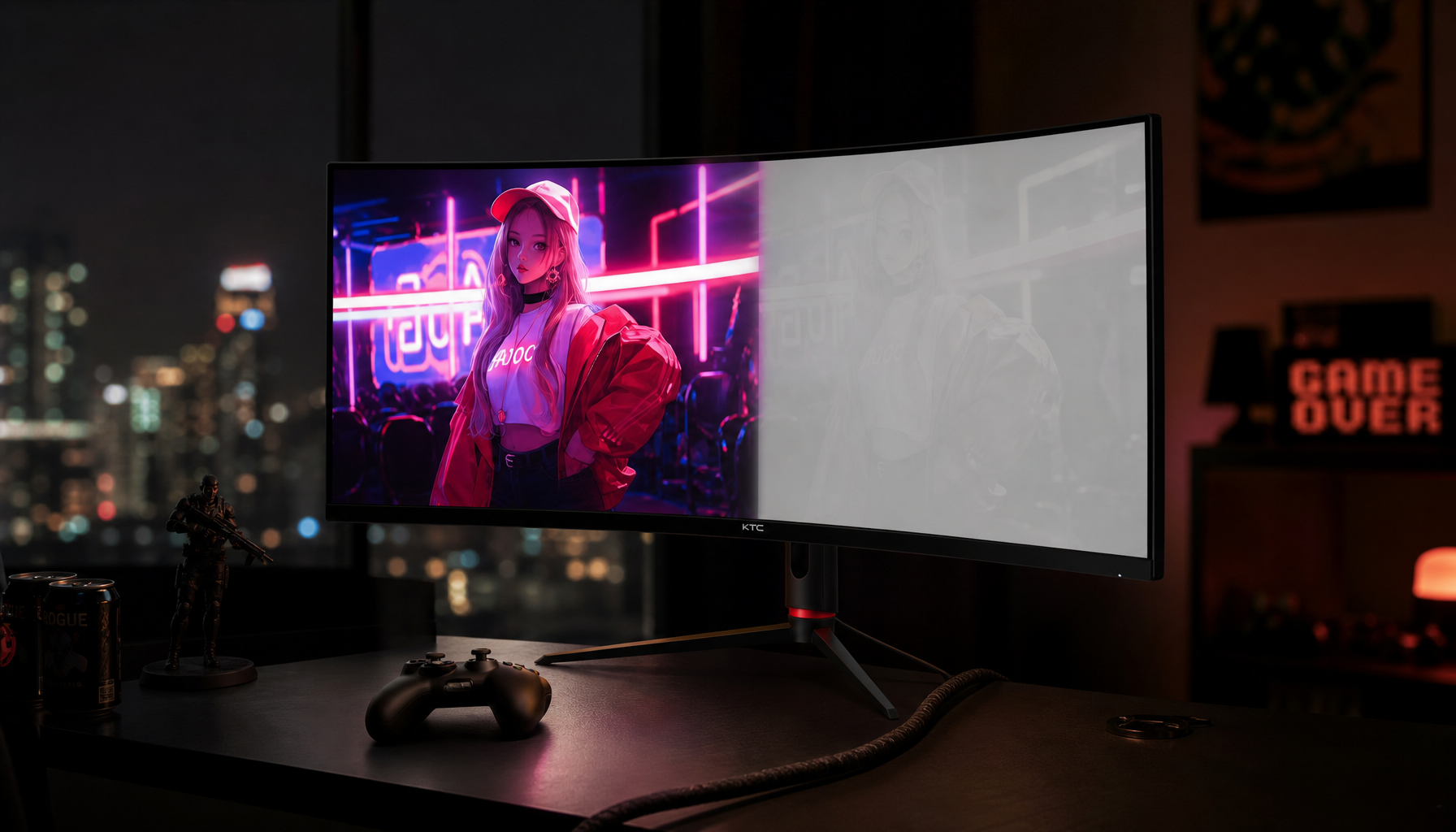
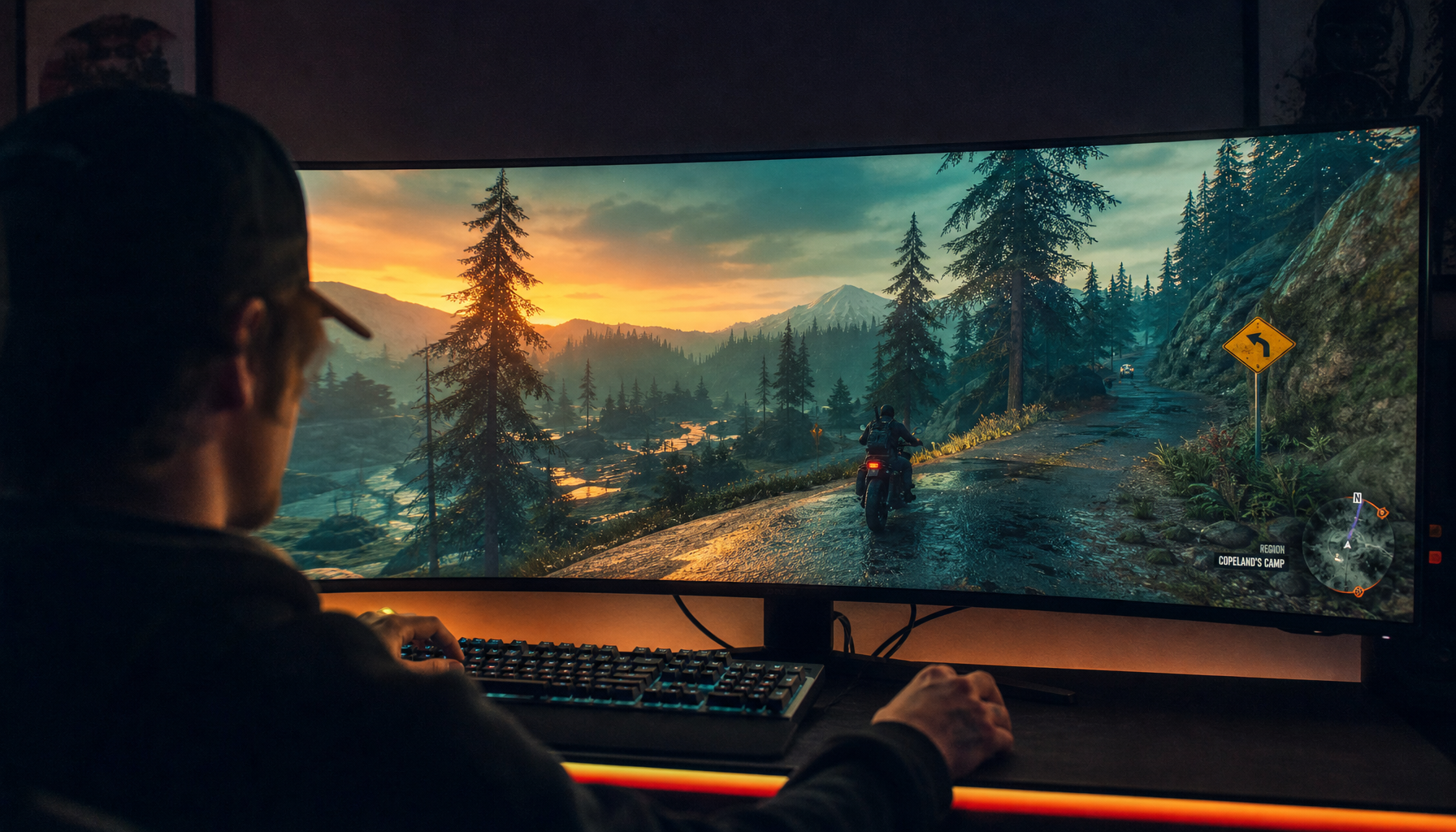
Picture enhancement features can increase input lag because the monitor may need extra time to analyze, alter, buffer, scale, or remap each incoming frame before showing it. For gaming, the cleanest fix is usually Game, FPS, or Instant mode, native resolution, a high refresh rate, and minimal post-processing.
Does your aim feel slightly late after turning on sharper edges, boosted contrast, or a vivid preset that looked great on the desktop? A simple A/B test between Game Mode and an enhanced picture preset can reveal whether the display is adding delay before the frame reaches your eyes. You will learn which settings usually cost responsiveness, which ones are safe, and how to tune a monitor differently for esports, office work, and portable screens.
Enhancement Adds Work Before the Frame Appears
Input lag is the delay between a player action and the visible result on screen, and display-side processing is one part of that chain. Input lag data is often tested with displays in Game Mode because that is usually where monitors and TVs bypass the most delay-heavy processing.

Sharpness, contrast boost, dynamic contrast, noise reduction, local dimming, HDR tone mapping, motion processing, and non-native scaling are not all equally slow. The key question is whether the monitor can apply the setting instantly as a simple output adjustment or whether it has to inspect the frame, compare multiple frames, run edge enhancement, or buffer video before scanout. The more the display behaves like a small video processor, the more likely it is to add latency.
What Input Lag Is, and What It Is Not
Input lag is not the same thing as pixel response time. A monitor can advertise a fast pixel transition and still feel delayed if the signal spends extra time in processing before pixels begin changing. The practical definition is action-to-visible-result delay: you click, move, flick, or press a key, and the screen responds after the system, graphics processor, sync path, and monitor complete their work.
A useful way to think about it is frame time. At 60 Hz, each refresh takes about 16.7 ms. At 144 Hz, it is about 6.9 ms. At 240 Hz, it is about 4.2 ms. If a picture preset forces the display to wait even one extra 60 Hz frame, that can feel larger than the improvement from upgrading between some high-refresh tiers. That is why monitor tuning still matters even when the spec sheet looks fast.
The latency chain also includes sync behavior. A measurement study of PC game VSync configurations found that synchronization choices can change latency while improving image stability, and synchronization choices were tested specifically because the smoothest image path is not always the lowest-lag path. The same principle applies inside the monitor: prettier processing can trade speed for presentation.
Why Sharpness Can Add Delay
Sharpness is usually an edge-enhancement process. The monitor looks for contrast transitions, exaggerates edges, and may create halos around text, UI lines, or game geometry. On some gaming monitors, a moderate sharpness slider may be lightweight enough to feel instant. On others, especially when bundled into super-resolution, detail-enhancement, or automated picture modes, it can trigger heavier processing.
The real-world effect is easiest to notice in aiming and mouse tracking. If you play a shooter at 240 Hz and your monitor’s enhanced preset adds even a small processing step, the screen may still look crisp, but your crosshair feels less directly connected to your hand. That delay can be hard to describe because image quality improves while control feel gets worse.

Sharpness can also mask another issue: non-native scaling. If you send a 1080p signal to a 1440p panel and let the monitor scale it, the display has to resize the image before showing it. A sharpness boost may then be added on top to hide the softness caused by scaling. Native resolution avoids that extra dependency and usually gives the cleanest text, geometry, and responsiveness.
Why Contrast Boost and Dynamic Contrast Differ From Basic Contrast
A basic contrast slider is usually a relatively simple image adjustment. It changes how bright and dark tones are mapped, and on many monitors it does not meaningfully affect input lag. Contrast boost, dynamic contrast, black equalizer, local dimming, and HDR-like enhancement can be more complicated because they may analyze the image before deciding how to change brightness or tone.
Dynamic contrast is the most suspicious setting for latency-sensitive play because it reacts to image content. The monitor may evaluate scene brightness, lift shadows, deepen blacks, or alter the backlight. That can help a single-player game look more dramatic, but it can also make shadow detail inconsistent and add processing overhead.
For office displays, contrast enhancement can be useful when reading dense spreadsheets or working in a bright room. The tradeoff is not usually about clutch reaction time; it is about consistency and comfort. For a portable smart screen used with a laptop over USB-C, restrained contrast and native scaling often matter more than aggressive enhancement because small text needs stability, not artificial punch.
Feature Impact Comparison
Feature |
What It Tries to Improve |
Input Lag Risk |
Best Use |
Basic brightness |
Screen luminance |
Low |
Any use, tuned to room lighting |
Basic contrast |
Tonal separation |
Usually low |
Office work, media, mixed use |
Sharpness |
Edge definition |
Low to medium |
Mild use for soft sources |
Super-resolution/detail boost |
Perceived detail |
Medium to high |
Video, not competitive gaming |
Dynamic contrast |
Punchier light/dark scenes |
Medium |
Casual games and movies |
Motion interpolation |
Smoother-looking motion |
High |
Video playback, not gaming |
Backlight strobing/BFI |
Motion clarity |
Variable |
Locked high-FPS competitive play |
Monitor scaling |
Fit non-native signals |
Medium |
Only when graphics-processor scaling is unavailable |

Motion Clarity Features Can Feel Fast but Still Have Tradeoffs
Motion blur reduction is often confused with input-lag reduction because the image can look sharper during movement. In reality, backlight strobing improves perceived motion clarity by briefly turning the backlight off between frames, and backlight strobing is most useful when the PC can keep frame rate locked to the monitor’s refresh rate.
That is powerful for competitive play, but it is not a universal speed button. Strobing can reduce brightness by about 30% to 50%, may cause flicker discomfort, and is often unavailable at the same time as Adaptive Sync. If your frame rate fluctuates, Adaptive Sync is usually the more stable choice because it reduces tearing and stutter without the classic VSync lag penalty.
Older display science helps explain why this matters. LCDs hold each frame until the next one, while CRT-style behavior allowed images to fade more quickly, and persistence affects perceived motion even when pixel response is already fast. That means some features improve what your eyes perceive during motion without necessarily reducing the command-to-screen delay.
Game Mode Works Because It Removes the Extras
Game Mode is a shortcut to a leaner processing path. It usually reduces or disables enhancement features, changes scaling behavior, limits motion processing, and prioritizes fast signal handling. That is why latency databases and gaming reviews often compare displays in their lowest-lag picture modes.

For a practical test, set your monitor to Game, FPS, or Instant mode, then disable extra sharpening, dynamic contrast, noise reduction, motion smoothing, and super-resolution features. Use native resolution, set your PC or console to the monitor’s highest supported refresh rate, and keep overdrive at a sane level rather than the most aggressive option if it creates inverse ghosting.
Then test one feature at a time. Play the same aim trainer, fighting game, or fast camera pan for a few minutes, switch only sharpness, and repeat. Do the same for contrast boost. If you cannot feel a difference but can clearly see a benefit, the setting may be acceptable for your setup. If your timing feels late, trust control feel over showroom punch.
Pros and Cons of Picture Enhancement
Picture enhancement has a legitimate place. Mild sharpness can improve soft video sources. Contrast boost can make dark scenes easier to read. HDR and stronger tone mapping can make cinematic games more immersive when the monitor implements them well. For office productivity, a balanced preset can make text, charts, and windows easier to scan for long sessions.
The downside is that enhancement can reduce predictability. Competitive players need a display that reacts consistently and immediately. Aggressive contrast boost may crush shadow detail or shift brightness mid-scene. Heavy sharpening can create halos around targets. Scaling and super-resolution can add processing that is unnecessary when the graphics processor can output the panel’s native resolution directly.
Best Settings by Use Case
For esports, start with Game, FPS, or Instant mode, native resolution, the highest stable refresh rate, Adaptive Sync if your frame rate varies, and minimal picture enhancement. Use just enough overdrive to reduce smearing without visible overshoot. Keep sharpness neutral or low unless the image is obviously soft.

For office productivity, prioritize readable scaling, neutral color temperature, comfortable brightness, and clean text. A small contrast adjustment is fine if it helps spreadsheets, code, or dashboards, but avoid extreme edge enhancement because it can make fonts look rough during long work sessions.
For portable smart screens, keep the signal path simple. USB-C displays are often used for travel, presentations, and second-screen workflows, so native resolution, stable brightness, and moderate contrast beat flashy processing. If the screen has a game preset, use it for controller or handheld gaming, then switch back to a calibrated or standard preset for document work.
Quick FAQ
Does the sharpness slider always increase input lag?
No. A simple sharpness adjustment may be nearly instant on many monitors. The risk rises when sharpness is part of a larger enhancement engine such as super-resolution, automated detail enhancement, scaling, or video processing.
Is contrast boost bad for gaming?
Not always. A mild black equalizer or contrast adjustment can improve visibility, especially in dark maps. Dynamic contrast is more questionable because it may analyze and alter the image scene by scene, which can hurt consistency and sometimes latency.
Should I turn off HDR to reduce input lag?
Not automatically. Some modern gaming monitors handle HDR with little noticeable delay, but HDR tone mapping can vary by model. Test HDR separately in the games where timing matters most.
Bottom Line
Picture enhancement is a value tool, not a free performance upgrade. Use it when the image benefit is obvious and the control feel stays tight; disable it when every frame matters. The best monitor setup is not the most processed image, but the one that keeps your eyes immersed and your inputs connected.