Many monitors change brightness from the image itself because the panel is managing power, heat, contrast, or OLED wear; true ambient-light adjustment is a separate feature that uses a room sensor.
Open a white spreadsheet after a dark game menu and the whole screen can seem to shift under your eyes, even though the room did not change. On one measured OLED ultrawide, brightness fell from about 453 nits with a small bright patch to 306 nits when the full screen turned bright, which is exactly the kind of swing people notice during normal desktop use. You will see why monitor makers do this, when it helps, and what settings matter before you buy.

Content-Based Brightness and Ambient-Light Brightness Are Different Features
The screen can react to the picture
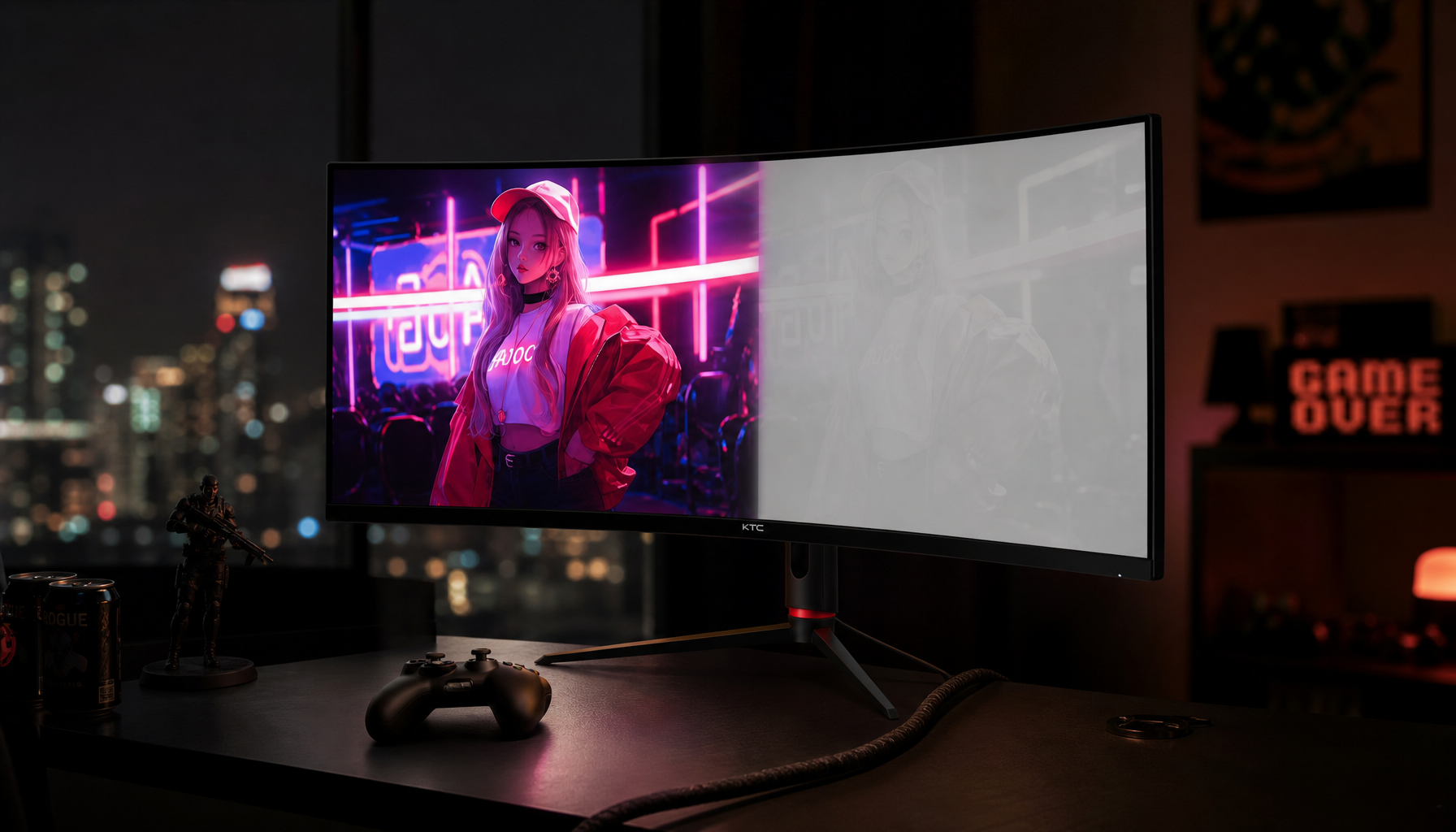
Many monitors use dynamic contrast to adjust brightness and contrast in real time from the image on screen, so a dark game scene and a bright browser page can produce different light output even when your desk lamp never changes. That behavior is built around the content itself, not around your room.
A room sensor reacts to your environment
Shoppers looking for a monitor with auto brightness usually mean something closer to a phone: a light sensor that follows the room and lowers the screen at night. One practical example came from a 29-inch ultrawide owner who wanted no PWM, low blue light, and a sensor-based brightness feature because a bright display in a dark room felt harsh during long reading sessions.

Built-in platform brightness controls usually affect laptop or all-in-one panels, not most external monitors, which is why desktop users often chase the wrong setting first. If your gaming monitor or ultrawide is changing brightness, the real control is often in the monitor’s own menu under names like dynamic contrast, an eco mode, a contrast-enhancement mode, or local dimming.
Why Monitor Makers Use Content-Based Brightness
Power, heat, and panel protection
On OLED monitors, content-based dimming is often a protection strategy rather than a comfort feature. When bright areas expand across the panel, the display reduces full-screen brightness to manage power draw and limit long-term pixel wear, which is one reason desktop windows and bright productivity apps can make the effect feel more obvious than a movie or a dark game.

Perceived HDR impact
Manufacturers also use dynamic contrast ratio and similar image-dependent controls to make highlights look punchier without driving the entire screen at peak output all the time. On HDR gaming monitors, that can help explosions, headlights, and sunlit reflections stand out while keeping darker areas readable.
Some gaming image controls also brighten shadow regions instead of dimming the whole screen, which is a different but related idea. Features such as shadow-equalization or shadow-boost controls can improve enemy visibility, but they also move the image away from a stable, reference-like look that many buyers want for desktop work, photo review, or general web browsing.
Where You Notice It Most
Gaming monitors and HDR panels
Brightness window tests show why this behavior stands out on gaming monitors: brightness is measured not just once, but across 2%, 10%, 25%, 50%, and 100% screen coverage because some displays change dramatically as bright content fills more of the screen. That matters most in HDR, where a small highlight can look intense but a full snowfield, white menu, or bright map screen can trigger a different luminance level.
Ultrawides and large desktop canvases
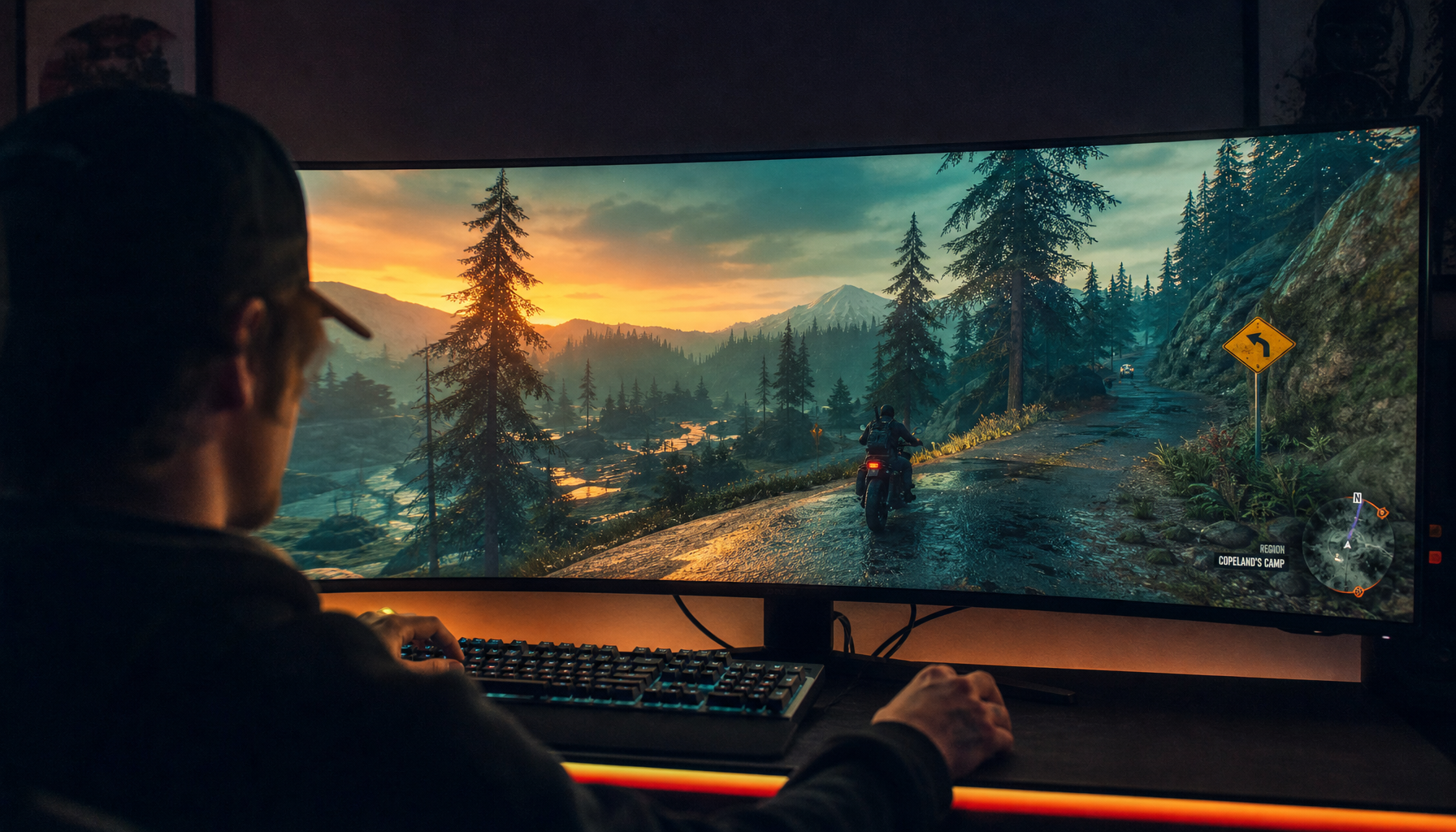
A 34-inch curved monitor owner on a desktop PC described brightness shifting with on-screen content even though the issue was not tied to ambient light at all. Ultrawides make this easier to spot because they often show broad white documents, long timelines, big spreadsheets, or side-by-side windows that cover a large percentage of the panel.
Dark rooms and night use
Night-time monitor setup advice puts dark-room comfort around 120 to 180 nits, with bias lighting behind the display to reduce harsh contrast against the wall. In practice, content-based dimming feels stronger at night because every swing between a dark app and a bright white page is more visible when the room itself is dim.

When It Helps and When It Hurts
Matching monitor brightness to room light is still the best baseline for comfort, which is why content-based brightness is not automatically good or bad. The right answer depends on whether you care more about HDR punch, stable desktop luminance, battery-conscious behavior, or eye comfort during long sessions.
Use case |
Usually helpful? |
Why it exists |
What to look for |
HDR gaming on OLED ultrawides |
Sometimes |
Preserves highlight impact while managing power and panel wear |
Brightness stabilizer mode, clear HDR window test data, ABL behavior in reviews |
Competitive gaming on high-refresh IPS or VA |
Usually not |
Image changes can alter shadow perception mid-match |
Dynamic contrast off, separate shadow controls, stable SDR brightness |
Office work on an ultrawide |
Usually not |
Large white windows make brightness shifts easy to notice |
Low minimum brightness, no PWM, easy manual control, optional light sensor |
Portable monitor travel use |
Mixed |
Limited brightness headroom makes any automation more noticeable |
Consistent SDR behavior, matte screen, simple brightness adjustment |
General office use in changing room light |
Helpful only if sensor-based |
Ambient-light control can follow the room for comfort |
True light sensor, DDC/CI support, wide manual adjustment range |
For everyday work, a 120 to 150 nit target is often easier to live with than a panel that keeps chasing the content. In brighter rooms, 250 to 350 nits is usually enough for general use, while 400-plus nits gives more headroom near windows or in glare-heavy spaces; those are buying decisions, not reasons to accept unstable brightness during basic desktop tasks.
How to Check Before You Buy or Try to Disable It
Start with the right control path
Most external monitor brightness changes will not be fixed by the normal platform brightness slider. Check the monitor’s OSD first, then look for DDC/CI software support if you want desktop control through tools such as a utility app.
Laptops and hybrid devices can add another layer
A working graphics control utility fix showed that content-based brightness on some systems can come from GPU power-saving features, not just from platform display settings. Users have also reported cases where BIOS options such as a battery-saving mode, battery brightness settings, or platform content-based brightness toggles were the real cause on affected laptop models.
Buying checks that save time later
Shoppers hunting for a monitor with automatic brightness usually end up caring about a cluster of related traits: a real light sensor, no PWM, low blue light, a low usable minimum brightness, and a comfortable pixel density for reading. If stable desktop brightness matters more than HDR drama, favor monitors with low minimum brightness, easy OSD access, the ability to disable dynamic contrast or local dimming, and review data that shows small changes between different window sizes rather than only one peak nit number.
FAQ
Q: Why does my gaming monitor dim more on a bright webpage than in a game?
A: OLED auto-dimming usually reacts to how much of the panel is bright at once. A full white webpage or spreadsheet can light far more of the screen than a dark game scene with a small HUD, so the brightness shift is often easier to notice on the desktop.
Q: Can a platform turn this off for an external monitor?
A: Platform brightness sliders usually do not control most external monitors directly. Start with the monitor’s own menu, then DDC/CI software, and only after that check GPU utilities, BIOS options, or laptop-specific power-saving settings.
Q: What is a good night-time brightness range?
A: Dark-room guidance points to roughly 120 to 180 nits for many night setups, plus bias lighting behind the monitor. A simple check is to open a white document and make sure it looks closer to paper on your desk than a glowing sign.
Practical Next Steps
If your screen changes brightness when the room stays the same, treat that as a content-control problem first, not an ambient-light problem. For most gaming monitors, ultrawides, and portable displays, the best buying move is to decide whether you want stable desktop luminance or the extra punch of image-dependent HDR behavior before you compare refresh rate, size, or panel type.
A practical short list works well: - Turn off Dynamic Contrast, Eco, local dimming, or similar image-dependent features and test again. - Set brightness to match the room before judging the panel; for many desks, that lands well below the factory default. - For OLED, check whether a brightness stabilizer mode is available and what nit cap it uses. - Before buying, look for review data across multiple window sizes, not just one advertised peak brightness number. - If you want true auto brightness for comfort, verify that the monitor has a real light sensor rather than only content-based dimming.
References
- Recommendations of a monitor with auto brightness
- How to completely turn off adaptive screen brightness based on content?
- Why Monitor Brightness and Contrast Ratios are Key to Display Quality
- A brand: Monitor Brightness: How to Match Your Room’s Light
- Brightness Quick Fixes for Laptops and External Monitors
- A company community: Screen brightness automatically changing
- Display dims and brightens based on what is being displayed
- A brand: Ergonomic Brightness: Optimal Monitor Settings for Night Use
- A publication: Does your gaming monitor’s brightness constantly change?
- Monitor Brightness & sRGB Guide
- A testing site: Our Monitor Picture Quality Tests: Brightness