Local dimming zone count still matters, but it no longer predicts HDR quality by itself. Real HDR performance now depends just as much on dimming algorithms, native panel contrast, brightness behavior, color accuracy, tone mapping, and how the monitor handles real content.
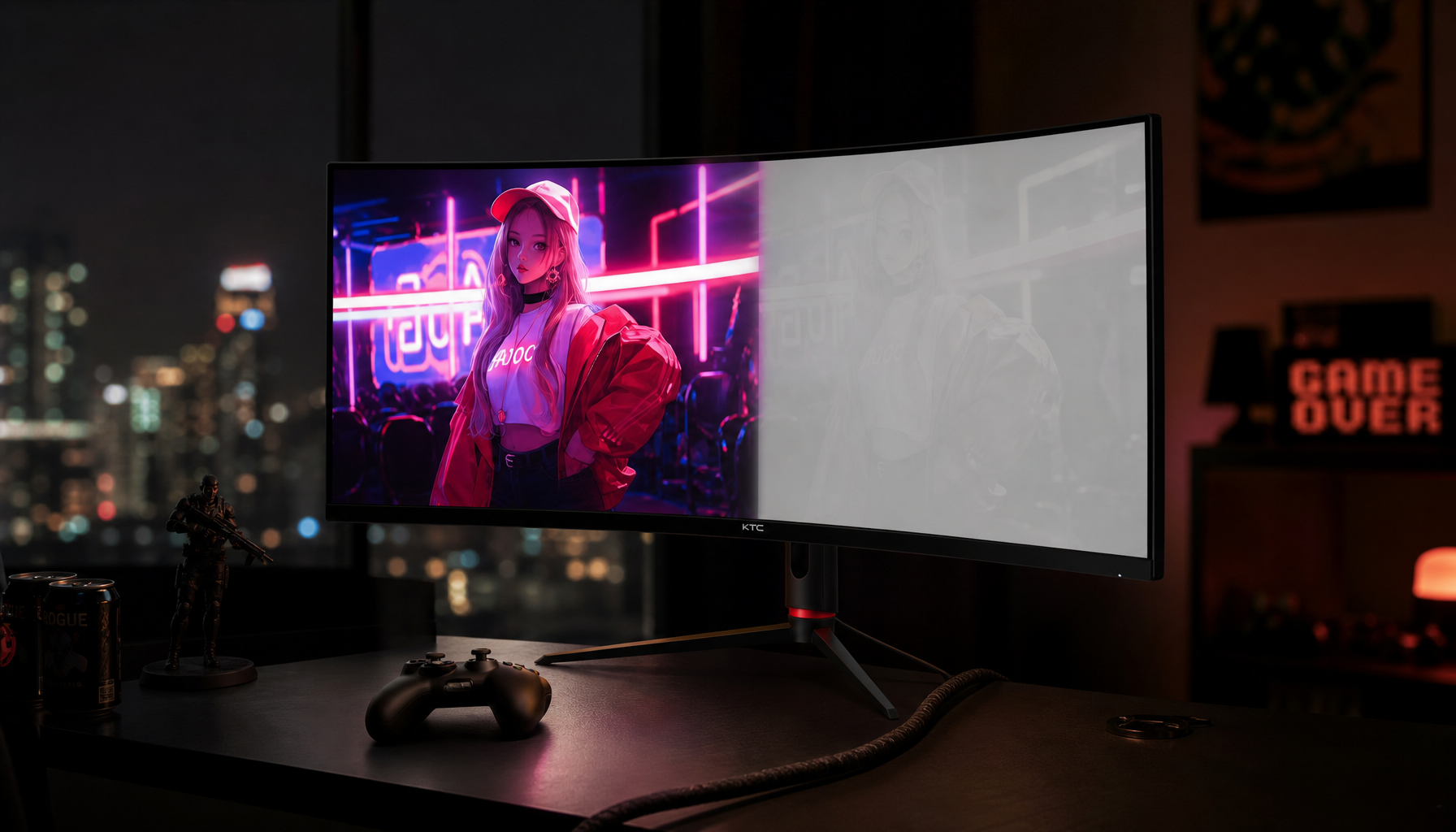
Is a night scene in your HDR game glowing gray around subtitles, even though the spec sheet brags about hundreds or thousands of zones? A five-minute full-screen blooming check can reveal problems that a zone-count badge hides. Here is how to judge HDR quality with the same practical lens you would use before buying a gaming monitor, creator display, or productivity screen you need to trust every day.
Zone Count Was a Useful Shortcut, but HDR Has Outgrown It
Local dimming is a backlight control system used mostly on LCD monitors. Instead of lighting the whole panel evenly, the monitor brightens some zones and darkens others so a torch, muzzle flash, starfield, or sunlit window can stand out against darker areas. That is why buyers started treating “more zones” as shorthand for better HDR.
The shortcut made sense when the comparison was simple. An edge-lit monitor with a handful of zones usually cannot isolate small highlights very well, while a full-array mini-LED monitor with hundreds or thousands of zones can control light with much finer precision. Local dimming artifacts, such as blooming, become easier to spot when a bright object moves over a black background, which is why full-screen tests are still useful before you trust marketing claims.
The problem is that modern HDR performance is no longer a single-hardware-spec contest. Two 1,152-zone monitors can look completely different because one has stronger processing, better panel contrast, better factory tuning, and less aggressive highlight clipping. A 576-zone monitor with a high-contrast VA or HVA panel may hide halos better than a higher-zone IPS monitor with weaker native contrast. That is why zone count has shifted from “headline spec” to “starting clue.”
The Real HDR Stack: What Matters Beyond Zones
HDR quality is the result of a chain. If one part is weak, the final image suffers even when the backlight grid looks impressive on paper.

Factor |
Why It Matters |
What to Watch For |
Native contrast |
Determines how much light leaks through before dimming helps |
IPS glow, gray blacks, raised shadows |
Peak brightness |
Gives highlights impact in games, movies, and bright rooms |
Weak sparkle below meaningful HDR brightness |
Sustained brightness |
Keeps large bright scenes from dimming too hard |
Snow scenes, skies, dashboards, creative work |
Dimming algorithm |
Controls how fast and accurately zones react |
Pumping, trails, flicker, crushed shadow detail |
Color volume |
Keeps saturated colors vivid at high brightness |
Washed-out HDR highlights |
Tone mapping |
Fits HDR content into the monitor’s real limits |
Clipped clouds, dull highlights, flat contrast |
Keeps grayscale, color, and brightness tracking believable |
Blue whites, red shadows, oversaturated skin |
A monitor can advertise 1,000 zones and still mishandle a dark game HUD if the dimming algorithm brightens a large area around each icon. Another display with fewer zones may preserve more shadow texture because its native contrast is stronger and its firmware makes smarter tradeoffs.
This is also where certification has become more useful than raw zone count. VESA’s newer DisplayHDR criteria tightened expectations around color gamut, contrast, color accuracy, black crush, and subtitle flicker. That matters because subtitle flicker and black crush are exactly the flaws zone-count marketing tends to skip.
Why More Zones Can Still Look Worse
More zones reduce the size of each backlight region, but every LCD zone is still larger than a pixel. When a bright object sits inside one zone, that zone must light up. If the surrounding pixels are supposed to be black, some light still leaks through the LCD layer. That visible glow is blooming.
In real use, the hardest scenes are not always the brightest. They are mixed scenes with small highlights: a white cursor over a dark desktop, subtitles in a shadowy movie, stars in space, neon signs in rain, or a flashlight moving through a cave. HDR buying advice treats backlight type as crucial, but it also points buyers toward certification, brightness, color, and port support because HDR depends on the whole pipeline.

There is a practical calculation hidden here. A 27-inch 4K monitor with 1,152 zones still has each zone covering thousands of pixels, so a tiny white crosshair or star cannot be lit independently the way OLED can light individual pixels. That is why a local dimming LCD can have excellent punch in explosions yet still show halos around a mouse pointer.
OLED changes the equation because it does not need backlight zones. Each pixel emits its own light, so black pixels can stay black next to bright pixels. The tradeoff is different: OLED is outstanding in dark rooms and for small highlights, while mini-LED LCD often wins for sustained brightness, bright-room viewing, and static productivity use where burn-in risk matters. HDR monitor recommendations make a similar practical distinction, favoring mini-LED for many accuracy-focused workflows while recognizing OLED’s black-level advantage in controlled lighting.
The Algorithm Is the New Differentiator
The dimming algorithm decides how the backlight behaves moment by moment. It has to protect highlights, preserve shadow detail, limit blooming, avoid flicker, and avoid adding latency. That is hard in a fast HDR game running at high refresh rates.
A conservative algorithm may reduce blooming by keeping highlights dimmer. The image looks cleaner, but explosions and specular reflections lose bite. An aggressive algorithm may make highlights pop, but it can create halos, brightness pumping, or trails behind moving objects. Neither behavior is visible from a zone-count number.
This is why test patterns matter. A local dimming test lets you vary shape size, brightness, density, and motion so you can expose how the monitor behaves when bright objects move across a dark field. If a display looks good only in static demo content but falls apart with moving highlights, the backlight hardware is not being controlled well enough for immersive gaming.
For productivity, the algorithm also determines whether the monitor is pleasant to use with local dimming left on. A bright spreadsheet cell, white document page, or small cursor can trigger visible patches around the desktop. The KTC mini-LED buying notes describe this as the friction of toggling HDR or local dimming for different tasks, and matching panel type and workflow matters more than chasing zones alone.
HDR Content and Tone Mapping Complicate the Scorecard
HDR is not just a display feature. It is content, metadata, software, operating system behavior, GPU output, cable bandwidth, and monitor processing working together. A display can be capable, yet the final picture can look wrong if tone mapping is poor or the wrong HDR mode is active.
HDR10 uses static metadata, so one set of brightness and color information can describe an entire movie or program. Dynamic-metadata formats can adjust guidance by scene or frame, but the monitor still has to map that content into its actual brightness, black level, and color volume. HDR display basics explain the core difference clearly: HDR preserves more highlight and shadow information than SDR, but the display hardware must be able to reproduce it convincingly.
This is where zone count becomes especially incomplete. A high-zone mini-LED monitor with poor tone mapping may clip bright clouds into flat white patches. A lower-zone display with better tone mapping may show less peak drama but more usable detail. For creator work, that second result may be more valuable because it is more predictable.
Operating system setup can add another layer. VESA’s DisplayHDR setup guidance recommends confirming HDR is enabled for the correct display, using updated GPU drivers, and checking whether true HDR playback produces visibly brighter peak whites than SDR app backgrounds. Before judging a monitor, make sure the signal path is actually working; otherwise, you may be grading the wrong problem.
Zone Count Still Matters, Just in Context
The right conclusion is not that zone count is useless. It is that zone count is a minimum-context spec. Very low-zone edge-lit dimming is still a warning sign for serious HDR. Full-array local dimming with hundreds or thousands of zones is still the correct LCD direction. But the number should never be the final verdict.
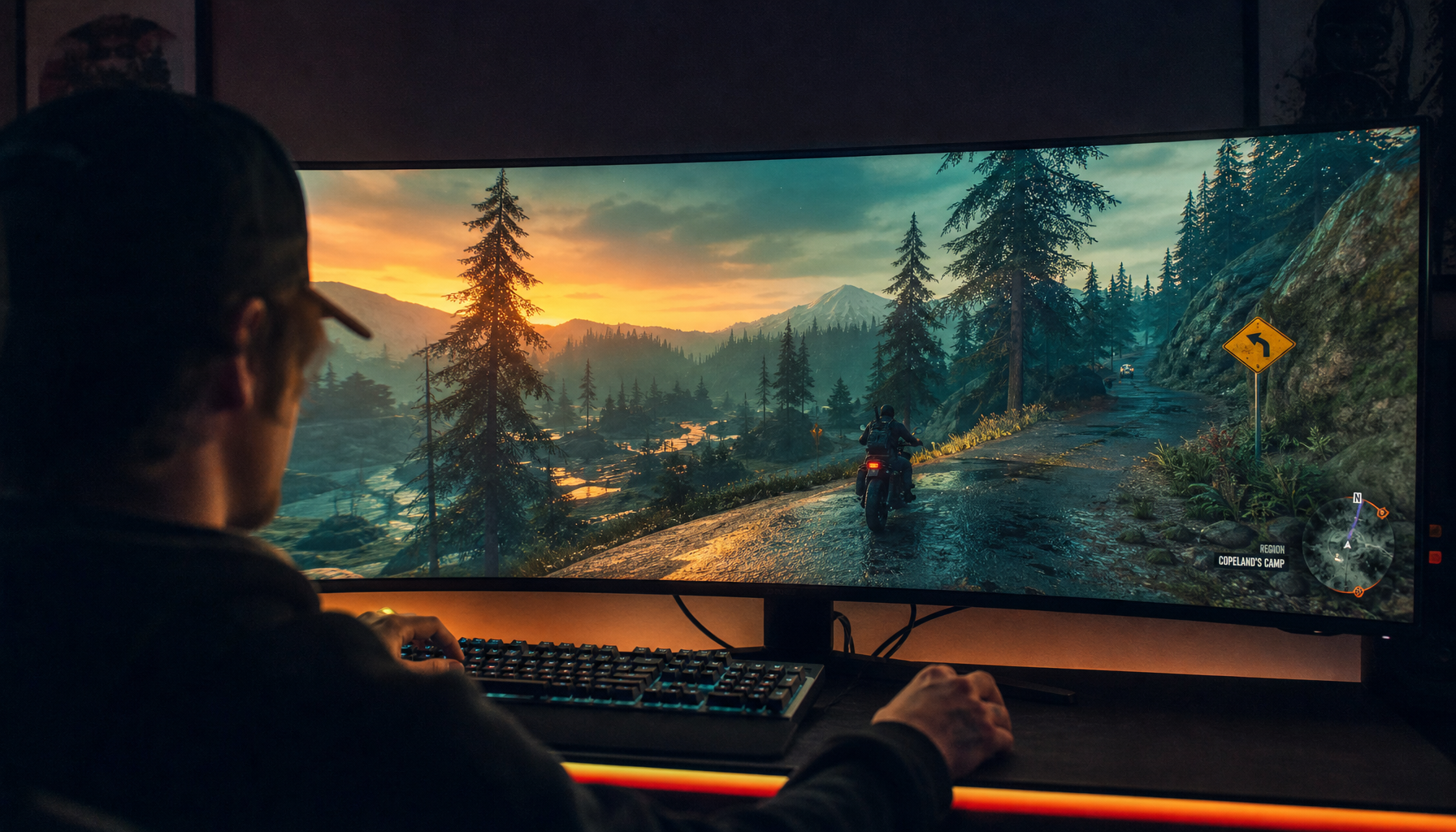
For gaming, prioritize the content you actually play. Story-driven HDR games with caves, night skies, neon signs, and cinematic lighting benefit from stronger local dimming and better black control. Competitive esports titles usually benefit more from motion clarity, refresh rate, input latency, and stable brightness than from another few hundred zones.
For office productivity, ask whether you can leave the display in a comfortable daily mode. If local dimming makes white windows look patchy or creates glow around the cursor, you will probably turn it off during work. That does not make the monitor bad, but it means the HDR feature is situational rather than seamless.
For creators, repeatability matters more than spectacle. A monitor with strong brightness, wide gamut, accurate factory tuning, and hardware calibration support can be more valuable than a brighter, higher-zone model that shifts tone mapping unpredictably. The fine-grained HDR image-quality research behind AIC-HDR2025 reinforces the same broader point: meaningful HDR assessment needs finer evaluation than coarse labels because subtle visible differences still matter.
A Smarter Buying Method
Start with display type. OLED is the cleanest choice for perfect blacks, dark-room gaming, and halo-free highlights, but it needs thoughtful use around static desktop elements. Mini-LED LCD is the stronger fit for bright rooms, high sustained brightness, and mixed productivity plus gaming setups. Standard edge-lit HDR monitors should be treated cautiously unless your expectations are modest.

Then check brightness and certification. DisplayHDR 600 can be a reasonable floor for meaningful HDR, while DisplayHDR 1000 and above are more convincing for high-impact highlights. The newer VESA rules are more helpful because they look beyond peak brightness into contrast, color, and artifacts, but older low-tier badges still need scrutiny.
After that, read independent reviews for blooming, black crush, EOTF tracking, sustained brightness, color accuracy, VRR flicker, and input lag. Real-model comparisons are useful when they evaluate panel type, dimming implementation, brightness, gamut, and practical tradeoffs rather than treating HDR as one badge.
Finally, test the monitor with your own content. Use a dark HDR game scene with subtitles, a bright outdoor scene, a desktop with white windows, and a full-screen local dimming pattern. If the monitor has multiple dimming levels, choose the setting that gives you the best balance for your use instead of assuming the highest mode is best.

FAQ
Is 1,152 zones always better than 576 zones?
Not always. More zones usually improve precision, but native contrast, firmware, brightness control, and panel type can outweigh the raw count. A well-tuned 576-zone VA or HVA display may look cleaner in some dark scenes than a poorly tuned 1,152-zone IPS display.
Do OLED monitors make local dimming zone counts irrelevant?
For OLED, yes, because there is no backlight zone grid. Each pixel controls its own light. The buying question shifts toward brightness, color volume, burn-in management, text clarity, refresh rate, warranty, and room lighting.
Should HDR be left on all day?
Only if the monitor handles SDR desktop content cleanly in HDR mode. If whites look dull, blacks look lifted, or local dimming creates cursor glow, use calibrated SDR for work and enable HDR for games, movies, and HDR creative review.
What is the fastest way to spot weak local dimming?
Use a full-screen blooming test, then watch real content with subtitles or small bright objects over black. If you see large halos, flicker, pumping, or crushed shadow detail, the monitor’s HDR quality is being limited by more than just zone count.
Zone count is still part of the HDR story, but it is no longer the headline. Buy the display that controls light accurately, sustains brightness honestly, tracks color well, and fits your room and workflow; that is the monitor that will feel immersive after the spec-sheet excitement wears off.