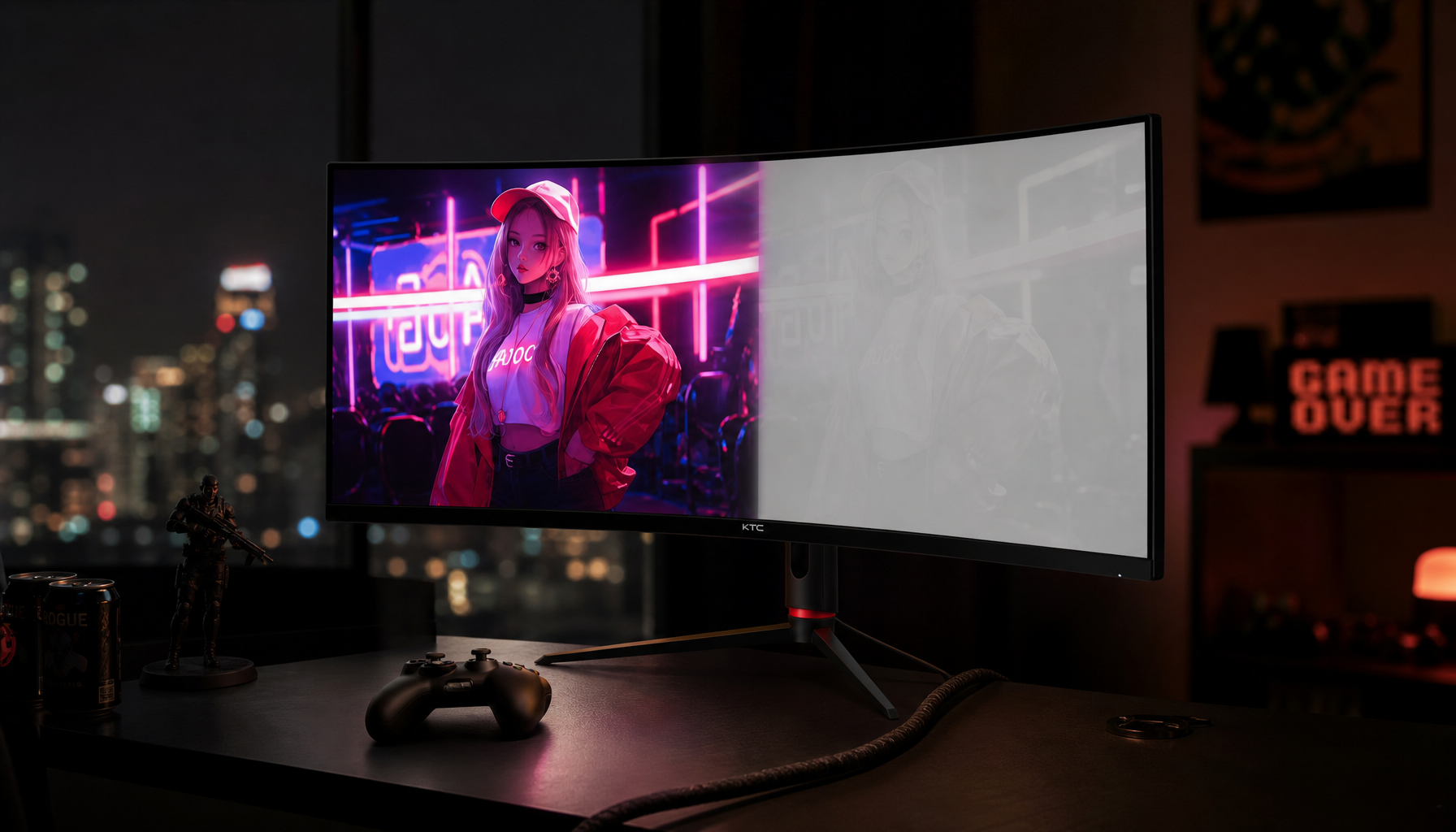
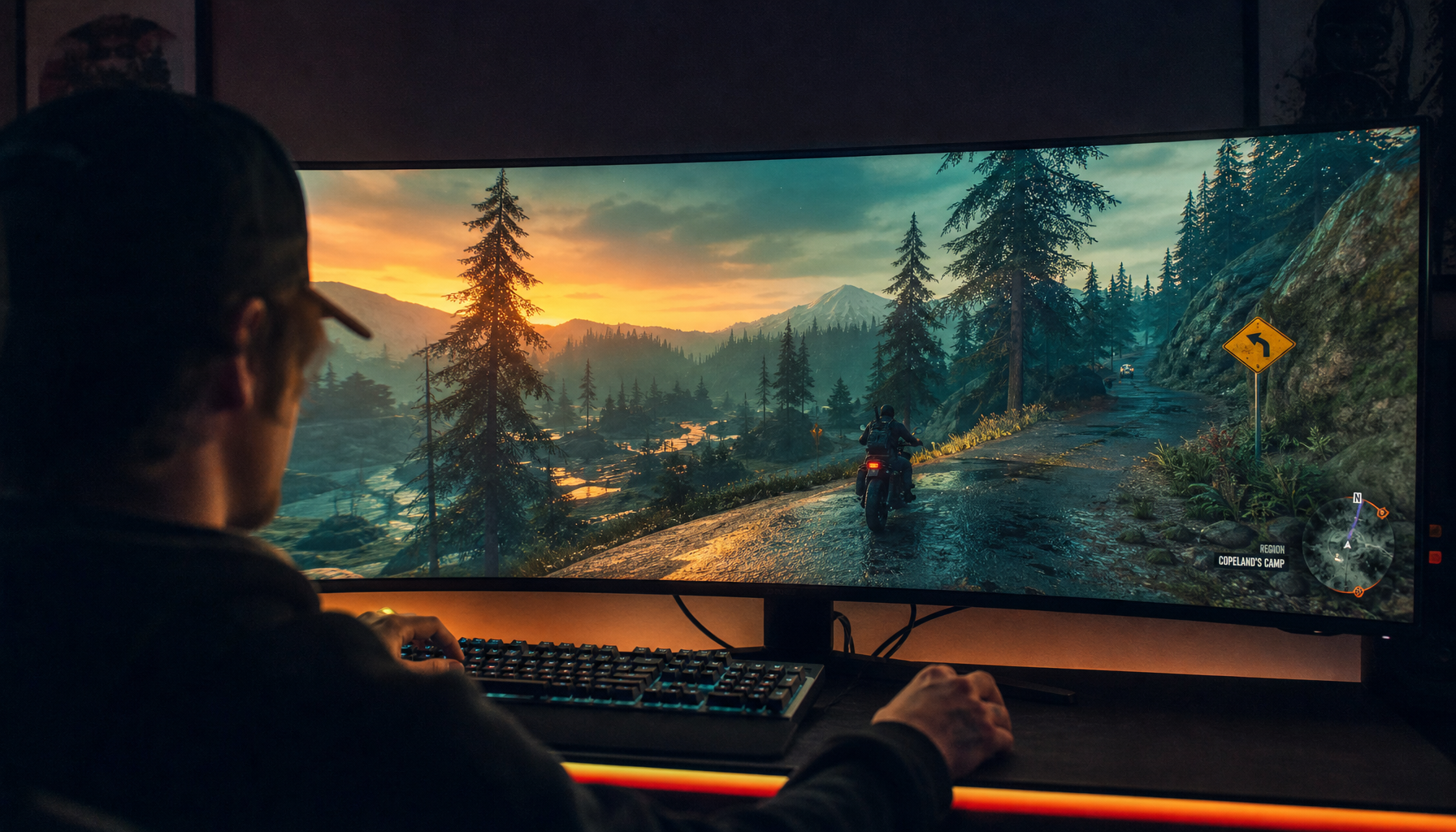
The same HDR movie, game, or image can look different because every monitor interprets brightness, color, metadata, and tone mapping through its own hardware limits and firmware choices.
Does one HDR monitor make a sunset glow while another turns the same scene dull, gray, or painfully bright? A quick check of the full signal chain, monitor mode, and real HDR capability can usually explain the mismatch before you blame the content. Here is how to diagnose the difference and tune your display for a more consistent, immersive result.

The Same HDR Signal Is Not the Same HDR Experience
HDR is not just a “brighter picture” switch. It is a chain that starts with the content, passes through the app, operating system, GPU, cable, HDR format, and monitor processing, then ends at the panel’s actual brightness, contrast, and color capability. If any link behaves differently, the final image changes.
That is why two monitors can both accept HDR10 yet produce very different results. HDR10 tells the display how HDR data is represented, but the display still has to map that signal to its own limits. The DisplayHDR certification exists because HDR claims alone can be confusing; the program measures luminance, color gamut, bit depth, rise time, black level behavior, dimming, and other performance traits rather than relying on a vague HDR label.
A practical example is a 1,000-nit HDR movie played on a 600-nit monitor. The monitor cannot show the full highlight range directly, so it compresses bright details through tone mapping. One model may preserve clouds around the sun but reduce overall brightness, while another may keep the image punchy but clip the brightest details. Both are receiving the same source; neither is necessarily broken.
Tone Mapping Is the Biggest Reason HDR Looks Different
Tone mapping is the display’s process for fitting HDR content into its own brightness and contrast range. Since many consumer monitors cannot reproduce every HDR master exactly, each display makes tradeoffs between highlight detail, shadow visibility, color saturation, and overall screen brightness.
This matters most when content exceeds a monitor’s real capability. A mini-LED gaming monitor might push higher peak highlights in a bright room, while an OLED may deliver deeper blacks and stronger perceived contrast in a dark room. The OLED can make space scenes and night games feel more dimensional, but it may dim larger bright areas. The mini-LED may sustain brightness better for snow maps, dashboards, and productivity windows, but it can show blooming around subtitles, cursors, or bright HUD elements.

Monitor trait |
What changes with the same HDR source |
Typical tradeoff |
Higher peak brightness |
Brighter sparks, sunlight, reflections, and specular highlights |
Can still clip if tone mapping is poor |
Better black level |
More depth in dark scenes and stronger contrast |
OLED may dim large bright areas |
Local dimming quality |
More separation between bright and dark objects |
Poor dimming can create halos or washed shadows |
Wider color gamut |
Richer HDR color volume |
Weak color management can oversaturate SDR content |
Better calibration |
More predictable grayscale and color |
Requires the right mode and workflow |
Certification Helps, but It Does Not Replace Evaluation
A monitor that says “HDR supported” may only mean it can accept an HDR signal. It does not guarantee enough brightness, contrast, local dimming, or color volume to make HDR look convincing. That distinction is why serious buyers should separate protocol support from measured performance.
DisplayHDR is useful because it gives buyers a shared benchmark instead of relying on labels like “HDR 600” or “HDR 1000” with no clear testing method. DisplayHDR 400 is entry-level, while DisplayHDR 600, 1000, 1400, and True Black tiers generally point to stronger HDR capability. True Black is especially relevant for OLED and future emissive displays because it focuses on very low black levels and fast response.
Still, certification is a starting point, not the whole story. Two DisplayHDR 1000 monitors can differ in local dimming zones, panel contrast, firmware, color accuracy, and sustained brightness. For a real-world gaming desk, that means one display may make explosions look spectacular but raise dark corners too much, while another may maintain shadow detail but feel less punchy in daylight.
Operating System, Apps, and Profiles Can Shift the Result
HDR behavior also changes at the operating system level. OS-level HDR can improve supported games and video, but leaving HDR enabled for normal SDR desktop work can make colors look dull, oversaturated, or inconsistent depending on the monitor and app. The HDR calibration app helps set minimum black, maximum brightness, and color saturation for HDR output, which can reduce obvious clipping or crushed shadows.
The catch is that monitor modes matter. If you calibrate the system while your display is in an HDR Cinema mode, then switch to HDR Game mode, the monitor may use different tone mapping, brightness limits, or local dimming behavior. That means the calibration no longer describes the same display behavior. The practical move is simple: pick the monitor mode first, then run calibration for that mode.
Traditional ICC calibration can also be less reliable in HDR workflows than SDR workflows. SDR color management is mature, but HDR can involve wide-gamut output, BT.2020 containers, OS-level mapping, and app behavior that does not always align. For color-critical work, keep a clean SDR profile for office and SDR editing, then use a separate HDR workflow with the monitor’s most accurate HDR mode.
Gaming HDR and Video HDR Have Different Priorities
The same monitor may look different with an HDR movie and an HDR game because the content is built differently. Video HDR is usually mastered ahead of time for a target brightness and black level. Game HDR is rendered in real time, so the result depends on the game engine, in-game HDR sliders, operating system calibration, GPU driver, and display mode.
For gaming, a full HDR signal chain matters: source, cable, operating system, app, metadata, GPU, and monitor mode all influence brightness and color. A fast HDR game mode may reduce latency but use more aggressive tone mapping. A cinema mode may look richer in cutscenes but feel slower or less readable in competitive play.
For example, a racing game at night can expose the tradeoff quickly. In a low-latency game mode, headlights may pop and input response may feel clean, but distant shadow detail can be compressed. In a movie or reference mode, the road surface and sky gradient may look smoother, but the monitor may add processing you do not want during fast play.

Why OLED, Mini-LED, and Basic LCD Behave Differently
Panel technology is a major reason HDR varies. OLED displays control brightness per pixel, so black levels are excellent and haloing is effectively avoided. That makes OLED especially strong for dark-room cinematic gaming, HDR video, and scenes with stars, neon, or high-contrast UI.
Mini-LED displays use many dimming zones behind an LCD panel. They can reach high brightness and often handle larger bright areas better, which is valuable for HDR gaming, mixed productivity, and brighter rooms. Their weakness is zone-based control: a bright object on a dark background can create blooming.
Basic edge-lit or globally dimmed LCD monitors may accept HDR but often lack meaningful contrast control. On those displays, HDR can look like a slightly brighter SDR image, or worse, a washed-out image with raised blacks. That is why buying only by the “HDR10” line in a spec sheet is risky.
How to Get More Consistent HDR Results
Start by confirming that the content is actually HDR and that the app is outputting HDR correctly. Then check the cable and port; for modern monitors, HDMI 2.0, HDMI 2.1, or DisplayPort 1.4 and newer are commonly relevant depending on resolution, refresh rate, and bit depth.
Next, choose the right monitor mode before calibration. Use calibrated SDR for spreadsheets, browsing, email, and most office work. Use an accurate HDR or cinema mode for movies. Use a low-latency HDR game mode for games. For creative HDR work, prioritize a stable mode with predictable tone mapping and calibration support rather than the most dramatic picture.
A practical consumer point is that the monitor, source device, cable, settings, and content all need to support HDR. If your HDR game looks flat, the fix may be as basic as enabling HDR in the operating system, enabling it in the game, selecting the monitor’s HDR mode, then rerunning calibration.
For buying decisions, look beyond peak brightness. A useful HDR monitor should combine real brightness, strong contrast, wide color, effective local dimming or per-pixel control, stable tone mapping, and sensible controls. If you edit HDR photos or video, favor factory accuracy, hardware calibration support, and sustained brightness over showroom punch.
Pros and Cons of HDR Monitors
HDR’s biggest advantage is immersion. Highlights feel more realistic, dark scenes gain depth, and color-rich games or films can look more lifelike. For creators, HDR can also reveal highlight and shadow detail that SDR simply cannot show.
The downside is inconsistency. HDR depends on the whole chain, and many monitors advertise HDR support without the hardware to make it impressive. HDR can also complicate desktop color, require separate modes, and expose weaknesses such as blooming, dimming, clipping, or poor factory tuning.
FAQ
Should I leave HDR on all the time?
For most PC users, no. Keep HDR off for normal SDR desktop work unless your system and monitor handle SDR mapping very well. Turn it on for HDR games, HDR video, and HDR creative workflows.
Is HDR10 enough?
HDR10 support is useful because it is widely compatible, but it is not a quality guarantee. The monitor still needs brightness, contrast, color volume, and good tone mapping.
Why does my HDR monitor look worse than SDR?
The monitor may have weak HDR hardware, the wrong picture mode, poor tone mapping, incorrect system calibration, or SDR content being forced through an HDR desktop mode. Start by switching back to SDR for normal content, then recalibrate HDR only for real HDR playback.
HDR is not one setting; it is a performance system. The best results come from matching the display mode to the job, calibrating after that choice, and buying monitors based on measured HDR behavior rather than the boldest logo on the box.