HDR can look oversaturated because it uses a wider brightness and color system, while your display, operating system, app, and content metadata may not map that signal cleanly. The fix is usually not to turn HDR off, but to verify the full chain, choose the right color mode, and avoid stacking vivid presets on top of HDR tone mapping.
Does your HDR game suddenly make neon signs glow like paint, skin tones look sunburned, or desktop colors feel too punchy after switching from SDR? A practical display check can quickly separate a real HDR benefit from a bad preset, mismatched gamut, or tone-mapping conflict. You’ll leave with a clear way to diagnose the issue and tune HDR so it feels immersive instead of artificial.
HDR and SDR Are Not Just Bright and Brighter
SDR, or standard dynamic range, was built around a more limited brightness and color target, commonly tied to Rec.709 or sRGB behavior. HDR, by contrast, carries more information about highlights, shadows, and color volume, so a properly mastered HDR scene can show brighter specular highlights, deeper shadow detail, and more intense color without simply boosting every pixel.
That distinction matters because high-dynamic-range television is a signal and display pipeline, not a magic “make everything vivid” switch. HDR content may be encoded for far higher luminance than your monitor can actually produce, and no consumer display can reproduce every brightness and color value that HDR formats can describe. The display has to compress that signal into its real capabilities through tone mapping.
A gaming monitor rated for entry-level HDR may accept an HDR10 signal but still lack the peak brightness, local dimming, black level, or color volume needed to make the image look natural. That is why the same movie can look balanced on a high-end OLED TV, harsh on a budget HDR monitor, and strangely flat or oversaturated in a desktop browser window.
Why HDR Looks Oversaturated on the Same Screen
Wide Gamut Can Stretch the Wrong Content
Many modern monitors have wide-gamut panels that can display more color than standard sRGB content expects. If SDR content is shown without proper color management, the monitor may stretch sRGB colors into the panel’s native gamut. That makes red icons, green grass, and blue UI accents look more intense than intended.
Then HDR enters the picture and uses a different color pipeline. HDR workflows commonly involve Rec.2020 containers, 10-bit color, PQ or HLG transfer functions, and metadata. HDR targets modern displays with wider color spaces and smoother gradients than SDR, but if an SDR app, HDR video player, GPU driver, and monitor preset disagree about the source color space, the result can be too saturated, too dull, or both in different parts of the screen.
A simple example: if your monitor is in “Native” or “Vivid” mode, a red streaming-site logo in SDR may already be oversaturated. When you enable HDR and then raise a saturation slider in the operating system or the monitor’s on-screen controls, HDR movies and games may receive a second color push. The screen looks impressive for five minutes, then skin tones and fire effects start looking fake.

Tone Mapping May Be Doing Too Much
HDR content is often mastered for brightness levels beyond what a monitor can sustain. HDR10 content can be mastered around 1,000 to 4,000 nits, while many desktop HDR monitors are far below that in real scenes. The monitor or GPU must decide what to do with highlights it cannot show.
The HDR setup guide highlights a practical verification step: confirm that the operating system is actually running HDR on the intended display, then compare SDR white against an HDR test app to see whether peak white behaves differently. If HDR mode is enabled but the wrong display, wrong cable, outdated driver, or unsupported app is involved, the system may still process color and brightness in a compromised way.
Tone mapping conflicts are especially common when both the source device and display try to “improve” the signal. A console, PC GPU, game engine, and monitor HDR mode can each apply brightness mapping. Stack those decisions together, and bright effects can clip, shadows can crush, and color can appear unnaturally dense because the display is compressing luminance while preserving or boosting chroma.
SDR May Have Been Inaccurate First
One reason HDR seems oversaturated is that SDR may not have been accurate to begin with. Retail presets often favor impact over fidelity. “Vivid,” “Dynamic,” and some wide-gamut gaming modes raise saturation, contrast, sharpness, and blue output because they stand out under bright store lighting.
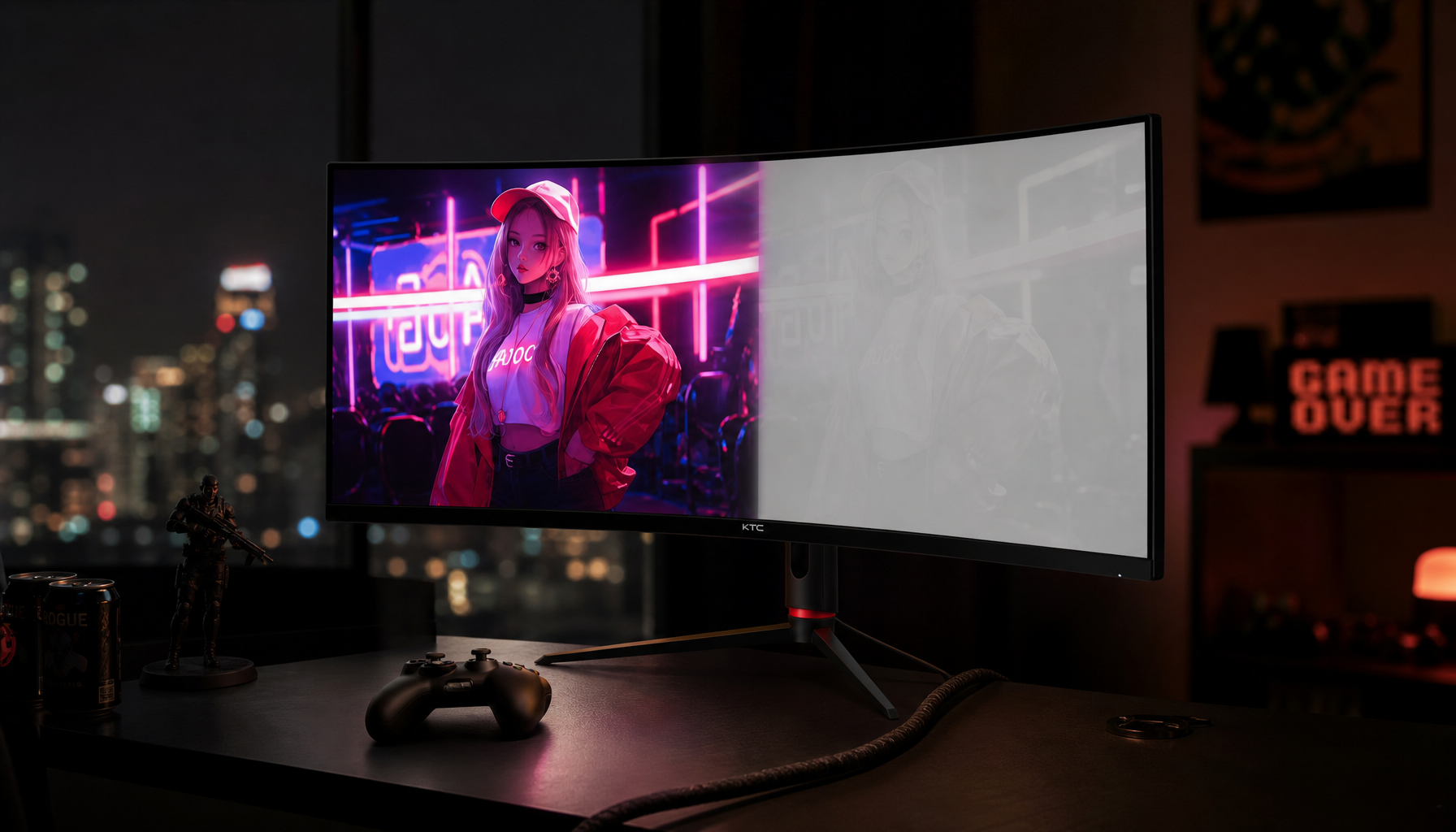
One HDR versus SDR gaming comparison documented a useful warning: the SDR display initially looked unusually weak, but after a factory reset, the side-by-side comparison became more balanced. That test showed how easily SDR monitor settings can distort the conclusion when brightness, contrast, or gamma have been altered.
For a real-world monitor buyer, this means a dramatic HDR demo is not proof that HDR is accurate. It may simply mean SDR was handicapped, HDR was in a showroom-style preset, or the content was graded to favor a specific display.
The Display Pipeline Problem
Content, App, OS, GPU, Cable, and Panel All Matter
HDR is a chain. The content must be HDR. The app must output HDR properly. The operating system must be in the right mode. The GPU driver must support the format. The cable and port must carry the signal. The monitor must understand the metadata and tone-map within its actual brightness and gamut limits.
The HDR-capable interface requirement is not just a spec-sheet detail. HDMI 2.0a, DisplayPort 1.4, and newer standards can carry HDR metadata, while older links or adapters may limit refresh rate, bit depth, chroma format, or HDR signaling. On a productivity desk with a laptop dock, one weak adapter can be the difference between clean HDR and a strange-looking compromise.

Browser playback adds another layer. The curated browser HDR resources show that HDR support varies by browser, image format, video format, and platform. If a web page, streaming site, or browser does not handle HDR metadata correctly, your monitor may not be the main problem.
Calibration Is Harder in HDR Than SDR
SDR calibration is mature. You set a target brightness, white point, gamma, and gamut, then build a profile with a colorimeter. HDR calibration is more constrained because consumer displays often lock parts of their HDR processing.
One HDR calibration discussion is blunt about this gap: professional HDR grading displays can support controlled 3D LUT workflows, while many consumer HDR TVs and monitors offer limited manual adjustment. That matters because HDR calibration is often restricted by fixed tone curves, factory EOTF behavior, and manufacturer processing that cannot be fully disabled.
Color-management community guidance points to a similar practical issue: SDR ICC workflows do not automatically describe HDR behavior across higher luminance ranges. The HDR monitor calibration problem is that applying an SDR correction curve in HDR can create strange grayscale or color behavior, especially when the display behaves differently in HDR mode than in SDR mode.
How to Tell Whether HDR Is Really the Problem
Start with the monitor preset. Use a neutral mode such as Custom, User, Standard, sRGB for SDR, or the certified HDR mode for HDR if your display provides one. Avoid Vivid, Dynamic Contrast, Black Equalizer extremes, and extra saturation controls while testing. Once the image is stable, you can add preference tweaks carefully.

Next, verify that HDR is active at the operating-system level and in the app. HDR setup guidance recommends checking the HDR toggle for the correct display, updating GPU drivers, and using a real HDR test clip or app. A streaming video should show an HDR label in the quality menu when genuine HDR playback is working.
Then compare content types. Use one known HDR movie scene, one HDR game with built-in calibration, one SDR desktop app, and one SDR photo. If only the desktop looks strange, the issue is likely SDR-in-HDR mapping. If only one game looks strange, the game’s HDR calibration or artistic grade is the likely cause. If everything looks exaggerated, the monitor preset or color mode is probably too aggressive.
Symptom |
Likely Cause |
Practical Fix |
Skin tones look red or orange in HDR |
Saturation boost or wrong color temperature |
Return saturation to default and target a neutral white point |
HDR highlights are bright but lose detail |
Tone mapping or clipping |
Lower in-game HDR peak brightness or use the display’s certified HDR mode |
SDR desktop looks dull when HDR is on |
SDR brightness balance mismatch |
Adjust SDR content brightness in OS HDR settings |
SDR content looks neon in normal mode |
Wide-gamut panel stretching sRGB |
Use sRGB or Rec.709 mode for SDR work |
One HDR game looks bad but movies look fine |
Game-specific HDR grade or calibration |
Run the game’s HDR setup and disable extra display tone mapping if available |
Practical Settings for Gaming, Office Work, and Portable Screens
For competitive gaming, accuracy and visibility matter more than maximum spectacle. Use HDR only in games with good native HDR support and calibration screens. Set the game’s peak brightness close to your display’s real capability, not the biggest number available. If your monitor peaks around 600 nits, setting a game to 2,000 nits may force harsh compression and make bright effects look flat or colorless.
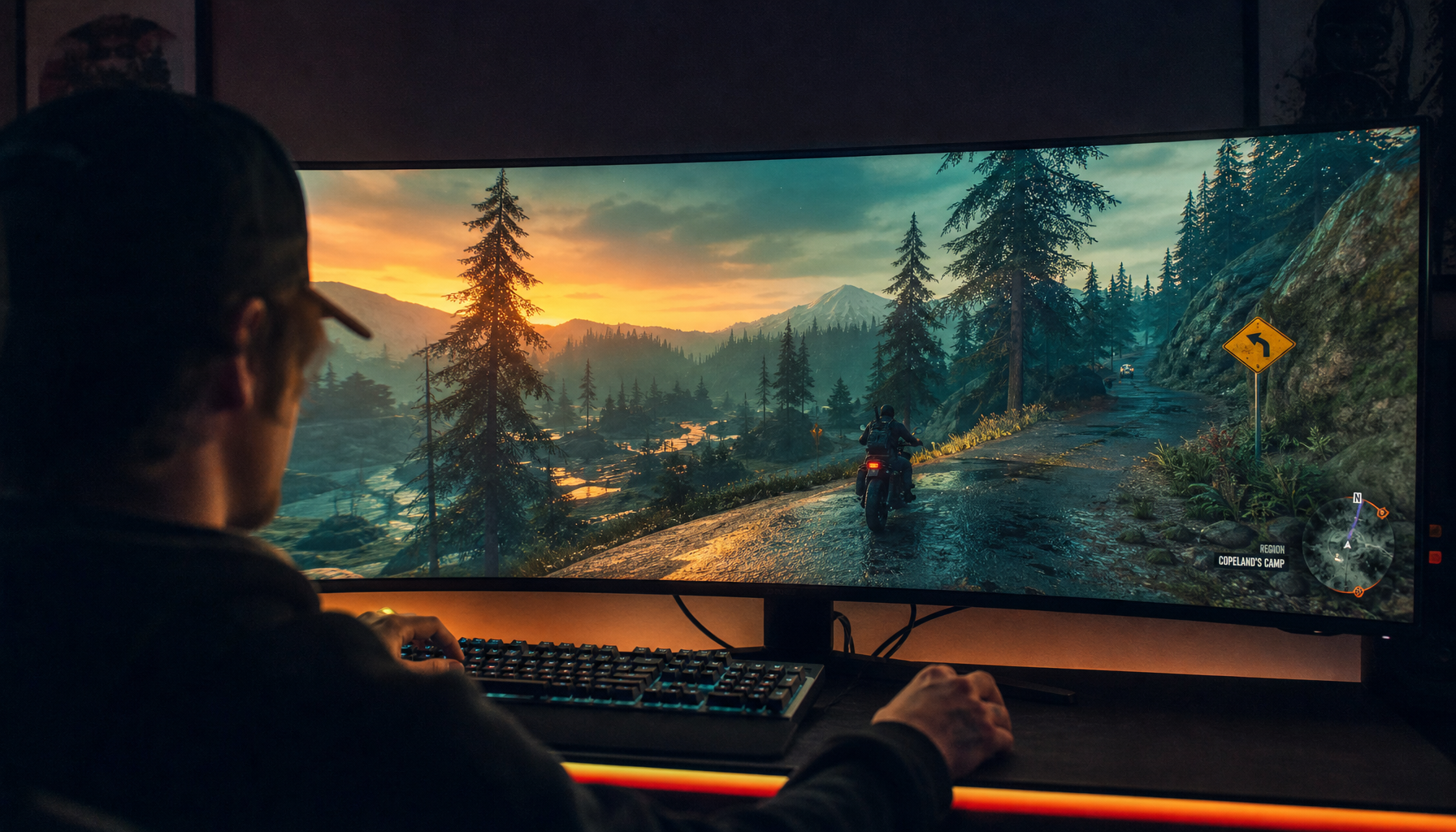
For single-player and cinematic gaming, HDR can be a major upgrade when the display has enough contrast. OLED panels benefit from deep blacks, while strong mini-LED monitors can make bright highlights feel convincing. The best result usually comes from leaving saturation at default, setting black level so near-black detail is barely visible, and avoiding shadow-boost features unless the game is too dark to play.
For office productivity, HDR is often optional. Documents, spreadsheets, email, and most web tools are SDR-first. If HDR mode makes your white background uncomfortable or your UI colors inconsistent, use SDR during the workday and switch to HDR for games or movies. That is not a downgrade; it is choosing the right color system for the job.

Portable smart screens need extra scrutiny. Many accept HDR signals but have limited brightness and contrast because they run from compact power budgets. On those displays, HDR can look washed out or oversaturated depending on how aggressively the screen maps the signal. If you use a portable monitor for a laptop, check whether the USB-C port, cable, and GPU output support HDR at the resolution and refresh rate you want.
Pros and Cons of Leaving HDR On
HDR’s upside is real. It can deliver stronger highlight detail, smoother gradients, richer color, and a more lifelike sense of depth when the content and display are matched. For movies, modern console games, and high-end PC gaming, a well-tuned HDR image can feel less like a brighter SDR picture and more like a window with better light control.
The downside is consistency. SDR remains more predictable across office apps, browsers, budget monitors, capture devices, and older content. HDR can also use more bandwidth and expose weak links in the setup, from old cables to underpowered panels. The value move is not to force HDR everywhere, but to build two reliable modes: calibrated SDR for daily work and clean HDR for media and games.
A Better Way to Think About Oversaturation
Oversaturation is not always “too much HDR.” It is usually a mismatch between color space, tone mapping, preset behavior, and content mastering. Color guidance from the capture side makes the same creative point: oversaturation happens when color intensity is pushed beyond what feels accurate or natural.
On a monitor, the engineering version is simple: every color should have a job. HDR should make a laser blast, sunset reflection, or chrome highlight more convincing, not turn every menu icon and face into a demo reel.
FAQ
Should I use HDR all the time on my computer?
Use HDR all the time only if your monitor, apps, and brightness settings remain consistent. Many users get better results by using SDR for office work and enabling HDR for supported games, movies, and streaming apps.
Is an sRGB mode better than HDR?
For SDR content creation, web design, office work, and accurate everyday color, sRGB mode is often the better choice. HDR is better when the content is mastered for HDR and the display has enough brightness, contrast, and color volume to show it properly.
Does higher brightness always fix HDR oversaturation?
No. More brightness can improve HDR impact, but it does not fix wrong gamut mapping, a vivid preset, bad tone mapping, or poor calibration. A 1,000-nit display in the wrong mode can look less accurate than a dimmer display set up correctly.
A strong HDR setup should feel controlled: brighter where the creator intended, deeper where the scene needs contrast, and richer without turning color into noise. Start neutral, verify the signal path, then tune for your room and use case. That is how HDR becomes an upgrade instead of a distraction.