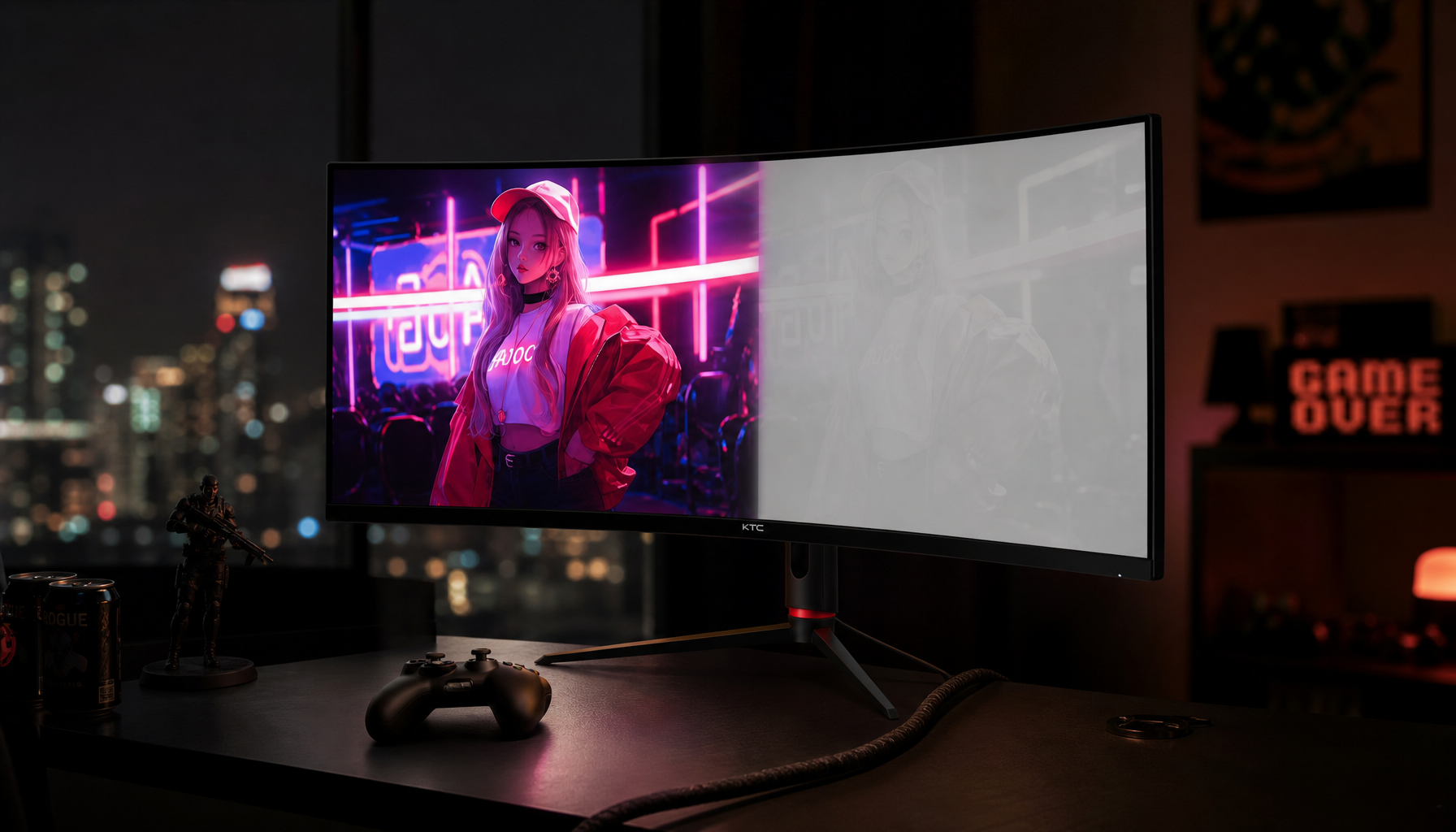
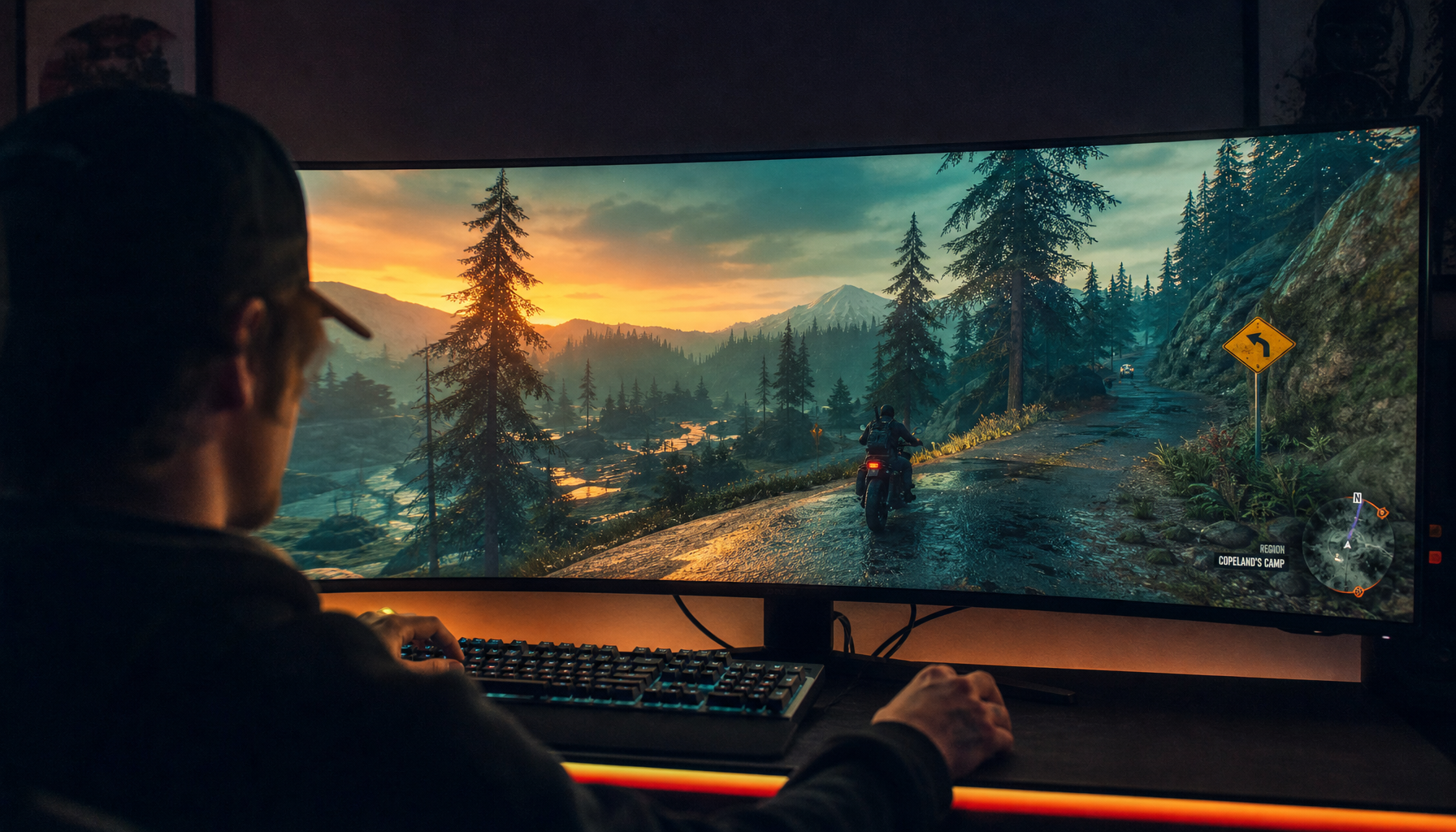
Dark scenes change because your eyes, the game engine, your monitor, HDR processing, and room lighting all adjust or are perceived differently over time. The first glance is usually a shock test; the adapted view is closer to what your setup actually lets you see.
Is that cave, hallway, or night map unreadable for the first few seconds, then suddenly full of shapes once you settle in? A practical calibration pass can separate a bad monitor setting from normal visual adaptation before you over-brighten the whole game. You’ll learn why the image shifts, which settings matter, and how to tune dark scenes without ruining contrast.
The Short Answer: Your Eyes Are Not the Only Thing Adapting
When you move from a bright menu, desktop, skybox, or office window into a dark game scene, your visual system needs a moment to become more sensitive to low light. At the same time, many modern games use camera-like exposure systems that brighten or darken the rendered scene to simulate how human vision adjusts. That means the image you first see may not be the image the game, monitor, and your eyes settle into seconds later.
The monitor then adds its own layer. Brightness, contrast, gamma, black level, HDR mode, panel contrast, local dimming, and room glare all decide whether near-black detail is visible or crushed. Dark-scene complaints often come from this chain, not from a single “too dark” slider. A TV or monitor’s brightness controls the black level, so raising it may reveal hidden detail, but it can also turn convincing blacks into gray fog.
What First Glance Really Means in a Game

Your first glance is a high-contrast transition event. You may be coming from a bright loading screen, a white browser window, a map overlay, or a sunlit in-game exterior. In that instant, dark textures, silhouettes, and doorway edges can look merged together because your perception is still biased toward the brighter view you just left.
Game engines often reinforce this effect. Many titles simulate exposure adaptation, so a torchlit tunnel, a moonlit street, or a bunker interior may intentionally shift over a second or two. In practice, you can test this by standing still at the edge of a dark area, staring at the center of the scene, and watching whether shadow detail appears without touching the monitor controls. If it does, the game’s exposure behavior and your visual adaptation are both part of the experience.
This is why a horror game can feel darker than a screenshot. Streams and screenshots are imperfect references because capture tools, compression, tone mapping, and the viewer’s display can flatten shadows. If a friend’s footage looks brighter, they may be using a different gamma curve, black equalizer, HDR mode, or panel type.
Why the Scene Looks Better After a Few Seconds
After a short adjustment period, you start distinguishing dark gray from black. In display terms, that is near-black separation. It is the ability to see the difference between a black wall, a dark coat, a shadowed doorway, and a crouched opponent. If your monitor preserves those steps, your eyes can use them. If your settings crush them into one block, adaptation will not rescue much.
Gamma is a major reason this changes so dramatically. Gamma controls how the image moves from black to white, especially in shadows and midtones. A typical gamma target around 2.2 is common for general viewing, while darker rooms may tolerate a slightly deeper look. Incorrect gamma adjustments, however, can make shadow detail disappear or make the image look flat.
For example, if you raise brightness until a cave looks clear the instant you enter it, the rest of the game may become washed out. If you instead leave brightness near a calibrated level and make a mild gamma or black-detail adjustment, the cave may still feel dark, but the edges of crates, stairs, and enemy silhouettes remain readable after your eyes settle.
Monitor Settings That Change Dark-Scene Perception

The most useful dark-scene controls are not interchangeable. Brightness affects black level on many displays, contrast affects bright detail, gamma shapes shadows and midtones, and backlight or OLED brightness changes overall light output. HDR adds another layer because the display must map a wider brightness range to what the panel can actually produce.
Control |
What It Changes |
Benefit |
Risk |
Brightness or black level |
The darkest visible tones |
Reveals hidden shadow detail |
Washed-out gray blacks |
Contrast |
Bright whites and highlights |
More punch and separation |
Clipped clouds, lamps, HUD glow |
Gamma |
Shadow and midtone curve |
Better cave, night, and interior visibility |
Flat image or crushed dark tones |
Backlight or OLED brightness |
Overall screen light output |
Better match to room lighting |
Eye fatigue or dull image |
HDR mode |
Brightness, contrast, and color mapping |
More realistic highlights on capable displays |
Muddy shadows on weak HDR monitors |
HDR deserves caution. HDR can make dark scenes more cinematic when the monitor has enough brightness, contrast, and local dimming or self-lit pixels. But HDR settings can affect how bright content appears, and low- to mid-range displays may render HDR games darker, flatter, or more artifact-heavy than a well-tuned SDR mode.
Panel Type Matters More Than Many Players Expect

An IPS monitor can be fast, sharp, and excellent for mixed work and gaming, but its native contrast is often weaker than VA or OLED. In a dark room, that can make horror games, extraction shooters, and night missions look gray or hazy. VA panels usually deliver deeper blacks for the money, but fast dark transitions can smear on some models. OLED is the premium dark-scene benchmark because individual pixels can switch off, creating extremely deep blacks and strong contrast.
That does not mean every player should buy OLED. The right monitor still depends on GPU power, game genre, desk use, and budget. Current gaming monitor buying advice continues to emphasize matching resolution and refresh rate to your hardware, and OLED is praised for contrast, response time, and rich color, while price and burn-in protection still matter.
For a value-oriented mixed setup, a 27-inch 1440p IPS or VA display at 144 Hz to 165 Hz is often the practical middle ground. For cinematic single-player games, OLED or a strong mini-LED display has a visible advantage in caves, space scenes, and night lighting. For competitive shooters, you may accept less cinematic black depth in exchange for high refresh rate, low response time, and clearer boosted shadows.
Room Lighting Can Make or Break Dark Scenes

A monitor cannot beat glare. A dim horror level on a glossy or semi-gloss screen will look worse if a lamp, window, or colored light strip reflects into the panel. Dark scenes often look muddy because ambient light lowers perceived contrast, even when the monitor is technically showing the detail.
A softly lit room usually works better than total darkness. Complete darkness can make a bright HUD feel harsh and can increase fatigue during long sessions, while harsh lighting can bury shadow detail. Eye-care guidance for gamers commonly recommends a softly lit room, an arm’s-length viewing distance, and breaks because extended play can contribute to digital eye strain.
For desktop monitors, bias lighting behind the display is a high-value fix. Use a soft, neutral light behind the screen, keep it out of your direct view, and avoid colored lighting that changes your perception of whites and grays. If a dark scene becomes easier to read without changing in-game brightness, your issue was partly environmental.
A Better Calibration Order for Dark Games

Start with the basics before touching dark-scene enhancers. Set the display to its native resolution, confirm the highest practical refresh rate in your operating system or GPU panel, and use the correct cable for your target resolution and refresh. Many high-refresh displays still default to 60 Hz after setup or driver changes, which makes motion clarity worse and can make fast dark scenes harder to parse.
Next, choose a neutral picture mode such as User, Custom, or Game. Set color temperature near 6500K if available, leave sharpness near default, disable dynamic contrast for testing, and use gamma around 2.2 as a baseline. Gaming and work display guidance commonly recommends matching brightness to the room, using refresh rates of 120 Hz to 240 Hz for smoother gaming when available, and enabling sync features where appropriate to reduce tearing and motion disruption.
Then tune from the game outward. Use the in-game brightness or HDR calibration screen first, because it knows the game’s intended black floor and highlight range. If shadows remain too deep across multiple games, adjust monitor gamma or black level lightly. If only one game looks wrong, leave the monitor alone and fix that title’s settings.
When to Use Black Equalizer, Shadow Boost, or FPS Modes
Competitive dark-boost features are tools, not accuracy settings. They lift shadow regions so enemies in corners, windows, and hallways appear sooner. That can be useful in tactical shooters, battle royale endgames, and older games with poor black-level tuning.
The tradeoff is depth. Push black equalizer too far and night scenes lose atmosphere, smoke loses density, and cinematic lighting looks artificial. For productivity and content work, these modes can also distort photos, videos, and UI contrast. A good compromise is to create separate profiles: one neutral profile for work and story games, one visibility profile for competitive play, and one comfort profile for late-night sessions.
If your monitor supports profile hotkeys or software switching, use them. A single global setting is rarely ideal for spreadsheets at 10:00 AM, a competitive match at 8:00 PM, and a dark RPG dungeon at midnight.
Eye Adaptation, Fatigue, and Performance
Your eyes may adapt to darkness, but fatigue still changes how well you read motion and contrast. Long sessions reduce blinking, dry the eyes, and make focusing harder. A 2024 systematic review found that action video game research shows mixed evidence for reliable changes in eye-movement behavior, with only 13 included eye-tracking studies and limited randomized intervention evidence on eye movement behavior. In plain terms, playing fast games does not make you immune to bad display ergonomics.
A practical setup beats endurance. Keep the screen slightly below eye level, avoid glare, take short distance-focus breaks, and avoid running a monitor at maximum brightness in a pitch-black room. For ultrawide or large 4K displays, sit far enough back that you can scan the center and corners without constant head movement. If you are leaning forward every time the game gets dark, the setup is asking your eyes to solve a hardware problem.
Quick Diagnosis: Normal Adaptation or Bad Setup?
If the scene becomes readable after a few seconds and still keeps rich blacks, you are probably seeing normal adaptation plus intentional game exposure. If it stays unreadable, check in-game gamma, HDR calibration, and black level. If raising brightness helps one game but ruins everything else, the game setting is the better target. If every dark scene across games, movies, and browser video looks crushed, your monitor or GPU-level settings need attention.
If HDR makes the desktop, menus, or SDR games look washed out, test SDR. Some displays advertise HDR but lack the brightness and contrast control to make it convincing. Dark-scene quality is not just an HDR checkbox; it is the combined result of panel contrast, tone mapping, local dimming, and calibration.
Final Word
Dark game scenes should feel dark, not unreadable. Let your eyes adapt, but make the monitor earn that adaptation with sane gamma, controlled room light, correct HDR use, and a panel suited to the games you actually play. The best setup preserves tension and immersion while still letting you see the next step, target, or doorway when it matters.