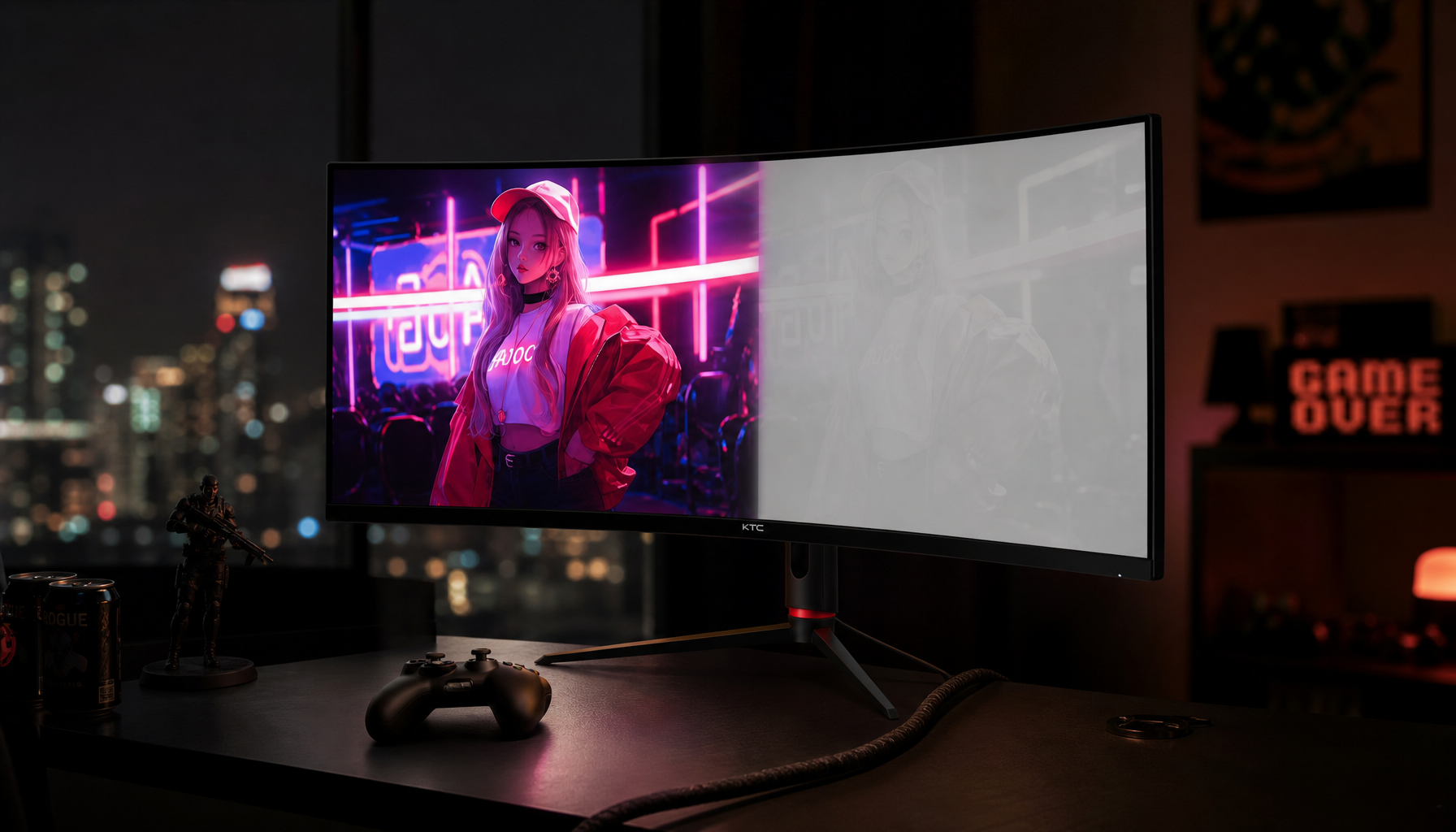
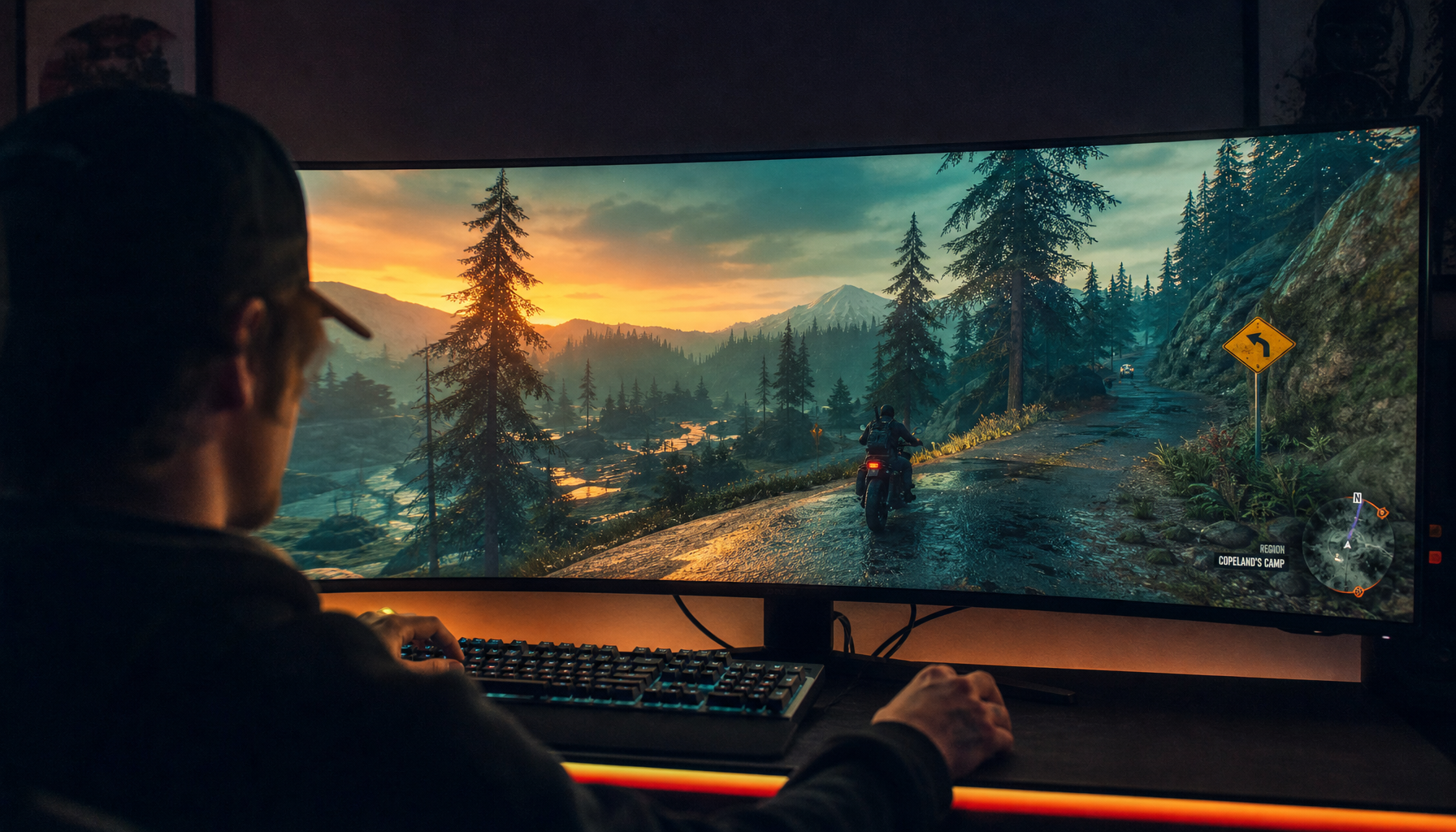
The same HDR badge sets a floor, not a full picture, so two monitors can meet the same certification and still deliver very different highlight impact.
You have probably seen this in real shopping: one gaming monitor makes sunlight, neon signs, and spell effects pop, while another with the same HDR label looks flat or oddly restrained. The gap usually comes from real brightness, dimming behavior, tone mapping, and setup, not from the badge alone. What follows is the practical way to judge HDR highlights on gaming monitors, ultrawides, and portable displays before you buy.

What the HDR Certification Actually Tells You
An open HDR certification standard for monitors does measure meaningful basics: peak luminance, black level, contrast, color gamut, bit depth, and color error. That matters because the monitor market still mixes formal certifications with vague labels, and the standards body explicitly warns that names like HDR-400 are not the same thing as a formally certified 400-tier label. For shoppers comparing gaming monitors, that means a verified badge is more useful than loose marketing language.
The problem is that certification is only a baseline. This certification was created because consumers often lacked meaningful HDR performance information, and even now the badge does not tell you everything about how highlights will look in actual games or movies. A monitor can pass the minimum for its tier and still differ in local dimming quality, sustained brightness, tone mapping, factory calibration, or panel behavior.
That is why two monitors with the same tier can feel far apart in use. Certification tiers from 400 through 1400, along with deep-black tiers from 400 through 1000 cover broad classes of performance, but they do not guarantee the same real-scene brightness or the same small-highlight punch. For monitor buyers, the certification is best treated as the starting filter, not the final decision.
Why Peak Brightness Alone Does Not Predict Highlight Pop
Real-world brightness matters more than a peak number on the box. HDR highlights only look dramatic when bright objects stand out against darker image areas, and that requires both enough luminance and enough contrast control. Many mid-range monitors can hit a headline number on a tiny test window, then drop hard when more of the screen turns bright.
That is why sustained brightness matters so much. The certification program’s own buying guidance notes that a display may hit 1,000 nits on only about 2% to 3% of the screen and still behave very differently from a monitor that can hold high brightness across larger areas. In practice, a racing game’s sun reflection, a snowy open-world scene, and a bright HUD-heavy shooter all stress the panel differently. A monitor that only flashes small highlights well may look impressive in demos and underwhelming in actual play.
The buying shortcut is straightforward: avoid assuming that equal certification means equal brightness behavior. The standards body’s testing framework includes more than one peak test, but shoppers still need to check whether a monitor holds brightness over time and over larger screen areas. For most monitor buyers, a 500-tier certification is the lowest sensible entry point, while 600-tier and above are much safer if HDR is a real priority.
Panel Type and Dimming Design Change Everything
OLED and mini-LED monitors can share a similar HDR badge and still look very different. OLED controls light per pixel, so blacks stay extremely dark and bright objects have clean separation. Mini-LED LCDs usually win on full-screen brightness, which helps in bright rooms and on large bright scenes, but their results depend heavily on how many dimming zones they use and how well the algorithm controls blooming.

That difference is especially visible on high-refresh-rate gaming monitors. One tech publication’s monitor guidance argues that OLED produces the strongest HDR effect because self-emissive pixels can switch fully off, giving highlights more contrast. By contrast, many budget LCD gaming monitors with HDR support lack enough local dimming to make explosions, headlights, or specular reflections stand out cleanly.
For LCD buyers, zone count matters more than many spec sheets admit. The certification program’s own comparison advice says fewer than 100 zones offers limited benefit, while 500 or more is preferable for stronger HDR. If you are choosing between a 240 Hz OLED esports monitor and a 240 Hz mini-LED LCD, the OLED will usually look cleaner in dark scenes, while the mini-LED may hold brighter full-screen highlights in daylight or a bright room. The better choice depends on your room and the kinds of games you actually play.
Tone Mapping and Desktop Setup Can Make a Good Monitor Look Bad
Turning HDR on in a desktop operating system does not fully configure HDR correctly. A desktop operating system can output an HDR signal while still guessing peak brightness, full-screen luminance, and SDR mapping if the monitor is not calibrated. That is a major reason one certified monitor can look washed out on one desk and excellent on another.
The practical fix is calibration. A major software company’s HDR guidance recommends using an HDR-capable display, enabling Use HDR, and working with supported modern digital video connections. Another tech publication goes further by recommending a desktop HDR calibration app, which sets minimum luminance, maximum luminance, maximum full-screen luminance, and color saturation for that specific monitor. On many gaming and ultrawide monitors, lowering the SDR content brightness slider also reduces the common washed-out desktop effect.

Real users run into this constantly. One October 21, 2024 report from a gamer using a desktop operating system described HDR looking less vibrant in fullscreen but more vivid after alt-tabbing or switching to windowed mode, despite HDR being enabled in the operating system, the game, and the monitor OSD. That kind of inconsistency is exactly why two displays with similar certifications can produce very different-looking highlights in actual play: the operating system, the game, and the monitor’s own tone mapping can all fight each other.
The Same Badge Means Different Things for Gaming, Ultrawide, and Portable Monitors
All tiers in this certification require support for a common HDR format, but the right tier depends on the category of monitor you are buying. A 27-inch high-refresh-rate gaming monitor used mostly at a desk in a dim room can look excellent with an OLED deep-black 400-tier or deep-black 600-tier panel because the black floor is so low. A bright-room ultrawide used for sim racing or open-world games may benefit more from a brighter mini-LED LCD that can sustain stronger luminance across larger parts of the screen.

Ultrawides make this tradeoff more obvious because the screen covers more of your field of view. The certification program’s own guidance notes that mini-LED often maintains much higher full-screen brightness, while most OLEDs drop sharply as bright areas expand. On a wide cockpit view, snow map, or sunlit desktop, that difference is easier to notice than on a smaller screen with isolated highlights.
Portable monitors are the hardest category. A major software company’s support page says built-in HDR video displays should at least reach 300 nits, but for a portable panel that number is only enough for basic HDR compatibility, not convincing highlight impact. If you are buying a portable monitor for a laptop or handheld gaming setup, treat HDR support as a bonus unless third-party measurements confirm much stronger brightness and good tone mapping.
What to Compare Beyond the Badge
Here is the fastest way to compare HDR monitors once you have filtered for a real certification:
Factor |
Why it changes highlights |
Better sign for buyers |
Weak sign |
Certification tier |
Sets the minimum HDR floor |
500-tier or higher for LCD, deep-black tiers for OLED |
Marketing labels like HDR-400 |
Peak brightness |
Controls small highlight punch |
Higher measured peak on 2% to 10% windows |
Box-only nit claim |
Sustained/full-screen brightness |
Affects large bright scenes and bright rooms |
Strong full-screen luminance and low brightness drop |
Sharp dimming on large bright areas |
Black level and contrast |
Determines how much highlights stand out |
OLED blacks or strong mini-LED dimming |
Gray blacks on basic LCDs |
Local dimming quality |
Reduces blooming and improves separation |
Full-array or 500+ zones on mini-LED |
No dimming or weak edge-lit dimming |
Preserves highlight detail and avoids washout |
Good factory tuning plus desktop HDR calibration |
Default HDR mode with no setup |
|
Panel type |
Shapes overall HDR character |
OLED for dark-room contrast, mini-LED for bright-room punch |
Standard LCD with minimal dimming |
The standards body’s open test framework is useful because it proves certification is more than random marketing, but it still does not replace direct measurement of sustained brightness and dimming performance. A spec sheet that spells out Mini LED and 1152 zones, as on a 27-inch 180Hz 2K HDR gaming monitor, already tells you more about likely highlight control than the certification badge alone. For gaming monitor shoppers, the practical order is: verify certification, check measured brightness behavior, confirm panel type, then look at dimming and calibration results.
That approach also helps with refresh-rate tradeoffs. Monitor buyers debating refresh rate versus image quality are often really deciding whether motion performance is worth giving up contrast, uniformity, or HDR. If you mainly play RPGs, racers, sims, or cinematic single-player games, stronger HDR image quality may improve the experience more than jumping from 240 Hz to an even higher refresh rate on a weaker panel.
FAQ
Q: Can two 600-tier certified gaming monitors really look very different?
A: Yes. A 600-tier certification guarantees a minimum class of HDR performance, but it does not ensure identical full-screen brightness, local dimming quality, tone mapping, or factory tuning. One monitor may make highlights look punchy and controlled, while another may bloom more or dim harder in bright scenes.
Q: Is 400-tier certified HDR enough for real HDR gaming?
A: Usually not if HDR is a priority. One tech publication’s real-world advice says a 600-tier certification is the practical entry point and a 1000-tier certification is where HDR starts to feel truly convincing. A 400-tier certification is often only a modest step up from SDR on LCD gaming monitors.
Q: Should I leave HDR on all the time in a desktop operating system?
A: Only if your monitor is calibrated and you like how SDR content looks in HDR mode. Desktop HDR setup guidance shows that desktop washout often comes from poor SDR-to-HDR mapping, and many users still toggle HDR by game or workflow.
Final Takeaway
The safe buying rule is simple: treat HDR certification as a screening tool, not proof of identical highlight quality. For gaming monitors and ultrawides, the best predictors of standout HDR highlights are measured sustained brightness, strong contrast, effective local dimming or per-pixel light control, and proper calibration.
If you want the shortest path to a better purchase, start with verified HDR certification, skip vague HDR branding, aim for 500-tier or higher on LCD or a credible deep-black OLED tier, and prioritize reviews or test data that show full-screen brightness behavior. That is the difference between a monitor that merely accepts an HDR signal and one that makes HDR highlights actually look worth paying for.
References
- HDR certification overview
- Certified HDR program
- Not all HDR is created equal
- What is HDR in a desktop operating system?
- HDR tiers and formats
- Why refresh rate matters less than other monitor features
- Why monitor HDR settings are often wrong on a desktop operating system
- Washed-out HDR user report
- HDR test methodology discussion
- Refresh rate versus image quality discussion
- HDR calibration and support discussion
- HDR tiers and rule changes discussion