A 21:9 ultrawide monitor is built for wider cinematic and PC desktop experiences, while most everyday video is still framed for 16:9. That mismatch creates black bars, side bars, or boxed-in video unless the image is cropped, stretched, or processed.
You open a standard video on a video platform, a game console menu, or a streaming show on a beautiful ultrawide display, and suddenly a chunk of the screen is just black space. The practical benefit of understanding this is simple: you can predict when a 21:9 monitor will feel immersive and when it will waste panel space. Here is how the aspect-ratio mismatch works, what fixes actually do, and when an ultrawide monitor is still the right buy.
The Real Reason 21:9 Does Not Fit Standard Video
A 21:9 ultrawide monitor is not literally 21 divided by 9. The common “21:9” label is a marketing term for a roughly 2.37:1 screen shape, close to the 64:27 ratio used to approximate cinema formats such as widescreen theatrical formats 21:9 label. That is why ultrawide monitors can make wide movies look fantastic: they are physically closer to the shape of many theatrical films than a standard 16:9 display.
The problem is that most standard video is not that wide. Full HD video is commonly delivered at 1920 x 1080, which is 16:9, and many online videos, console games, TV shows, and live streams are built around that rectangle Full HD. When a 16:9 picture appears on a wider 21:9 monitor, the monitor has extra horizontal space that the video was never meant to fill.
Letterboxing, Pillarboxing, and Windowboxing

People often call all black bars “letterboxing,” but the exact bar placement matters:
Display or content mismatch |
What you see |
Why it happens |
Common result |
2.39:1 movie on 16:9 screen |
Black bars top and bottom |
Movie is wider than the screen |
Letterboxing |
16:9 video on 21:9 monitor |
Black bars left and right |
Video is narrower than the screen |
Pillarboxing |
2.39:1 movie inside a 16:9 stream on 21:9 monitor |
Bars on all sides |
Movie is letterboxed inside a standard video container |
Windowboxing |
16:9 video stretched to 21:9 |
No bars, distorted image |
Width is expanded without matching height |
Faces and objects look too wide |
16:9 video cropped to 21:9 |
No side bars, missing image |
Top and bottom are cut off |
Subtitles, UI, or heads may be clipped |
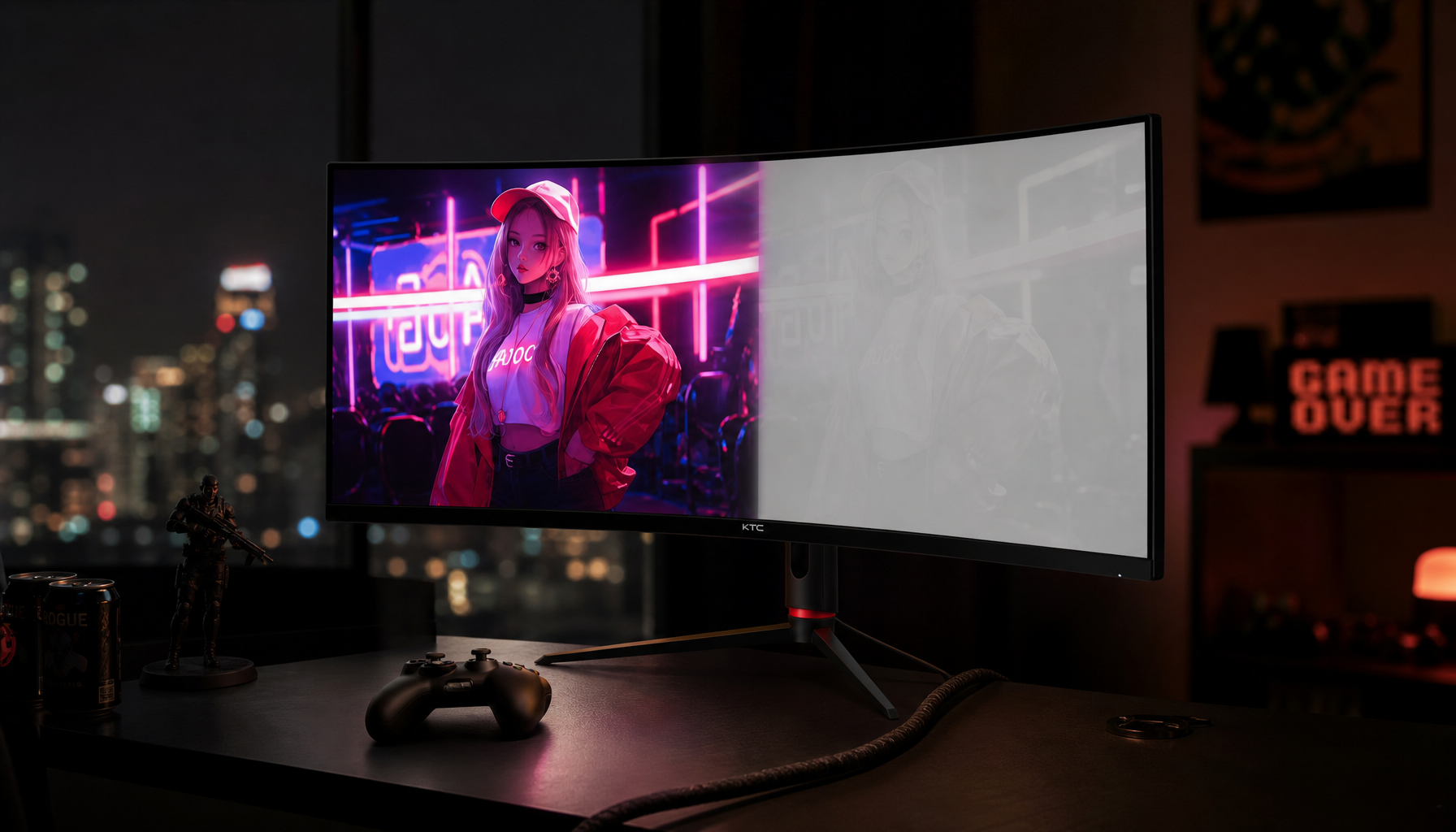
On a 21:9 monitor, standard 16:9 content usually creates pillarboxing, not traditional letterboxing. It feels awkward because the display is marketed as “more screen,” yet standard video may use only the middle portion of that wider panel.

Why Movies Can Look Better Than Everyday Video

The strongest media argument for a 21:9 ultrawide monitor is cinematic film playback. Many modern blockbuster films are mastered near 2.39:1, and a 21:9 monitor closely matches that wide presentation, so the image can fill much more of the screen without top-and-bottom bars 2.39:1 movies. If your movie library leans heavily toward widescreen action, science fiction, or superhero films, a 34-inch ultrawide can feel more theater-like than a similarly priced 16:9 monitor.
But that advantage is content-specific. Comedies, dramas, older films, TV series, live sports, tutorials, video calls, and most creator videos are often 16:9 or close to it. On a 21:9 display, those formats sit in the center with black side bars unless the player or monitor changes the image.
The Disc and Streaming Catch
Even some “ultrawide” movies do not arrive as a clean ultrawide signal. A disc format and some streaming platforms may store a wide movie inside a 16:9 frame, with black bars baked into the video container disc media. On a 21:9 monitor, that can create windowboxing: black bars above, below, left, and right.
This is why two movies with the same visible cinematic shape can behave differently on the same monitor. One may scale neatly across the panel, while another may need zooming, browser extensions, or player-level crop controls to remove the baked-in bars.
Can You Fix the Black Bars?
You can reduce or hide black bars, but every method has a tradeoff. A monitor, media player, browser extension, or GPU driver can stretch, crop, zoom, or scale the image, but none of those options magically creates original picture information that was not in the video.
Stretching is the least desirable fix. It fills the screen, but it changes the geometry of the image, making faces, cars, game HUDs, and text look wider than intended. For a display buyer who cares about image quality, color accuracy, or cinematic presentation, stretching defeats the reason to buy a good monitor in the first place.
Cropping Is Cleaner, but It Cuts Content
Cropping can look more natural than stretching because it preserves proportions. The tradeoff is that a 16:9 video cropped to fill 21:9 loses information from the top and bottom of the frame. That may be tolerable for some talk videos, but it can damage subtitles, sports scoreboards, game UI, movie framing, or tutorial steps.
Browser extensions can help with windowboxed streaming video by zooming the picture, but they are not always perfect. Some services restrict playback quality because of DRM, and ultrawide playback through extensions may be limited to 1080p in certain cases browser extensions. If you bought a high-refresh-rate 3440 x 1440 monitor partly for premium streaming, that limitation can be more frustrating than the bars themselves.
Ultrawide Makes More Sense for Gaming and Work Than Standard Video

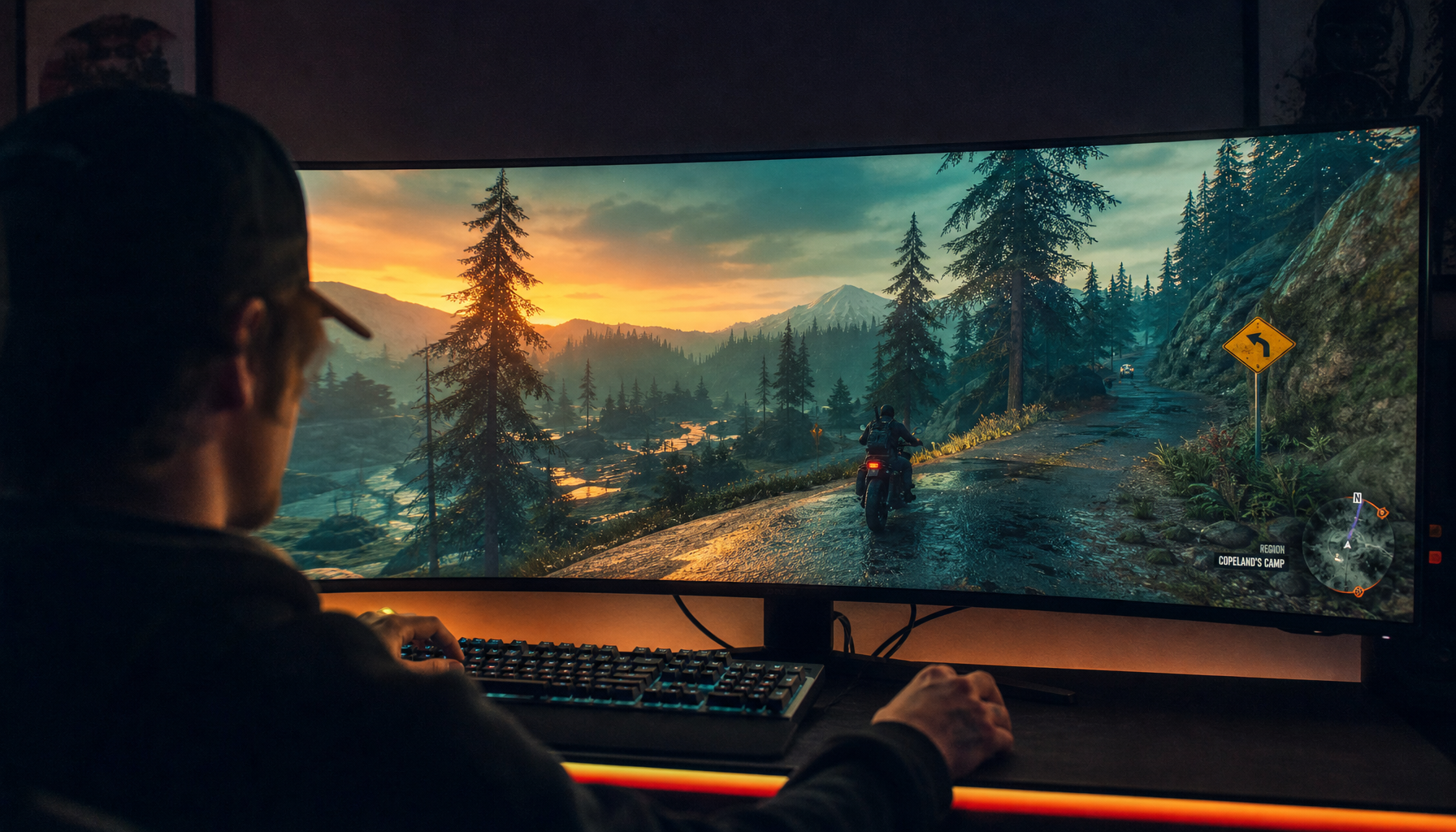
The 21:9 format often earns its keep outside video playback. On a desktop, the extra width gives you room for a browser, notes, chat, spreadsheets, timelines, or editing panels without the center bezel of a dual-monitor setup. For PC gaming, many titles support ultrawide resolutions and provide a broader field of view, which can feel more immersive on racing games, flight sims, RPGs, and cinematic single-player titles.
The important distinction is input format. A PC can render a game or desktop at the monitor’s native ultrawide resolution. Standard video cannot do that unless it was created, mastered, or delivered in that shape. That is why a 21:9 monitor may feel expansive in a game at 3440 x 1440, then oddly constrained when you switch to a 1920 x 1080 video.
Console and Streaming Buyers Should Be Careful
If your main use is a game console, another game console, streaming box, or TV-style content, a 16:9 monitor is usually the safer fit. Most console output and streaming interfaces are designed around 16:9, so a 21:9 monitor may spend a lot of time showing unused side space.
For a PC-first setup, the tradeoff can still be worth it. A 21:9 ultrawide is strongest when your day includes multitasking, ultrawide-supported games, video editing timelines, or wide movies. It is weaker when your main activity is full-screen standard video.
How to Choose Before Buying
The most practical way to decide is to audit your actual screen time. If 70% of your use is PC work, ultrawide gaming, and wide-format films, a 21:9 monitor can make sense. If 70% is video platforms, live sports, console gaming, sitcoms, or video calls, a high-quality 16:9 monitor may feel more consistently full-screen.
Also consider screen size, not just aspect ratio. A 34-inch 21:9 monitor is wide, but its video height is similar to a smaller 16:9 display. That means a standard 16:9 video may not look as large as you expect because the video is limited by height, with unused space on both sides.
Action Checklist
- Check your top five video sources and confirm whether they usually play in 16:9, 1.85:1, 2.39:1, or another format.
- If you watch mostly standard video, prioritize a 16:9 monitor with better contrast, refresh rate, or local dimming over ultrawide width; a conventional 27-inch QHD option such as a 27” 2K 100Hz/120Hz Home&Office Monitor can be a more natural fit when 16:9 video matters more than ultrawide workspace.
- If you play PC games, verify ultrawide support for your favorite titles before buying.
- Test whether your preferred streaming service creates pillarboxing or windowboxing on ultrawide displays.
- Avoid stretching 16:9 content unless you truly do not care about image accuracy.
- Use crop or zoom controls only when losing top-and-bottom picture information will not hide subtitles, HUDs, or important framing.
FAQ
Q: Why does my 21:9 monitor show black bars on a video platform?
A: Most videos on video platforms are uploaded in 16:9, such as 1920 x 1080. A 21:9 monitor is wider than that, so the video keeps its correct shape and leaves unused space on the left and right.
Q: Is 21:9 better than 16:9 for movies?
A: It depends on the movie. Films around 2.35:1 to 2.39:1 can look excellent on 21:9 because they closely match the monitor shape. Standard TV shows, older films, and 16:9 streaming content usually fit better on a 16:9 display.
Q: Should I buy a 21:9 ultrawide monitor for console gaming?
A: Usually, no. Most console output is designed for 16:9, so a 21:9 monitor may show side bars or rely on scaling. Ultrawide monitors make more sense for PC gaming, productivity, and content that can actually use the wider resolution.
Final Takeaway
A 21:9 ultrawide monitor is not bad for video; it is specialized. It shines with ultrawide PC games, wide desktop workflows, and cinematic films near 2.39:1, but standard 16:9 video will usually show side bars unless you crop or distort it. For buyers choosing a gaming or productivity display, the right question is not whether black bars are normal. They are. The better question is whether your everyday content is wide enough to use the panel you are paying for.