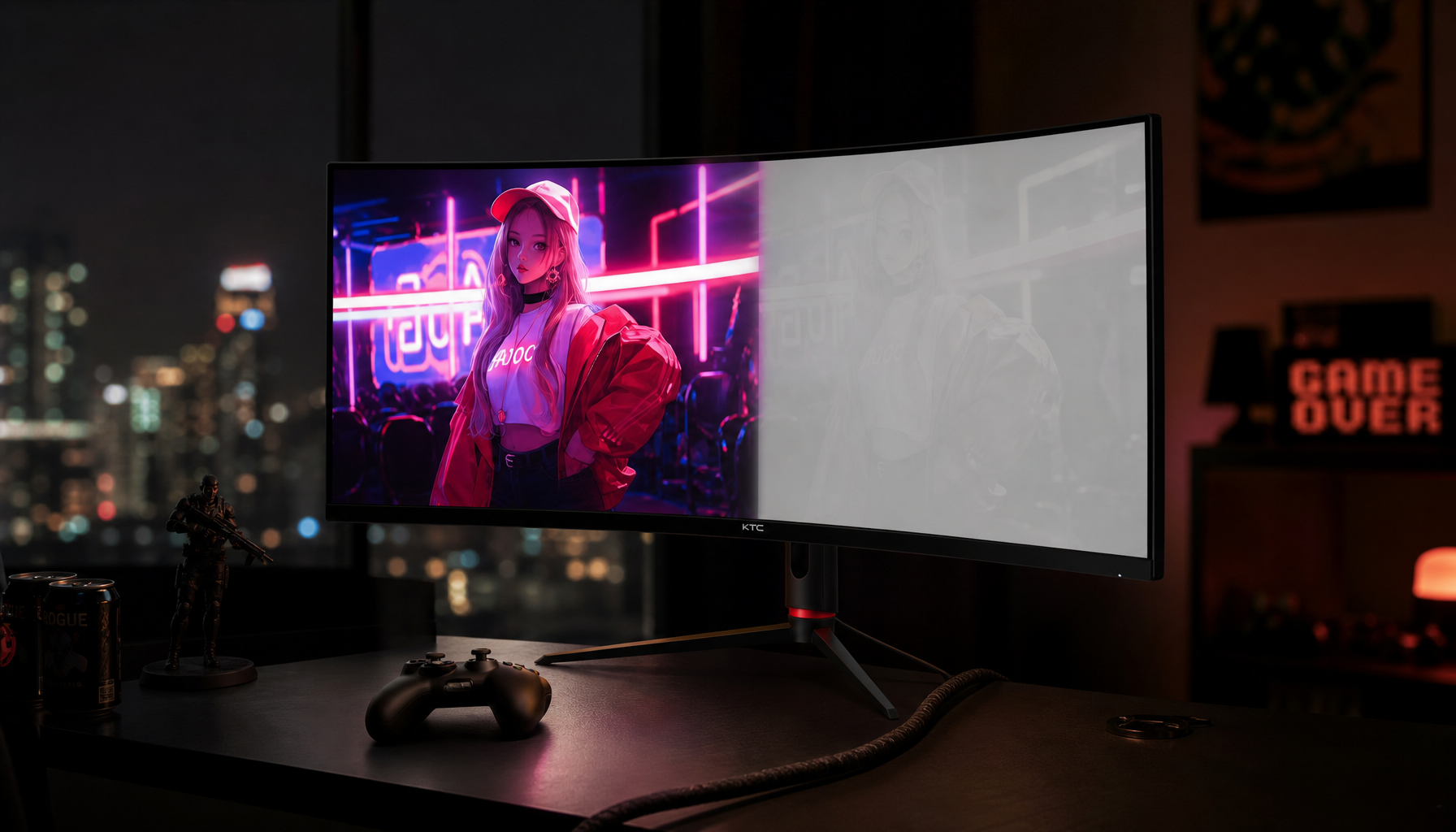
1080p often looks softer on a 4K monitor because the image is enlarged to fit a denser panel, and scaling can blur edges, textures, and UI elements. Even with clean 2 x 2 pixel mapping, final quality depends on the scaler, content type, viewing distance, and display settings.
The Pixel Math Is Clean, but the Image Still Changes
A 4K monitor is typically 3840 x 2160, while 1080p is 1920 x 1080, so 4K has exactly four times the pixels of Full HD. In theory, one 1080p pixel can become a clean 2 x 2 block on a 4K screen, which is why 1080p-to-4K scaling is less awkward than scaling 1080p to 1440p.
The problem is that many monitors, GPUs, apps, and video players do not always use perfect integer scaling. They may apply smoothing, sharpening, chroma processing, or aspect handling that makes the image look slightly smeared instead of crisp.
That softness is most obvious on desktop text, thin UI lines, browser content, and game HUDs. Video and cinematic games can hide it better because motion blur, compression, and anti-aliasing already soften the source.

Pixel Density Makes 1080p Flaws Easier to See
A native 1080p screen is built around that resolution. A 24-inch 1080p gaming monitor has relatively large pixels, and the image fills the panel without reconstruction.
On a 27-inch 4K display, the panel is much sharper at native resolution, with far higher pixel density. One display overview notes that a 27-inch 4K display reaches about 163 PPI, compared with about 82 PPI for 27-inch 1080p pixel density. Once your eyes get used to that sharpness, 1080p content looks more obviously low-detail.
This is why 1080p on 4K can feel worse even when the scaling is mathematically reasonable. The monitor is not ruining the source; it is revealing how limited the source is compared with native 4K.
Gaming: Performance Wins, but Clarity Pays the Bill
For gaming, dropping to 1080p on a 4K monitor is a practical performance move. Rendering 2.1 million pixels is far easier than rendering 8.3 million, which can mean higher FPS, lower input latency, and more stable frame pacing.
That is why competitive players often favor lower resolutions and high refresh rates. Monitor data for esports players shows that many still use 1920 x 1080 displays because speed matters more than visual fidelity in competitive gaming competitive gaming.
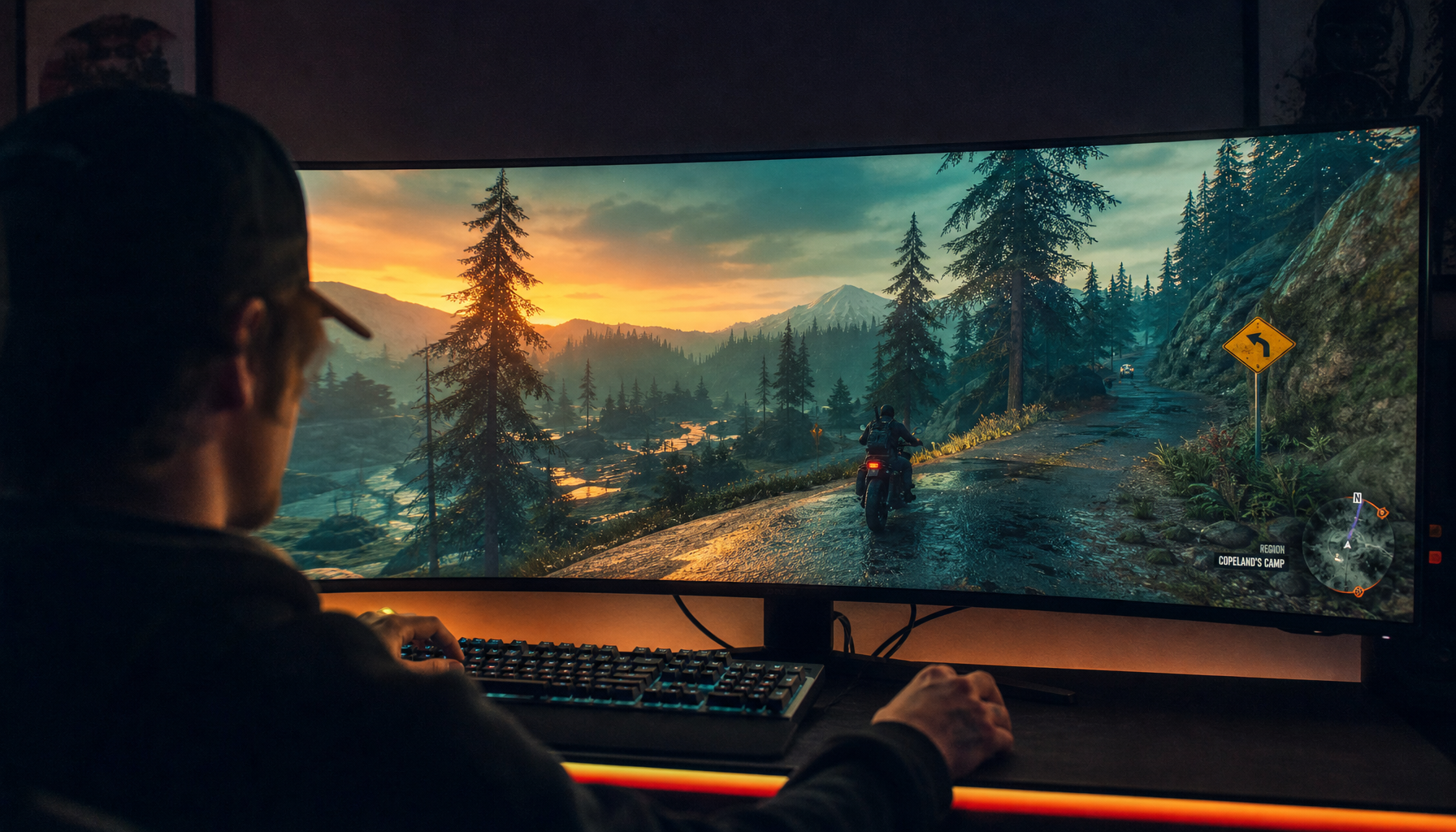
The tradeoff is image precision. Fine textures, distant enemies, foliage, and UI labels can look less defined when the game output is scaled across a 4K panel. A gaming monitor roundup also notes that dual-mode monitors can make 1080p useful in games, while desktop use may look soft dual-mode monitors.

How to Make 1080p Look Better on a 4K Monitor
Use 1080p strategically, not as your default for everything. Native 4K is still the best mode for office work, text, design, spreadsheets, and multitasking because it preserves the panel’s sharpness.
For games and video, tune the pipeline:
- Use GPU scaling and test integer scaling if available.
- Keep the monitor at native 4K for desktop use.
- Lower in-game render scale instead of changing the system resolution.
- Try AI, temporal, or game-native upscaling when supported.
- Adjust monitor sharpness lightly; avoid extreme sharpening halos.
Some 4K monitors handle 1080p scaling surprisingly well, but others apply soft processing you cannot fully bypass.
The Right Screen Depends on Your Priority
If you mostly play esports, a native 1080p high-refresh monitor can still be the sharper, faster, better-value tool. The image is direct, the GPU workload is lighter, and motion performance can take priority.

If you split time between work, content, and immersive games, a 4K monitor is the stronger long-term display. Use native 4K for productivity and visual games, then switch to lower render settings only when FPS matters.
The real answer is not that 1080p is bad on 4K. It is that 4K raises the visual ceiling, and once you see native sharpness, scaled 1080p has nowhere to hide.