









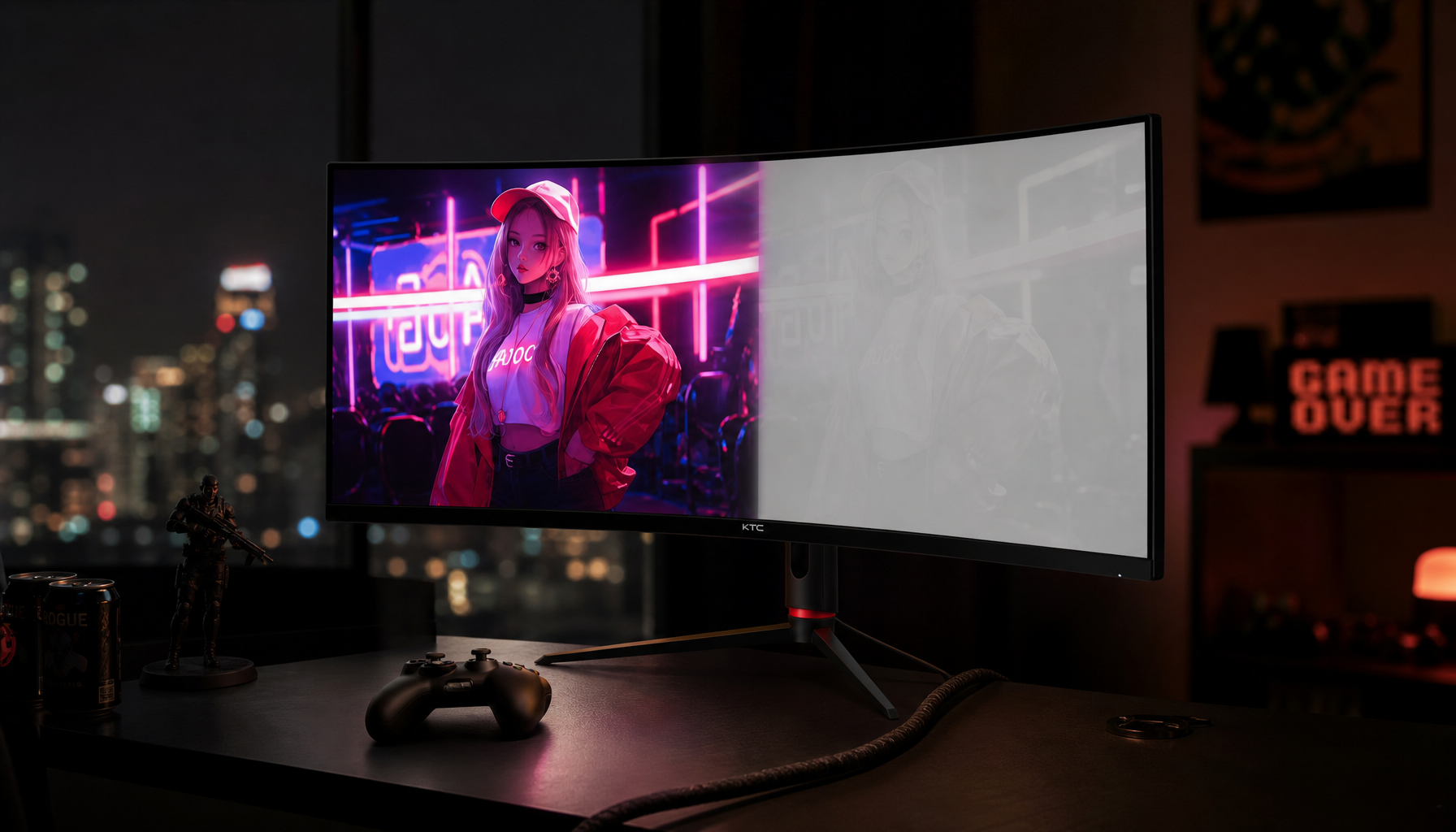
Local dimming zones are independent sections of an LCD monitor’s backlight that can brighten or dim separately. Better zone control usually improves HDR contrast and shadow detail, but it still does not deliver true pixel-off black like OLED.
If night maps in games look gray and subtitles glow over dark scenes, your monitor is likely lighting more of the screen than needed. Independent testing has shown some full-array LCD designs can deliver about 2x HDR real-scene brightness versus thin edge-lit designs, which helps bright highlights and dark detail appear at the same time. You’ll get a practical way to read this spec, compare monitor types, and set expectations before you buy.
Local Dimming Zones, Explained in Plain Language
On LCD monitors, local dimming zones are groups of backlight LEDs controlled independently, so one area can dim while another stays bright. This is the core trick that helps HDR scenes show bright effects without washing out the entire image.

LCDs still rely on a shared backlight, so light leakage limits true black even when zone control is strong. OLED behaves differently because each pixel emits its own light and can turn fully off, which is why OLED remains the black-level reference.
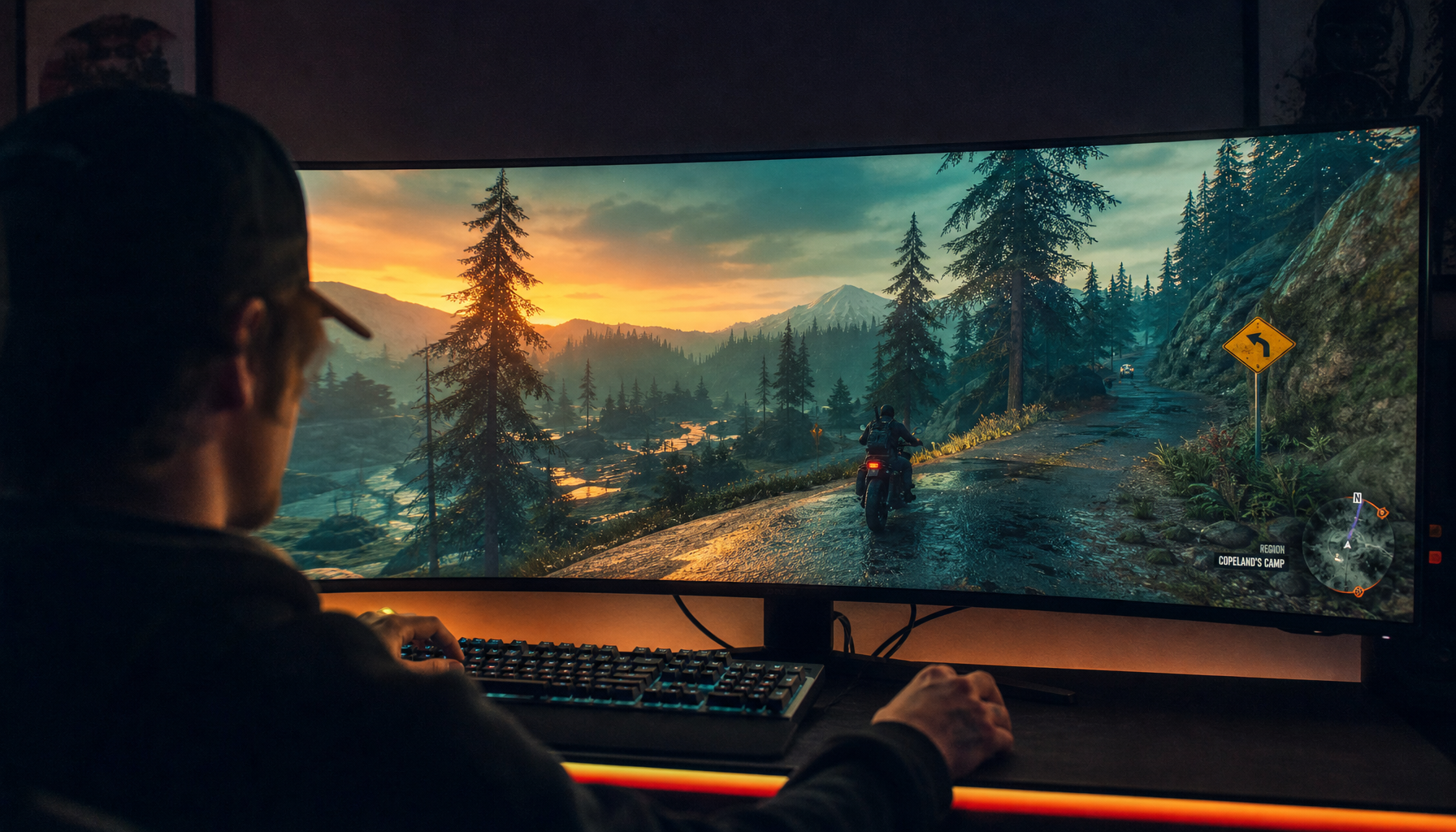
The biggest visual gain appears in dark-room viewing, where ambient light is not already lifting black levels. In a bright office, local dimming still helps highlights, but the black-level improvement is less obvious to most people.
Backlight Type Matters More Than Marketing Labels
Backlight architecture determines your ceiling for contrast quality: global dimming changes the whole backlight together, edge-lit systems light from the border, and full-array designs place controllable LEDs behind the entire panel. For gaming monitors and ultrawide panels, this architecture often predicts HDR quality better than a generic “HDR-ready” badge.

Zone layout tiers range from low-count 1D systems (often around 8-16 zones) to higher-count 2D full-array systems (commonly hundreds of zones). That jump in spatial control is why full-array mini-LED monitors usually show cleaner highlight separation in dark scenes.
Backlight approach |
Typical zone behavior |
Practical contrast outcome |
Common artifact risk |
Best fit |
Global dimming (direct-lit) |
Whole screen brightens/dims together |
Limited mixed-scene contrast, often near basic LCD behavior |
Crushed shadows or raised blacks in mixed scenes |
Budget office use, SDR-first setups |
Edge-lit (no local dimming) |
No per-area zone control |
Weak dark-scene HDR impact |
Clouding, uneven blacks |
Thin portable monitors, basic productivity |
Edge-lit local dimming |
Small number of edge-driven sections |
Some contrast gain, limited precision |
Banding and halos in hard scenes |
Entry HDR, casual media |
Full-array local dimming (FALD) |
Many zones behind full screen |
Stronger HDR separation and black depth |
Blooming around small bright objects |
Mid/high-end gaming and content creation |
Mini-LED full-array |
Higher zone density with smaller LEDs |
Best LCD path toward OLED-like dark-scene control |
Reduced but still possible blooming |
Premium HDR gaming, high-refresh 4K, pro editing |
Independent 175-monitor brightness data reinforces this: full-array LCDs measured much brighter than edge-lit LCDs in SDR and HDR real-scene tests (for example, IPS SDR 561 vs 367 cd/m², IPS HDR 918 vs 447 cd/m²). For portable and slim ultrawide monitors, edge-lit designs are still common for size and power reasons, so HDR expectations should be moderated.
Zone Count Helps, But Algorithms Decide What You Actually See
Zone granularity is the first quality filter: more and smaller zones usually reduce light spill around bright objects on dark backgrounds. Low-zone implementations can brighten large blocks of the image at once, which weakens shadow control.
Blooming severity depends on three interacting factors: zone count, dimming algorithm behavior, and scene difficulty. A classic stress case is a white cursor or subtitle over a black background, where one lit zone can create a visible halo around nearby dark pixels.

Mini-LED implementation quality also depends on driver precision, transition speed, and thermal design, not just raw zone numbers. That is why two monitors with similar advertised zones can look different in fast shooters or high-refresh racing titles, especially during sudden bright flashes in dark scenes.
HDR Certifications: Useful Baseline, Not a Full Verdict
DisplayHDR certification is a minimum performance baseline, not a guarantee of perfect local dimming behavior in all content. It is still useful because it separates simple “HDR signal support” from tested HDR performance thresholds.
In DisplayHDR CTS 1.2, released May 7, 2024, VESA added or refined tests tied to dimming behavior, including dual-corner black-level behavior, active dimming, static contrast requirements, and subtitle flicker stability. These updates improved how mixed bright/dark scenes are evaluated instead of relying only on peak brightness marketing.
Tier-level local dimming requirements for LED LCDs generally map like this: DisplayHDR 400 may have no local dimming, 500/600 can use edge-lit dimming, and 1000/1400 expects full-array dimming. Treat that as a floor: two monitors at the same tier can still differ meaningfully in blooming control, transition smoothness, and black uniformity.

Practical Setup for Gaming, Ultrawide, and Desktop Work
Game mode behavior can differ from movie modes because monitors may simplify or alter dimming logic to keep latency low. If you play competitively, verify image quality and responsiveness in the exact mode you use, not only in default picture presets.
When halos are distracting during desktop use, practical mitigations include lowering brightness, increasing room light, and using lighter themes instead of pure black backgrounds. This is especially relevant for coding, spreadsheet work, and cursor-heavy workflows where small bright UI elements move over dark backgrounds.

A fast local-dimming stress test is to check moving bright objects on dark backgrounds, then repeat with your monitor’s local dimming off and on. If dark-scene gaming looks better but desktop halos bother you, keep two profiles: one HDR gaming preset with local dimming enabled, and one SDR desktop preset with dimming reduced or disabled.
FAQ
Q: How many zones are “enough” for HDR gaming?
A: Higher zone counts generally improve control, but algorithm quality still decides real results; as a buying shortcut, full-array mini-LED with hundreds of zones is usually a stronger HDR starting point than low-zone edge-lit designs.
Q: Is local dimming still useful in a bright room?
A: Ambient light reduces the visible black-level benefit, but local dimming can still help specular highlights and mixed-scene contrast.
Q: Should I disable local dimming for office work?
A: Desktop halo behavior can be distracting with small bright UI elements on dark themes, so many users prefer dimming off (or less aggressive) for productivity and on for HDR media.
Practical Next Steps
- Decide your primary use first: competitive gaming, cinematic HDR gaming, creator work, or mixed office use.
- Prioritize backlight architecture before headline brightness: full-array mini-LED usually beats edge-lit for HDR control.
- Use DisplayHDR tier as a baseline filter, then verify dark-scene behavior, blooming, and transitions in real content.
- Test in your real environment: dark-room movie/game checks and bright-room daytime checks can lead to different conclusions.
- Save two presets on day one: HDR/Game (local dimming on) and Desktop/Work (local dimming reduced or off).
References
- DisplayNinja: LED Local Dimming
- RTINGS TV Local Dimming Tests
- DigiKey Forum: Mini-LED and Local Dimming
- HDR Tech: Local vs Global Dimming
- RTINGS Monitor: LED vs OLED
- DisplayNinja: FALD Blooming
- Acer Community: FALD Blooming Mitigation
- RTINGS Monitor Local Dimming Tests
- TestUFO Local Dimming Pattern
- VESA DisplayHDR Performance Criteria
- RTINGS Monitor DisplayHDR Guide


,%20mini-LED,%20and%20edge-lit%20tech%20to%20see%20how%20they%20impact%20blooming.
)