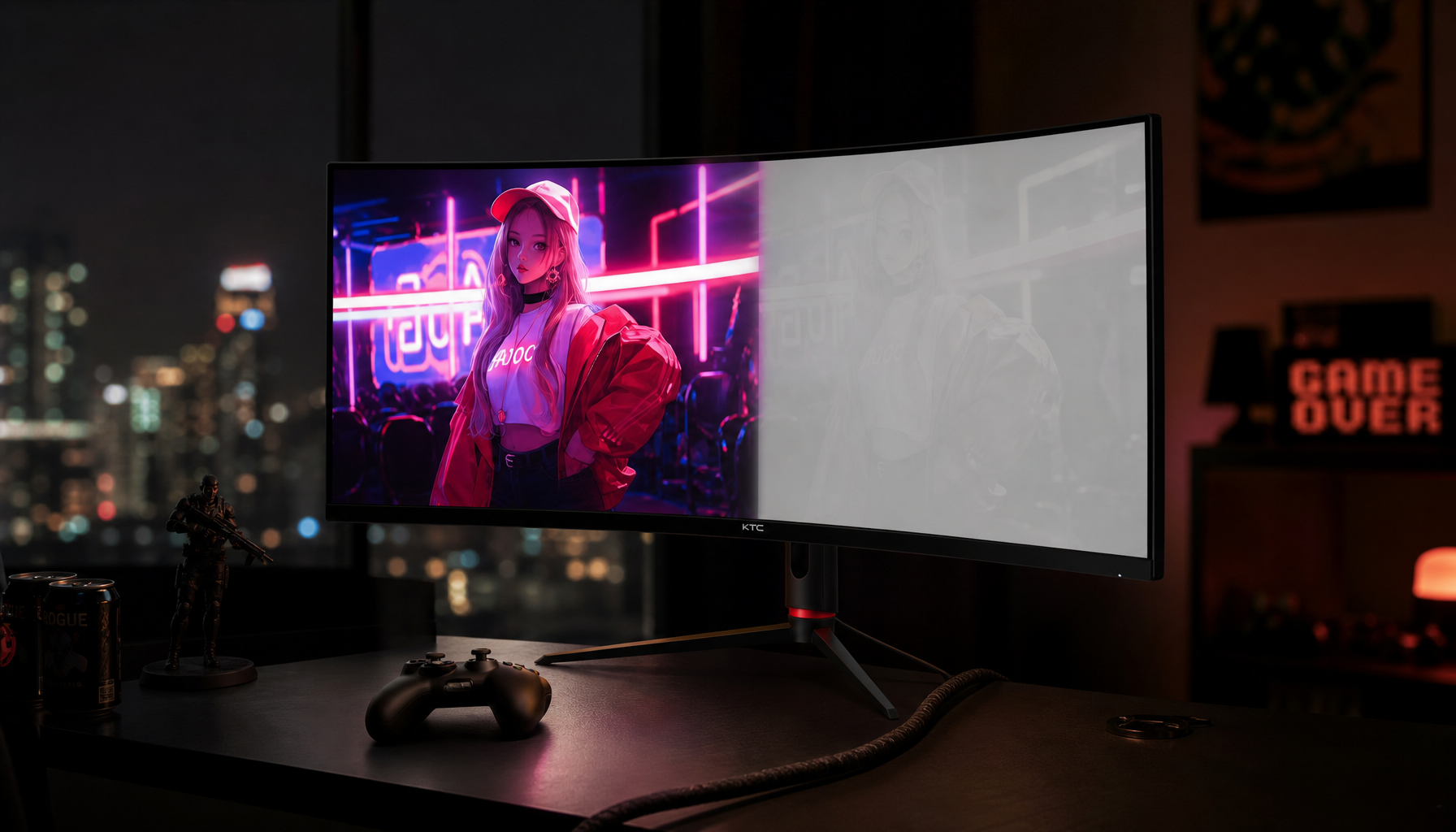
The same resolution can look razor-sharp on a smaller or denser screen, yet soft when screen size and viewing distance change. Perceived sharpness depends on resolution, pixel density, distance, scaling, and your eyesight.
Is your 4K monitor not looking as crisp as the spec sheet promised, or does your 1080p portable screen look surprisingly clean when it sits farther back? A practical setup check can reveal whether you are losing clarity to distance, scaling, or artificial sharpness settings before spending money on a new display. You will learn how to place, tune, and judge a monitor so the resolution you already paid for looks its best.
Why the Same Resolution Can Look Different
Resolution tells you how many pixels a screen can display, but it does not tell you how large those pixels appear from your chair. A 1920 x 1080 image on a compact portable display can look clean because the pixels are packed tightly. The same 1920 x 1080 resolution stretched across a 27-inch desktop monitor has larger pixels, so text edges, diagonal lines, and game HUD elements can look coarser at the same distance.
This is why pixel density matters. Pixel density describes how tightly pixels are packed on the screen, and viewing distance determines whether your eyes can separate those pixels. When you sit farther away, each pixel occupies less of your visual field, so the display appears smoother. When you sit closer, the same pixels become easier to notice.

In practical monitor testing, this shows up fast. A 27-inch 1080p office monitor can look acceptable from a reclined 36-inch position, but it often looks rough at 20 inches during spreadsheet work. A 15.6-inch 1080p portable screen, by contrast, can look crisp at laptop distance because the same pixel count is compressed into a smaller panel.
Perceived Sharpness Is Resolution Plus Distance
The Simple Relationship
Perceived sharpness rises when pixels become harder to distinguish. That can happen because the display has more pixels, because the screen is smaller, or because you sit farther away. It can also happen when operating system scaling makes text larger without lowering the monitor’s native resolution.
For desktop users, the important question is not “Is 4K sharper than 1440p?” in isolation. The better question is “At my screen size and sitting distance, can I see the difference?” Display size and viewing distance are decisive because 4K detail can look similar to HD when the viewer is too far away to resolve the added pixels.
A simple real-world example makes the point. A 32-inch 4K monitor at about 26 to 32 inches can show very fine text, dense code, and photo detail clearly. Move that same monitor back toward 38 inches and the image may still look clean, but the visible advantage of 4K over a lower-resolution panel becomes less dramatic. You gain comfort and immersion, but you give up some inspection-level detail.
Native Resolution Still Comes First
Distance cannot rescue a bad signal chain. If a monitor is not running at its native resolution, the image may be scaled, stretched, or softened before viewing distance even enters the equation. Recommended display resolution guidance emphasizes using the recommended resolution for the clearest image and sharpest text.
For gaming, the same principle applies. Running 1080p output on a 1440p panel often looks softer because the pixels do not map cleanly. It is usually better to keep the monitor at native resolution and adjust game settings, render scale, upscaling, or anti-aliasing before dropping the display output resolution.
Pixel Density, Screen Size, and Viewing Distance Compared
Display setup |
Typical sharpness behavior |
Practical viewing note |
15.6-inch 1080p portable screen |
High perceived sharpness for everyday work |
Works well at close laptop-style distances |
24-inch 1080p monitor |
Balanced for office and basic gaming |
Comfortable around arm’s length for many users |
27-inch 1080p monitor |
More visible pixel structure |
Better if viewed farther back or used with larger text |
27-inch 1440p monitor |
Strong desktop sweet spot |
Good for productivity and gaming at normal desk distance |
32-inch 4K monitor |
Very sharp when placed correctly |
Best when distance, scaling, and desk depth are dialed in |
A 32-inch 4K screen has roughly 138 to 140 pixels per inch, while a 32-inch 1440p screen is around 92 pixels per inch. That difference is visible when you sit close enough to benefit from it, especially in text, UI lines, game details, photo edges, and PDF rendering.

How Far Should You Sit?
Office and Productivity Displays
For most desks, arm’s length remains a reliable starting point. Recommended monitor distance is commonly about 20 to 28 inches from the eyes, with the top of the monitor at or slightly below eye level. This distance usually balances text clarity, posture, and reduced eye strain.

For a 24-inch monitor, around 20 inches can feel natural. A 27-inch display often works better closer to 24 inches. A 32-inch monitor may need closer to 28 inches or more, especially if you use it for full-screen documents, dashboards, or multitasking. If you find yourself leaning forward to read text, increase scaling or font size instead of moving your face closer all day.
Gaming Monitors
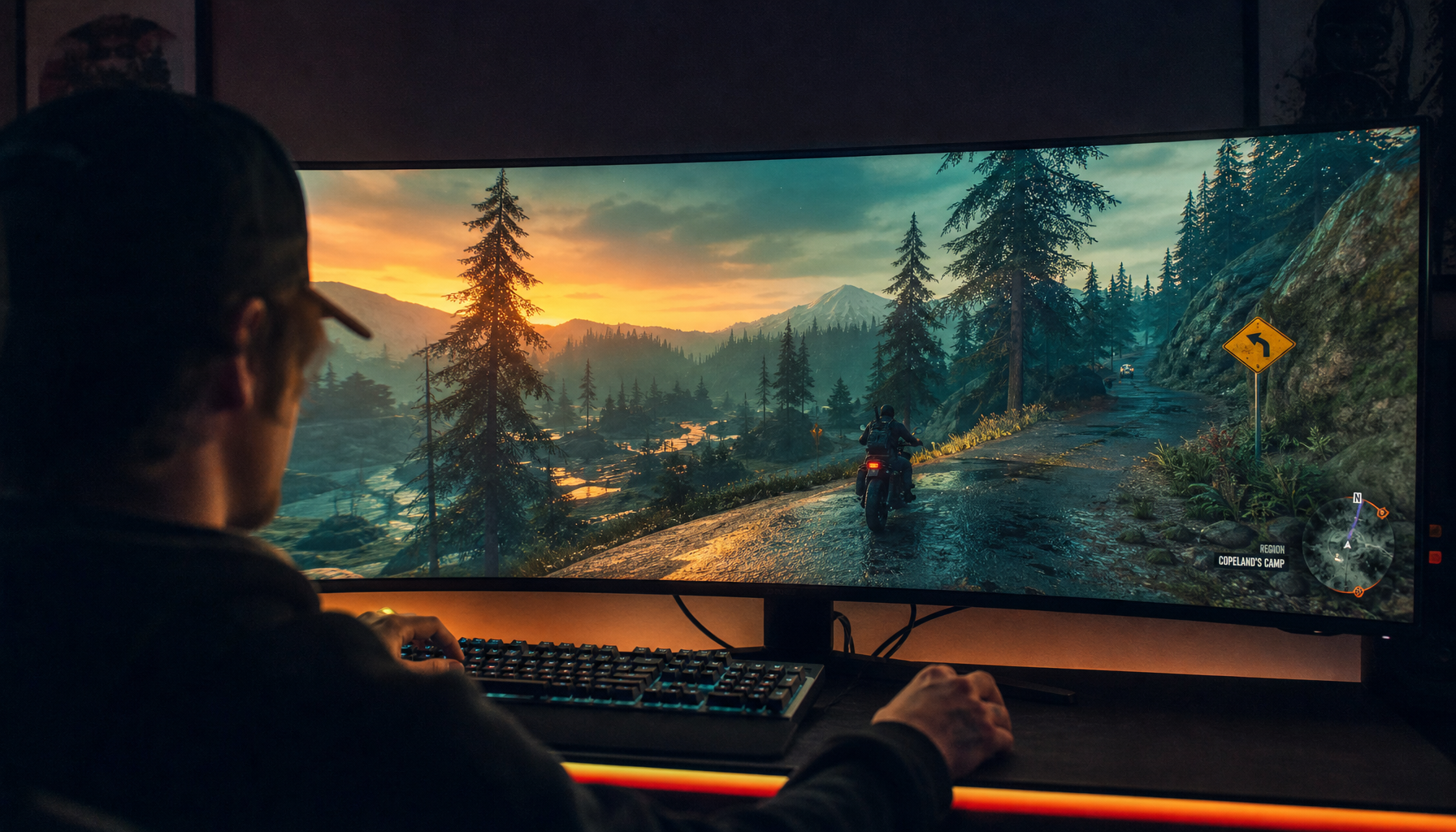
Competitive players often prefer smaller screens or moderate distances because the entire field of view stays easy to scan. A 24- or 25-inch high-refresh monitor at 20 to 30 inches can make enemy movement, crosshair placement, and HUD awareness easier to control. For immersive single-player gaming, a 32-inch 4K display or ultrawide can sit farther back because the goal shifts from pure scan speed to visual depth and comfort.
Monitor size guidance places many desktop viewing distances between about 20 and 50 inches depending on screen size, with larger monitors needing more room to avoid excessive eye and neck movement. That is why a 49-inch super-ultrawide can feel powerful on a deep desk and overwhelming on a shallow one.
Portable Smart Screens
Portable smart screens are a special case because they are often smaller, closer, and used beside a laptop. A 1080p portable display can look sharper than expected because its pixel density is high relative to its size. The downside is that small UI elements can become tiring if scaling is too low. For travel work, presentations, coding on the go, or a second screen beside a laptop, perceived sharpness often depends more on proper scaling and glare control than on chasing 4K.
Sharpness Settings Are Not the Same as Real Detail
Monitor sharpness controls can be useful, but they do not create real resolution. Monitor sharpness is usually edge enhancement, which increases contrast around borders to make lines appear more defined. Push it too far and text develops halos, photos look noisy, and game edges shimmer.

For computer use, a clean setup usually starts with native resolution, correct scaling, balanced brightness, and neutral or modest sharpness. If increasing sharpness suddenly makes text look much better, treat that as a clue. The real issue may be non-native resolution, poor scaling, an incorrect cable path, bad font-smoothing tuning, or an aggressive picture mode.
The best quick test is black text on a white background, a spreadsheet grid, diagonal lines, and a familiar high-resolution image. Raise sharpness until halos or jagged edges become obvious, then step it back until those artifacts disappear. For photo and video work, keep display-level sharpening conservative because it changes what you think the file contains.
Why Your Eyes and Use Case Matter
Sharpness is partly measurable and partly perceived. Imaging labs often use objective methods such as modulation transfer function to quantify how much fine detail a system preserves. MTF50 is widely used because it correlates well with perceived sharpness, while very low-contrast “vanishing” detail is more observer-dependent.
That matters for monitor choice because two people can react differently to the same screen. A user reading enlarged PDFs may benefit less from higher resolution than someone editing dense diagrams or small type. A gamer chasing 240 Hz may accept lower pixel density to protect frame rate. A designer checking fine edges may value 4K at a closer distance even if it costs more GPU power.
Hands-on comparison is especially useful for vision-sensitive work. Higher resolution may preserve fine detail at normal distances, but it may not dramatically improve recognition if text is already enlarged. For users with eyesight limitations, scaling, contrast, font rendering, and viewing comfort can matter as much as raw resolution.
Practical Setup Advice
Start by confirming the monitor is running at its native resolution. Then set operating system scaling so text is readable from your normal posture, not from a leaned-in position. The recommended resolution and scale are usually the safest starting points. In display settings, test scaled modes with real text, not just the desktop wallpaper.
Next, place the monitor where your eyes naturally land near the upper third of the screen. If the display is large, move it back before lowering resolution. If the display is small and dense, bring it closer only as long as your shoulders, neck, and eyes stay relaxed. A monitor arm can help because it gives you several extra inches of usable depth and makes it easier to switch between focused work and relaxed viewing.
Finally, judge sharpness with your actual workload. For office productivity, use documents, email, spreadsheets, and browser text. For gaming, test native resolution with your preferred anti-aliasing or upscaling settings before reducing output resolution. For portable smart screens, test at the distance you actually use in a hotel, meeting room, couch setup, or compact desk.
The Bottom Line
Viewing distance changes perceived sharpness because it changes how large each pixel appears to your eyes. The same resolution looks sharper when pixel density is higher, when the screen is farther away, or when scaling and native-resolution output are configured correctly.
The strongest display setup is not always the highest resolution on the largest panel. It is the screen size, pixel density, distance, scaling, and sharpness setting that let you work or play without blur, halos, squinting, or wasted GPU power.