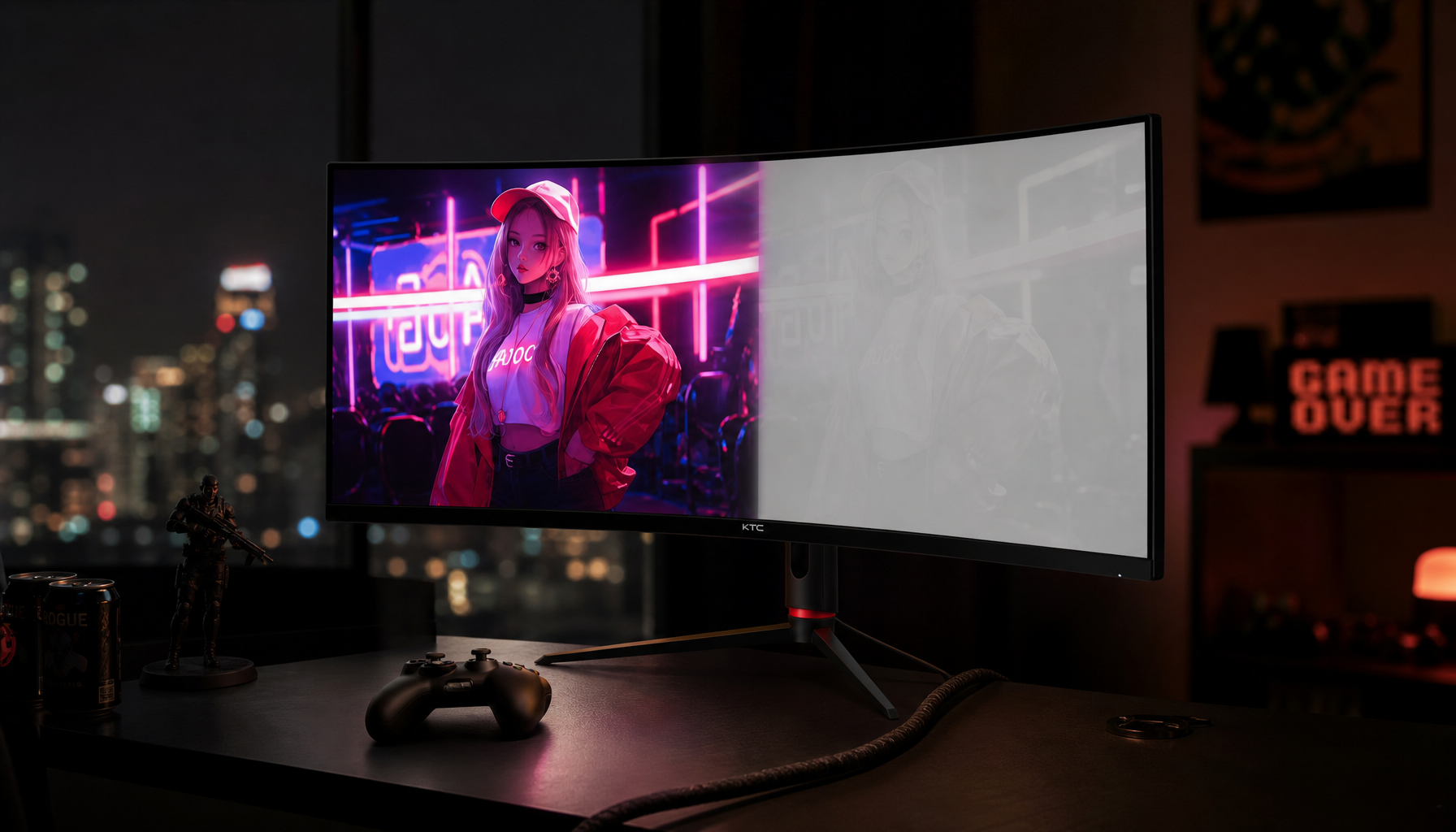
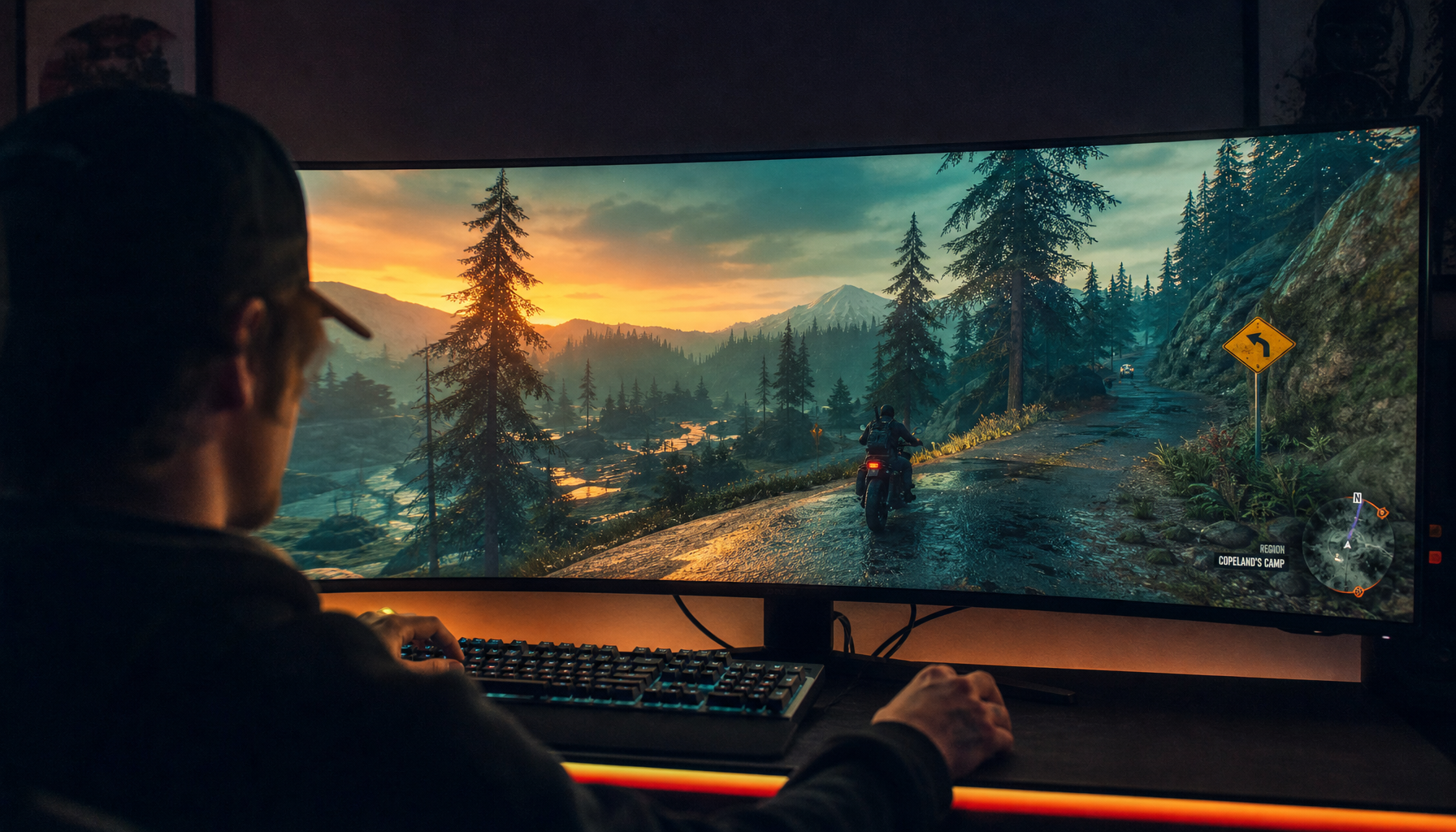
Different video players can show the same HDR movie differently because each one may pass HDR to the display, tone-map it to SDR, apply its own color management, use OS HDR handling, or interpret metadata differently.
Does the same HDR clip look punchy in one player, dim in another, and strangely gray in a third, even though nothing changed on your monitor? A practical A/B test can reveal whether the player, OS HDR mode, display preset, or metadata path is doing the heavy lifting. Here is how to read those differences and choose the playback setup that keeps highlights, shadow detail, and color under control.

Why the Same HDR Video Can Look Different
HDR is not just “brighter video.” It is a chain of decisions. The video file carries brightness and color information, the player decodes it, the operating system may manage an HDR or SDR output path, the GPU renders the image, and the monitor or TV finally maps that signal to its real panel limits.
Tone mapping is the key translation step. It compresses HDR content into what a real display can reproduce while trying to preserve perceptual detail, contrast, and visual fidelity. A recent hardware tone-mapping study describes this as a process of preserving visible image quality while converting HDR data into lower-range output while converting HDR data. That definition matters because a video player is not always simply playing the file. It may be actively reshaping the image before your monitor ever sees it.
On the same PC, one player may pass HDR10 metadata to an HDR display and let the display tone-map. Another may convert HDR to SDR internally. A third may use GPU shaders, ICC color management, a custom renderer, or the operating system compositor. The result can be different brightness, highlight roll-off, saturation, and black-level behavior.
The Four Main Playback Paths
HDR Passthrough Lets the Display Decide
In an HDR passthrough path, the player sends an HDR signal and metadata downstream, then the monitor or TV handles most of the tone mapping. This is common with HDR10 playback on TVs and some PC monitor setups. The display receives the HDR signal, reads static metadata where available, switches into HDR mode, and applies its own EOTF tracking, local dimming, color-volume mapping, and peak brightness limits.
This can look excellent on a strong HDR display. A 1,000-nit-class monitor or OLED-style screen usually has more headroom for specular highlights than a basic portable screen, so it needs less aggressive compression. The downside is control. If the display’s HDR mode is too dark, clips highlights, or changes behavior between presets, the player may not be the real cause.
HDR10 also uses static metadata, which means one set of brightness and color information applies to the whole title rather than every scene. That is one reason two HDR10 screens can show the same content differently: the display still has to interpret the signal against its own brightness, black level, local dimming, and color volume one set of brightness.
Player-Side HDR-to-SDR Tone Mapping
Some players tone-map HDR to SDR before output. This is useful when your display is SDR, when system HDR is off, or when you want predictable desktop playback. The player compresses PQ HDR brightness into SDR range, usually targeting a known white level and color space.
This is why a GPU-based player can look surprisingly good on an SDR monitor with HDR files. Its renderer can apply tone mapping instead of blindly clipping values. In some developer issue notes, users have compared default HDR-to-SDR tone mapping with HDR passthrough and found that different approaches can sometimes appear similar when the tone curve and display behavior line up.
The advantage is consistency. The weakness is that you are no longer seeing true HDR output. Bright sparks, sun glints, headlights, and energy effects are being squeezed into SDR. For office productivity displays or portable screens with weak HDR capability, that tradeoff may be preferable because readable contrast matters more than an HDR badge.
Dynamic Tone Mapping Changes Scene by Scene
Dynamic tone mapping analyzes scenes, frames, or brightness changes and adjusts the curve in real time. This can help a dimmer display avoid looking muddy in dark movies and avoid blowing out bright skies in the next scene. Home theater processors, TVs, and some playback chains may do this more aggressively than reference-oriented workflows.
The practical gain is visible with mixed-brightness content. A sci-fi movie with dark interiors and bright cockpit windows may look more balanced with dynamic tone mapping than with one static curve. The risk is instability. If the algorithm pushes midtones up too much, skin can look lifted and contrast can feel artificial.
Tone mapping can be static across a whole movie or dynamic scene by scene, and dynamic handling is often better suited to content with large brightness swings static across a whole movie. For a gaming monitor, this is the same reason HDR game modes need calibration: the game, OS, and display can each try to solve the brightness problem.
Color Management and ICC Profiles Can Shift the Result
Color management is the quieter variable. A player that honors ICC profiles may transform colors differently than a player that bypasses desktop color management. If the display has a measured profile, the player may use that profile to map colors and tone response. If not, it may assume a standard target.
Developer discussions raise exactly this kind of question: if an ICC profile describes a display’s HDR behavior, should the player still be told to target PQ, or should the profile handle the tone response? That is not a casual setting. ICC handling, target transfer curve, gamut clipping, and tone-mapping operator can interact in ways that make two technically correct outputs look different.
For creators and serious reviewers, reference monitoring practice matters. Professional HDR grading decisions should be made on a high-quality calibrated monitoring display, with consumer-style dynamic tone mapping or automated HDR processing disabled for mastering decisions. For everyday playback, you do not need a grading suite, but you do need to know whether your player is managing color or leaving it to the system and display.

Player Behavior Compared
Playback behavior |
What it usually means |
Best fit |
Main risk |
HDR passthrough |
The display receives HDR and performs tone mapping |
Strong HDR TVs, OLEDs, Mini LED monitors |
Display preset or firmware dominates the image |
HDR-to-SDR tone mapping |
The player compresses HDR before output |
SDR monitors, office displays, portable screens |
Less true highlight impact |
Dynamic tone mapping |
Brightness curve changes by scene or frame |
Mixed-brightness movies and games |
Can look processed or inconsistent |
ICC-aware playback |
Player uses display profile for color transforms |
Calibrated desktop and creator setups |
Wrong profile can make HDR look worse |
OS-managed HDR |
The operating system sits in the middle |
Streaming apps, desktop HDR workflows |
SDR apps and HDR video may be balanced differently |
Why Some Players Look Brighter
A brighter player is not automatically more accurate. It may be lifting midtones, ignoring metadata, targeting a higher SDR white level, or applying a more aggressive tone curve. On a 400-nit portable monitor receiving a 1,000-nit HDR master, the player or display must compress highlights heavily. If one player preserves cloud detail and another makes the whole image brighter, the brighter one may simply be spending highlight range on midtone visibility.
This is where a simple test helps. Use a familiar HDR scene with dark clothing, faces, a bright window, and small highlights. If the player makes faces readable but erases texture in the window, its curve is prioritizing midtones. If it keeps the window detailed but makes faces too dim, it is protecting highlights. If shadows turn gray, black level or limited-range handling may be wrong.
The LIVE Tone-Mapped HDR database is useful context because it contains thousands of tone-mapped HDR video sequences and subjective quality scores from human observers, showing that tone-mapping quality is not one fixed mathematical answer subjective quality scores. Human perception decides whether the curve feels natural, not only whether the signal path is technically neat.
Gaming Monitors, Office Displays, and Portable Screens Need Different Choices
For an immersive gaming monitor, start with the monitor’s most accurate HDR game or cinema mode, then run the game or OS HDR calibration. If the display has strong peak brightness, local dimming, and low input lag, passthrough or game-native HDR usually gives the most convincing result. If the game includes its own HDR calibration sliders, set those after choosing the monitor mode, because the game needs to know the display behavior it is targeting.
For office productivity displays, SDR often remains the cleanest daily mode. Mixed SDR desktop apps can look dim or uneven through an always-on HDR desktop path, and productivity work benefits from stable whites, predictable contrast, and accurate text rendering. Use HDR only when playing HDR video, reviewing HDR media, or launching a game that benefits from it.
For portable smart screens, be skeptical of “HDR supported.” Many portable displays can accept HDR10 but lack the brightness, local dimming, or color volume to make HDR look truly high impact. In that case, a good player-side HDR-to-SDR conversion can look more controlled than weak display-side HDR. It may not deliver the brightest specular highlights, but it can protect faces, subtitles, UI overlays, and shadow detail.
How to Choose the Best Player Settings
Start by deciding who should tone-map: the player, the OS, or the display. If you own a strong HDR monitor or TV, try HDR passthrough first and use the display’s accurate HDR mode. If your screen is SDR, entry-level HDR, or portable, use a player with reliable HDR-to-SDR tone mapping and compare several tone-mapping curves.
Next, check whether the player is color-managed. If you use a calibrated monitor profile, an ICC-aware player can be valuable, but only if the profile matches the active display mode. An SDR ICC profile should not be treated as a magic fix for HDR mode, because many displays change tone response, brightness behavior, and color processing when HDR is enabled.
Then test real content instead of menus. A good HDR test scene should include a face, a dark area, a bright highlight, and a saturated color. Pause the same frame in each player. Watch for clipped clouds, crushed jackets, neon colors turning chalky, skin shifting red or green, and subtitles blooming against black.
Finally, separate your presets. Keep one clean SDR preset for office work, one HDR video preset for movies, and one low-latency HDR preset for games. The goal is not one universal setting. The goal is a repeatable setup where each screen mode has a job.
Practical Pros and Cons
Player-side tone mapping gives you consistency and is excellent for SDR monitors, portable displays, and controlled comparisons. Its limitation is that it compresses HDR before the display can use true HDR headroom.
Display-side HDR passthrough can deliver the most immersive result on capable hardware. Its limitation is that each monitor or TV has its own tone-mapping personality, so the same player can look different across screens.
Dynamic tone mapping can make difficult HDR titles more watchable, especially on dimmer displays. Its limitation is that it may drift away from creative intent by constantly adapting the image.
ICC-aware playback is powerful for calibrated workflows. Its limitation is complexity: the wrong profile, wrong transfer curve, or wrong HDR desktop state can make playback less accurate than a simple standard path.
FAQ
Should I Leave System HDR On All Day?
For productivity, usually no. A calibrated SDR desktop is often clearer and more consistent for documents, spreadsheets, browsers, and design work unless you are actively viewing HDR content or using an HDR workflow.
Why Does HDR Look Washed Out in One Player?
The player may be converting HDR incorrectly, the OS may be mapping SDR and HDR together, the display may be in a poor HDR preset, or range handling may be wrong. Compare the same paused frame with HDR passthrough and player-side tone mapping to isolate the cause.
Is Dynamic Tone Mapping Better Than Static Tone Mapping?
It can be better for movies and games with big brightness changes, but it is not automatically more accurate. For mastering or critical review, stable reference behavior matters more than making every scene look punchy.
Closing Thought
Different HDR players are not just different interfaces; they are different rendering pipelines. For the best result, match the player’s tone-mapping approach to the real display in front of you: passthrough for strong HDR screens, controlled player-side mapping for weaker or SDR displays, and separate presets for gaming, video, and daily work.