Ultrawide screens can expand your view and deepen immersion, but they rarely outweigh skill. In competitive games, any advantage is usually limited by game design, performance costs, and the need to keep key information in focus.
Ever feel like an enemy appeared from the side a split second too late, or that your standard screen makes busy matches feel cramped? Moving from 16:9 to 21:9 gives you visibly more horizontal space, but it also demands more from your GPU and your attention. The real question is whether ultrawide gives you a practical edge for your games or just adds cost and complexity.
What “ultrawide advantage” actually means
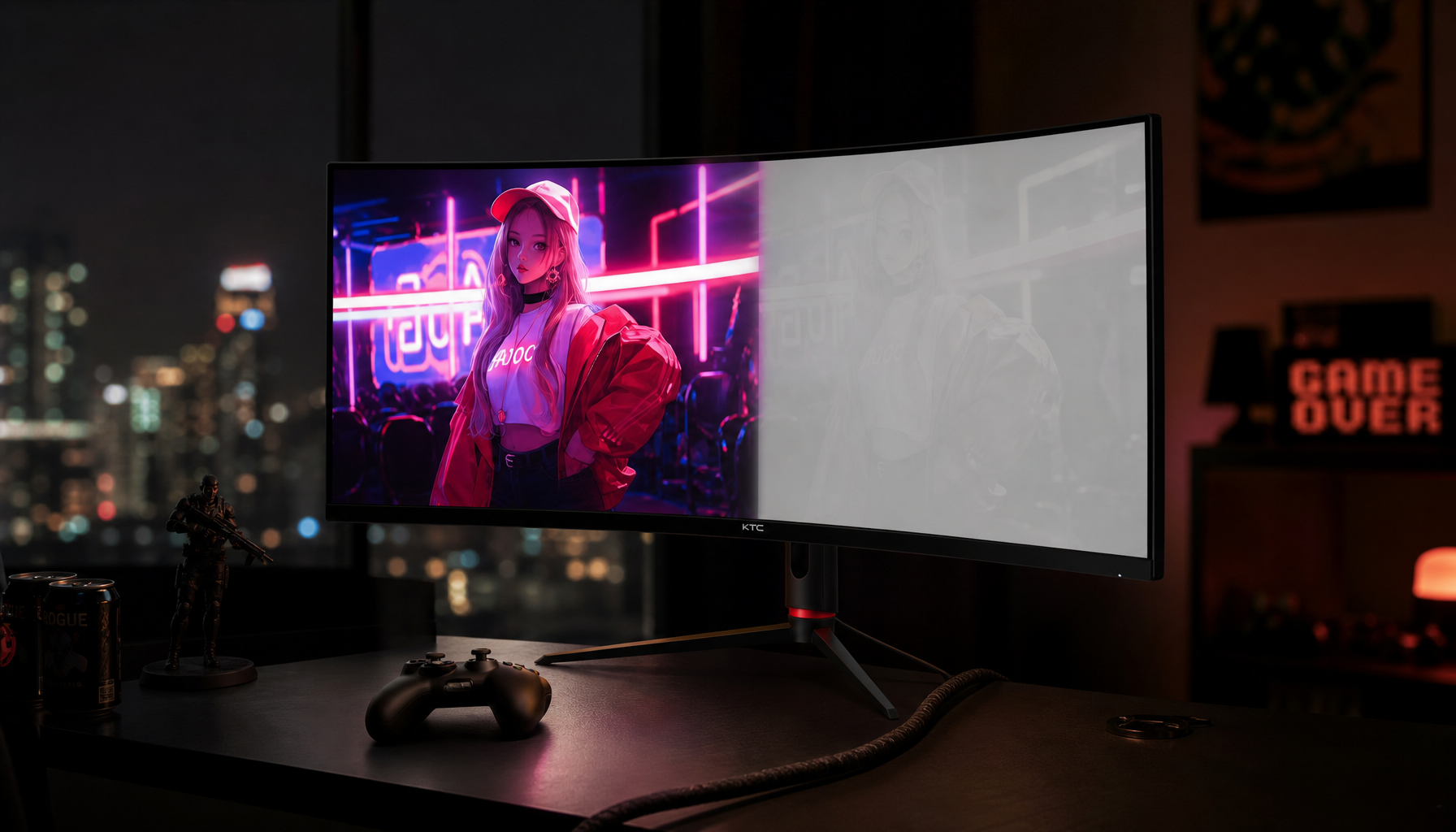
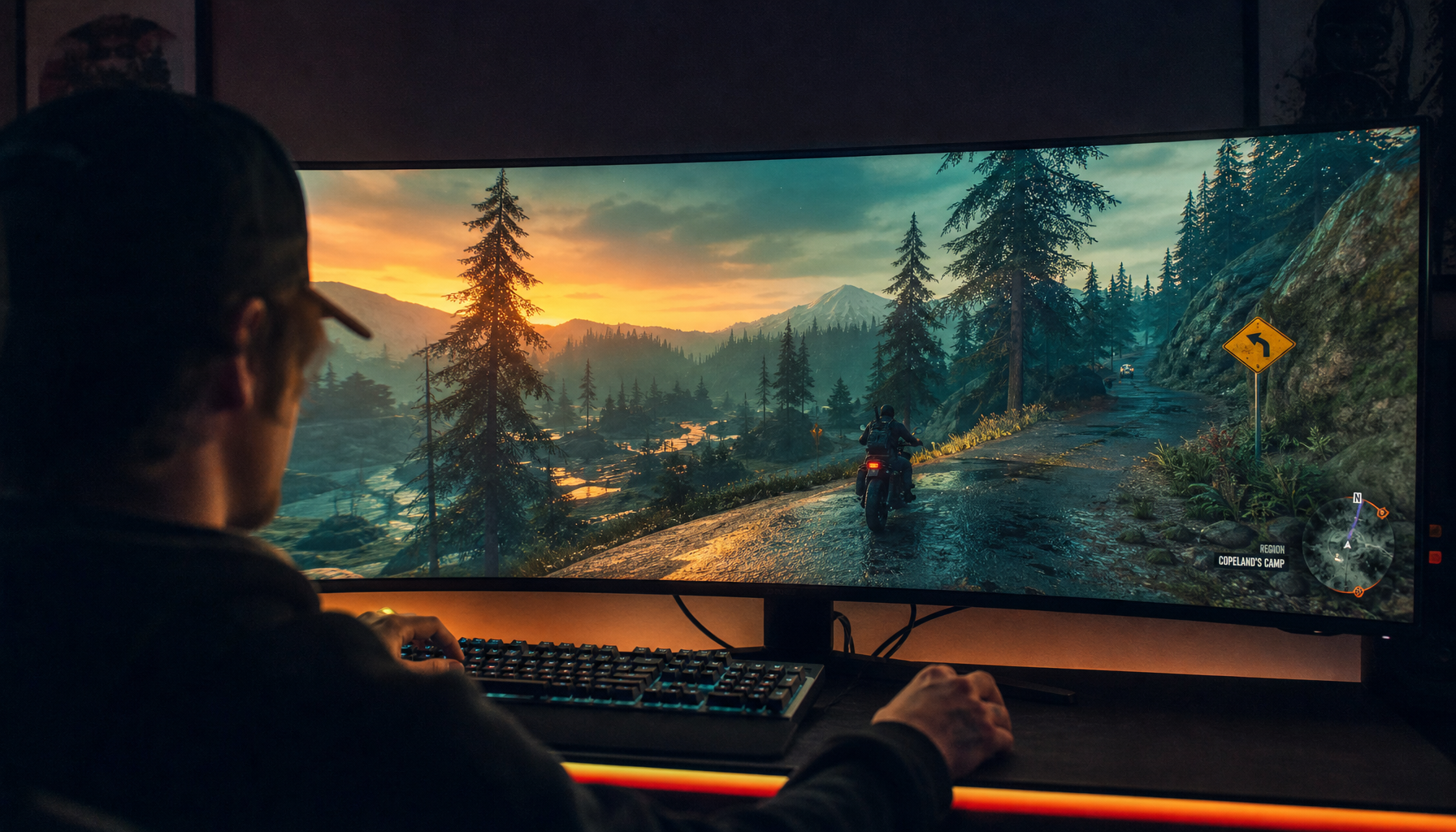
An ultrawide monitor usually means a 21:9 display instead of the standard 16:9, and that wider canvas can show more of the game world at once. In practice, the gain feels most obvious in racing, flight, simulation, strategy, and open-world games, where peripheral information matters and the play space benefits from a broader view. A 21:9 display format is also commonly paired with 3440x1440, which is the sweet spot many enthusiasts choose because it balances clarity, size, and compatibility.
That said, “advantage” needs a careful definition. In a fair competitive sense, an unfair advantage would mean hardware gives access to information or reaction windows that other players cannot reasonably counter. Ultrawide can sometimes move in that direction, which is why some games restrict support. One widely cited example is a major competitive shooter that disabled 21:9 support to avoid imbalance.
Does seeing more on the sides help you win?
Yes, in certain genres, but the benefit is situational rather than universal. A wider screen can help you spot movement earlier at the edges, monitor more UI, or track more of the map without panning as much. That is why ultrawide gaming monitors remain so appealing for immersive PC play, especially at 3440x1440 and above.
In real matches, though, more visible space is not the same as faster decision-making. On a 34-inch ultrawide, the minimap, ammo count, teammate pings, and flank routes may all fit more naturally, but your eyes still need to travel farther. For slower tactical games or vehicle-based titles, that wider awareness can be a real comfort and performance benefit. For twitch shooters, the extra width can become visual overhead.

Long-term user experience reflects that split. One daily ultrawide owner in a retrospective on living with ultrawide found the format excellent for cinematic gaming, but less ideal in competitive play because important action still stays centered while peripheral content keeps pulling attention outward. That matches what many display reviews have suggested for years: broader vision helps most when the game gives you time to use it.
Why many competitive players still stay with 16:9
If ultrawide were a clear multiplayer cheat code, esports would have standardized around it by now. They have not. Competitive players often keep choosing 24-inch to 27-inch 16:9 displays because the full play area stays inside a tighter natural view, reducing head and eye movement. Fast refresh and low latency matter more than raw width, and gaming monitor guidance keeps reinforcing that point by prioritizing refresh rate, response time, and use-case fit over aspect ratio alone.
This is where the “unfair” claim usually falls apart. In high-level multiplayer, consistency is often more valuable than a wider canvas. Tournament environments, spectator tools, HUD design, and developer balancing all lean toward standardized 16:9 behavior. Some games preserve ultrawide support but keep UI or camera rules conservative; others show black bars in cutscenes or scale awkwardly. Support is still inconsistent, especially in titles that aim for strict competitive parity.
There is also a practical comfort issue. On paper, more field of view sounds like free performance. In practice, a very wide panel can push HUD elements toward the corners, which means more eye travel for health, cooldowns, or radar checks. That can work against you in games decided by fractions of a second.
The performance cost most players underestimate
Ultrawide is not just a shape change; it increases rendering workload. A 3440x1440 panel carries about 4.95 million pixels, while standard 2560x1440 sits at about 3.69 million. That means 3440x1440 has roughly 35% more pixels for your GPU to push every frame.
That extra load matters more than many buyers expect. If your current system runs a competitive shooter at 180 FPS on 2560x1440, moving to ultrawide without lowering settings can easily cut that headroom enough to pull you below your monitor’s refresh target. Broader advice around 3440x1440 versus 4K workloads is useful here: ultrawide is easier to run than 4K, but it is still meaningfully heavier than standard 1440p.
Older enthusiast advice makes the same value point from another angle. In one flight-sim hardware discussion, top-end GPU spending at high resolutions was criticized when the real-world gain did not justify the price. That logic still holds. If ultrawide forces a costly GPU upgrade just to maintain your current competitive frame rate, the “advantage” may turn into a net loss.
When ultrawide is a real upgrade, not a gimmick
Ultrawide makes the strongest case when you split time between immersive gaming and serious desktop work. The extra horizontal room is excellent for chat, maps, timelines, dashboards, and side-by-side windows, and ultrawide monitor setups can replace dual monitors without bezels or extra cabling. For a player who races at night, edits clips the next morning, and keeps streaming tools and a browser open, that is real value.

The buying sweet spot for most people is still a 34-inch 3440x1440 model with at least 144 Hz, solid adaptive sync, and a curve that matches your desk depth. That recommendation aligns with current ultrawide picks and broader setup guidance recent ultrawide monitor testing. Going larger to 49 inches or 32:9 can be spectacular for sims, but it is much more niche, more demanding, and more likely to expose compatibility issues.
Use case |
Best fit |
Why |
24-inch to 27-inch 16:9 |
Faster visual focus, standard support, easier high FPS |
|
Racing, flight, sim, strategy |
34-inch ultrawide |
Better side awareness and stronger immersion |
34-inch ultrawide |
One-screen multitasking with strong gaming capability |
|
Luxury sim cockpit setup |
49-inch super ultrawide |
Maximum wraparound feel, but expensive and specialized |
So, is it unfair?
Usually not. Ultrawide can offer a modest information and immersion edge in games that fully support it, but that edge is balanced by wider eye travel, heavier GPU demand, and inconsistent competitive support. In many serious multiplayer titles, developers already cap or tune the experience to keep things fair.
The better question is not whether ultrawide is unfair, but whether it matches how you play. If your nights revolve around ranked shooters and you care most about stable, high-refresh performance, 16:9 is still the cleaner competitive tool. If you want a more absorbing screen for sims, open-world games, and a powerful one-display desk, ultrawide earns its place when the hardware and game support are there.
A good display should widen your options, not just your screen. Buy ultrawide for immersion and workflow gains, not because you expect it to carry your K/D.