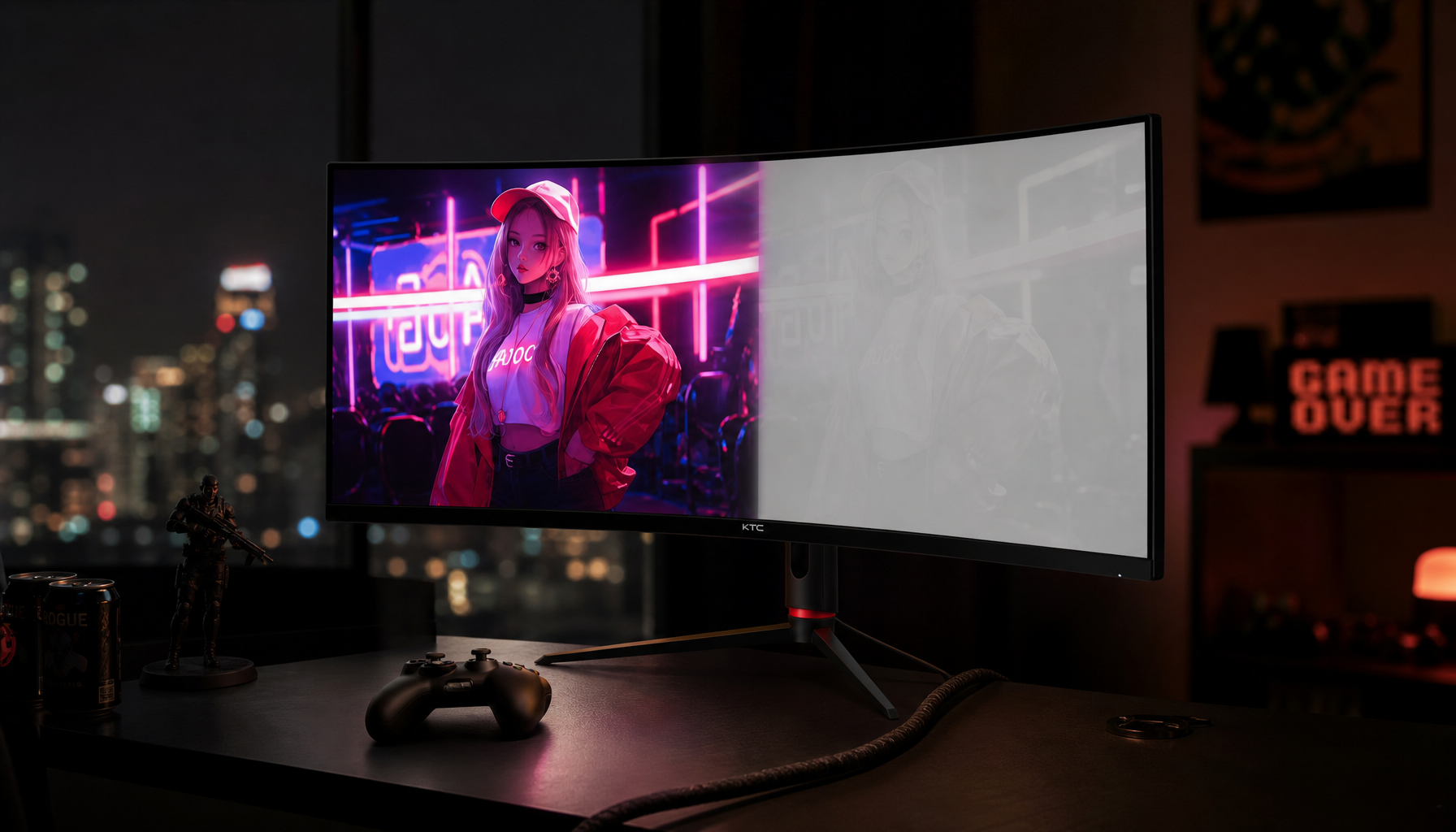
Static HDR metadata applies one brightness-and-color instruction set to an entire movie, game, or video, while dynamic HDR metadata can adjust those instructions scene by scene or frame by frame. The practical difference is consistency: dynamic metadata gives capable displays better guidance when content moves from dark caves to sunlit skies.
 Does HDR sometimes look brilliant in one scene, then oddly dim, washed out, or too crushed in the next? On a good gaming monitor, portable smart screen, or productivity display, understanding metadata helps you choose the right HDR format, calibrate desktop HDR correctly, and avoid paying for an HDR logo that your panel cannot meaningfully use. Here is the plain-language breakdown that turns the spec sheet into a better screen decision.
HDR Metadata, Explained Without the Fog
HDR metadata is the instruction layer that tells a display how HDR content was mastered and how bright or colorful it may need to get. In practical monitor terms, it helps the screen decide how to map a movie, game, or creative preview onto the panel’s real limits for peak brightness, black level, color volume, and contrast.
HDR itself is not magic brightness. High-dynamic-range television can represent brighter highlights, darker shadow detail, and wider color than SDR, but it cannot make a weak panel suddenly behave like a 1,000-nit Mini-LED or an OLED with pixel-level black control. Metadata is guidance; the display hardware still has to execute.
Tone mapping is where the work happens. If a game scene is mastered for highlights brighter than your monitor can produce, tone mapping compresses that brightness into the range your screen can show. Done well, clouds keep texture, neon signs glow without becoming white blobs, and dark hallways still reveal usable detail. Done poorly, HDR can look flatter than SDR.
 What Static HDR Metadata Means
Static metadata uses one set of mastering information for the whole piece of content. HDR10 is the most common example on monitors, consoles, streaming boxes, and PC games. HDR10 uses static metadata, 10-bit color, and wide color standards, which is why it became the baseline HDR format across so many devices.
The advantage is compatibility. If your monitor says it supports HDR, there is a strong chance it accepts HDR10. That matters for PC gaming, console use, and portable screens where universal support is more valuable than chasing a premium format that your source device or app may not output.
The weakness is compromise. One metadata profile has to cover the whole experience, even if the content jumps from a dim office interior to a desert battlefield at noon. On a strong OLED or high-zone Mini-LED display, the monitor’s own tone mapping may handle this gracefully. On an entry-level HDR400 monitor with no local dimming, the same static instruction set can lead to clipped highlights, raised blacks, or a picture that looks technically HDR but feels unimpressive.
A simple example makes this clear. Imagine a two-hour movie with one scene mastered around a candlelit room and another around a bright snowfield. Static metadata gives the display an overall map for the title, not a fresh map for each scene. Your monitor must decide how to protect both shadow detail and highlight detail using limited information.
What Dynamic HDR Metadata Means
Dynamic metadata changes as the content changes. HDR10+ and other dynamic HDR formats are the best-known consumer examples. HDR10+ adds dynamic metadata, which allows brightness and color instructions to vary by scene or frame instead of staying fixed for the entire title.
That matters most when the display has enough performance to use the extra guidance. A dynamic HDR signal can tell the screen to preserve subtle shadow texture in a dark scene, then shift priorities when a bright explosion or specular highlight appears. The goal is not just brighter HDR. The goal is better-controlled HDR.
Some proprietary dynamic HDR ecosystems use broader certification requirements. According to official support documentation, the operating system may automatically choose a certified dynamic HDR format when available because certification can provide stronger guarantees than a basic HDR signal alone. That does not mean every certified monitor will look brighter in every mode; it means the system may prioritize certified accuracy and tone-mapping behavior over maximum punch.
For users who split time between gaming, productivity, and media, this is a key nuance. Dynamic metadata can improve content playback, but desktop HDR, game HDR, and monitor HDR modes still interact. If a monitor limits brightness in one certified mode and unlocks higher brightness in another non-certified HDR10 mode, the best setting depends on whether you value accuracy, impact, or workflow consistency.
Static vs Dynamic HDR Metadata: Practical Comparison
Feature |
Static HDR Metadata |
Dynamic HDR Metadata |
Common formats |
HDR10 |
HDR10+, certified dynamic HDR formats |
Adjustment behavior |
One instruction set for the whole title |
Scene-by-scene or frame-by-frame guidance |
Main strength |
Broad compatibility |
More precise tone mapping |
Main weakness |
Can compromise mixed bright and dark scenes |
Requires compatible content, device, and display |
Best fit |
PC monitors, consoles, broad HDR support |
Premium movie playback, high-end displays, consistency-focused setups |
Hardware dependency |
High |
Still high |
Why Monitor Hardware Matters More Than the Logo
Metadata is only part of HDR quality. HDR quality depends on contrast ratio, black levels, brightness, color performance, and local dimming effectiveness. A monitor can accept dynamic metadata and still look mediocre if it lacks the brightness, dimming precision, or color volume to reproduce the intended image.
This is why HDR certification tiers deserve attention. HDR certifications help users understand whether a PC is actually operating in HDR mode, and broader certification programs classify monitor capability rather than simply confirming that an HDR signal is accepted. Entry-level HDR support is not the same thing as convincing HDR.
HDR400 is often the first step into HDR, but it can be limited for immersive gaming because many displays in that range lack meaningful local dimming. Higher tiers such as HDR1000 and HDR1400 usually point to stronger brightness and black-level performance. A useful real-world rule is this: if a monitor cannot create a bright highlight without lifting the surrounding dark area, dynamic metadata has less room to shine.
For office productivity displays, this cuts both ways. A high-brightness Mini-LED monitor may make HDR video and cinematic games look excellent, but aggressive local dimming can create blooming around white text, spreadsheets, and UI elements. For a work-first display, SDR accuracy and stable desktop behavior may matter more than the most dramatic HDR mode.
Which Is Better for Gaming?
For gaming, dynamic metadata is helpful when supported, but it is not the first spec to chase. Many PC HDR games still rely on HDR10 output plus in-game calibration sliders. The larger performance difference often comes from the monitor’s peak brightness, black control, local dimming, panel type, and whether the game’s HDR implementation is competent.
HDR gaming advice is practical here: a display that merely accepts HDR input may still map HDR into an SDR-like output, while true HDR should exceed typical SDR limits in brightness, contrast, color gamut, and dimming behavior. In a racing game, setting the HDR white point too high can erase cloud detail. In a horror title, setting black levels poorly can crush hallway detail into a flat dark block.
A performance-driven setup should start with the monitor’s accurate HDR or Game HDR mode, then run system or console HDR calibration, then tune the in-game HDR sliders. If the game includes a paper-white setting, treat it as UI and midtone comfort, not as a contest to maximize brightness. If it includes a peak brightness slider, match it to what your display can actually sustain, not the biggest number in the menu.
 Which Is Better for Office and Creative Work?
For everyday office use, static versus dynamic metadata is usually less important than whether HDR should be enabled at all. The desktop HDR pipeline performs tone mapping before desktop composition, using monitor information and content metadata. That is powerful, but it can also make SDR desktop content look different from what you expect.
For spreadsheets, email, coding, browser work, and SDR design tasks, SDR mode often remains the cleaner default. Testing guidance makes the same practical point: enabling desktop HDR is best reserved for actual HDR games or video because SDR desktop colors can look incorrect when HDR stays on all day.
For creative HDR work, the bar is higher. You need an HDR-capable display, repeatable brightness behavior, wide color coverage, and calibration discipline. A portable smart screen labeled HDR may be useful for client previews or entertainment, but it should not be treated as a reference HDR grading monitor unless its brightness, gamut, and tone tracking are measured and stable.
Buying Advice: What to Check Before You Pay for Dynamic HDR
Start with the content chain. Your source device, app, operating system, cable, and monitor must all support the HDR format you want. The monitor, content, source device, cable, and settings all need HDR support, so a single missing link can collapse the experience back into basic HDR10 or SDR.
Then check the panel’s real HDR capability. Look for peak brightness, sustained brightness, local dimming or OLED-level black control, 10-bit support or 8-bit plus FRC, and wide color coverage such as DCI-P3. For a gaming monitor, also confirm the exact refresh-rate mode you plan to use, because 4K at 120 Hz with HDR, VRR, and 10-bit color demands more bandwidth than casual spec sheets suggest.
Finally, decide by use case. If you want a reliable office display with occasional HDR video, strong SDR quality plus baseline HDR10 may be enough. If you want immersive single-player games, HDR movies, and console HDR, prioritize OLED or a strong Mini-LED panel before worrying about dynamic metadata. If you want the most consistent scene-to-scene HDR playback, dynamic formats such as HDR10+ or other certified dynamic HDR formats are worth having, but only when your display hardware can make those instructions visible.
 Quick FAQ
Does Dynamic HDR Always Look Better Than Static HDR?
No. Dynamic metadata gives better instructions, but the display still needs enough brightness, contrast, color volume, and tone-mapping quality to use them. A strong HDR10 OLED or Mini-LED monitor can outperform a weak display that technically supports a dynamic format.
Is HDR10 Bad Because It Uses Static Metadata?
HDR10 is not bad; it is the universal baseline. Its static metadata is less adaptive, but broad support makes it valuable for PC monitors, game consoles, streaming devices, and portable displays.
Should I Leave HDR On All the Time?
For most mixed-use setups, no. Keep SDR for desktop work and enable HDR when you play HDR games, watch HDR video, or edit HDR content. That keeps office colors predictable and makes HDR feel intentional when you actually need it.
Final Word
Static HDR metadata is the dependable baseline; dynamic HDR metadata is the smarter guide. For the best screen experience, buy the display for its real brightness, contrast, dimming, and color performance first, then treat dynamic HDR support as the control layer that helps capable hardware reach its full impact.