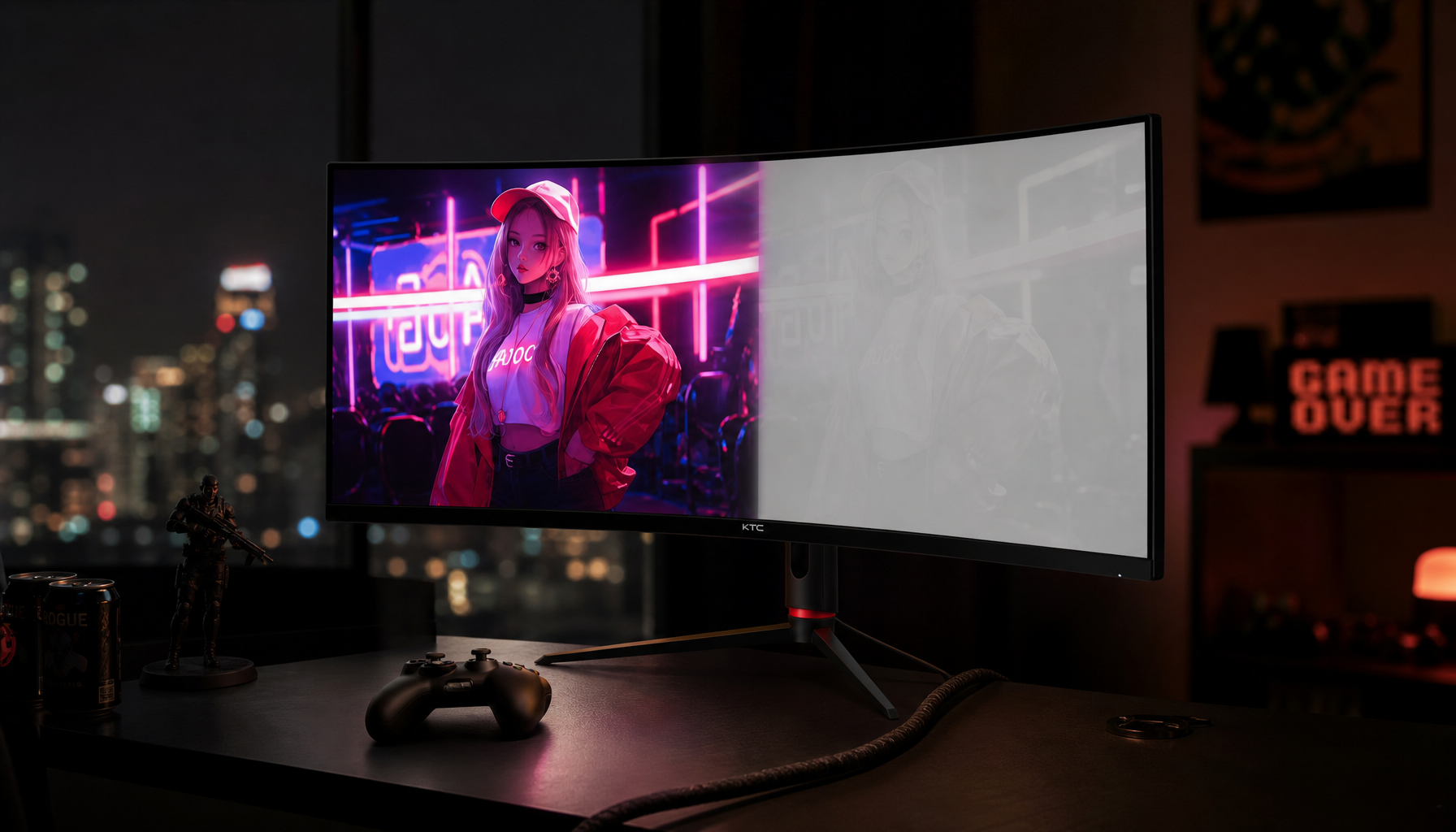
Yes, on many gaming monitors, sRGB mode improves SDR color accuracy without ruining immersion. The tradeoff is that some wide-gamut displays look less punchy at first because sRGB mode removes extra saturation that was never part of the game image.
If you switched your gaming monitor to sRGB mode and the picture suddenly felt less dramatic, that reaction is normal. On a wide-gamut 27-inch or 34-inch gaming display, the change often means exaggerated reds and greens were pulled back to a more correct level, not that the panel lost quality. You’ll leave with a practical way to choose between sRGB, Native, Game, and HDR modes based on the games you play and the monitor you own.
What sRGB Mode Actually Changes on a Gaming Monitor
It usually clamps a wide-gamut panel back to the SDR target
On most PCs, most content uses the sRGB color space, including the desktop, web content, and standard SDR video. That matters for gaming monitors because many newer IPS, OLED, mini-LED, and ultrawide displays can show a wider gamut than sRGB, so default or Native mode may push SDR games beyond the color range their artists expected.
That is why sRGB mode is often treated as the common-denominator setting. It does not fully calibrate the monitor, but it usually gets SDR content closer to the intended color target. In practice, that means grass, skin tones, UI elements, and skies often look less neon on a wide-gamut gaming monitor.

It can reduce “wow factor” if you are used to oversaturation
A wide-gamut monitor in default mode can look more vivid simply because it is showing SDR content with extra color intensity. A review site notes that many monitors do not automatically limit SDR content to sRGB, which is why uncorrected images can appear oversaturated even when the panel itself is technically impressive.
That first impression is where many gamers get stuck. If you have been using a factory Game mode on a 240 Hz esports monitor or a bright ultrawide for months, sRGB mode can seem muted for the first few hours. The visual impact is lower only in the sense that the fake extra saturation is gone; sharpness, contrast, motion clarity, and refresh rate are unchanged unless the preset also alters other controls.
When sRGB Mode Is the Better Choice for Gaming
SDR games usually benefit the most
For most SDR titles, developers target sRGB, while wide-gamut oversaturation is a monitor-side effect. That makes sRGB mode a strong fit for competitive shooters, MOBAs, older games, and everyday mixed use where you move between a game platform, a chat platform, a video platform, and a desktop platform on the same display.
This is especially useful on monitors that cover nearly all of sRGB and go much wider in their native gamut. On those displays, sRGB mode can make enemy outlines, HUD colors, and map details look cleaner because you are not fighting exaggerated color separation. If you play for long sessions, the more restrained image can also feel easier on the eyes than a permanently boosted preset.

Mixed-use setups benefit from consistency
A gaming monitor is rarely used for games alone. Non-color-managed applications can look more wrong in Native mode than in sRGB mode, which helps explain why a monitor that looks exciting in one game can make browser images, streams, or launchers look odd.
For a single-monitor setup in a bedroom, dorm, or apartment office, sRGB mode is often the safest daily setting. It keeps web pages, SDR games, video apps, and store pages closer to the same visual baseline. If your monitor is also used for light photo work, content creation, or shopping for another portable monitor or ultrawide, that consistency matters more than a permanently boosted picture preset.
When Native, Game, or HDR Mode Makes More Sense
Story-driven games can justify a more saturated look
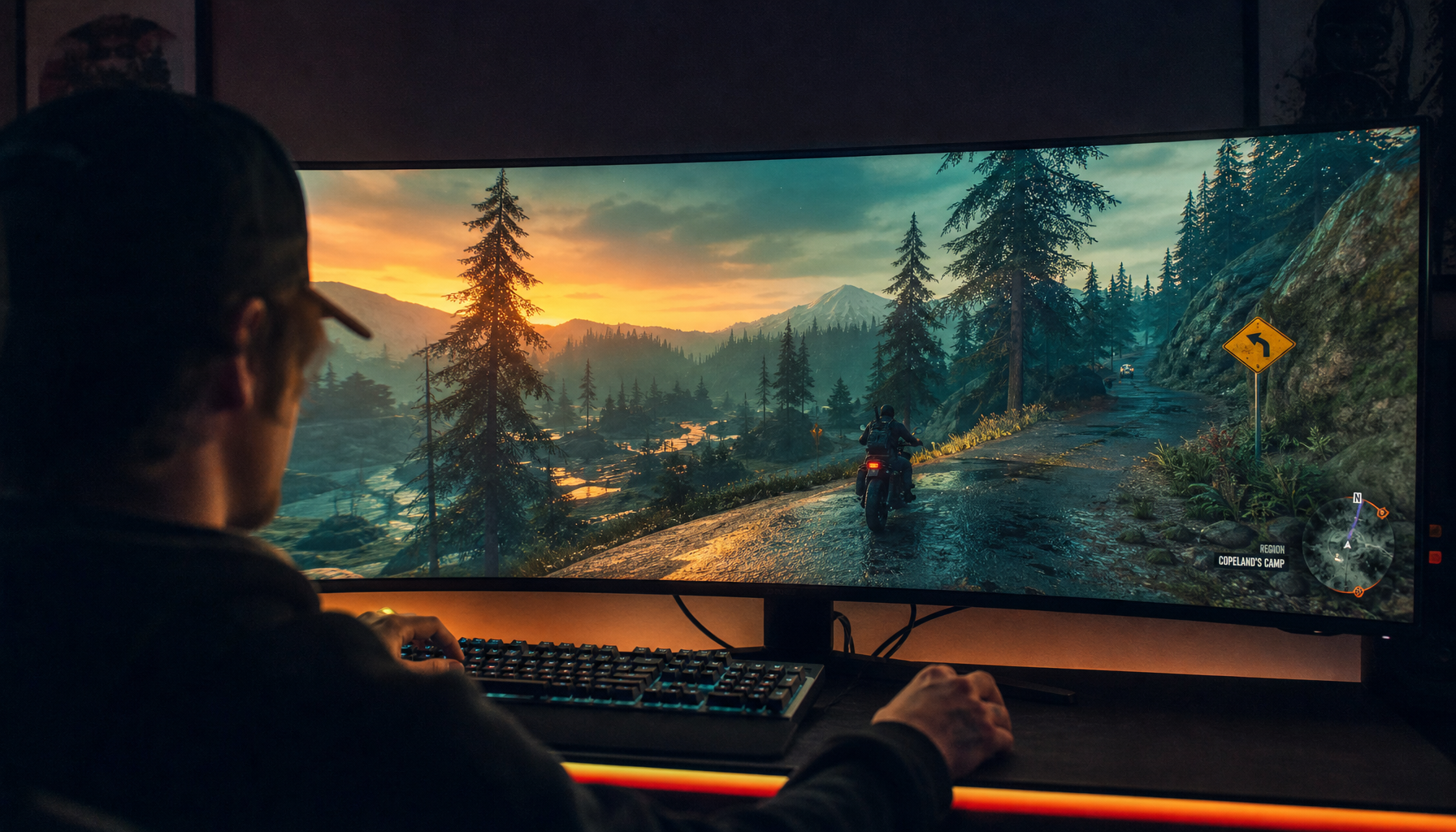
Some gamers simply prefer a more dramatic image, and that preference is valid. A review site explicitly notes that some users may prefer oversaturated images, especially on large curved ultrawide monitors or bright mini-LED gaming displays where cinematic impact is part of the point.
If you mostly play open-world, fantasy, racing, or anime-styled titles in SDR, Native or a tuned custom mode may feel more exciting than strict sRGB. That is not the accurate choice, but it can be the preferred one. The key is understanding that you are making an intentional style decision rather than assuming the more colorful preset is automatically “better.”
HDR changes the equation
Once HDR is enabled, developers can target wider spaces such as DCI-P3 and Rec. 2020 instead of plain SDR sRGB. In those cases, a monitor’s HDR mode can produce stronger highlights and more selective color intensity, even if the overall image looks less universally saturated than the monitor’s oversaturated SDR default mode.

That is why HDR can look “less colorful” at first on a wide-gamut gaming monitor. You are often moving from inaccurate SDR oversaturation to a more controlled HDR presentation. If HDR still looks too subdued on your display, the same monitor discussion notes that an HDR calibration tool from a software company and limited saturation adjustments can help, but those tweaks are broad and can push some shades too far.
How Panel Type, Refresh Rate, and OSD Behavior Affect the Decision
Panel capability does not guarantee a good sRGB preset
A gaming monitor can have excellent gamut coverage and still have a frustrating sRGB mode. A review site points out that most monitors cover over 95% of sRGB, but coverage alone does not tell you whether the preset locks brightness, limits gamma options, or leaves white balance slightly off.
That matters a lot in buying decisions. A 360 Hz esports monitor with a locked, dim sRGB mode may be less useful than a 165 Hz monitor with a flexible custom preset that lets you tame saturation without losing brightness control. Likewise, a premium OLED may have superb color volume, but if you spend most of your time in SDR games, the practical question is whether its everyday SDR behavior is manageable.
Some monitors restrict controls in sRGB mode
On some displays, users report that enabling sRGB mode locks brightness and contrast controls. That does not make sRGB mode bad, but it can make it inconvenient, especially if you play in a bright room during the day and a dark room at night.
Refresh rate itself is not the deciding factor here. A 144 Hz portable monitor, a 240 Hz 1440p panel, and a 49-inch ultrawide can all benefit from sRGB mode if their SDR default mode is too hot. What matters more is whether the monitor gives you enough OSD control to balance accuracy, brightness, and comfort without forcing you into a single rigid preset.
How to Test sRGB Mode Without Guessing
Compare modes in the right order
The fastest way to judge sRGB mode is to compare it against Native or your current Game preset using the same SDR game scene. sRGB mode is closer to the common SDR target, but it is not full calibration, so the goal is not perfection. The goal is to see whether the monitor looks more believable without becoming flat.
Start with a game that gives you a mix of skin tones, foliage, UI accents, and neutral surfaces. Good test cases include a bright map in a competitive shooter, a daylight town area in an RPG, and a browser page right after. If reds stop glowing, greens look less radioactive, and white menus stop picking up a tint, sRGB mode is probably doing its job.

Use the mode that matches the content
If HDR is available and well implemented on your monitor, HDR can deliver a more accurate wide-color presentation than oversaturated SDR. If HDR is inconsistent in a specific title, switch back to SDR and decide between sRGB and a custom wide-gamut mode based on whether you value accuracy or drama more in that game.
The best long-term setup for many gamers is simple: use sRGB for desktop work and most SDR games, keep one custom preset for “fun” SDR gaming, and use HDR only in titles where the implementation is clearly better. That approach works well on mainstream gaming monitors, premium ultrawides, and even secondary portable monitors used with a laptop or handheld PC.
sRGB Mode vs Other Monitor Modes
Mode |
Best for |
Main visual effect |
Main downside |
Best monitor buyer fit |
sRGB |
SDR gaming, desktop, mixed use |
More accurate SDR color, less oversaturation |
May look less vivid at first; some monitors lock controls |
Buyers who want a balanced everyday gaming monitor |
Native |
Cinematic SDR gaming, custom tuning |
Maximum gamut and stronger color punch |
SDR games can look oversaturated |
Buyers who prefer impact over accuracy |
Game preset |
Fast switching, casual gaming |
Often brighter or punchier out of the box |
Color can be inconsistent or exaggerated |
Buyers who want convenience on high-refresh-rate displays |
HDR |
HDR-capable single-player games |
Wider intended color range, brighter highlights |
Quality varies by game and monitor |
Buyers prioritizing HDR-ready gaming monitors |
Mixed gaming and creator use |
Best chance at balancing accuracy and control |
Takes time and may need tools |
Buyers who are picky about both image quality and flexibility |
Action Checklist
- Test sRGB mode with one SDR game, one browser page, and one video app on the same monitor.
- Check whether sRGB mode locks brightness, contrast, or color temperature in the OSD.
- Keep sRGB for daily use if your default mode makes reds, greens, and UI colors look exaggerated.
- Save a separate custom or Game preset if you prefer extra punch for single-player SDR games.
- Use HDR only in games that clearly benefit from it on your specific display.
- Evaluate the monitor in your actual room lighting, not just at night or in a showroom-like environment.
FAQ
Q: Does sRGB mode make a gaming monitor look washed out?
A: Usually no. It often looks less saturated, but that is different from washed out. On a wide-gamut gaming monitor, sRGB mode commonly removes excess color rather than reducing contrast or motion quality.
Q: Is sRGB mode better for competitive gaming or cinematic games?
A: It is usually better for competitive and mixed-use SDR gaming because color cues and UI elements look more controlled. Cinematic SDR games may feel more impressive in a custom wide-gamut mode if you prefer style over strict accuracy.
Q: Should I leave HDR on instead of using sRGB mode?
A: Not by default. HDR is useful when the game and monitor both handle it well. For everyday desktop use and many SDR games, sRGB mode is often the more predictable choice.
Final Takeaway
sRGB mode is not the enemy of visual impact on a gaming monitor. It is usually the more accurate choice for SDR content, especially on wide-gamut displays that otherwise make games look more saturated than intended.
If your monitor’s sRGB preset stays bright enough and does not lock too many controls, it is often the best everyday mode. If it feels too restrained for certain games, keep a second preset for cinematic SDR play and reserve HDR for titles that truly benefit from your panel’s wider color capability.