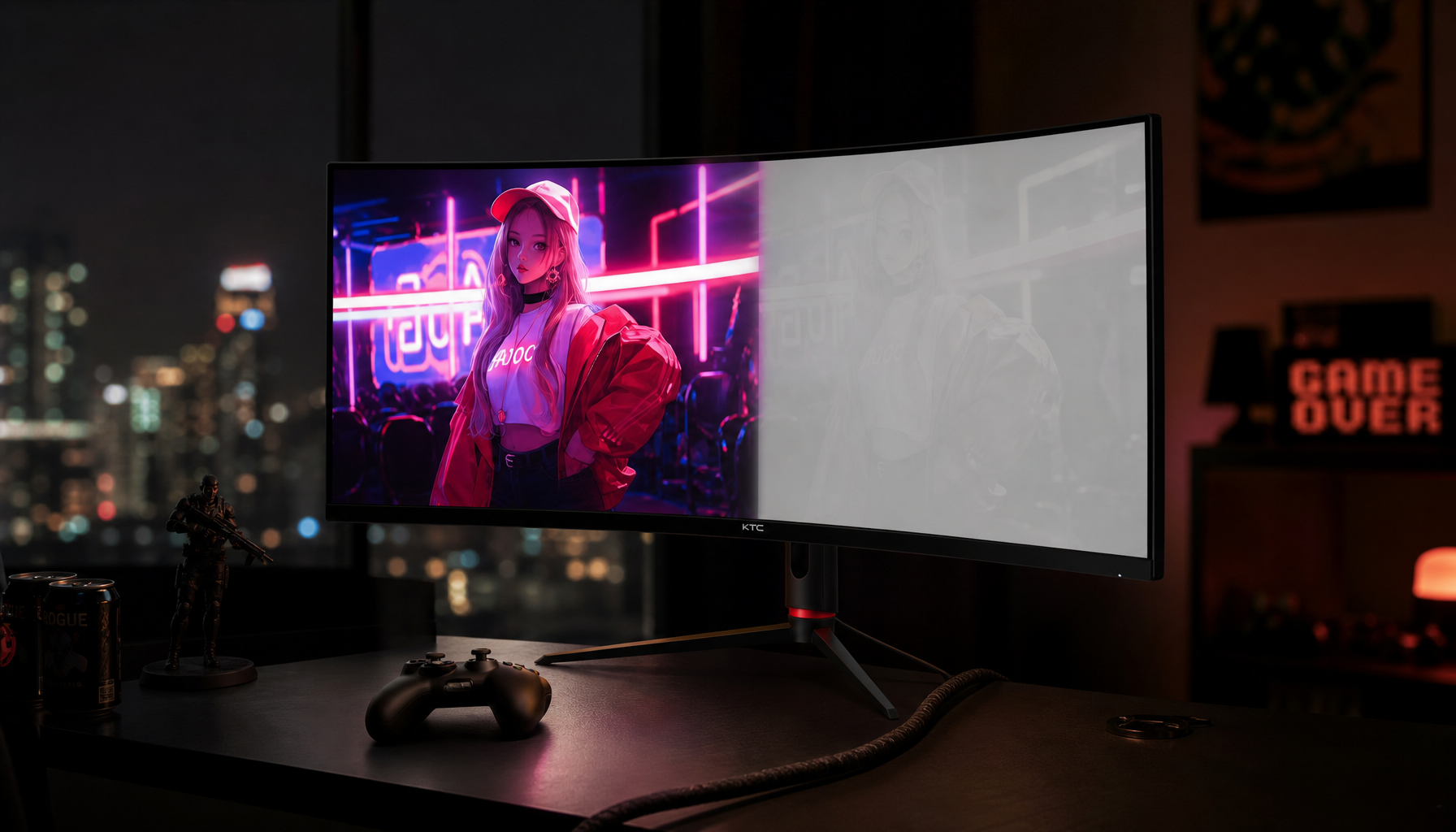
Dark scenes differ because SDR and HDR use different brightness rules, color handling, metadata, and tone mapping. HDR can reveal more shadow depth, but only when the display, room, settings, and content mastering all line up.
Does a cave in your game look rich and dimensional in SDR, then oddly dim, gray, or crushed when HDR turns on? A practical display setup can usually separate a real HDR limitation from a bad mode, a bright room, or system-level tone mapping in minutes. You’ll learn why dark scenes shift between SDR and HDR, how to diagnose the cause, and which settings actually improve the picture.

SDR and HDR Do Not Treat Darkness the Same Way
SDR, or Standard Dynamic Range, was built around a narrower brightness and color range. It is predictable, easy to drive, and still excellent for office work, web browsing, esports, and most non-HDR video. HDR, or High Dynamic Range, expands the signal so content can carry brighter highlights, deeper shadows, and wider color, which is why a night skyline can show both dim windows and sharp neon without forcing everything into the same narrow range.
The key difference is that HDR is not just “brighter SDR.” The HDR setup process exists because the whole chain has to confirm that the operating system, graphics hardware, cable, monitor, and app are actually operating in HDR mode. If one part falls back to SDR behavior, the result can look flat, dark, or overprocessed.
In real use, SDR often looks brighter in dark scenes because users raise brightness or backlight for a comfortable desktop. HDR is more content-led. If a movie’s shadow is meant to be dim, HDR may keep it dim instead of lifting it for a bright office. That can look more cinematic in a controlled room and worse under overhead lights.
Why HDR Dark Scenes Can Look Better
A strong HDR display can give dark scenes more separation. Instead of turning a black jacket, a dark wall, and a shaded doorway into the same muddy patch, good HDR preserves small brightness steps near black while leaving room for bright highlights. That is the immersive payoff: more depth per pixel, not just more pixels.
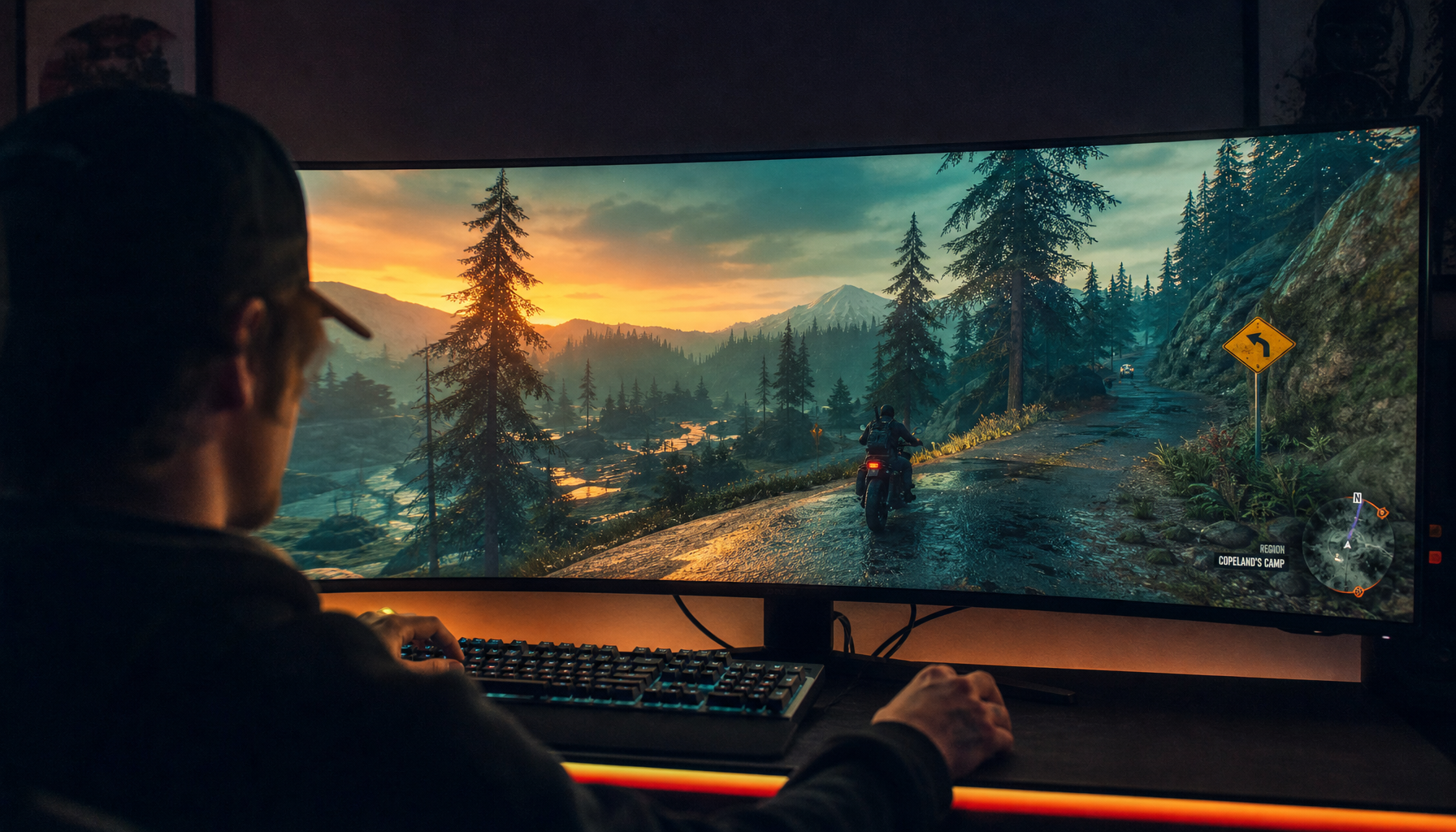
The best examples show up in games and films with native HDR grading. A torch in a dark hallway should stay bright without washing the whole frame. A starfield should hold tiny bright points while the background remains convincingly black. A tactical monitor used for night maps should let you see shape and distance without turning the entire scene gray.

This depends heavily on black level. Peak brightness gets the marketing spotlight, but a high peak number cannot rescue raised blacks. A display with weak contrast may make HDR night scenes look milky because the darkest parts of the image are not truly dark. Self-emissive panels usually excel here because pixels can shut off individually, while local-dimming LCDs can perform very well when dimming zones are controlled tightly.
Factor |
SDR Behavior |
HDR Behavior |
Dark-room brightness |
Often user-adjusted upward |
More tied to content intent |
Highlight handling |
Compressed into a smaller range |
Preserved through higher luminance targets |
Shadow detail |
Predictable but limited |
Potentially richer, but easier to crush |
Color depth |
Commonly 8-bit |
Commonly 10-bit in HDR workflows |
Display dependence |
Moderate |
Very high |
Why HDR Dark Scenes Can Look Worse
HDR dark scenes often disappoint when the monitor accepts HDR metadata but lacks the hardware to show it well. Entry-level HDR modes may read the signal without delivering deep blacks, high local contrast, meaningful peak brightness, or stable tone mapping. That is why “HDR supported” should never be treated as proof of high HDR quality.
The HDR setup process is useful because it pushes buyers and users to verify real HDR operation instead of trusting a label. A basic HDR-capable monitor may make an HDR game switch on, but dark scenes can still look flatter than SDR if the panel has low native contrast, no effective local dimming, or a picture mode that lifts the black floor.
Desktop HDR can also be confusing. SDR apps inside HDR mode may look washed out or dull because SDR desktop content and HDR video are being handled through the same system-level pipeline. For productivity, SDR often remains the cleaner choice. For HDR movies and games, switch HDR on deliberately, use the right monitor mode, and calibrate around that use case.
Tone Mapping Is the Hidden Difference
Tone mapping is the display’s attempt to fit HDR content into its real brightness and color limits. HDR content may be mastered for brightness levels beyond what a consumer monitor can reproduce, so the display has to decide what to preserve, what to compress, and what to clip.
HDR10 uses static metadata, meaning one set of brightness guidance applies across the whole movie or episode. Some dynamic HDR formats can use scene-aware metadata. Early HDR10 streaming rollouts showed why HDR delivery depends on both format support and the playback device’s ability to interpret the signal properly.
Here is the practical impact. In a dark scene with a bright flashlight, one monitor may protect the flashlight beam and crush the surrounding wall texture. Another may lift the shadows and make the flashlight less intense. Neither is simply “wrong”; each is tone mapping the same HDR signal through different hardware and firmware limits.
Your Room Can Make HDR Look Too Dark
HDR shadow detail is fragile in a bright room. Reflections, desk lamps, and window light raise your eye’s black reference, so a correctly dim scene can look underexposed. SDR often feels easier in daylight because you can raise brightness globally and keep working.

Color-critical HDR viewing expects a very controlled environment. Light Illusion notes that an HDR reference surround is built around very low ambient light, with the monitor surround luminance held near 5 nits. That is far darker than a typical home office with a ceiling light, a white wall, and daylight spilling across the panel.
For a practical setup, treat HDR like a performance mode. Dim direct lights, avoid shining desk lamps onto the screen, and use bias lighting behind the monitor rather than in front of it. If you run a glossy self-emissive panel, room reflections can lift perceived blacks dramatically. If you use a matte LCD, glare is softer, but blacks can still look lighter under strong ambient light.
Calibration Changes the Dark Scene Balance
Calibration is where many HDR complaints get solved. Built-in HDR video calibration for laptop displays explicitly balances bright-area detail against dark-area detail, and its HDR content calibration workflow tells users to move the slider toward dark detail when shadows disappear.

For external monitors, use the monitor’s accurate HDR mode first, then run an HDR calibration app if available. Do not tune the entire display around one dark episode or one game cave. That usually breaks other content. A better approach is to keep separate habits: SDR for office work, HDR cinema or true-black-style modes for video, and HDR game mode for low latency.
Avoid dynamic contrast when accuracy matters. It may make a demo pop, but it can fight HDR metadata by changing brightness behavior scene by scene without respecting the creator’s tone map. The result is often unstable blacks, pulsing shadows, or clipped highlights.
When SDR Is the Better Choice
SDR is not obsolete. For spreadsheets, coding, writing, web browsing, competitive shooters, and long work sessions, SDR is often the more reliable mode. It gives steady brightness, predictable color, and fewer surprises when switching apps. That matters on productivity displays where comfort and consistency beat cinematic peak highlights.
HDR is the better choice when the content is native HDR and your display has the hardware to make it meaningful. HDR films, single-player games, high-end self-emissive monitors, strong local-dimming panels, and well-mastered streaming content can look dramatically more dimensional. But forcing HDR onto SDR content can create fake contrast, oversaturation, or a washed-out desktop.
A Practical Setup Workflow
Start by confirming HDR is actually active in the operating system, the monitor’s on-screen display, and the app or game. If HDR is missing, check the cable, graphics driver, refresh rate, and monitor input mode before judging image quality. A 4K high-refresh HDR signal may need the right video connection to carry resolution, refresh rate, and HDR together.
Next, pick the most accurate HDR preset rather than the brightest showroom mode. Let the display warm up for a normal session, then calibrate black visibility and peak brightness. In a game, run the monitor’s HDR mode first, then the game’s HDR calibration, so you avoid double tone mapping.
Finally, test with familiar scenes. A good dark-scene check includes a black background with small highlights, a dim interior with visible wall texture, and a bright object inside a dark frame. If blacks are gray, lower room reflections and check local dimming. If shadows vanish, adjust black level or HDR calibration. If highlights look dull, the display may be tone mapping too conservatively or simply lacking brightness headroom.
FAQ
Why does SDR look brighter than HDR on my monitor?
SDR often looks brighter because the display or operating system raises the whole image. HDR tries to preserve scene intent, so dark scenes stay dark and bright highlights get the extra headroom. In a bright room, that can make HDR feel dim even when it is technically closer to the source.
Should I leave HDR on all the time?
For most monitor users, no. Leave SDR on for daily desktop work and enable HDR for native HDR games or video. This avoids washed-out SDR apps and keeps productivity color more consistent.
Is a basic HDR certification enough for good dark scenes?
It can confirm basic HDR compatibility, but it is not a guarantee of impressive HDR depth. For dark-scene impact, prioritize black level, contrast, local dimming quality, and real HDR tone mapping over the lowest certification tier alone.
Dark scenes look different because SDR and HDR are different display languages. Use SDR when you need consistency, use HDR when the content and panel deserve it, and tune the room and calibration before blaming the monitor.