Refresh rate mainly affects motion smoothness, input feel, and blur, not color accuracy by itself. Color accuracy depends more on panel type, gamut, calibration, gamma, white point, uniformity, and picture mode, though some high-refresh monitors make tradeoffs that can indirectly affect image quality.
Does your 240Hz monitor feel razor-sharp in a match but oddly oversaturated when editing product photos or reviewing design work? A practical setup check can separate motion issues from color issues in minutes: test refresh rate, switch to the best sRGB or standard mode, and compare grayscale, skin tones, and scrolling behavior separately. You’ll have a clearer way to choose, tune, and trust a display for gaming, office work, portable use, or creative review.
Refresh Rate Changes Motion First
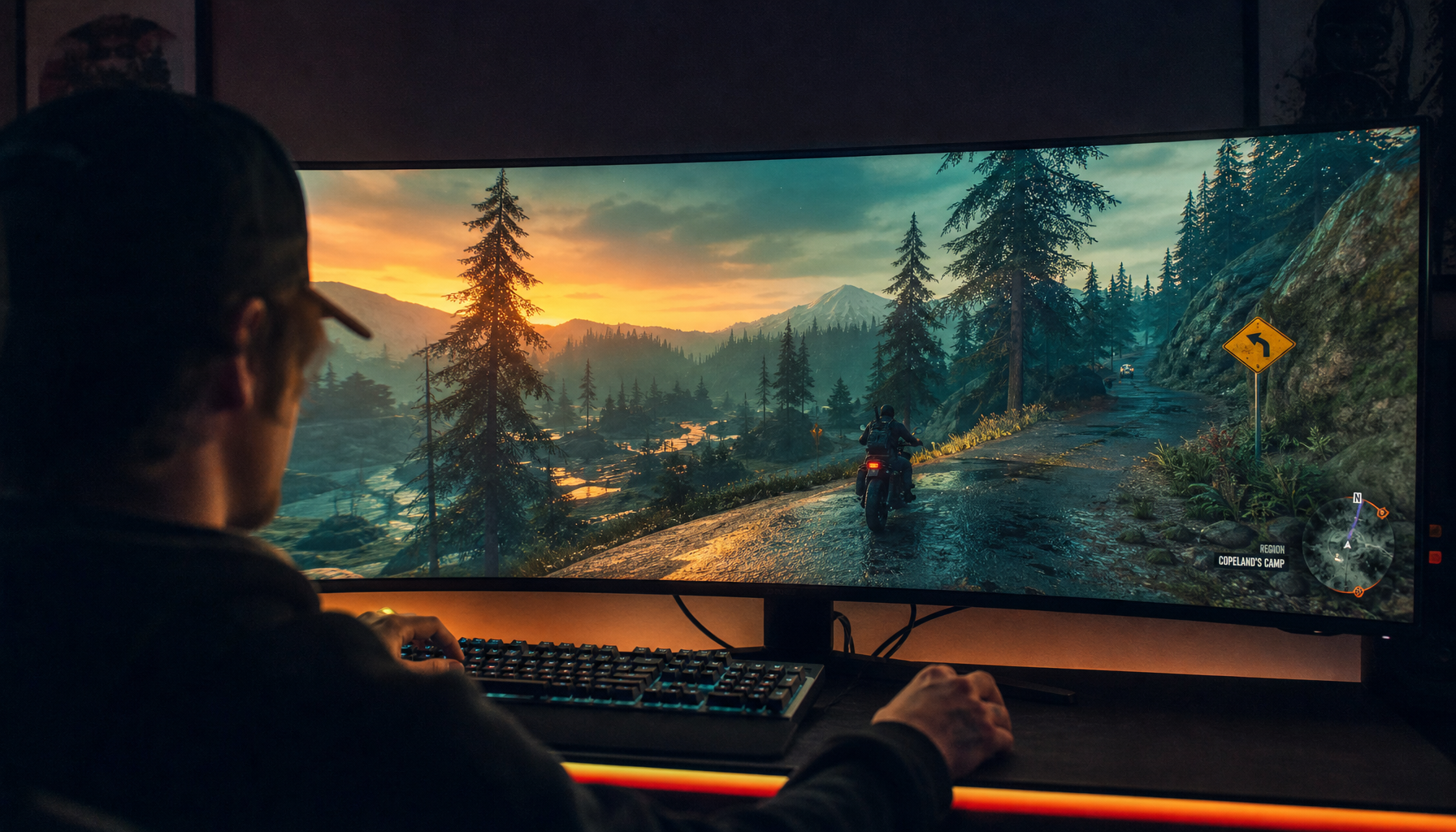
Refresh rate is how many times per second a monitor updates its image. A 60Hz display refreshes 60 times per second, while 144Hz, 165Hz, 240Hz, and higher panels refresh far more often. That gives your eyes more frequent visual updates, which is why pointer movement, camera pans, scrolling documents, and fast game action can feel smoother.
The motion advantage is easy to quantify. On a sample-and-hold display, each frame remains visible until the next refresh, so perceived blur is closely tied to frame time. Typical sample-and-hold MPRT values are about 16.67 ms at 60Hz, 8.33 ms at 120Hz, 6.94 ms at 144Hz, and 4.16 ms at 240Hz. In practice, that means a 240Hz monitor can make a fast side-to-side flick look cleaner than 60Hz even before you consider response time or overdrive tuning.
For gaming, that advantage is not theoretical. Higher refresh rates can reduce possible input lag and persistence blur while making action games easier to track. If your PC outputs 160 frames per second on a 165Hz screen, you are using most of what that monitor can show. If it only outputs 55 frames per second, the high-refresh panel still works, but the motion benefit is limited by the system.
Color Accuracy Comes From a Different Chain
Color accuracy means how closely the display reproduces the intended color, not how vivid it looks. Delta E is the common error metric: around 1 is hard to notice, under 2 is excellent, under 3 is good for most users, and above about 3 becomes easier to see in real work.
That color chain includes gamut, white point, gamma, grayscale tracking, panel uniformity, bit depth, viewing angles, and calibration. A monitor can be 240Hz and accurate, or 60Hz and inaccurate. A wide-gamut gaming display can look impressive in a store demo but oversaturate web content if it lacks a usable sRGB mode. A modest 75Hz office monitor can look more natural than a faster panel if it has better factory tuning and more stable viewing angles.
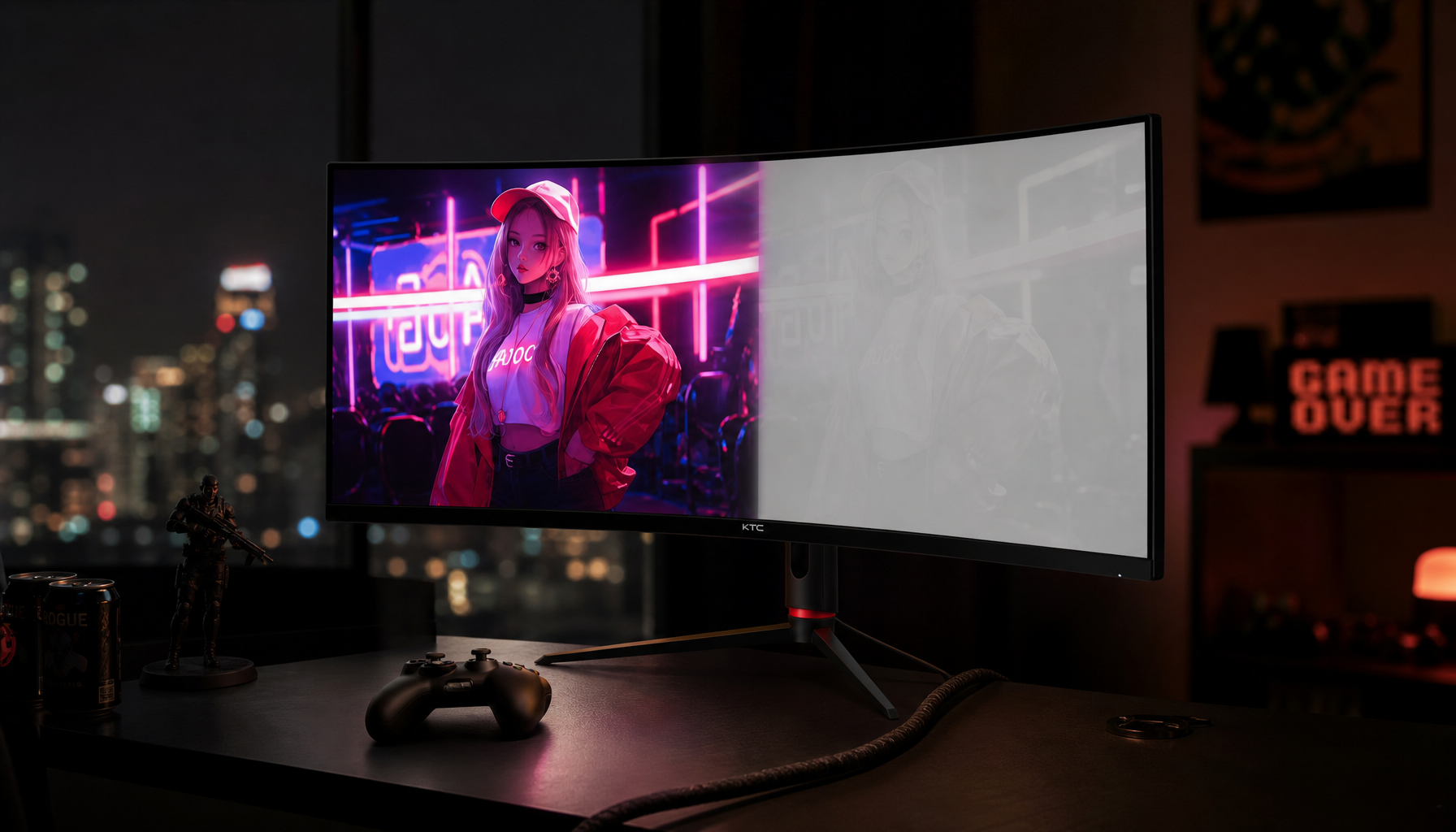
The useful separation is this: refresh rate controls when new frames appear, while color accuracy controls whether each frame looks correct. If a red logo looks too orange on a static desktop wallpaper, refresh rate is not the root cause. If a moving enemy smears across the screen during a fast turn, color accuracy is not the root cause.

Where Refresh Rate Can Indirectly Affect Color
A high refresh rate does not inherently damage color accuracy, but monitor makers sometimes prioritize speed over consistency, especially in lower-priced gaming models. High refresh rate and color accuracy can coexist, yet budget gaming monitors may trade factory calibration, uniformity, or panel quality for motion specs that look stronger on a spec sheet.
There are also mode-level compromises. Some monitors reduce color depth, chroma quality, brightness, or HDR capability at their highest refresh setting depending on bandwidth, cable, port, compression, and firmware behavior. Discussions around 1,000Hz-class displays make the same point at the extreme end: advertised refresh modes may depend on reduced resolution, reduced color settings, special overclock modes, or specific interface requirements.
Backlight strobing is another tradeoff. Strobe modes can reduce perceived motion blur by pulsing the backlight, but they often lower brightness and may not work with VRR unless the monitor supports advanced combinations. That can make motion clearer in a shooter while making the screen less comfortable or less suitable for color review.
Motion Specs vs. Color Specs
Spec |
What It Tells You |
What It Does Not Prove |
Refresh rate |
How often the monitor can update the image |
Accurate color, low response time, or low input lag |
Response time |
How quickly pixels transition between shades |
Correct gamma, white point, or gamut behavior |
Delta E |
How close colors are to a target |
Smooth motion or low input lag |
Gamut coverage |
How many colors the monitor can display |
Whether those colors are accurate |
VRR |
Whether refresh timing can follow GPU frame output |
Factory calibration or uniform brightness |

A simple example shows why this matters. A 27-inch 1440p 165Hz IPS monitor with Delta E under 3, near-full sRGB, and adaptive sync can be an excellent all-rounder for gaming, office work, and web content. A 27-inch 240Hz monitor with weak sRGB control and visible tint shift may feel faster in esports but be less trustworthy for photo edits, product listings, or brand-color checks.
Panel Type Still Matters
Panel technology shapes both motion and color behavior. IPS is often the safest choice when you want strong color stability, wide viewing angles, and fast-enough gaming performance. VA can deliver deeper blacks and strong contrast, which helps immersive games and movies, but some VA transitions can be slower and may produce visible dark trailing. TN can be very fast and low-lag, but it usually has weaker viewing angles and color consistency. OLED and QD-OLED can combine very fast response with deep blacks and wide color, though buyers should consider static-content care features for long desktop use.
For office productivity and mixed-use screens, color, resolution, ergonomics, connectivity, HDR capability, and panel type belong alongside refresh rate rather than treating Hz as the only premium feature. That is the right mindset. A finance dashboard, editing timeline, CAD workspace, and competitive FPS session all stress the display differently.
Portable smart screens need the same discipline. For a travel display, full-sRGB IPS quality, stable off-angle color, matte finish, and good brightness control usually matter more than chasing 144Hz. If it is a portable gaming screen for a handheld PC, higher refresh and VRR become more valuable, but only if the device can feed enough frames.
How to Choose for Your Use Case
For competitive gaming, prioritize 144Hz or higher, low input lag, fast real response behavior, VRR, and a panel with clean overdrive tuning. Gaming monitors commonly start at 144Hz, while competitive models often move into 165Hz, 240Hz, or higher territory. Color still matters, especially for visibility and immersion, but motion performance should lead the buying decision.

For office productivity, 60Hz is usable, but 100Hz to 120Hz can make scrolling, cursor movement, and window dragging feel calmer and more immediate. 120Hz can be a noticeable smoothness upgrade over 60Hz for everyday work. If you spend nearly the whole day in spreadsheets, browser tabs, code, or design tools, that comfort upgrade can be real, even when you are not gaming.
For photo editing, web design, product content, and brand review, color comes first. Choose IPS or OLED, near-full sRGB at minimum, a credible sRGB mode, Delta E under 3, stable brightness, and good uniformity. Refresh rate becomes a comfort feature unless you also game or edit motion-heavy content.

For 4K gaming, do not buy refresh rate in isolation. VRR synchronizes refresh behavior with GPU frame delivery, which can make fluctuating frame rates feel smoother than a fixed refresh target. A 4K 144Hz monitor is only fully exploited if your GPU can feed it; otherwise, 1440p at 165Hz may deliver a better balance of motion, clarity, cost, and reliability.
Practical Setup Checks
Start by setting the monitor to its native resolution and intended refresh rate in your operating system. Use the cable and port standard your monitor requires. If the advertised maximum refresh rate is missing, the limitation may be the cable, port, GPU, monitor settings, or driver.
Then separate motion tuning from color tuning. For motion, test several refresh rates in a game or browser motion test, enable VRR if supported, and avoid overdrive settings that create bright halos or inverse ghosting. For color, switch to the best sRGB or standard mode, set brightness to match the room, avoid glare, and leave novelty presets alone for serious work.
For color-sensitive work, recalibrate regularly if you have the tools. If you do not, use the monitor’s most accurate preset, keep neutral room lighting, and compare important output on a second trusted screen before publishing or printing. That habit catches the real failures: a cool white point, crushed shadows, oversaturated skin tones, or uneven corners.
The Bottom Line
Refresh rate affects motion performance first: smoothness, blur, tearing behavior, and the feel of interaction. Color accuracy lives in the panel, calibration, gamut, gamma, white point, and uniformity. The best display choice is not “highest Hz wins”; it is the monitor whose speed, color trust, resolution, and connectivity match the work you actually do.