Panel gamma curve shape determines whether near-black details remain visible or disappear into shadow. The best setting preserves dark-scene visibility without making blacks look gray.
Why Gamma Shape Matters in Shadows
Gamma describes the tonal progression between black and white. A steeper low-end curve keeps shadows deep, but it can make levels just above black look too similar. A flatter low-end curve lifts near-black tones, making rocks, armor, opponents, and UI markers easier to distinguish.
That is why two monitors set to gamma 2.2 can still look different in a night map. One may transition smoothly from black to gray, while another may dip or rise unevenly, changing practical visibility.
For SDR PC gaming, gamma 2.2 is the usual starting point, while dark-room, video-oriented setups sometimes use a value closer to 2.4. The tradeoff appears in calibration discussions about gamma 2.2 or 2.4: stronger perceived contrast can look more cinematic, but it may hide near-black detail.
The Shadow Detail Tradeoff
Shadow detail occupies the narrow range just above black. If the curve is too dark in that range, black crush causes a cave wall, a black coat, and a crouched opponent to collapse into nearly the same tone.

If the curve is lifted too much, fog, corners, and nighttime scenes become easier to scan, but the picture loses depth. Blacks look gray, and the game’s lighting feels less grounded.
Contrast gives an image punch, while gamma determines where that punch falls. A high-contrast display can produce deeper blacks and brighter whites, but dark-scene content still requires controlled near-black gradation to remain readable.
Panel Type Changes the Result
VA, IPS, OLED, and TN panels handle dark tones differently. VA panels often provide deeper native blacks, so a slightly lifted shadow curve can improve visibility without immediately flattening the image. IPS panels usually have lighter blacks, so aggressive gamma lifting can make dark scenes look hazy.

OLED panels behave differently because individual pixels can turn off completely. Near-black gamma handling is especially noticeable: a small curve mismatch can make a scene appear dimensional or cause dark detail to look clipped.
Panel type also shapes gaming priorities. IPS commonly favors speed, color stability, and wide viewing angles, while VA is often selected for stronger dark-room contrast in immersive play. The balance between motion clarity, contrast, and viewing conditions should guide the choice.
How to Tune Gamma for Games
Start with the monitor’s standard, sRGB, or custom mode, then adjust brightness for the room before changing gamma. In a bright room, lifted shadow visibility may help, but controlling glare and setting the black level correctly should come first.
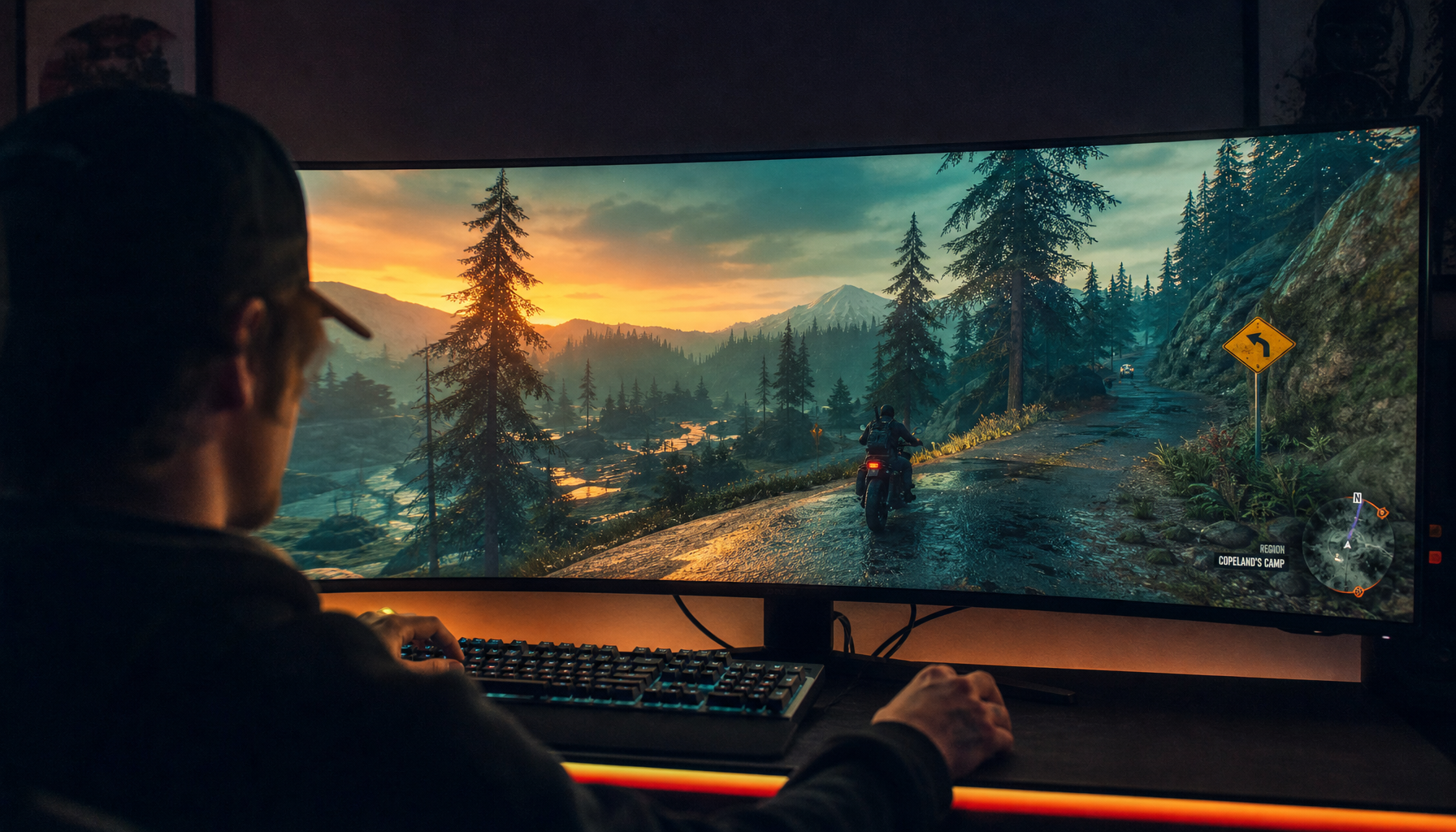
Use the game’s built-in calibration screen when available. Many games expect the darkest logo or symbol to be barely visible, not bright and obvious. In survival or open-world titles, increasing gamma can improve nighttime navigation through gamma adjustment.

Follow these steps:
- Set monitor gamma near 2.2 for SDR PC gaming.
- Adjust brightness until black remains dark without crushing detail.
- Use in-game gamma controls for each title.
- Test a real dark scene, not only a calibration pattern.
- Save separate presets for competitive and cinematic play.
Technically accurate calibration can still feel unsuitable if room lighting, panel behavior, or a game’s rendering places near-black tones below your visibility threshold.
Competitive vs. Immersive Settings
For competitive shooters, a slightly flatter shadow curve can improve opponent visibility against dark backgrounds, especially in interiors, tunnels, and night maps.
For horror games, RPGs, and cinematic campaigns, keep the curve closer to the intended presentation. Shadows should remain readable without lifting the image enough to reduce suspense and depth.
Two presets provide practical control: a visibility-first profile for ranked play and a contrast-first profile for story-driven games.